-
Cicen'dia: the meaning of this name is uncertain, and I had thought
possibly from the Latin cicindela, "glowworm," or
from a Latin word meaning "candelabrum," until I was contacted
by the former curator of the Museum for Natural History in Stuttgart,
Germany, with the information that it was taken by Grisebach (the author)
from an old plant name in Toscana (Italy), kikenda, meaning
a Gentianaceae. Another source adds "Based on the name recorded by Dioscorides and supposedly from ancient Tuscany for an unknown plant of the family." The genus Cicendia was published by Michel Adanson in 1763.
-
ci'cera: from the Latin cicer, a classical Latin name for
the chick-pea or garbanzo.
-
cichoria'cea: like Cichorium.
-
Cichor'ium: the Latinized version of an Arabic
name for one species of this genus from the Greek kichore,
which usually carries a common name of chicory or endive. The genus Cichorium was published by Carl Linnaeus in 1753.
-
Cicu'ta: an ancient Latin name of poison hemlock. The genus Cicuta was published by Carl Linnaeus in 1753.
-
cicutar'ia/cicutar'ium:
refers to the leaves which resemble those of Cicuta, the
ancient Latin name for poison hemlock.
-
cienegen'sis: named for Cienega Seca Creek in the San Bernardino
Mts, the word "cienaga" meaning meadow or marsh.
-
cilianen'sis: thanks to Adolf Ceska of Ceska Geobotanical Consulting
for the following: "According to the Intermountain Flora (A. Cronquist, A.H. Holmgren, N.H. Holmgren, J.L. Reveal, and P.K. Holmgren.,
1977, Vol. 6, Columbia University Press,
New York, page 400), Eragrostis cilianensis was described by
Carlo Allioni (1725-1804) in his Flora Pedemontana, based on
the type specimen collected by Bellardi in Ciliani estate,
Italy."
-
ciliar'e/ciliar'is: edged with hairs, from cilium, "eyelid, eyelash."
-
cilia'ta/cilia'tum/cilia'tus:
name given to indicate a slight fringing like an eyelash that might occur on petals, leaves, petioles or other plant parts.
-
ciliatifo'lia: having hair-fringed leaves.
-
ciliola'tum: fringed on the side.
-
cilio'sa/cilio'sum: fringed or ciliate.
-
-cil'lus: a Latin adjectival suffix used as a diminutive.
-
cim'ae: one website I found referred to the taxon ( Astragalus cimae) by the common
name Cima milkvetch, and its range is the east desert mountains, so
I am assuming that this name refers in some way to Cima Dome or to
some other similarly-named geographical feature in the East Mojave. This is the only species to use this epithet.
-
cinerar'ius: pertaining to ashes.
-
cineras'cens: becoming ashy-gray.
-
ciner'ea/ciner'eum/ciner'eus:
ashy-gray, from the Latin cinis, “ashes," usually the foliage.
-
cini'cola: from the Latin cinis, "ashes," and the
-cola suffix denoting "an inhabitant of," the common
name for this taxon in the Jepson Manual being ash beardtongue.
-
Cin'na: from the Greek kinna, a name for a kind of grass. The genus Cinna was published in 1753 by Carl Linnaeus.
-
Cinnamo'mum: Greek for cinnamon. The genus Cinnamomum was published by Jacob Christian (H. von) Schaeffer in 1760.
-
Circae'a: named for Circe (pronounced SIR-see),
the enchantress of Greek mythology. According to a website called
"Characters of Greek Mythology," Circe is the daughter of Helios,
the Sun God, and Perse. She was a powerful witch who had no love for
mortals. Initially, she was married to a king and poisoned him in
hopes of taking over the kingdom. But she was banished from the city
and went to live on the Island of Dawn, Aeaea. She is best known from
the Odyssey where she turned Odysseus' men into animals with a magic
potion. Of course, the gods helped Odysseus, and Hermes was sent to
give him an herb that would make him immune to Circe's magic. She eventually
agreed to turn his men back, but only on the condition that Odysseus
sleep with her. Then she warned him of the perils in the next part
of his journey. Odysseus and Penelope's son, Telemachus, is said to
have married her. The genus Circaea was published by Carl Linnaeus in 1753.
-
circae'zans: enchanting, having the properties of Circe. The website of the Missouri Botanical Garden says "Specific epithet means resembling the genus Circaea which is commonly known as enchanter's nightshade and which was named for Circe of Greek mythology who reportedly used enchanter's nightshade in her magic." Another example of a specific epithet used for no other taxon.
-
circina'ta/circina'tum: coiled, rounded, circular.
-
cir'cum-: Latin prefix meaning around, e.g. circumvagum, circumscissa.
-
circumscis'sa: from the Latin for "cut
around" because the upper half of the fruiting calyx falls away when
the nutlets are ripe.
-
circumva'gum: from the Latin circum,
"around," and vagum, "wandering," of uncertain
meaning.
-
cirra'ta: equipped with tendrils.
-
cirrho'sa/cirrho'sus: climbing by tendrils.
-
Cir'sium: derived from the Greek kirsion,
"a kind of thistle," in turn from kirsos, "a
swollen vein or welt," because thistles were often used as a
remedy against such things. The genus Cirsium was published by Philip Miller in 1754.
-
cismonta'na: on this side of the mountains,
as opposed to transmontana, the other or far side.
-
Cistan'the: presumably from the genus name Cistus and the Greek anthos, "flower." The genus Cistanthe was published by Édouard Spach in 1836.
-
Cis'tus: an ancient Greek name. The genus Cistus was published in 1753 by Carl Linnaeus.
-
citer: indicating proximity or nearness.
-
citharifor'me: from the Greek kithara, "lyre," and forme, indicating shape or resemblance, thus meaning "lyre-shaped" or "like a lyre."
-
citra'ta/citra'tus: resembling Citrus.
-
citrigra'cilis: from the roots citron, the citron-tree, and gracilis, "slender, thin". This name may be a combination
of the names Madia citriodora and M. gracilis, because
this taxon is a derived hybrid of those two taxa.
-
citrin'a/citrin'um/citrin'us: lemon-yellow.
-
citriodor'a: lemon-scented.
-
citro'leum: I had thought that this was from the root for lemon or
the genus Citrus, but it now seems certain that it is from
the Latin citra, "on the side of," and oleosus,
"oily," the common name for this species being oil nest
straw. David Hollombe sent me the following as further confirmation:
"J. D. Morefield, in his original account of Stylocline citroleum says Stylocline citroleum appears nearly restricted to areas
of heavy petroleum production and other developments in the southern
San Joaquin Valley and is certainly endangered, if not already extinct.
The epithet is derived from the Latin citer, indicating proximity
or nearness, and oleum, "oil, olive oil."
-
Citrul'lus: the Latin diminutive of Citrus, possessing a similar
odor and flavor. The genus Citrullus was published by Heinrich Adolph Schrader in 1836.
-
Cla'dium: from the Greek kladion, "a small branch or branchlet" or klados, "a branch," referring to the highly branched inflorescences. The genus Cladium was published in 1756 by Patrick Browne.
-
cladoca'lyx: from the Greek klados, "branch," and kalyx, "the bud cup or calyx of a flower."
-
clairbrown'ii: named for Clair Alan Brown (1903-1982), an American botanist who specialized in Louisiana flora. He was was born in Port Allegany, Pennsylvania, and earned his bachelor's degree cum laude from New York State College of Forestry in 1925 and his master's in botany from the University of Michigan in 1926. He began working at Louisiana State University the following year before returning to the University of Michigan for his doctorate, which he completed in 1934. His dissertation was titled Morphology and biology of some species of Odontia. He took up his position at LSU again and taught botany, systematic botany, wood identification, dendrology, forest pathology, ecology, and palynology (the study of pollen grains and other spores, especially as found in archaeological or geological deposits)
until his retirement in 1970. He held a number of leadership roles in international organizations throughout his career, including as president of the Southern Weed Control Conference in 1948, as a delegate to the International Botanical Congress in 1950, and as president of the American Fern Society in 1960. He was also appointed to the International Committee on Palynology and was president of honor at the 78th Société botanique de France. Among his awards were a Guggenheim Fellowship in 1952, a National Science Foundation fellowship in 1961, and an Edmund Niles Huyck Fellowship. In 1973, he received a Louisiana Literary Award for his illustrated anthology Wildflowers of Louisiana and Adjoining States. He married Maude Nichols in 1926 and they had two daughters, Sarah and Dorcas. Maude and nineteen-year-old Sarah died in a car accident in April, 1962. Brown died on March 24, 1982, in Baton Rouge.
-
clandestin'um: from Latin clandestinus, "hidden," a reference to the small secondary flowering heads concealed in the leaf axils.
-
clara'nus: named for Clara Adele Pike Blodgett Hunt (1859-1931), a schoolteacher
and amateur botanist. The Jepson Manual refers to this taxon as Clara
Hunt's milkvetch, and originally spelled it as clarianus, but that has
been corrected.
She was the daughter of Edward P. and [Lucy] Schattuck Pike and was
born in Claremont, New Hampshire. She came to California when 12 years
old and married her first husband, George Farwell Blodgett, in 1878.
He died in 1883. In 1891 she married her second husband, Daniel Otis
Hunt and made St. Helena in the Napa Valley her home. Before her marriage
she was a successful school teacher in the East Bay area. She was
a great lover of flowers and had a liberal education in botany. Her
particular delight for many years was the study of wildflowers with
which our hills and valleys abound and several years the flower shows
she gave either at her home or under the auspices of the Women's Improvement
Club, attracted a great deal of attention. Mrs. Hunt was a past president
of the Women's Improvement Club and in her earlier years took a great
deal of interest in civic affairs. Her second husband died in 1914.
(Information slightly rewritten from an entry in the St. Helena Star,
4/8/32)
-
clarea'na: named for Clare Butterworth Hardham (1918-2010), a distinguished American botanist and cattle rancher born in Santa Barbara, California, where her family had a nut farm near Templeton. She grew up in Connecticut and received a BA degree from Vassar College in 1939, did graduate work at McGill University in Montreal, Canada, and received her MS in botany from UC Santa Barbara. In college, she met long-time Paso Robles physician, John F. Hardham. They married, and after World War II moved to California. She made extensive studies of the flora of the Santa Lucia Range, Sierra Madre Range, and other areas of the Central Coast during the 1950s and 1960s. She collaborated with James Reveal on Chorizanthe and related genera. In later years, her other main interest was developing the ranch she inherited from her father to produce top quality polled Hereford cattle. She died at the age of 92 in San Luis Obispo.
-
claria'na/claria'num: named for Marjorie Chappel Davis Clary (1885-1975), wife of
Benjamin Little Clary and an amateur naturalist who owned, with her husband,
Ben L. Clary, whom she married in Denver, the Coral Reef Ranch near Coachella. She was born in Union County, Iowa. She died in Los Angeles at the age of 88. No further information available.
-
clark'ei/clark'ii: named for Joseph Henry Clarke (1853-1932). He was born in Fillmore City, Utah, but when only a few weeks old, was taken with his family to Bidwell’s Bar in Butte County, California. In 1870 the family moved to Cahto in Mendocino County. Joseph spent his boyhood in Butte County where he had little opportunity for formal schooling, but was a voracious reader and interested in all the sciences. His family was engaged in farming and stock-raising. He started a dairy in 1872 and continued that business until 1881 when he began raising sheep, starting with Merinos and Shropshires, and then in 1902 Rambouilette sheep, becoming the largest breeder of that breed of sheep in Mendocino County.
-
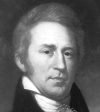
Clar'kia: named for William Clark (1770-1838)
who with Captain Meriwether Lewis made the first transcontinental
 |
|
expedition from 1804 to 1806. He was born in Virginia and moved with
his family in 1784 to an area of Kentucky which was the site of present-day
Louisville, where his famous Revolutionary War brother George Rogers
Clark had built a fort. He learned about Indian warfare at firsthand,
and became an ensign at the age of 18. He was the principal military
director of the Lewis and Clark expedition, also the chief mapmaker and artist, and
he kept detailed journals on the plant and animal life they encountered.
His knowledge of Indian habits and character contributed greatly to the |
success of the mission that had been assigned by President Jefferson.
After returning from the West, he resigned from the Army and took
the position of Indian agent until Congress appointed him Brigadier-General
for the territory of upper Louisiana. President Madison appointed
him governor of the Missouri territory in 1813, and he held that office
until Missouri was organized as a state, at which time he was a reluctant
candidate for the same job and was defeated. In 1822 President Monroe
appointed him superintendent of Indian affairs in St. Louis and he
held that position until his death in 1838. The genus Clarkia was published in 1814 by Frederick Traugott Pursh.
-
clark'iae: named for Mary Rose Clark (c. 1871-1942?). "... born
in Nevada to Irish immigrant parents and attended the Normal Department
of the University of Nevada, receiving her First Grade Diploma in
1894 and Life Diploma in 1895. She left teaching in 1901 and was a
postal clerk until 1904, then was proprietor of a poultry ranch. Unfortunately,
she was committed to the state hospital at Sparks, Nevada, in 1910
and spent the rest of her life there." (Information from David
Hollombe)
-
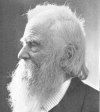
clarkia'na/clarkia'nus: named for Galen Clark (1814-1910), one of Yosemite's earliest explorers and protectors, a
 |
|
charter member of the Sierra Club, and author of The Big Trees of California, Their History and Characteristics (1907), Indians of the Yosemite (1904). and The Yosemite Valley (1910). He was born in Canada but met and married Rebecca McCoy in Missouri. After his wife died he moved to California around the time of the Gold Rush. Within a few years at the age of 39 he contracted tuberculosis and his doctors gave him six months to live, so he moved to an area in the Sierra Nevada Mountains called Wawona. Discovering the Mariposa Grove of giant sequoias, he spent |
most of his time exploring and teaching people about the great trees. He involved himself in and largely spearheaded a political campaign to preserve the area that would eventually become Yosemite National Park. To support himself, he ran a small hotel and guide service, but not being a good businessman, he was constantly in debt. Although he wrote three books about Yosemite, he never sought to use his position for monetary gain and did not dwell on his own accomplishments. He was perpetually poor but rich in the spiritual nature of the mountains and the tall trees he loved so much. He died just shy of his 96th birthday at the home of his daughter in Oakland. His name is memorialized in Mt. Clark and the Clark Mountains east of Yosemite.
-
clava'tum/clava'tus: means "club-shaped," from the Latin clava, "a club," referring to the top of the hairs on the inner side of the petals.
-
clavicar'pa: from the Latin clava, "club," and karpos,
"fruit," thus with club-shaped fruits.
-
clavifor'mis: from the Latin for "club-shaped," with reference to the capsules.
-
Clayton'ia: named for John Clayton (1694-1773),
a Clerk to the County Court of Gloucester County, Virginia from 1720
until his death, one of the earliest collectors of plant specimens
in that state, and described as the greatest American botanist of
his day, who supplied materials for an 18th century flora of Virginia
called Flora Virginica (published 1739-1743) by Jan Frederick Gronovius.
He conscienciously and systematically took samples of everything he
encountered, and sent them to Mark Catesby at Oxford, who in turn
sent them to Gronovius in Leiden, Holland, where they were examined
by Linnaeus. He was also the attorney general for the colony of Virginia.
He did not publish much himself but his specimens were of considerable
taxonomic and nomenclatural significance, and Gronovius based his
work at least in part on a manuscript by Clayton. Since his were some
of the first North American specimens studied by Linnaeus, many were
type specimens for Linnaean names. The specimens that were studied
by Gronovius were bought by Sir Joseph Banks and subsequently passed
to the British Museum (now the Natural History Museum) in London,
where they have recently (1988-1990) been separated from the main
collection and curated as the Clayton collection. 1686 has often been
given as his date of birth rather than 1694, but this is the date
used by the John Clayton Herbarium of the Natural History Museum of
London. The genus Claytonia was published by Carl Linnaeus in 1753.
-
cleisto'gamum: from the Greek kleistos, "that which can
be closed," and possibly gamos, "a marriage"(?),
the same root as for the word gamete. The word cleistogamous refers
to flowers that self-fertilize without opening.
-
Clem'atis: in Greek means "long, lithe
branches" and is an ancient name for some climbing plant. The genus Clematis was published in 1753 by Carl Linnaeus.
-
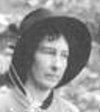
clem'ensiae/clemen'tis: named for botanical explorer Mary Strong Knapp Clemens (Mrs. Joseph Clemens) (1873-
 |
|
1968), an American botanist and plant collector. She was a missionary who accompanied her husband, Methodist minister Rev. Joseph Clemens (1862-1936) to the Philippines, New Guinea and the Far East. Born Mary Knapp Strong in New York, she settled in Australia and continued collecting until a few years before her death in 1968. She was born in New York and married Joseph Clemens in 1894. A website of the New York Botanical Garden relates: “In 1902 he joined the US Army as chaplain with the rank of Captain. This position made possible their extensive travels. |
Mary Strong Clemens made field collections in California, Utah, Oklahoma and Texas as Joseph Clemens was transferred from post to post. From 1905-1909 they were stationed in the Philippines and she collected on Mindanao and Luzon. After her husband's retirement, they returned to the South Seas, supporting their work through sales of specimens. They collected on the highest and most inaccessible mountains in the Philippines, British N. Borneo, Chihli and Shantung provinces in China, Anam, French Indo-China and New Guinea. In 1929 they spent six months collecting in Sarawak, Borneo. In 1930, E. D. Merrill estimated their collections at over 20,000 numbers. Mrs. Clemens collected the material and Mr. Clemens prepared it for shipment.” Following her husband’s death from food poisoning in 1936, Mary went to New Guinea and remained until she was evacuated to Australia in 1941. She became the houseguest of the Queensland government botanist, working at the herbarium and collecting extensively in Queensland. She broke a hip in 1950 which reduced her ability to botanize, and she moved in 1963 to the Garden Settlement for the Aged at Chermside on the northern outskirts of Brisbane, dying there in 1968. She was considered to have a deep religious conviction, a fanatical devotion to collecting plants, a concern for the welfare of the indigenes, and indifference to her own comfort and the robustness of her person, but other botanists were skeptical of her ability to identify plants.
-
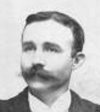
clemensior'um: named for Mary Strong Knapp Clemens (1873-1968) (see previous entry) and her husband and co-
 |
|
collector Joseph Clemens (1862-1936) (picture at left). He was a Methodist Episcopalian clergyman, missionary and plant collector born in St. Just, Cornwall, England. He emigrated with his family to Williamsport, Pennsylvania in 1867 and then moved to Eichelsburg, Pennsylvania. His father was an iron miner and Joseph was the only one of the five brothers who did not become a miner. Clemens attended Dickinson College where he received a BA in 1894 and an MA in 1897. At Dickinson his courses included Dutch, German, Greek, Latin, and Hebrew, as well as physics, |
chemistry, analytical geometry, political economics, English literature and psychology. He was a member of the Union Philosophical Society and the Dickinson Prohibition Club, and during those years he was already engaged to Mary Strong Knapp. After graduation, from 1894 to 1901, Clemens was a pastor for the Central Pennsylvania Methodist Episcopal Conference, and in 1896 he was married. In 1902 he joined the US Army as chaplain with the rank of Captain and was sent to Hawaii with the 15th Infantry, and then to the Philippines from 1905 to 1909 with his wife. This position made possible their extensive travels, and while in the Philippines he joined in Mary’s botanical studies. In 1915 they made their first botanical study together at Mount Kinabalu in northern Borneo and they were back in Borneo again in 1931. The conflict between his social and religious duties bothered him and he was eventually retired from the Army for a disability he had received in the line of service, and the couple returned to the US where he spent five months lecturing in Pennsylvania in small towns, factories, schools and churches. With the money he earned there, he endowed Dickinson Seminary and support missions. They returned to the Philippines in 1922 and Joseph spent six and one half years doing evangelical work on Luzon. In August 1935, the couple traveled to New Guinea to advance their missionary pursuits. While there, Joseph Clemens apparently contracted food poisoning early in the new year from eating wild boar meat and died. The -orum ending is a suffix given to a personal name to convert it to a substantival
commemorative epithet when the epithet refers to two or more men or
two or more people of mixed genders, and the epithet in the California flora is Verbena X clemensiorum.
-
clementi'na/clementi'nus:
of San Clemente Island, where species with these epithets are located.
-
clemen'tis: see clemensiae. Several of these taxa were collected by Mary Strong Knapp Clemens.
-
Cleo'me: an ancient name of some mustard-like
plant. FNA says "Origin obscure, perhaps from Greek kleos, glory, or after Kleo, Greek muse of history, first used by Priscian, fourteenth-century medical writer." The genus Cleome was published in 1753 by Carl Linnaeus.
-
Cleomel'la: a diminutive form of Cleome. The genus Cleomella was published by Augustin Pyramus de Candolle in 1824.
-
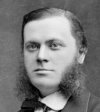
Clev'ea: named for Per Theodor Cleve (1840-1905), a Swedish chemist, biologist, mineralogist and oceanographer.
 |
|
He was born in Stockholm into a family whose ancestors had come from western Germany, and was drawn to the natural sciences from an early age, beginning his study of chemistry and biology at the Stockholm Lyceum in 1858. In 1860 he became an assistant professor of minerology. He was awarded a BSc from Uppsala University in 1863 and a PhD degree from the same institution in 1868, and that same year was apppointed assistant professor of chemistry. His most important contribution to chemistry was his discovery in 1879 of the chemical elements holmium and |
thulium. He also taught at the Royal Institute of Technology between 1870 and 1874, and eventually became professor of general and agricultural chemistry at the University of Uppsala. He occupied the Chair of Chemistry at the University of Uppsala starting in 1874. In 1890, Cleve began to mainly focus on the field of biology, mainly studying freshwater algae, diatoms, and plankton. He created a method of dating glacial and post-glacial deposits from the types of diatom fossils in the deposits. Cleve participated in a Swedish expedition to Spitsbergen in 1898. While on this mission, he discovered a number of species of spumellarians, nassellarians, and phaeodarians, all eukaryotic species not animal, plant or fungus. One of his daughters became a botanist, and both his son-in-law and a grandson won Nobel Prizes. He joined the Royal Swedish Academy of Sciences in 1871, and died after experiencing an attack of pleurisy. The genus Clevea was published in 1868 by Sextus Otto Lindberg.
-
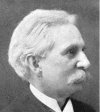
cleveland'ii: named for Daniel Cleveland (1838-1929),
a lawyer, an authority on ferns, and a botanical collector, who
 |
|
during the course of his collecting, rediscovered all the plants of the San Diego area that had been found only once. He was born in Poughkeepsie, New York, and lived there until the age of 12, at which time he went to Biloxi, Mississippi to attend school. At the age of seventeen he moved to New Orleans where for two years he was head bookkeeper in a commercial establishment. In 1857 he returned to Poughkeepsie where he worked for the firm of Tallman and Paine and began to study law. He was admitted to the bar by the Supreme Court of New York in 1859. In May of 1859, |
Daniel joined his brother William, also a lawyer, in his practice in San Antonio. Here the two men remained throughout the American Civil War. He was appointed mayor and made a number of municipal improvements, most notably freeing the city from debt. He was at one time mayor
of San Antonio, Texas, and is remembered by having his name on a number
of southern California plants. Contrary to what is sometimes thought,
the Cleveland National Forest was not named for Daniel Cleveland,
but rather for President Grover Cleveland.
-
clifton'ii: named for botanist Glenn Lee Clifton (1943- ), with William
Dean Taylor the discoverer of the taxon Neviusa cliftonii, in eastern Shasta County
in 1992, and like Taylor a worker at the Santa Cruz-based botany consulting
firm Biosystems Analysis, Inc. He currently lives in Kingman, Arizona.
-
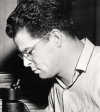
cliftonsmith'ii: named for Clifton F. Smith (1920-2000), Santa Barbara County’s most renowned field botanist for
 |
|
over 50 years, senior botanist at the Santa Barbara Botanic Garden (in whose honor the herbarium there is named) and author of A Flora of the Santa Barbara Region, California. He joined the staff of the Santa Barbara Museum of Natural History as a part time assistant in 1947 and made his first collecting trip to Santa Rosa Island two years later, followed by visits to Santa Cruz, Anacapa and San Miguel islands. He is a member of the exclusive All Eight Club of people who have visited all eight of the Channel islands. Galium cliftonsmithii was published by Lauramay Tinsley Dempster. |
(Photo credit: Islapedia)
-
Clinopo'dium: possibly from the Greek klino, "to slope or recline, to lean, bed" and podos or podios, "a foot, one foot, little foot." The Jepson Manual gives the meaning as "savory," but this might be because that is one of the common names for members of this genus, formerly Satureja. Gledhill says "Bed-foot (Dioscorides' name for the knob-shaped appearance of the inflorescence)." The genus Clinopodium was published by Carl Linnaeus in 1753.
-
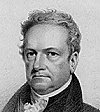
Clinton'ia: named for DeWitt Clinton (1769-1828), a naturalist, state legislator, US senator, mayor of New York City,
 |
|
and 7th governor of New York. Known chiefly for his role in the construction of the Erie Canal, also known as "Clinton's Ditch," he was also a keen naturalist and is credited with having discovered a native American wheat species. He was extremely interested in humanitarian and philanthropic causes, as is demonstrated by his role as the primary organizer of the Public School Society of New York City, the chief patron of the New York Orphan Asylum and the New York City Hospital, the founder of the New York Historical Society, a founding member of the Literature |
and Philosophy Society, the second president of the American Academy of Art, and the vice-president of the American Bible Society and the Educational Society of the Presbyterian Church. He was born in Little Britain, New York, and attended Kingston Academy and began his college studies at what was then called the College of New Jersey (now Princeton) before transferring to King's College (which was renamed Columbia College while he was a student there. He was the nephew of George Clinton, two-time vice-president of the United States, and first governor of New York, the brother of US Representative George Clinton, Jr., and the half-brother of US Representative James Clinton. He was a delegate to the New York State Constitutional Convention in 1801, and was introduced to politics as the secretary for his uncle George Clinton who was then the governor of New York. He went on to being a member of the New York State Assembly, and then was elected to the State Senate before being appointed to the US Senate in 1802 to fill a vacancy. He resigned this office in 1803 to become mayor of New York City, a position which he held from 1803 to 1807, from 1809 to 1810, and again from 1811 to 1815. From 1810 to 1824 he was one of the earliest members of the Erie Canal Commission, and after he took office as governor of New York in 1817, he was largely responsible for its construction. When the canal was finished in 1825, Clinton opened it and traveled in the packet boat Seneca Chief along the canal to Buffalo. After riding from the mouth of Lake Erie to New York City, he emptied two casks of water from Lake Erie into New York Harbor to celebrate the first connection of waters from the East with waters from the West. The canal was an immense success, carrying large numbers of passengers and a huge amount of freight traffic. The cost of moving freight between Buffalo and Albany fell from $100 to $10 per ton, and the state was able to quickly recoup the funds that it had spent on the project by collecting tolls along the canal. He was reelected governor in 1820 and served until 1822 when he wasn’t renominated. He maintained his position on the Canal Commission and oversaw the design and eventual construction of the 363-mile long Erie Canal which provided easier access than was then possible for Eastern commerce from the Atlantic to inland areas such as Ohio, Illinois and Indiana. He was elected governor of New York four times and heavily influenced the development of infrastructure both in New York State and in the United States as a whole. In 1824 his opponents in the New York State legislature voted for his removal from the Canal Commission, which caused such a wave of indignation among the electorate that he was nominated for governor by the People's Party and was re-elected governor, defeating the official candidate of the Democratic-Republican Party, his fellow Canal Commissioner Samuel Young. He served another two terms until his sudden death in office. He ran once unsuccessfully for president in the election of 1812 against James Madison. Thomas Jefferson and De Witt Clinton exchanged a number of letters and even gifts between 1802 and 1825. Jefferson admired the Erie Canal project greatly, writing that "N. York has anticipated by a full century the ordinary progress of improvement." Clinton himself had authored the gift that Jefferson’s note acknowledged, a widely respected publication entitled Letters on the natural history and internal resources of the State of New York, chock full of scientific information. The book analyzed New York’s natural wealth and potential for development and prosperity, featured detailed geological descriptions, and included reports of previously undocumented plant, bird, and fish species in New York. Clinton had gathered notes and observations a dozen years earlier, while serving on the Canal commission. The intervening years provided tantalizing support for Clinton’s conviction that scientific knowledge of the land and its resources could work hand in hand with infrastructure improvements to transform American life and drive economic growth. Clinton was a Freemason and was elected Grand Master of the Grand Lodge of New York. He was essential in establishing the Grand Encampment of Knights Templar in the United States and served as its first, second, and third grand master from 1816 to 1828. He was a director of New York's earliest savings bank established to serve laborers and the poor, The Bank for Savings in the City of New York. Clinton accomplished much as a leader in civic and state affairs, such as improving the New York public school system, encouraging steam navigation, and modifying the laws governing criminals and debtors, but when he died suddenly of heart failure in Albany on February 11, 1828, he left his family in poor financial condition. While he was a fine administrator in government, he had handled his own financial affairs rather poorly. As a result, the Clinton family was badly in debt and had no means of support after the governor's death or money to properly bury him, so for 16 years his remains were placed in the family vault of Dr. Samuel Stringer, an old friend and fellow Mason, until sufficient funds were collected to have him reinterred. During his lifetime his name was usually spelled De Witt. The genus Clintonia was published by Constantine Samuel Rafinesque in 1818 and is called bluebead lily or simply clintonia.
-
Clitor'ia: from the Greek kleitoris, "clitoris," which refers to the shape of the flower resembling the female genitalia. The genus Clitoria was published by Carl Linnaeus in 1753.
-
clivo'rum: of the hills, from Latin clīvus, “slope, hill.”
-
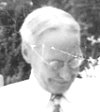
clo'keyi: named for Ira Waddell Clokey (1878-1950), who collected plants in Clark County, Nevada in the 1930s and
 |
|
completed the impressive Flora of the Charleston Mountains published just after his death. He was born in Decatur, Illinois, and attended Illinois University and Harvard, gaining a BS in mining engineering. After his main interest had shifted from engineering to his boyhood love of botany, he got an MS in plant pathology at Iowa State. He had worked as a mining engineer in Mexico and Colorado from 1903 until 1920, having moved to Colorado in 1915. He collected plant specimens in Mexico but many were lost in a fire in 1912. For seven years beginning in 1935 he collected |
extensively in the Charleston Mountains of Nevada. His personal herbarium included over 100,000 specimens which were deposited in the herbarium of the University of California and became the property of the herbarium at the time of his death. JSTOR adds: “Clokey's particular area of interest was the genus Carex and he collected a lot of material which was exchanged with many of the country's leading caricologists. He also studied genetics and undertook research into maize at the California Institute of Technology and published numerous other papers on various botanical topics.” (Photo credit: Find-a-Grave)
-
clusia'na: named for Carolus
Clusius (Charles de l'Ecluse) (1526-1609), a Flemish botanist, horticulturist and
 |
|
traveller who became a professor at
the University of Leiden. The following is quoted from Wikipedia:
"He studied at Montpellier with the famous medical professor
Guillaume Rondelet, though he never practiced medicine. In 1573 he
was appointed prefect of the imperial medical garden in Vienna by
Maximilian II and made Gentleman of the Imperial Chamber, but he was
discharged from the imperial court shortly after the accession of
Rudolf II. After leaving Vienna in the late 1580s he established
himself in Frankfurt am Main, before his appointment as professor
at |
the University of Leiden in 1594. He helped create one of the earliest
formal botanical gardens of Europe at Leiden, the Hortus Academicus,
and his detailed planting lists have made it possible to recreate
his garden near where it originally lay. In the history of gardening
he is remembered not only for his scholarship but also for his observations
on tulips "breaking" — a phenomenon discovered in the
late 19th century to be due to a virus — causing the many different
flamed and feathered varieties, which led to the speculative tulip
mania of the 1630s. Clusius laid the foundations of Dutch tulip breeding
and the bulb industry today. His first publication was a French translation
of Rembert Dodoens's herbal, published in Antwerp in 1557 by van der
Loë. His Rariorum aliquot stirpium per Hispanias observatarum
historia (1576)—one of the earliest books on Spanish flora—initiated
his fruitful collaboration with the renowned Plantin printing press
at Antwerp, which permitted him to issue late-breaking discoveries
in natural history and to ornament his texts with elaborate engravings.
Clusius, as he was known to his contemporaries, published two major
original works: his Rariorum plantarum historia (1601) is the
first record for approximately 100 new species and his collaborative
work Exoticorum libri decem (1605) is an important survey of
exotic flora, both still often consulted. He contributed as well to
Abraham Ortelius's map of Spain. Clusius translated several contemporary
works in natural science. Clusius was also among the first to study
the flora of Austria, under the auspices of Emperor Maximilian II.
He was the first botanist to climb the Ötscher and the Schneeberg
in Lower Austria, which was also the first documented ascent of the
latter. His contribution to the study of alpine plants has led to
many of them being named in his honor, such as Gentiana clusii, Potentilla clusiana and Primula clusiana. The genus Clusia (whence the family Clusiaceae) also honors Clusius."
-
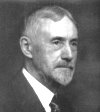
clut'ei: named for Willard Nelson Clute (1869-1950), an American author, naturalist and botanist. He was born in
 |
|
Painted Post, Steuben County, New York, and was interested in taxonomy from an early age. He moved to New York City in the late 1800s and was assistant curator of the botany department of Columbia University and a member of the staff of the New York Botanical Garden. He co-founded the American Fern Society in 1893 and was editor of The Linnean Fern Bulletin (later renamed The American Fern Journal) and The American Botanist. In 1902 he moved to Illinois and became a high school teacher of botany and agronomy, authoring numerous textbooks. In 1928 he joined |
the teaching staff of Butler University in Indianapolis and was appointed director of their new botanical garden. A website of the Cultural Landscape Foundation says: “Having gained recognition for his curation of Butler University’s gardens, in 1938 Clute was chosen to transform the estate of John Hampden Holliday into a public park. He designed the 94-acre site to showcase a wide variety of rare and exotic plants, including 43 cacti species, a vast variety of maples (one of the largest collections in a public park at the time), and a series of woody perennials arranged by phylogenic classification. Though Clute never obtained a formal academic degree, he continued to dedicate himself to botanical research throughout his life, authoring nineteen books before his passing in 1950 at the age of 81.” He collected ferns, lycopods, and nonvascular plants in North America, Jamaica and New Zealand. He married Ida Martin who illustrated some of his books.
-
Cneorid'ium: a diminutive of Cneorum,
spurge olive, from the Greek kneoron, for some shrub resembling
the olive. The genus Cneoridium was published by Joseph Dalton Hooker in 1862.
-
Cni'cus: a Latin name of the safflower, from
Greek knecos, "safflower, thistle, yellow," which in turn may be derived from chnizein or knizein, meaning "to injure or torment;" referring to the plant's thorns causing extreme prickliness. The genus Cnicus was published in 1753 by Carl Linnaeus.
-
coachel'lae: presumably named for the Coachella Valley where it
grows.
-
cobren'sis: uncertain derivation, but the website called the Cactus Art Nursery says: "The species name cobrensis comes from a copper mine near the type locality and from the copper-red colour of the central spines of many plants (cobre = Spanish for copper). There are quite a few taxa which have this as a specific epithet and the derivations differ. A Mammillaria species in Mexico has Barranca del Cobre, Chihuahua, Mexico, for its distribution. A South American fish named Dolicancistrus cobrensis takes its name from the Rio Cobre, a river in Columbia and Venezuela. Another non-botanical usage of cobrensis refers to the El Cobre Canyon Formation in the Cañon del Cobre of Rio Arriba County, New Mexico. But finally a fairly certain explanation from Flora Neomexicana: A Lexicon of New Mexico Plant Names: "cobrense, cobrensis, from the copper mines at Santa Rita del Cobre, near Silver City, New Mexico, Astragalus cobrensis, Lithospermum cobrense, Polygonatum cobrense. But wait a minute, the taxon in California is Boechera (Arabis) cobrensis for which SEINet gives state localities as California, Idaho, Nevada, Oregon and Wyoming, but not New Mexico. So that derivation appears to be out too. And the first derivation given above is for a genus (Notocactus) that isn't even in California. IPNI lists at least 14 taxa with cobrensis as the specific epithet and three others with cobrense. This demonstrates that there can be different derivations and meanings for an epithet when appled to different species.
-
coccin'ea/coccin'eus: scarlet or bright, deep
pink, from the Latin word coccineus which means "scarlet" or "crimson," from the Latin coccum derived from Ancient Greek κόκκος, and usually translated as berry, but referring specifically to the gall of the Kermes oak ( Quercus coccifera), used in the past to create a scarlet dye.
-
cochinchinen'sis: I presume this name means of or from Cochinchina,
which was the southern part of Vietnam.
-
Cochlea'ria: from the Greek kochlarion and the Latin cochlear,
meaning "a spoon," from the shape of the basal leaves. The genus Cochlearia was published by Carl Linnaeus in 1753.
-
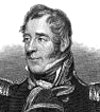
Cochran'ea: named for Admiral Thomas Cochrane (1775-1860), 10th Earl of Dundonald, British flag officer of the
 |
|
Royal Navy, mercenary and radical politician. He was born at Annsfield, near Hamilton, South Lanarkshire, Scotland, one of seven brothers, and spent much of his early life in Culross, Fife, where his family had an estate. He joined the Navy as a Midshipman in 1793 at the outbreak of the French Revolutionary Wars. His career was a succession of promotions and advancements, assignments to numerous ships and involvements in numerous actions nearly all of which were successful, innovations in military technology, controversies arising out of his seeming inability to |
get along with superior officers, subordinates, employers, and colleagues in several navies and Parliament, a duel with a French officer, an internation inceident arising out of his boarding of the American merchant ship Chatham at a time when there was no state of war between the two countries, expulsion from the Parliament after the Great Stock Exchange Fraud of 1814 followed by re-election, a disinheritance by his uncle after he eloped and married in a civil ceremony, and participation with the Chilean, Brazilian and Greek navies. The following is quoted from Wikipedia: “Through the influence of his uncle, he was listed as a member of the crew on the books of four Royal Navy ships starting when he was five years old. This common (though unlawful) practice called false muster was a means of acquiring the years of service required for promotion, if and when he joined the Navy. His father secured him a commission in the British Army at an early age, but Cochrane preferred the Navy. He was a daring and successful captain of the Napoleonic Wars, leading Napoleon to nickname him Le Loup des Mers ('The Sea Wolf'). He was dismissed from the Royal Navy in 1814 following a controversial conviction for fraud on the Stock Exchange. He helped organise and lead the rebel navies of Chile and Brazil during their respective successful wars of independence through the 1820s. While in charge of the Chilean Navy, Cochrane also contributed to Peruvian Independence through the Freedom Expedition of Perú. He was also asked to help the Greek Navy but was prevented by events from having much impact. In 1832, he was pardoned by the Crown and reinstated in the Royal Navy with the rank of Rear Admiral of the Blue. After several more promotions, he died in 1860 with the rank of Admiral of the Red, and the honorary title of Rear-Admiral of the United Kingdom. His life and exploits inspired the naval fiction of 19th- and 20th-century novelists, particularly the figures of C. S. Forester's Horatio Hornblower and Patrick O'Brian's protagonist Jack Aubrey. Thomas Cochrane was appointed as governor of Newfoundland and later Vice-Admiral of the United Kingdom.” He died after a second painful surgery for kidney stones. Despite the many controversies that swirled around him in life, he was interred in Westminster Abbey in the floor of the nave directly before the choir. The genus Cochranea was published by John Miers in 1868.
-
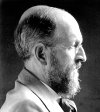
Cockerel'lia/cockerel'lii: named for internationally known zoologist, entomologist and naturalist Theodore Dru
 |
|
Alsion Cockerell (1866-1948). He was born in Norwood, England. His father died in 1878 and the family moved to Margate. Cockerell attended several schools including the Middlesex Hospital School but never attained a degree. He was interested in natural history from an early age stimulated by one of his teachers and frequent visits to his grandfather’s farm. Although tuberculosis interrupted his studies, he was publishing papers by the age of 20 and for therapeutic reasons moved in 1887 to the mountain area of Westcliffe, Colorado, where he worked as a |
biologist. He helped to establish the Colorado Biological Association the following year as his health improved. He returned in 1890 to England and worked for the British Museum of Natural History where he met Alfred Russel Wallace. He married his first wife in 1891 and from 1891 to 1893 he was curator of the public museum in Kingston, Jamaica. While in Jamaica he and his wife frequently went on collecting expeditions together and assembled a large private library of natural history films, which they showed to schoolchildren and public audiences to promote the cause of environmental conservation. His first son was born and died there in Jamaica. In 1892 he had established his reputation as an entomologist and was elected a member of the Entomological Society of Washington. There seems to be some disagreement regarding the death of his wife. The Islapedia website says that his second son was born in New Mexico and his wife died five days later, but an article by Sue Ann Gardner in Faculty Publications of the University of Nebraska – Lincoln states that it was after the death of his wife and the resurfacing of his health problems that he moved to moved to New Mexico. In any event, by 1893 he was in New Mexico and was appointed as professor of entomology and zoology at New Mexico Agricultural College at Las Cruces. In 1900 he married his second wife, a high school biology teacher, and in 1901 his second son, Martin, died. From 1901 to 1903 he taught biology at New Mexico Normal University at Las Vegas, and then was appointed curator of the museum at Colorado College, Colorado Springs. In 1904 he became lecturer on entomology at the University of Colorado, in 1906 professor of systematic zoology, and in 1912 professor of zoology, which post he held until his retirement. He conducted much research especially on fossils and fish scales which were primarily taxonomic. In 1923 he was elected president of the Entomological Society of America. Cockerell was best known for his work on North American bees. He worked on specimens brought back by the Los Angeles County Museum Biological Survey, and published his many findings. Cockerell’s special interest in bees led him to describe and name specimens from the United States, the West Indies, Honduras, the Philippines, Africa, and Asia. He published at least 5,500 names for species and varieties of bees and almost 150 names for genera and subgenera. It has been estimated that this represented over a quarter of all known species of bees during his lifetime. He made several trips to the California Channel Islands in the mid 1930s, including San Miguel, Santa Catalina and San Nicolas islands. He also published a staggering number of papers, well over 1,200, on slugs, moths, fish scales, fungi, roses and other flowers, fossils, mollusks, and a wide variety of other plants and animals, insect coloration, plant and animal distribution, and evolution. He died in San Diego. The genus Cockerellia was published in 1985 by Áskell Löve and Doris Benta Maria Löve.
-
coerul'ea: blue, from the Latin coeruleus, "dark blue or sky blue."
-
coerules'cens: bluish, becoming blue.
-
cochisen'sis: from the type locality in Cochise County, Arizona.
-
cogna'ta/cogna'tus: closely related to, from Latin cognatus, “related by blood.”
-
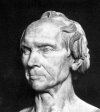
Cogswel'lia: named for Joseph Green Cogswell (1786-1871), a scholar, educator, librarian, editor, bibliographer, and
 |
|
author. He was born in Ipswich, Massachusetts, and after a grammar school education attended Phillips Exeter Academy, graduating from Harvard in 1806 and studying law from 1807 to 1809. He practiced law for several years in Belfast, Maine. He married in 1812 and his wife died the following year. Her death and a dislike for the profession led him to give up the practice of law, and he served as a tutor at Harvard from 1813 to 1815. He was elected as a fellow of the American Academy of Arts and Sciences in 1816. That same year he went to Europe and spent several years, |
first at the University of Göttingen and then in the principal capitals, studying principles of instruction, educational problems and bibliography. He returned to the US in 1820 and was appointed professor of geology and mineralogy, and college librarian at Harvard. In 1823 he resigned from Harvard and along with George Bancroft, the historian, established Round Hill School at Northampton, Massachusetts. Bancroft departed in 1830 and although Cogswell tried to continued alone, it was too much for him and he closed its doors in 1834, taking instead charge of a similar institution in Raleigh, North Carolina, but ill health and incompatibility with Southern culture led to his resignation after only two years at Raleigh. He accepted the position as editor of the New York Review, one of the leading American critical journals of the time, and remained as editor until its suspension in 1842. He became a friend and companion of John Jacob Astor, and urged on him the idea for the creation of a library, along with Irving and others was appointed a trustee for the new library. Washington Irving was appointed minister to Spain and asked Cogswell to accompany him, but Astor made him superintendent of the library. When Astor died in 1848, Cogswell traveled to Europe to purchase books, and made many acquaintances with people such as Johann von Goethe, Alexander von Humboldt, Pierre-Jean de Béranger, Lord Byron, and Walter Scott. He made many contributions to the library and retired in 1861, returning to Massachusetts and settling in Cambridge, where he died in 1871 at the age of 85. The genus Cogswellia was published by Curt Polycarp Joachim Sprengel in 1820.
-
Coin'cya: named for Auguste Henri Cornut de la Fontaine de Coincy (1837-1903), a French botanist who specialized in the Spanish flora and collected specimens from Morocco. He was the author of Ecloga plantarum hispanicarum, a five-part series on Spanish flora published from 1893 to 1901, and several papers involving the botanical genus Echium. He was particularly interested in the Nature Park of the Montgó Massif which he visited between 1889 and 1890. He was a member of the Botanical Society of France. An award issued by the Société botanique de France for excellence in taxonomic research was established in his name, along with the genus Coincya published in 1891 by French botanist Georges Rouy.
-
Co'ix: from the classical Greek name used by Theophrastus for, according to some sources, a species
of Egyptian or Ethiopian palm, and according to others, a species of reed-like plants. A Singapore National Parks Board website says that Coix is the "Latin version of a Greek name for the Egyptian [doum] palm Hyphaene thebaica." Coix is a genus in the Poaceae and best-known species is Coix lacryma-jobi, widely called Job's tears." The genus Coix was published by Carl Linnaeus in 1753.
-
-cola/colus: a suffix signifying "an inhabitant of or dweller
in," from Latin incola, "an inhabitant," (e.g.
deserticola, "dwelling in the desert," monticola, "dwelling
in the mountains," saxicola, "growing among rocks,"
serpentinicola, "living on serpentine soils," arenicola, "dwelling in or on sand.")
-
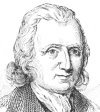
Colden'ia: named for Cadwallader Colden (1688-1776), an Irish-born physician, natural scientist, and correspondent
 |
|
of Linnaeus. His parents were Scottish and he attended the Royal High School in Edinburgh and Edinburgh University to become a minister. He continued his studies in medicine, anatomy, physics, chemistry, and botany in London then went to Philadelphia to begin a practice in medicine. In 1717, he was invited by Governor Robert Hunter to relocate to New York, and in 1720 he became a surveyor general of New York. His political career began in 1720 when he joined the provincial council, then served several terms as lieutenant-governor and acting governor for the Province of |
New York between 1760 and 1771. He was the first colonial representative to the Iroquois Confederacy and was the author of The History of the Five Indian Nations (1727). He was involved in one of the early protest demonstrations against the Stamp Act and his coach was seized and burned. Colden retired from public life as America entered the Revolutionary period. He wrote and published essays about yellow fever highlighting the relationship of living conditions and high rates of disease which prompted improvements in public health. Colden wrote a taxonomy of the flora near his Orange County, New York home, which he rendered in Latin and sent to the Swedish patriarch of plant science and Latin nomenclature, Carl Linnaeus, who duly published the work in 1753 and named the genus Coldenia in the family Boraginaceae, a genus which is now placed in Tiquilia.
-
coleman'ii: named for Ronald Albert Coleman (1946-2019), a botanical author and photographer, noted orchid ex-
 |
|
pert, author of The Wild Orchids of California and The Wild Orchids of Arizona and New Mexico, and visiting scholar at the University of Arizona. An obituary gives this: "Ronald Albert Coleman, born on June 29, 1946 in New Orleans, Louisiana to Cecil and Bernice Coleman, passed away on Thursday, July 25, 2019 at the age of 73 in Tucson, Arizona. He is survived by his beloved wife of 51 years, Jan; his sons, Joel (Shelly) and Troy, his four grandchildren Gabriel, Clara, Graham, Owen and six of his seven siblings as well as many nieces and nephews. Ron, a Christian, was |
baptized at age 11. As an adult he served as a teacher, deacon and Elder of his church.Ron, an engineer, held a BS in physics, two masters in engineering and was proud of his technological contributions to the freedom and defense of his country. A lifelong botanist, he authored books on the native orchids of California, Arizona and New Mexico. His hobbies included poetry, the music of Frank Sinatra, the study of history, and travel."
-
Coleo'gyne: sheathed fruit, from the Greek koleos, "sheath," and gune, "ovary," according to FNA "alluding to thin staminal tubelike sheath surrounding ovary and style." The genus Coleogyne was published by John Torrey in 1851.
-
colliga'ta: from the Latin colligatus, "fastened together," derived from the Latin verb colligo, "to bind together," which refers to the connected sporoblasts and spores.
-
colli'na/colli'num/colli'nus: pertaining to hills, hill-loving. The name almost certainly derives from Collina, goddess of the hills. One source, the Obscure Goddess Online Directory, refers to the name Collatina, Goddess of Hills and Downs, and says "A variant of Her name, Collina, shares its name with one of the four earliest regions of Rome. The two major hills which formed the Collina region, the Viminal and the Quirinal, were the only two of the seven major hills which were commonly designated collis ('hill', 'mound', or 'ridge') rather than mons ('mountain', 'huge rock'), though the Capitoline, the smallest of the seven, could occasionally be called collis."
-
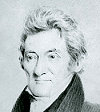
Collin'sia: named for Zaccheus Collins (1764-1831), a minerologist, botanist, merchant, plant collector and herbar-
 |
|
ium owner from Philadelphia, vice-president of the Philadelphia Academy of Natural Sciences, and an authority on the lower plants. He was a correspondent of John Torrey, Thomas Nuttall, George Engleman, Alexander von Humboldt, Eli Ives, Jacob Bigelow, Henry Muhlenberg, and Constantine Samuel Rafinesque-Schmaltz, and was frequently consulted by other botanists although he appears to have never published anything himself. He was also director of the Library Company of Philadelphia founded by Benjamin Franklin. He was born into a Quaker family in Lynn, MA, |
and engaged in business in Marblehead before going to Philadelphia. He was an avid collector and his herbarium contained a nearly complete collection of the plants from the vicinity of Pennsylvania and New Jersey. He also received specimens from correspondents particularly from South Carolina and Georgia, but also from Arkansas, Missouri, and the Mississippi River area and westward. He was especially interested in cryptogamic plants (organisms that do not produce seeds and include algae, fungi, mosses, and ferns). He died after spending more than six months incapacitated by paralysis. Thomas Nutall honored him by naming Collinsia for him in 1817 which was described “to have been a sort of lifetime achievement award.” (Photo credit: American Philosophical Society.)
-
Collo'mia: from the Greek kolla, "glue," referring to the sticky secretion around the seeds. The genus Collomia was published in 1818 by Thomas Nuttall.
-
colocyn'this: from the Greek kolokunthis, "round gourd."
-
colo'na: Wiktionary says "Feminine form of colonus, “farmer; colonist,” in turn from colo, “to till, cultivate, worship,” of unknown application. But Gledhill says colona/colonus means "forming a mound, humped." The taxon in the California flora with this epithet is Echinochloa colona, published originally by Johann Heinrich Friedrich Link in 1833, but at present I can't relate either of these meanings to the plant in question.
-
coloraden'sis/coloradoen'sis: of or from
Colorado.
-
Colubri'na: snake-like, shaped like a snake, from the Latin coluber, "snake," according to FNA perhaps alluding to twisting of deep furrows on stems of some species. The genus Colubrina was published by Louis Claude Marie Richard in 1826.
-
columbar'iae: I have often wondered about the specific epithet columbariae, which we know from Salvia columbariae or chia, It is said to possibly derive from the Latin columbarius meaning "of or pertaining to doves or appearing dove-like." I can’t imagine what there is dove-like about chia. It's interesting that despite the fact that there are at least eight past or present taxa which use 'columbaria' as a species name, there is so little information about what it means. The 2013 work by Ernest Small entitled North American Cornucopia: Top 100 Indigenous Food Plants states that: “When he coined the scientific name Salvia columbariae for golden chia, English botanist George Bentham explained his unusual choice of name with the Latin phrase “habitus scere Scahiosa columbariae” (appearance like Scahiosa columbaria). Scahiosa columbaria L. is a Mediterranean species with a thin cluster of basal divided leaves and a head-like inflorescence, all reminiscent of golden chia.” One has to wonder whether his reference was instead to Scabiosa columbaria since no genus Scahiosa seems to exist. It seems strange because Scabiosa columbaria does not look anything like chia to me. But who knows what was in Bentham’s mind? If one wonders about what relationship there is between a columbarium and doves, the website Britannica provides the answer that a columbarium is a “sepulchral building containing many small niches for cinerary urns. The term is derived from the Latin columba, 'dove' or 'pigeon,' and it originally referred to a pigeon house or dovecote.” The word dovecote has been described as a compartmental structure, often raised on a pole, for housing domesticated pigeons or doves. But the absence of an apparent relationship between chia and doves causes me to doubt this derivation. On the other hand, the use of the name columbaria in other taxa causes me to doubt the Bentham derivation. However the same name can have different derivations for different species. I am left wondering. This well illustrates the difficulty sometimes in determining the etymology of a name. One also might question the ‘ae’ ending in columbariae since it is usually applied to names that honor women like eastwoodiae (for Alice Eastwood) or davisiae (for Nancy Jane Davis), but it is also used as an ending for names that end in ‘a’ like catalina (catalinae), cima (cimae), sierra (sierrae), greata (greatae) and possibly columbaria (columbariae). And just to mention some completely different derivations, Sernec (the Southeast Regional Network of Expertise and Collections) says "columbariae is a reference to Columbian, or of western North America," a website entitled Natural History of Orange County proposes that the species name comes from columbaria, a plant in the old world, genus of Scabiosa, and PlantZAfrica says "The specific epithet columbaria, is from the Latin meaning ‘a dove,’ referring to some flower colour or forms." So I'm not the only one who is confused.
-
colum'biae: of or from the Columbia River region, specifically along
the Columbia River in the Columbia Basin east of the Cascade Mountains
and within the Columbia Gorge west of the Cascade Mountain Crest.
-
columbia'na/columbia'num/columbia'nus: of western North America.
-
columnar'is: columnar, in the shape of a
column.
-
columnif'era: bearing columns, in reference to the tall cylindrical
flower heads.
-
colusan'a: of or from Colusa County, California.
-
Colu'tea: from the Greek name kolutea which was applied to
these shrubs (bladder senna) and was a name used by Theophrastus. The genus Colutea was published by Carl Linnaeus in 1753.
-
colwel'liae: named for Alison E. L. Colwell (1963- ). Her brief bio on Calphotos which may or may not be current includes this: "Alison Colwell is a botanist with the USGS Yosemite Field Station in El Portal, CA. She became interested in parasitic plants while taking an undergraduate field botany course at UC Berkeley. For her graduate degree, she studied genome evolution in parasitic plants at Washington University in Saint Louis. She is currently working on Orobanche for the Flora of North America project and The Jepson Manual." Info from Linked In: She received a BA in botany/plant biology from Cornell University in 1985, and a PhD in Ecology, Evolution, Systematics and Population Biology from Washington University in St. Louis. Positions she has held include microbiologist with the US Geological Survey, botanist with the National Park Service, assistant rare plant botanist with the California Native Plant Society, consulting biologist with Alison Colwell Biological Consulting, and currently curator of the Center for Plant Dversity at the Univerity of California, Davis.
-
-coma: suffix meaning "hair" or "a tuft of hair," as in the names Anisocoma, argyrocoma, Isocoma, Pyrrocoma, leptocoma.
-
Coman'dra: from the Greek kome, "hair," and ander,
"man," referring to the hairy attachment of the stamens.
The genus Comandra was published by Thomas Nuttall in 1818.
-
Comarostaph'ylis: from the Greek komaros,
a name for Arbutus unedo, the strawberry tree, and staphule,
"a cluster of grapes" because of the similarity of this
shrub to Arbutus and its clustered fruit. The genus Comarostaphylis was published by Joseph Gerhard Zuccarini in 1837.
-
Comasto'ma: from the Greek kome for "hair" and stoma for "mouth," from fringes on corolla lobes. The genus Comastoma was published by Hideo Toyokuni in 1961.
-
coma'ta: furnished with a tuft, sometimes of hair.
-
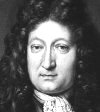
Commeli'na: named for the two Dutch botanists Jan Commelin. (1629-1692) and his nephew Caspar Commelin
 |
|
(1667-1731), known to Charles Plumier, a French Franciscan monk, botanist and traveler, and Carl Linnaeus who named the genus Commelina. Jan Commelin was the son of book publisher and historian Isaac Commelin and Cornelia Bouwer. In 1641 the family moved to Amsterdam. Jan Commelin (or Johannes Commelijn) was a doctor, commercial plant trader and the director of botany at the Hortus Medicus (Medical Garden) in Amsterdam, who worked with many tropical plants that had been collected in Asia and sent back to Holland. He was the author of the Horti Medici Amstelodamensis Rariorum, published in Amsterdam in 1697. As an independent merchant, Jan ran a wholesale business for medicinal plants which he delivered to hospitals and pharmacies in Amsterdam and elsewhere. He was elected to the city council in 1672. He was also the author of Nederlantze Hesperides (1676) which dealt with the cultivation of citrus fruits, Catalogus plantarum indigenarum Hollandiae (1683) which was the first flora of the Netherlands, and for fourteen years he edited eleven of the twelve volumes of the Hortus Indicus Malabaricus by |
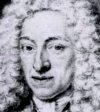 |
Hendrik Adriaan van Rheede tot Draakenstein. His major work was the Catalogus plantorum horti medici Amstelodamensis rariorum which was partially finished and published posthumously, the remainder being completed by his nephew Caspar. The Municipal Council of Amsterdam commissioned alderman Jan Commelin and burgomaster Johan Huydecoper van Maarsseveen to build and direct a botanical garden for medicinal plants originally called the Hortus Medicus but eventually the Hortus Botanicus. Caspar Commelin was also a botanist and Jan’s nephew who after Jan’s death continued his work and completed his books. He graduated with a degree in medicine at Leiden and settled in Amsterdam. In 1696 Caspar was appointed to the post of botanist at the Hortus and eventually succeeded his uncle Jan. Between Jan and Caspar, they described hundreds of species from Africa, the Americas, and Asia. In 1703, he published a work on the systematics of rare exotic plants, and in 1706 was appointed as professor at the Athenaeum Illustre school in Amsterdam. The Commelins are considered among the most important of the early botanists. The story is that Linnaeus who established this genus decided to commemorate the Commelins because the dayflower has two large petals (for Jan and Caspar) and a third small petal (for another Commelin who died young before he could accomplish anything in botany), but this may well be an apocryphal though convenient explanation. The genus Commelina was published by Carl Linnaeus in 1753.
-
com'munis: in Latin "common, general" and means growing in communities, common, public, shared by all or many.
-
commuta'ta: changeable, changed or changing; used for a species that
is very similar to one already known.
-
como'sa/como'sum: tufted, furnished with a tuft
of some kind, from the Latin comosus, "having long or abundant hairs" or "with a tuft," "having many leaves" or "being leafy."
-
compac'ta/compac'tum/compac'tus: growing in
compact form, from the Latin compactus, "joined together."
-
complana'tum: flattened, levelled, from the Latin complanatus, "flattened."
-
comple'xa: encircled, embraced, complex, from Latin complexus, past participle of complector, “I entwine, encircle, compass, infold,” from com-, “together” and plectere, “to weave, braid."
-
compos'itus: composite, having many parts, from Latin compositus, past participle of compono, “put together.”
-
compres'sa: from Latin compressus, "compressed, flattened, restrained, repressed."
-
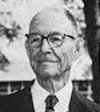
Conard'ia/conardia'na: named for Henry Shoemaker Conard (1874-1971), a botanist, emeritus professor of botany at
 |
|
Grinnell College, and leading authority on bryophytes and water lilies. He was born in Philadelphia. His father was the director of a boarding school and his uncle was a horticulturist. Henry attended Friends' Select School in Philadelphia from 1881 to 1888 and then Westtown Friends' Boarding School in Westtown, Pennsylvania in 1889, graduating as valedictorian in 1892. He next entered Haverford College where he was awarded a BSc degree in 1894 and an MA in 1895. He first taught science in Westtown, then he entered the University of Pennsylvania as a Harrison fellow in biology |
in 1899, completing his PhD in 1901, followed by teaching botany at the university from 1901 to 1905. Then from 1905 to 1906, he was a Johnston Scholar at Johns Hopkins University. In 1906 he took up a professorship in botany at Grinnell College in Grinnell, Iowa, a position he held until 1955. While there he was chair of the botany department and chairman of the faculty. He was granted emeritus status in 1944. He also curated the bryophyte collections at the University of Iowa and ran the Moss Clinic at the Iowa Lakeside Laboratory. His first wife died in 1946 and he remarried in 1950, moving to Florida in 1955. He was the author of How To Know Mosses and Liverworts, The Plants of Iowa, and over 100 articles and monographs. He was president of the American Bryological Society, the Iowa Academy of Science and the Sullivant Moss Society. In addition to his collections in Iowa, he also gathered specimens on trips to the Olympic Peninsula and in Yellowstone National Park. The genus Conardia was published in 1876 by Harold Ernest Robinson. (Photo credit: Proceedings of the Iowa Academy of Science)
-
conchulif'erus: from the Greek konche, "a shell or shellfish," the suffix - ule, which is used as a diminutive, and the suffix
- iferus, from the Latin fero, "to bear," so
that this basically means "bearing or having a small shell or some shell-like structure," referring to the distinctive clam-like fruits, which are cupped with
a deeply-lobed margin. This species is sometimes called cupped fringe-pod
and is basically restricted to Santa Cruz Island and a few locations in the Santa Monicas.
-
concinno'ides: normally an epithet like this would mean resembling genus Concinna or Concinnum, but there are no such genera listed anywhere that I can find, although both are used as specific epithets for many taxa. Both epithets are derived from the Latin concinnus meaning "elegant, pretty, pleasing, well-proportioned or neat." The -oides ending comes from the Greek oeides, "like something else," so maybe this was intended to mean like something neat or elegant.
-
concin'num: neat, elegant, well-made.
-
con'color: of the same color throughout, as in the leaf
surfaces.
-
Conda'lia: named for Antonio Condal (?-?) (name sometimes given as Antoni), a Spanish physician
(or medical student) and botanist born in Barcelona who explored in South America and was
a member of Pehr Loefling's expedition of 1754-1756 up the Orinoco River. Not much is known about him, in particular his dates of birth and death. It is commonly reported by such sites as Wikipedia, FNA, SEINet, World Flora Online, Vacular Plants of Arizona, Plant Genera Named After People, and even Umberto Quattrocchi, that they were 1745-1804. It's incredible to me that all these sources ignored the fact that if he was born in 1745, he would have been only 9 years old when he joined Loefling's expedition. Currently there is no available information about his true date of birth, although he may well have died in 1804. The genus Condalia was published in 1799 by Spanish taxonomist Antonio José Cavanilles who attributed it to Antonio Condal without giving any dates.
-
Conde'a: David Hollombe provided the following: “The name goes back to ' Condaea frutescens, satureia foliis; flore albo,' a name given by Jean-Baptiste René Poupée-Desportes in an unpublished manuscript. Jussieu adapted this as ' Satureia condaea' not published by Jussieu, but both cited as a synonyms by Lamarck. If Poupée-Desportes explained the name in his manuscript, I don't know that anyone has quoted his etymology in any published work.” However Tropicos lists the name as having been authored by French botanist Michel Adanson in 1763, and the Jepson Manual’s etymology says: “Name used by Adanson without explanation.” David further stated that: “Poupée-Desportes died in 1748, before the 1753 foundation of the binomial system, so he is not credited as the author, but he was the first to use a form of the name for the type species of the genus.” The name Condea emoryi in the Lamiaceae was published by Raymond Mervyn Harley and J.F.B. Pastore in 2012 after the taxa was initially published as Hyptis emoryi by John Torrey. Other species of Condea are resident in Mexico. It has also been suggested that the name may refer to Louis II, Prince de Condé (1621-1686), aka Louis de Bourbon, French general, but I have not found any independent confirmation of that. None of the usual sources like Gledhill, Stearn, Jaeger, Quattrocchi, or FNA offer any clues. The genus Condea was published by Michel Adanson in 1763.
-
condensa'ta/condensa'tus:
crowded together, forming dense mats.
-
condit'ii: named for Ira Judson Condit (1883-1981), an American horticulturist. An article by David Keil in Phytoneuron 2018-79: 1–6 about Erigeron condittii says: "During his time at Cal Poly, he explored San Luis Obispo Co. and collected plant specimens, often accompanied by Judge E.P. Unangst, and visited and collected in other parts of the state. He founded a short-lived California Polytechnic School Herbarium of about 4,000 specimens, which was later incorporated into the University of California Herbarium. Many of his collections at UC bear labels from the Cal Poly Herbarium [the type of Erigeron conditii is labeled as having come from his private herbarium]. Condit later taught horticulture at the University of California, where he earned a masters degree in 1928; he was awarded a PhD from Stanford University in 1932. Dr. Condit researched and published on a number of subtropical fruit crops in California.” He was born in Jersey, Ohio, graduating from Granville High School in 1900 and going on to Ohio State University and earning a BS degree in 1905. After graduating from Ohio State he worked for the Division of Entomology at the US Department of Agriculture, then taught at Cal Polytechnic. He married in 1912 and moved to Berkeley where he joined the College of Agriculture. He studied tropical fruits and published research reports on the cultivation of the avocado, carob, oriental persimmon and loquat. He was at least partly responsible for establishing the economically important California avocado industry. Condit is best known today for his work on the large genus Ficus, which includes the edible fig. Wikipedia says: “After World War I, Condit took a job as horticulturist for the planned J.C. Forkner Fig Gardens, a combination fig ranch and real-estate development project in Fresno, California, that collapsed in the Great Depression. He later served for four years as horticulturist to the California Peach and Fig Growers Association. In 1923, the growers association sent him to Europe to learn about the fig industries of Algeria, Italy, Greece, Turkey, France, Spain and Portugal. In 1935, Condit joined the University of California Citrus Experiment Station in Riverside as associate professor and associate subtropical horticulturist. He remained there for many years studying the morphology of the fig flower, fig nomenclature and climatic adaptation, and fig breeding, and he wrote cytological studies of over thirty Ficus species. Among those he studied were Ficus carica (the edible fig), F. benjamina (weeping fig) and F. elastica (rubber plant). In 1947 he published The Fig, his comprehensive monograph on the subject. In 1934-35, Condit was visiting professor at Lingnan University in Canton, China, and also visited the Philippines, Formosa, Japan, and Hawaii. He served as the editor of the Subtropical and Tropical Pomology section of Biological Abstracts, and he was a member of the American Association for the Advancement of Science, the American Society of Horticultural Science, and the California Botanical Society. Condit retired from UC Riverside in 1951 and died in Santa Barbara, California in 1981 at the age of 97. A collection of his papers is held by the Riverside Public Library.”
-
confertiflor'a/confertiflor'um:
with crowded flowers, from the Latin conferta, "crammed." CasaBio says "From the Latin con/ cum, "together," and fertus, "brought," and flora, "flowers," meaning flowers pressed close together."
-
confertifo'lia:
with crowded leaves.
-
confer'tus: dense, clustered, crowded together. The species Lupinus lepidus var. confertus is sometimes called crowded lupine.
-
confin'is: in Latin confinis may mean "related, adjacent, adjoining, bordering on." It appears to derive from Latin con, "with" and finis, "end, limit or boundary." The name Antennaria confinis was originally published in 1899 by Edward L. Greene who did not explain his choice of epithet. It was one of the 5,620 names he published. In 1989 Randall J. Bayer moved the epithet to subspecies rank as Antennaria rosea ssp. confinis.
-
confu'sa/confu'sus: uncertain, might be taken
for another species.
-
Congdon'ia/cong'donii/congdon'is: named for Joseph Whipple Congdon (1834-1919), an American lawyer by trade and botanist who moved to California from Rhode Island in 1880. He was born in Pomfret, Connecticut, and graduated Brown University with the class of 1855, was admitted to the bar in Providence, Rhode Island in 1860, and served a term in the Rhode Island legislature for 1878–1879. He lived in Mariposa from 1882 until 1905 and contributed significantly to the botanical exploration of Yosemite. He discovered over 30 new species of plants, many of which are rare and endemic to the Yosemite region. In addition to collecting in California, he was well known in Europe for his work, and a collection of plants he made there and in the East was presented to Stanford University. He was the first botanist to collect the rare Yosemite bog-orchid ( Platanthera yosemitensis) in 1895, which was a species that was not recognized as distinct until 2007. At the time of his death he had a herbarium of about 10,000 specimens. The genus Congdonia was published by Willis Linn Jepson in 1925.
-
conges'ta/conges'tum/conges'tus:
arranged very closely together, very crowded, from the Latin congestus, "congested or crowded together."
-
conglomera'tus: crowded together, conglomerate. Latin meanings include "gathered into a ball or rounded mass, to roll together, collect, heap up, or concentrate." The name was originally published in the 1700s by Swedish physician and botanist Johan Andreas Murray.
-
Conico'sia: from the Greek konicos, which means "cone-shaped
or conical." The genus Conicosia was published by Nicholas Edward Brown in 1925.
-
coniflor'a: with flowers like cones. Jepson describes the flowers of Silene coniflora as ovate-conic.
-
Conioselin'um: a name derived by combining the generic names Conium and Selinum. The genus Conioselinum was published in 1814 by Friedrich Ernst Ludwig von Fischer.
-
Co'nium: derived from the ancient Greek name coneion for hemlock. The genus Conium was published by Carl Linnaeus in 1753.
-
con'jugens: joined, united, present participle of conjugo, "to join, couple."
-
conjugia'lis: joined in pairs, wedded, from the Latin conjugatus,
"united."
-
conna'ta/conna'tus: united,
having opposite leaves joined together at their base, from Latin connatus, "born together, born at the same time."
-
conoi'dea: cone-like.
-
Conrin'gia: named for Hermann Conring (1606-1681), a German polymath, journalist, jurist, antiquary, professor and
 |
|
noted intellectual at the University of Helmstedt, Germany,
whose
primary disciplines were physics and medicine, who was one of the
first of the early German political scientists who used the term "statistics" (although they meant it in the sense of the study of states), who
lectured on the political constitutions of states and was considered
the founding father of the history of German law, and whose historical
critique of Roman law helped emancipate Germany from its medieval
past. He was also physician to Queen Christina of Sweden. Conring was the author of New Discourse on the |
Roman-German
Emperor. The genus Conringia was published in 1759 by Philipp Conrad Fabricius based on an earlier description by Lorenz Heister.
-
consanguin'ea: related, Latin for "with blood, of the same blood."
-
consim'ilis: just alike, from Latin consimilis, entirely similar.
-
Consol'ida/consol'idus: solid, stable, from the Latin consolido,
"to make firm." The genus Consolida was published in 1722 by Samuel Frederick Gray.
-
conspe'rsus: scattered, from the Latin conspersus, "scattered, strewn."
-
conspic'uum: conspicuous, from Latin conspicuus, “visible, striking,” from conspicere, “to notice,” from con-, “with, together,” and specere, “to look at.”
-
Constancea: see following entry.
-
Constanc'ea/constan'cei: named for Lincoln Constance (1909-2001), a patriarch of botany
at Berkeley. The following
 |
|
is quoted from a UC Berkeley press release
6/15/2001: "Lincoln Constance, a much respected botanist and
administrative leader at the University of California, Berkeley, died
of respiratory failure after a brief illness on Monday, June 11, at
Alta Bates Medical Center in Berkeley. He was 92. Constance was professor
emeritus of botany and an expert on plants of the parsley family -
the Umbelliferae, an economically important group that includes carrots,
parsley, fennel and poison hemlock. During his six-decade career,
he served as director of UC Berkeley's University Herbar- |
ium and as president of the California Academy of Sciences. Just as important
were his years as an administrator at UC Berkeley. He held the post
of dean of the College of Letters & Science - UC Berkeley's largest
college - from 1955 to 1962, and served as vice-chancellor for academic
affairs from 1962 to 1965. His tenure as vice-chancellor coincided
with the turbulent free speech years. He served as acting chancellor
at various times, including a brief period before Roger Heyns became
chancellor in 1965. He retired in 1976. 'Lincoln was the patriarch
of botany at UC Berkeley,' said Brent Mishler, professor of integrative
biology and current director of the University and Jepson Herbaria.
'He was immensely influential in shaping the modern history of the
university and of systematic botany on a worldwide level. In addition
to his numerous professional accomplishments, Lincoln was a true gentleman
and an exceptionally generous colleague, mentor and friend.' Clark
Kerr, who was UC Berkeley's first chancellor from 1952 until 1958,
recalled in 1988 that Constance was one of the faculty responsible
for bolstering UC Berkeley's academic reputation. As a member of the
campus budget committee and later dean, he bore much of the responsibility
for weeding out unproductive or ineffective members of the faculty
and hiring academics who were strong both in teaching and research.
By 1964, a national study placed all UC Berkeley departments surveyed
in the top six nationwide and called the campus 'the best balanced
distinguished university' in the country. Because of the pivotal role
Constance played, Kerr presented him in 1988 with the Clark Kerr Award,
an honor given yearly by the Academic Senate. Paul Licht, current
dean of the biological sciences at UC Berkeley, remembers him as very
dedicated, to the point of helping keep the campus clean. 'He would
never pass a piece of trash without picking it up and throwing it
in a trash bin,' Licht said. 'He deeply cared about every aspect of
the campus that he loved so much.' Born in Eugene, Oregon, on Feb.
16, 1909, Constance graduated from the University of Oregon in 1930
and entered UC Berkeley as a graduate student in botany. He studied
under Willis Linn Jepson, the author of the first systematic survey
of California plants. After obtaining his PhD in botany in 1934, Constance
spent three years at Washington State College (now Washington State
University) as director of their herbarium before returning to UC
Berkeley as an assistant professor in 1937. He subsequently became
curator of seed plants in the University Herbarium, then chair of
the department of botany from 1954 to 1955, and finally director of
the University Herbarium for 12 years, from 1963 to 1975. He was trustee
of the Jepson Herbarium, founded in 1950 for the study and collection
of California flora, from 1960 until his death, and helped oversee
the editing of a new edition of Jepson's 1925 Manual of the Flowering
Plants of California, which was published in 1993 as The Jepson
Manual, Higher Plants of California. During World War II, he left
to become a geobotanist and eventually a research analyst at the Office
of Strategic Services in Washington. During his career, he contributed
as a parsley family expert to numerous plant manuals, including compendia
of the plants of Nevada, Arizona, Texas, Panama, Venezuela and Peru.
Many of these contributions were in collaboration with long-time colleague
Mildred E. Mathias, late professor emeritus of botany at UCLA. Constance
applied to the parsley family a new way of classification called biosystematics,
which takes account of all characteristics of a plant, from habitat
to chromosome number, in determining relationships. 'He made modern
sense out of a very diverse and complicated group, the Umbelliferae or Apiaceae,' Mishler said. 'He was one of the top plant systematists
of his generation.' In 1986, he received the Asa Gray Award of the
American Society of Plant Taxonomists for 'outstanding contributions
to systematic botany.' He remained active after his retirement, among
other things chairing for 23 years, until 1998, the Academic Senate's
Committee on Memorial Resolutions, which compiles memoria for deceased
faculty. Constance was a fellow of the American Academy of Arts and
Sciences and of the California Academy of Sciences, and a foreign
member of the Linnaen Society of London and the Swedish Royal Academy
of Sciences. He served as president of the American Society of Plant
Taxonomists, the California Botanical Society and the Botanical Society
of America. He is survived by his son, William, of Berkeley and a
niece, Nancy Constance Doornink, of Springfield, Ore. His wife, Sara
(Sally) Luten Constance of Oregon, died in 1991." He was truly one of the irreplaceable giants of California botany. The genus Constancea was published by Bruce Baldwin in 1999.
-
constric'tus: constricted, drawn together, contracted, from Latin constrictus, “compressed, contracted,” past participle of constringo, “to draw or bind together, to compress.”
-
contig'uum: near together close enough to
touch each other, or closely related, from Latin contiguus, "near, touching, bordering upon," from root of contingere, "to touch upon."
-
continenta'lis/continen'tis: continental,
widespread.
-
contor'ta/contor'tus: twisted, from the Latin contortum meaning "tangled."
-
contra-/contro-: Latin prefix meaning against.
-
contrac'ta/contrac'tus: drawn together, contracted, from Latin contractus, "a drawing together, a shrinking; a contract, an agreement."
-
convallario'ides: resembling genus Convallaria, lily-of-the-valley,
from the Latin convallis, "a valley."
-
convolvula'ceum: twining. One source says resembling the genus Convolvulus. The Latin convolvo means "to roll around."
-
Convol'vulus: from the Latin convolvere,
"to twine around, to roll round or up, coil, twist, wrap round," referring to the way the stems wrap around the branches of other plants. The genus Convolvulus was published in 1753 by Carl Linnaeus.
-
Cony'za: derived from the Greek word konops, for flea, and used by Pliny as a name for some kind of a fleabane.
The genus Conyza was published by Carl Linnaeus in 1753.
-
cook'ei: named for William Bridge Cooke (1908-1991), a naturalist, major mycologist
and prolific author on fungi.
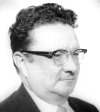 |
|
He received a BS in botany from the University of Cincinnati in 1932, an MS in 1939 from Oregon State University, and a PhD from Washington State University in 1950. Among his works were The Fungi of
our Mouldy Earth (1986), The Ecology of the Fungi (1958), Fungi of Mt. Shasta (1955), and On the Flora of the Cascade
Mountains (1962). He donated more than 2,100 mushroom collections to the UC Berkeley herbarium, more than any other collector. The article about him on the MykoWeb site by Elsa Vellinga adds: "In his ‘real life,’ Cooke worked as a mycologist for the |
Robert A. Taft Sanitary Engineering Center, part of the US Public Health Service in Cincinnati, and studied fungi in polluted water and sewage until his retirement in 1969." In addition to the five books, he wrote 192 articles. His name is also on Phacelia cookei, a taxon published in 1970 by Lincoln Constance and Lawrence Ray Heckard, and on Glyceria cookei published by Jason Richard Swallen in 1941. (Photo credit: MykoWeb)
-
cook'ii: named for Fred Lucien Cook (1921-1971) who helped Robert Hoover
explore the area where this plant was found. He was born in Tennessee,
and was a biologist with the US Fish and Wildlife Service. His family settled in Atascadero where he eventually died.
-
cool'eyae: named for Grace Emily Cooley (1857-1916), an American botanist,
author of Impressions of Alaska: with a List of Plants Collected
in Alaska and Nanaimo, B.C. (1892). Along with James M. Macoun
of the Canadian Geological Survey (1902) she made important early
collections of vascular plants and lichens. The following is quoted
from Ladies in the Laboratory?: American and British Women in Science
1800-1900, by Mary R. S. Creese: "Grace Cooley taught in
the botany department at Wellesley for twenty-one years. She was born
in East Hartford, Connecticut, on 26 July 1857. In 1881, at the age
of twenty-four, after several years of high school teaching in New
Jersey and New York, she enrolled at Wellesley. Although she did not
immediately proceed to a degree, she nevertheless held the position
of instructor from 1883 to 1896. She carried out summer research at
the Woods Hole Marine Biological Laboratory, and in 1893 took an AM degree
at Brown University, Rhode Island. Among her publications from this
period is a detailed account of the flora of southeastern Alaska,
which appeared in the 1892 Bulletin of the Torrey Botanical Club.
Still a paper of general interest, it reported a trip she and Clara
Cummings had taken by coastal freighter along the Alaska panhandle
the preceding summer. In the alpine meadows above Juneau, Cooley discovered
a new species of buttercup that now bears her name, Ranunclus cooleyae.
In 1894, following a period of research at the Naples Zoological Station
and some time at the University of Zurich, she received a Zurich PhD.
Her dissertation research on the cellulose content of seeds appeared
in the Memoirs of the Boston Society of Natural History (1895).
Although she became associate professor at Wellesley in 1896, she
was not promoted further, possibly because she failed to publish again
until 1904, when she brought out two papers on the growing of trees.
She was especially active on the Missionary Committee of Wellesley's
Christian Association. In 1904, at the age of forty-seven, she returned
to New Jersey, where her teaching career had begun more than twenty-five
years earlier. For eleven more years she taught biology in Newark
high schools. The welfare of women schoolteachers was her particular
concern, and she took a leading part in the formation of the Association
of Women Teachers of the Newark High Schools, serving as the organization's
first president. She died in Newark, 27 January 1916, at age fifty-eight."
-
coombs'iae: named for Ella May Coombs (Mrs. David Rose, Mrs. Aaron Leslie Coombs) (1857-1918).
-
coo'perae: named for Sarah Paxson Moore, aka Mrs. Ellwood Cooper (1824-1908), a botanist and plant collector near Santa
Barbara. The Santa Barbara Morning Press of 14 March 1908 reported: “Mrs. Ellwood Cooper Dies; End of Busy, Helpful career. In the passing of Mrs. Ellwood Cooper, Earth has lost one of its sweetest flowers. Few could have been more beloved than was this cultivated, noble woman whose life was filled with good works. Surrounded by her family she passed peacefully away, after a long illness, the end coming as a result of heart disease. Mrs. Cooper was born in Pennsylvania and was married in Philadelphia, both she and her husband being members of the Society of Friends, or Quakers. The Coopers went to the West Indies, where they lived ten years and Mr. Cooper amassed a large fortune. They lived five years in Brooklyn and came to Santa Barbara in 1870, being attracted here by the splendid climatic conditions. Mrs. Cooper was always interested in the development of education and soon after their arrival here Mr. and Mrs. Cooper established an institution of learning of a high order. This school was known as “The College.” The faculty was composed of a number of educators who afterwards distinguished themselves as teachers at various universities. The Coopers’ three children, their son Henry and their daughter Fanny, who have made their home with their parents, and their daughter Helen, now Mrs. Baxley, the wife of I. R. Baxley of Montecito, received part of their education at this institution. Mr. Cooper purchased the beautiful ranch at Elwood and was the first manufacturer of olive oil in this state. Although Mrs. Cooper always took a deep interest in things educational and did much to further them in this city, she was more widely known for her knowledge of plants and helped to collect for the flora of this state. She was well known by most of the botanists in the United States. She had a very large circle of warm friends in this city, among whom she was a social leader, although, owing to ill health, she had led a very quiet life lately.” The book The Gardener's Monthly And Horticulturist V20 by Thomas Meehan
states that: "Mr. Ellwood Cooper, brought up in Lancaster county, Pa., after making a fortune in the West India trade, went to Santa Barbara, California, and settled down to the cultivation of a large ranch - 4,000 olive trees, 4,000 English walnuts, 12,500 almond trees, and 50,000 eucalyptus trees constitute a portion of the orchards and forest he has set out. Appreciating the importance of growing large quantities of trees and the especial value of the Eucalyptus, he opened an intercourse with Baron Ferd. Von Muller, director Botanic Gardens of Melbourne, and received numerous pamphlets of the Baron's writing on Eucalyptus. These he has collected and edited, with matter of his writing, making an important contribution to our works on forest culture." He was also the superintendent of Santa Barbara College and may be more than anyone else responsible for the great number of blue gum eucalyptuses that populate so many of our neighborhoods. Virtual American Biographies on the Virtuology website says: "He was educated in Harmony, after which he engaged in business in Port au Prince, W. I., and later in New York. About 1870 he removed to southern California and settled in Santa Barbara, where he has devoted his attention principally to the cultivation of fruits. On his farm are produced olives, grapes, English walnuts, and European almonds, in crops far exceeding those of the older countries; also oranges, lemons, Japanese persimmons, and other similar fruits. Mr. Cooper was the first in the United States to manufacture olive-oil and put it on the market. In connection with this industry he has invented various forms of machinery for use in the oil-works, and also a machine for hulling English walnuts, grading them as to size and washing them, thus not only effecting a great saving of labor, but making them more satisfactory for sale than can be done by hand. He has been president of the Board of Directors of Santa Barbara College, for three years was principal of the college, and is now (1886) president of the California state Board of Horticulture. He has published Statistics of Trade with Hayti (New York, 1868), Forest Culture and Eucalyptus Trees (San Francisco, 1876), and A Treatise on Olive Culture (1882)." His name is also on the large Ellwood oil field, the onshore portion of which was abandoned in 1972, and which is currently still producing oil from at least one offshore oil platform. He died in 1918. -
coo’peri: named for Sir Daniel Cooper (1821-1902), nineteenth-century Australian politician, merchant and philan-
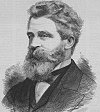 |
|
thropist in the Colony of New South Wales. He served as the first speaker of the Legislative Assembly of the colony and was a noted philatelist. He was born at Bolton, Lancashire, England, the son of Thomas Cooper, merchant, and his wife Jane Ramsden. He was the nephew of the emancipated convict and extraordinarily successful businessman, Daniel Cooper, who took an interest in the education of his nephew. He was taken to Sydney by his parents when a child, but was sent back to Britain again in 1835 and spent four years at University College London. Cooper |
began business at Le Havre, France, but his health failing, he returned to Sydney in 1843, and acquired an interest in a mercantile firm, afterwards known as D. Cooper and Company, and bought much property in Sydney and its suburbs. This afterwards appreciated in value and Cooper became a wealthy man. In 1853 he inherited the bulk of the enormous fortune of his uncle, Daniel, who had no children. He was an early member of the senate of the University of Sydney, to which he gave £500 for a stained glass window, and £1,000 to found a scholarship. His political career began in 1849 at the age of 27. After New South Wales was granted self-government with an elected Legislative Assembly and an appointed Legislative Council in 1856, Cooper was elected Speaker by a majority of one vote. In 1860, his health again on the decline, he found it necessary to resign and returned to England the following year. During the following decades he was much involved in relief for the widows and children of soldiers killed in the Crimean War, and for victims of the cotton famine in Lancashire. He maintained his interest in New South Wales and in 1886 was a member of the Royal Commission for the Colonial and Indian Exhibition at London. In 1897 he was appointed Agent-General for New South Wales in London. He was married and had two sons and five daughters. He was a founder and the first president (1869–1878) of the Philatelic Society of London, the predecessor of today's Royal Philatelic Society London. He also apparently developed an interest in natural history. William Jackson Hooker praised him for sending plants from Australia, and plants were grown from seeds provided by him. He had a number of plants named for him. I find it curious that none of the many articles and obituaries about him mention this. ( Sphaeropteris cooperi)
-
coo’peri: named for Dr. James Graham Cooper (1830-1902), a zoologist, ornithologist, physician and geologist who
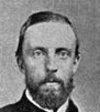 |
|
worked on the Geological Survey of California with Josiah Dwight Whirney, William Henry Brewer and Henry Nicholas Bolander, and collected plants in the Mojave Desert in 1861. He was the son of William Cooper, one of the founders of the New York City Museum of Natural History, a friend of John James Audubon, the first American member of the Zoological Society of London, and the person for whom the Cooper's hawk was named. James Graham Cooper was born in New York and graduated with a medical degree from the New York College of Physicians and Surgeons |
in 1851. In 1860 he joined the Blake Expedition that went from St. Louis up to the Missouri River and into Idaho and Washington, and after that made visits to several of the Channel Islands. He was credited with co-authoring with Spencer F. Baird the first book on the birds of California entitled Ornithology, Volume I, Land Birds, published in 1870, and made the first published report on the elf owl, Micrathene whitneyi, in 1861. In 1863, he described the desert tortoise and named it Gopherus agassizii for Louis Agassiz, to honor him for his work on North American turtles. Cooper published on botany, conchology, ornithology, mammalogy, and paleontology, and with George Suckley was co-author of The Natural History of Washington Territory (1860). He was also director of the Museum of the California Academy of Sciences.
(Species in Achyronychia, Adenophyllum, Aphyllon, Caulanthus, Ericameria [formerly Haplopappus], Hymenoxys, Lycium, Orobanche, Piperia, Psilostrophe)
-
copeland'ii: named for botanist Dr. Edwin Bingham Copeland (1873-1964).
He was born in Monroe, Wisconsin, 30
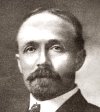 |
|
Sep. 1873, died Chico, California,
1964. [His father was a zoologist and no doubt influenced his early
interest in the natural sciences. He did three years of undergraduate
work at the University of Wisconsin and then] ... was a graduate of
Stanford University with the pioneer class of 1895; botanist of the
US Philippine Commission, 1903; curator of herbarium, University
of California, Berkeley, 1928-32; world authority on ferns and author
of Genera Filicum, the Genera of Ferns (1947) (from
Cantelow and Cantelow, "Biographical Notes on Persons in Whose
Honor Alice |
Eastwood Named Native Plants" in Leaflets of Western
Botany, 1957). "A well-known pteridologist who got his education
at Stanford University and in Germany, taking his PhD degree at Halle
in 1896; appointed in the Philippines late 1903; Dean [and professor
of plant physiology for eight years of the institution he founded
which is now known as the University of the Philippines College of
Agriculture at Los Baños, Laguna.]; professor, University of
California, 1928-32; technical adviser, Dept of Agriculture and Nat.
Resources, Manila, and director of the National Economic Garden, Los
Baños, 1932-35. He wrote A Fern Flora of the Philippines in 3 volumes (1958-60)." (from National
Herbarium Nederland). He was a tremendously prolific writer and
was the author of numerous papers on pteridophytes, plant pathology
and agricultural botany. Earlier in his career he was also a botany
professor at the University of Indiana, the State Normal School at
Chico, California, and the University of West Virginia. Copeland's
personal herbarium was sold to the University of Michigan.
-
Copros'ma: from the Greek kopros, "dung," and osme,
"a smell," alluding to the fetid smell. The genus Coprosma was published by Johann Reinhold Forster and Johann Georg Adam Forster in 1775.
-
Cop'tis: from the Greek kopto, "to cut," in reference
to the deeply-incised leaves. The genus Coptis was published by Richard Anthony Salisbury in 1807.
-
coralli'na/coralli'nus: coral-red.
-
Corallorhi'za: from the Greek korallion,
"coral," and rhiza, "root," thus meaning
having coral-red roots. The genus Corallorhiza was published in 1760 by Jean Jacques Châtelain.
-
cordaea'na: named for August Karl Josef Corda (1809-1949), a Czech physician and mycologist, born in Reichenberg
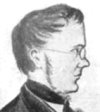 |
|
(now Liberec), Bohemia. Both his parents died suddenly only weeks after his birth and he was raised by his grandmother, attending the Normal School in Reichenberg. When he was ten, his grandmother died and he was farmed out to strangers who gave him no schooling for two years. Two years later he went to live with an uncle in Prague and was enrolled in the Lyceum of New Prague. He left the Lyceum in 1824 to study physics, chemistry, minerology, and botany (under Ignaz Friedrich Tausch) at the Polytechnic Institute. In 1827 he briefly took a job in a chemical |
factory before going back to the University of Prague to study surgery. He became a cholera doctor and continued in that capacity for five years in a number of different cities, eventually becoming dispirited by the struggle against the disease and quitting the practice of medicine altogether. Perhaps because of associates of his such as Kurt Sprengel, Alexander von Humboldt, Karl Sigismund Kunth, Johann Horkel and Martin Lichtenstein, he became inspired by botany. He studied palms and wrote several monographs in Berlin then returned to Prague and collected in that region. He was invited to take up a position as curator of the Division of Zoology at the Czech National Museum, where mycology became the primary focus of his work. He produced two monumental works, the 6-volume Icones fungorum hucusque cognitoruma (1837-1842) and Prachtflora europäischer Schimmelbildungen (1839). He perished at sea in 1849 while returning home from a collecting trip in Texas.
-
corda'ta/corda'tus: from the Latin meaning "heart-shaped."
-
cordifo'lia: in Latin means with "heart-shaped
leaves."
-
cordula'tus: from the Greek kordyle,
"a club. cudgel, bump or swelling," thus meaning shaped like or appearing
like that, of uncertain application.
-
Cordylan'thus: from two Greek words kordyle,
"club," and anthos, "flower." The genus Cordylanthus was published by Thomas Nuttall in 1846.
-
Cordyl'ine: from the Greek kordyle, "a club." Cordyline was published by Philibert Commerson in 1789.
-
co're-co're: I was uncertain of the etymology of this name until Michael Simpson sent me a note from an Argentinian friend of his named Pablo Moroni who said: "The element "core-core" derives from and follows the vernacular name of the species in the Mapuche language." He says further that: "In the protologue one can read 'Incolis core-core,' which means 'called core-core by the inhabitants.' " The indigenous Mapuche language, called Mapudungun or Mapuzugun, is spoken by several hundred thousand people primarily in south-central Chile and parts of southwestern Argentina. The taxon in the California flora with this epithet is the introduced but naturalized Geranium core-core from Argentina called Argentinian crane's bill. It also grows in other parts of southern South America from Ecuador and Bolivia south, and in Australia and New Zealand. It was published originally as Geranium core by Vincenz Franz Kosteletsky in 1836 and then as Geranium core-core by Ernst Gottlieb von Steudel in 1856, and who knows what was in their mind. Steudel's protologue sheds no light on the matter. In an article about extracts from the plant called core-core, one website says: "The roots are used as an astringent and anti-inflammatory. They are also used to relieve dental neuralgia and scurvy. The decoction of the leaves has hemostatic properties. In addition, the juice made from its stems and roots is used to reduce pain caused by eye conditions." Not a single website on the internet even mentioned where the name comes from, but the Jepson eflora did say that G. core-core had been previously misidentified as G. retrorsum from Australia.
-
Coreop'sis: from the Greek koris,
"a bug," and -opsis, indicating a resemblance, therefore
meaning bug-like, referring to the achenes which look like ticks. The genus Coreopsis was published by Carl Linnaeus in 1753.
-
Corethro'gyne: derived from the Greek korethron meaning "a
brush for sweeping" and gune, "style," and referring
to the brush-like style tips. The genus Corethrogyne was published by Augustin Pyramus de Candolle in 1836.
-
coria'cea: from the Latin corium, "leather," and
the - acea suffix indicating resemblance, thus "resembling leather,
leathery."
-
Corian'drum: originally from the Greek koriandron, "coriander," a name used by Pliny, and derived from koros, "a bug," in reference to the foetid smell of the leaves. The genus Coriandrum was published by Carl Linnaeus in 1753.
-
coridifo'lium: with leathery leaves.
-
Corisper'mum: (1) Munz says from the Greek coris, "a
bedbug," and sperma, "seed" (2) Jepson says,
I believe correctly, from the root cori, "leather or leathery," and sperma, "seed," thus "leathery-seeded." The genus Corispermum was published by Carl Linnaeus in 1753.
-
cornel'ius-mul'leri: named for Cornelius (‘Neil’) Herman Muller (originally Müller or Mueller) (1909-1997), a pro-
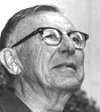 |
|
fessor of botany at UC Santa Barbara, whose major fields were ecology, taxonomy and botanical history. In addition to the California oak Quercus cornelius-mulleri, he had a second oak named for him, a Mexican species, Q. mulleri. The following is quoted or paraphrased from the JSTOR entry on Muller: He grew up in Texas and received his training in botany at the University of Texas, Austin (BA 1932, MA 1933) and the University of Illinois, Urbana (PhD 1938). He first worked as an assistant botanist for the United States Department of Agriculture. He joined the faculty of |
Santa
Barbara College in 1945 as an assistant professor of science, then assistant professor of botany in 1948, associate professor of botany in 1950, full professor in 1956 and acting dean of the graduate division (1961-1962). He was one of the first scientists to be involved in the Institute for Tropical Biology in San Jose, Costa Rica (1961-1962). His wife Katherine became director of the Santa Barbara Botanical Garden (1951-1974). As a plant taxonomist, Muller was a specialist on American oaks, Quercus, and published on the genus in southwestern United States and Mexico, traveling to remote areas on horseback. Plant collections used for his research and to aid teaching plant taxonomy became the founding collections of the UCSB herbarium. His research increasingly concentrated on ecological observations including vegetation dynamics, plant interactions and his classic studies of chemical interactions or allelopathy. He published extensively on both desert and arctic ecosystems, providing his own interpretation of vegetation climaxes, and demonstrated the importance of hybridization in the systematics of American oaks. In 1975 he was awarded the Eminent Ecologist Award, the highest honor of the Ecological Society of America. He became an emeritus professor in 1976. (Photo credit: Herbarium of the L.H. Bailey Hortorium)
-
cornicula'ta/cornicula'tus:
horned, from the Latin corniculata or corniculatus meaning "equipped with horns," in turn from cornu, "horn."
-
Cor'nus: a Latin name for dogwood derived from cornu, "horn," alluding to the tree's hard wood. Regarding the common name dogwood, Wikipedia has this to say: "The name 'dog-tree' entered the English vocabulary before 1548, becoming 'dogwood' by 1614. Once the name dogwood was affixed to this kind of tree, it soon acquired a secondary name as the hound's tree, while the fruits came to be known as 'dogberries" or "houndberries.' The tree was named for its berry, called dogberry from at least the 1550s, where the implication could be that the quality of the berry is inferior, as it were 'fit for a dog.' " The genus Cornus was published by Carl Linnaeus in 1753.
-
cornu'ta: bearing horns or spurs, usually the
flowers.
-
corolla'ta: like a corolla.
-
coronar'ia/coronar'ium:
used for or belonging to garlands or crowns, from Latin coronaria, "crown, garland, wreath."
-
corona'ta/corona'tum: crowned.
-
coronen'sis: the 'ensis' ending suggests that this is most likely a geographical reference. The type description includes the following: "The new variety is named for the type locality near the Rams Horn Spring campground, the Latin corona being one possible translation of 'horn.' " The Nevada Natural Heritage website lists the common name of this taxon as the Rams Horn Springs milkvetch, while other sources call it the Modoc Plateau milkvetch. I can find nothing that relates the word corona with 'horn,' which in Latin is cornu, the word corona typically being translated as 'crown.' Latin authorities I have consulted agree that there is no possibility that the two words could be used interchangeably. The taxon author, Stanley L. Welch, very kindly responded to my query by saying that "the name coronensis on page 408 [of Stearn's Botanical Latin 3rd Edition revised 1983], in some part indicates the crown achieved by presence of horns, in a metaphorical sense, that [are] seen occasionally by hunters hoping that the animal in their sights has, indeed, horns. In other words, the animal should have been 'crowned,' and hence the name coronenisis (with apologies)." I wrote him back and suggested that the connection between 'horn' and 'crown' was a very thin basis for an epithet, and a subsequent communication from him added: "Since deer do not have horns, the reference to the locality is thin indeed, but the 'horns' do indeed 'crown' the head of male deer. I chose that name on purpose, as a euphonious substitute for 'cornensis'." I don't know what deer have to do with it, since the reference is to rams, which are male sheep, but they do indeed have horns.
-
Coronil'la: from Latin corona, "a crown," in reference
to the flowers. The genus Coronilla was published by Carl Linaeus in 1753.
-
coronopifo'lia: having leaves like those
of Coronopus, a naturalized European member of the mustard
family.
-
Corono'pus/corono'pus:
from the Latin corona, "crown," and pous,
"foot," from the deeply cleft leaves like the points of
a crown. The genus Coronopus was published by Johann Gottfried Zinn in 1757.
-
correl'lii: named for botanist Donovan Stewart Correll (1908-1983), a specialist in orchids. He was born in Wilson,
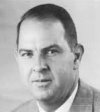 |
|
North Carolina. He received a BA degree from Duke University in 1934, an MA in 1936, and a PhD in 1939. Part of his doctoral reseach was done at Harvard under the supervision of orchid authority Oakes Ames who introduced him to economic botany, which was the focus of much of his career at USDA. From 1939 to 1943 he was a research associate at the botanical museum at Harvard. In 1943 he participated in the Alaska Highway Botanical-Geological Survey. He worked briefly in 1944 for USDA then served as a gunnery officery in the US Navy, returning to Harvard |
to complete his research 1946-1947. He worked from 1947 to 1956 for the USDA. In 1950 his Native Orchids of North America North of Mexico was published and in 1952 and 1953 along with Oakes he released in two volumes Orchids of Guatemala. In 1956 he became head of the botanical department of the Texas Research Foundation, publishing several works on Texas ferns, and then in 1970 the Manual of the Vascular Plants of Texas. From 1971 to 1973 he was program director for systematic biology at the National Science Foundation. Then Correll moved to the Fairchild Tropical Botanic Garden in Miami, where he researched together with his wife Helen B. Correll and assistant Priscilla Fawcett the flora of the Bahamas. The resulting work Flora of the Bahama Archipelago, Including the Turks and Caicos Islands appeared in 1982. He died the following year after months of illness. (Photo credit: Economic Botany, Vol. 38, No. 1, Jan. - Mar., 1984, pp. 134-136)
-
corrensia'na: possibly named for Carl Franz Josef Erich Correns (1864-1933), a German botanist and geneticist who
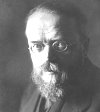 |
|
was born in Munich. Suffering from tuberculosis as a youth and orphaned at seventeen, he nevertheless graduated from the University of Munich in 1889. In 1892 he became a botany instructor at Tubingen University. That year he also was married and eventually had three children including one who was a minerologist and one who was a chemist. His researches included cell wall growth, floral morphology, and vegetatve reproduction in mosses and liverworts. However it was his series of experimental crosses using different maize and pea varieties that was most conse- |
quential. From 1900 all of his time was focused on plant genetics, sex determination in plants, becoming assistant professor of botany at Pfeffer's Institute, Leipzig in 1902, then professor of botany and director of the botanical garden at Münster University in 1909, and the first director of the Kaiser Wilhelm Institute for Biology, Berlin, in 1913. Wikipedia adds: “Between 1922 and 1927 Correns was a member of the senate of the Kaiser Wilhelm Society. In 1925, Correns was elected a member of the Scholars Academy Leopoldina, and in 1932 he was awarded by the British Royal Society the Darwin Medal. In the same year he received the Harnack Medal of the Kaiser Wilhelm Society as well as the Bavarian Maximilian Order for Science and Art. Since 1924 he was a corresponding member of the Bavarian Academy of Sciences. One of his major claims to fame was that he was one of several rediscoverers of the laws of Mendel. Correns died on February 14, 1933 in Berlin. (Photo credit: Revolvy)
-
corruga'ta: corrugated, wrinkled, from the Latin corrugis, “having folds or wrinkled.”
-
Cortader'ia: from cortadera, a native
Argentinian word meaning "cutting," because of the leaf
margins. The genus Cortaderia was published by Otto Stapf in 1897.
-
cortusifo'lius: with leaves like Cortusa, a genus in the Primulaceae published by Linnaeus in 1753 and named for Giacomo Antonio Cortuso (1513-1603), Italian nobleman and botanist appointed from 1590 to 1603 as prefect of the Botanical Garden of Padua by the Venetian Doge. He was an excellent field botanist and plant procurer and had his own international network of exchange with some of the foremost naturalists of his time including Jean Bauhin, Ulisse Aldrovandi, Pietro Andrea Gregorio Mattioli, Carolus
Clusius, Matthias de l'Obel and Conrad Gessner. He was one of the Italians who sent rare bulbs to northern Europe.
-
Corvisar'tia: named for Jean Nicolas Corvisart-Desmarets (1755-1821), a French physician and personal physician of
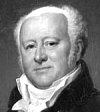 |
|
the Emperor Napoleon I. He was born in Dricourt (now in Ardennes), and at the age of 12 at his father’s wish, he entered the prestigious college of Sainte-Barbe where he was a mediocre student, spending more time on sports than studies. However, one day, after listening to anatomy professor, Antoine Petit, and visiting medical clinics in Paris, Corvisart became fascinated in medicine. He convinced his father and quit pursuing law to pursue a medical profession. Corvisart immediately obtained a position at the Hotel-Dieu as a male nurse. He later attended medical school at the |
Faculte de Medicine, where he was an outstanding student, known for his work ethic, observation skills, and independent spirit. He had the option of choosing between medicine and surgery, and decided he preferred and was more attracted towards medicine. Even as the youngest member of his class, Corvisart was at the top of his class, and graduated in 1782. Unfortunately, his defiance to tradition ultimately led to his failure in finding work after graduation. He had applied to the Hosipital of Paroisses, but was denied of working there as a physician by Necker because he refused to wear the powdered wig required for the position, and had to be content with starting his practice as a doctor in the poor neighborhoods of Saint Sulpice in Paris. As his reputation spread, in 1783 he was appointed to teach physiology, surgery, and obstetrics to medical students. Eventually, in 1786, he became the professor of clinical pathology. In 1795, Corvisart was elected to be the chair of clinical medicine of what was a newly formed medical school at the Charite Hospital in Paris and took over the clinical teaching. He initiated new methods of treating patients and studying diseases, focusing not on researching diseases in cadavers, but on recognizing particular diseases based on signs and symptoms given off by the patient. The following is quoted from Wikipedia: “In 1799, Corvisart and fellow French physician Paul Joseph Barthez were appointed by the French government as 'physicians of the Government'. In 1801, one of Corvisart's first patients, Barras, invited Corvisart to a reception, where he was introduced to General Napoleon Bonaparte and his wife Josephine. Napoleon was said to be a 'difficult' person to treat in the clinical setting, as he demanded a full explanation for each aspect of the ailments he experienced. Napoleon often refused to take prescribed medicine and was skeptical as to the practice and application of medical treatment, save that suggested by Corvisart, who he deemed as both competent and reliable. In August 1803, Napoleon sent for Corvisart due to chest pain and a sudden cough. Napoleon had been characterized as reluctant to access his physicians, including Corvisart at first. Corvisart quickly diagnosed Napoleon with a pulmonary congestion, which he did not disclose to the emperor out of regard for his well-being. Instead, he treated the condition with a vesicant (a blister agent), which proved to be effective in countering the pain and congestion. In retrospect of the successful and tactful treatment, Napoleon was quoted as saying, ‘I saw that Corvisart understood my system, and that he was the doctor who suited me, so I attached him to myself.’ In December 1808, Napoleon granted Corvisart the title of 'Baron' in recognition of his services and dillegence as Napoleon's physician. Napoleon also awarded Corvisart with the title of 'Officer of the Legion of Honour,' leading to Corvisart's admittance into the Academy of Sciences in 1811. By 1806, Corvisart published his manuscript entitled Essai sur les maladies et les lésions organiques du cæur et des gros vaisseaux, which many consider to be the first writings of modern cardiology, and he was appointed as he was given the title of 'chief physician' and attended to Napoleon and his family, consisting of the Empress as well as the Imperial House and court.” He treated Napoleon for breathing difficulties and respiratory issues, and also for scabies. After the failure of a treatment for steriity for the Empress Josephine, Corvisart’s brash mannerisms led to a disaffection with Napoleon. His medical contributions were many, and consisted primarily of a new understanding of pathological anatomy, and his appreciation that the reason for disease arose out of the body’s individuality and that disease was organic arising from a constitutional change to the affected organs. He retired at the age of 60 and was made a member of Académie Nationale de Médecine in 1820. He died on September 15, 1821, after a third attack of apoplexy, which caused a hemiplegia, four months after Napoleon died.
The genus Corvisartia was published by François Victor Mérat de Vaumartoise in 1812.
-
Cory'dalis: from the Latin corydalus and the ancient Greek korydalos or korydos for the crested or tufted lark, korys being "helmet or helm." Stearn says: "Greek word meaning a lark; the flowers have spurs like those of larks." The genus Corydalis was published in 1805 by Augustin Pyramus de Candolle.
-
Cor'ylus: from the Greek korylos and the Latin corylus or corulus, "hazel, " and a Latin name for the hazelnut
or filbert. The genus Corylus was published in 1753 by Carl Linnaeus.
-
corymbo'sa/corymbo'sum: corymbose, that is, provided
with corymbs, or flat-topped flower clusters in which the flower stalks
emanate from different points on the stem.
-
corymboso'ides: having a corymbose form.
-
cory'phaeum: from the Greek koryphaios, "leading." In Greek theater, the koryphaios was the leader or speaker of the chorus.
-
Coryphan'tha: from the Greek koryphe, "head,
crown, apex, summit" and anthos, "flower." The genus Coryphantha was published in 1868 by (Antoine) Charles Lemaire.
-
Cos'mos: from the Greek kosmos, "ornament,
decoration," from the Latinized form of Greek kosmos,"order, good order, orderly arrangement," a word with several main senses such as "to order and arrange," or "to deck, adorn, equip, dress." Thus kosmos had an important secondary sense of "ornaments of a woman's dress, decoration." Pythagoras is said to have been the first to apply this word to "the universe," perhaps originally meaning "the starry firmament, or the firmament adorned with stars," and the word cosmos often suggested especially "the universe as an embodiment of order and harmony." The genus Cosmos was published by Antonio José Cavanilles in 1791.
-
costafo'lia: from the Latin costa, "a rib," and folia, "leaves," thus "rib-leaved."
-
-
costifo'lia: may be the same as costafolia with no further information.
-
Cotoneas'ter: from the Latin for "quince-like," from cotoneum, a Latin name for the quince, and the suffix -aster, "resembling,"possibly
from the leaf shape. The genus Cotoneaster was published by Friedrich Kasimir Medikus in 1789.
-
cotto'nii: named for botanist John Storrs Cotton (1875-1954), author of Range Management in the State of Washington. He was born in Woodstock, Connecticut, and was an agronomist with the US Bureau of Plant Industry. He was married and had a daughter. He died in Washington, DC. and was buried in Maryland.
-
Cot'ula: from the Greek kotule meaning "a small cup" and referring to a hollow
at the base of the amplexicaule leaves. The genus Cotula was published by Carl Linnaeus in 1753.
-
cotulifo'lia: with leaves like genus Cotula.
-
Cotyle'don: from the Greek kotule, "a cavity," from
the cup-like leaves of some species. The genus Cotyledon was published by Carl Linnaeus in 1763.
-
coul'teri: named for John Merle Coulter (1851-1928).
The following is quoted from the website Virtual
American
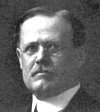 |
|
Biographies: "...botanist, born in Ningpo,
China, 20 November, 1851. He was graduated at Hanover College, Indiana,
in 1870, and during 1872-'3 was botanist to the United States geological
survey of the territories in the Rocky mountain system. In 1874 he
became professor of natural sciences in Hanover College, where he
remained until 1879, when he was appointed to the chair of biology
at Wabash. Prof. Coulter was editor of the "Botanical Gazette," published in Crawfordsville, Indiana, and was the author, in part,
of "Synopsis of the Flora of Colorado" (Washington,1874);
"Manual |
of Rocky Mountain Botany" (New York, 1885); and
in part of "HandBook of Plant Dissection" (New York, 1886).
(Photo credit: Wikisource) ( Botrychium multifidum ssp. coulteri, Erigeron coulteri)
-
coul'teri/coulteria'num:
named for Dr. Thomas Coulter (1793-1843), the Irish botanist, physician, explorer and great
 |
|
friend of Dr. Romney Robinson (see Romneya), who was in California 1831-32. He studied botany in Switzerland under Augustin de Candolle, discovered the Colorado Desert, first collected the matilija poppy and other plants, and was the first botanist to collect in Arizona. He was a doctor in a Mexican mining camp for the Real del Monte Company and was one of the first to collect in Mexico. He collected with David Douglas in California in 1831-32, where he first described the pine that now bears his name. After returning home from the New World, he made a gift of 50,000 |
herbarium specimens to Trinity College in Dublin. He was a member of the Royal Irish Academy, and a fellow of Trinity College, Dublin, where he founded the college's herbarium of which he became the curator. E. Charles Nelson published a biography of him in 1994 called A Man Who Can Speak of Plants. (All other taxa in California with the coulteri specific epithet other than those in the previous entry)
-
Courtois'ia: named for Belgian botanist Richard Joseph Courtois (1806-1835), co-author of Compendium florae belgicae (1827). He went to the Lycee in Liège, and then worked at the Hôpital de Bavière. He received a doctorate in medicine in 1825. At the same time he was sub-director of the botanical garden of the University of Liège and continued working with the botanist Alexandre Louis Simon Lejeune, and in collaboration with him produced a flora of Belgium, Choix des plantes de la Belgique. He investigated all regions of Liège and released in 1828 Recherches sur la statistique physique, agricole et médicale de la province de Liége (Researches on the physical, agricultural and medical statistics of the province of Liège), which publication focused on geography, geology, mineralogy, moors, water sources, flora and fauna, meteorology, and also on the physical and moral constitution of the population, hygiene, diseases, epidemics, hospitals, etc. of the province. In 1828 he was married, but not long after that came down with tuberculosis and eventually died at the age of 35. He was a member of a number of professional scientific societies. The genus Courtoisia was published in 1813 by Nestor Léon Marchand.
-
coves'ii: named for Elliot Ladd Coues (1842-1899), a naturalist,
army doctor and frontier historian, best known as the
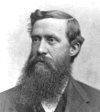 |
|
author of the
pioneering Key to North American Birds, one of America's most
renowned ornithologists and the co-founder and first president of
the American Ornithological Union. Coues began his career as a surgeon
in the US Army, serving on the Union side during the Civil War.
He had been greatly interested in ornithology since boyhood, and after
the war, he published several important monographs on the subject,
including Key to North American Birds (1872), Birds of the
Northwest (1874) and Birds of the Colorado Valley (1878).
Although known primarily as an |
ornithologist, he described many of
the other species in the southwest, which were then named for him. One of
those species was the Coues white-tailed deer ( Odocoileus virginianus
couesi). Coues was a strong supporter for the rights of native
Americans and women. He is also famous for his role in the so-called Sparrow
War which broke out in 1874 between himself and Dr. Thomas Mayo Brewer and between supporters and opponents of the
introduced house sparrow which was becoming a huge pest in eastern cities. Coues' position was that they should be mostly done away with. Brewer's death largely ended the "war." . In
later years, he turned his attention to editing works on early travel
in the West, including the celebrated History of the Expedition
of Lewis and Clark (1893) and Expeditions of Zebulon Montgomery
Pike (1895). During the 1880s, he became interested in psychical
research. During a visit to Europe in 1884 he met Madame Blavatsky
and became an ardent theosophist. He founded the Gnostic Branch of
the Theosophical Society in Washington, D.C., and was elected president
of the American Board of Control of the Theosophical Society. He was
also active in the formation of the American Society for Psychical
Research. He sought to become head of the American theosophical movement.
However, in the late 1880s and early 1890s he broke with the movement,
denounced the Theosophical Society, and was threatened with a libel
suit by Madame Blavatsky. Blavatsky's death in 1891 brought an end
to the suit. In 1899 he accompanied C. Hart Merriam on a two-month
voyage on the steamship Elder along the Alaska coast which
was funded entirely by Edward H. Harriman. On board were a noted group
of scientists including zoologists, geologists, ornithologists, botanists,
anthropologists and forestry experts interested in evaluating the
health and vigor of the Alaska forests. The expedition collected numerous
bird and plant species and made significant advances in the understanding
of glaciers, and because Harriman wanted the widest possible dissemination
of information regarding the expedition, he included two nature writers,
two landscape painters, two photographers and a wildlife artist. The
apparent discrepancy between the names Coves and Coues results from
the fact that the Romans did not distinguish between 'u' and 'v,'
thereby permitting authors when choosing Latin names to use either
interchangeably. Some authors apparently had a distaste for long strings
of vowels, so 'covesii' may have seemed preferable to 'couesii.' It
is also possible that it was a deliberate Latinization of the name,
and that just as Bigelow was Latinized to Bigelovius, thus producing
'bigelovii', Coues may have been Latinized to Covesius, thus producing
'covesii.' The referenced species of Senna is sometimes given
the common name of Coves' senna and sometimes Coues' senna, although
I have also seen Cove's senna, Coves's senna, and Coues's senna. Clearly Coves' and Cove's senna is an inappropriate name because his name was not Cove or Coves.
-
covillea'na/covillea'num: see covillei below.
-
covill'ei: named for Dr. Frederick Vernon Coville (1867-1937), a botanist on the Death Valley expedition of 1890-91,
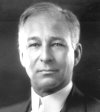 |
|
first director of the United States National Arboretum, chief botanist of the USDA and honorary curator of the National Herbarium 1893-1937. He was born in New York and matriculated at Cornell University where he received his BA in 1887. He briefly taught botany and then took a position with the USDA as assistant botanist for the Geological Survey of Arkansas in 1888. He remained with the Department of Agriculture for the rest of his life, and published around 170 papers and books. He took part in C. Hart Merriam and Theodore S. Palmer’s Death Valley |
Expedition and was the author of Botany of the Death Valley Expedition (1893). He was particularly interested in medicinal and desert plants and conducted in 1897-1898 the Medicinal Plants Survey. Wikipedia says: “Coville also participated in and wrote on the 1899 Harriman Alaska Expedition, although he never completed his Flora of Alaska. He was involved with the establishment of the Carnegie Institution's Desert Botanical Laboratory in 1903, the USDA Seed Laboratory, and spearheaded efforts that lead to the foundation of the United States National Arboretum in 1927. Coville was considered the American authority on Juncaceae and Grossulariaceae. After 1910 he began to work on blueberries, and was the first to discover the importance of soil acidity (blueberries need highly acidic soil), that blueberries do not self-pollinate, and the effects of cold on blueberries and other plants. In 1911, he began a program of research in conjunction with Elizabeth White, daughter of the owner of the extensive cranberry bogs at Whitesbog in the New Jersey Pine Barrens. His work doubled the size of some strains' fruit, and by 1916, he had succeeded in cultivating blueberries, making them a valuable crop in the Northeastern United States. For this work he received the George Roberts White Medal of Honor from the Massachusetts Horticultural Society. In 1919, Coville played an instrumental role in drawing attention to the threatened state of the only known box huckleberry colony ( Gaylussacia brachycera), sparking a revival of interest that led to the discovery of many new specimens of the plant. From 1920 to his death, he was chairman of the National Geographic Society' research committee and was very influential in deciding areas of exploration. At the time of his death he was working on a revision of Botany of the Death Valley Expedition as a flora of the Valley.”
-
Cowan'ia: named for James Cowan (?-1823), a British merchant, amateur botanist and plant collector in Mexico and Peru. The genus Cowania was published by David Don in 1828.
-
crac'ca: from the Latin cracca, a classical name given to a leguminous plant like a pulse or vetch. There is also a genus Cracca published by Carl Linnaeus in 1753.
-
craigia'na: named for Sir William Gibson-Craig, 2nd Baronet (1797-1878), a Scottish advocate and politician, born at
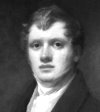 |
|
Edinburgh and educated at the high school there and then privately in Yorkshire. William became an advocate in 1820 and was lord clerk register and keeper of the signet for Scotland from 1862 until his death. He was made a privy counsellor in 1863. He was the member of parliament for Midlothian from 1837 to 1841 and for Edinburgh from 1841 to 1852. He was a junior lord of the treasury in Lord John Russell's government from 1846 to 1852. In 1828 he was elected a fellow of the Royal Society of Edinburgh. He gained the title 2nd baronet Gibson-Craig in 1850. He was married and
|
had six children. Gibson-Craig was a member of the Oregon Association which sponsored the famous plant collectors, William Lobb and John Jeffrey, who
made many important introductions of seed from the northwestern US in the 1850s. He lived on his Riccarton estate near Edinburgh which dated back to 1296 and which the Craig family purchased in 1610. Gibson-Craig was an avid collector of exotic trees. His son, Sir James Gibson-Craig, 3rd Baronet, continued the tradition and in 1884 invited the Scottish Arboricultural Society to view the collection and many of the trees seen and recorded that year were already large specimens. The huge Gothic mansion was demolished in 1956 after having been an army base during WWII, a resettlement camp for POWs and headquarters of the Royal Artillery 3rd Anti-Aircraft Group, and now serves as the Riccarton Campus serving Heriot Watt University. The collection of trees remains a versatile feature of borders around the now Heriot Watt University campus.
-
crandal'lii: named for Charles Spencer Crandall (1852-1929), botanist, horticulturist, professor and herbarium curator at Colorado Agricultural College, and plant collector in Colorado. He was born in Waverly, New York. JSTOR says “Between 1885 and 1889 he worked as a foreman in the gardens of Michigan Agricultural College. Later he became a professor of botany and horticulture at Colorado Agricultural College in Fort Collins (1890-1900) and while based there collected and published Colorado weeds (1893). Crandall also collected fungi in Colorado, producing an exsiccatae entitled Colorado Fungi which contained some 200 species. In 1894 he also produced a paper entitled "The Russian thistle." Moving to the University of Illinois in 1902, he was based in the horticulture department and served as assistant chief of pomology in 1906. By 1916 he was professor of pomology and chief in plant breeding at the Agricultural Experiment Station.” He published many articles including “Seed Production in Apples,” “Blight and Other Diseases,” “Colorado Weeds,” and others about pomology.
-
Crant'zia: named for Heinrich Johann Nepomuk von Crantz (1722-1789), a botanist and physician, born in Roodt-sur-Eisch, Luxembourg, and obtained a doctorate of medicine in 1750 in Vienna. He studied obstetrics in Paris and London. He was married twice and had two sons and a daughter. In 1754 he became a lecturer in obstetrics at St. Mary's Hospital in Vienna, then from 1756 to 1774 taught physiology and materia medica at the University of Vienna. He was the author of Materia medica et chirurgica in three volumes. He also studied chemistry, botany, and the sources of mineral water. The genus Crantzia was named for him in 1818 by Thomas Nuttall.
-
crassicau'le/crassicau'lis: thick-stemmed, from the Latin crassus, "thick," and caule, "stem."
-
crassifo'lia/crassifo'lium/crassifo'lius:
thick-leaved.
-
crass'ipes: with a thick stalk (compare brevipes, planipes, gracilipes,
filipes).
-
Cras'sula: from the Latin crassus,
"thick," referring to the fleshy leaves. The genus Crassula was published by Carl Linnaeus in 1753.
-
cras'sus: thick, fleshy.
-
Cratae'gus: from the Greek krataigon, "thorn," from Greek kratos, "strength," and akis, "a sharp tip," alluding to thorns of some species, an ancient name for a flowering thorn used
by Theophrastus. Crataegus is a genus of several hundred species called variously quickthorn, may-tree, thornapple, whitethorn, mayflower, and hawberry, but most commonly hawthorn, and the name haw, originally an Old English term for hedge (from the Anglo-Saxon term haguthorn, "a fence with thorns,") also applies to the fruit. The genus Crataegus was published by Carl Linnaeus in 1753.
-
craterico'la: from the Greek krater, "a cup, the mouth
of a volcano," and the -cola suffix indicating "dweller
of." The only taxon iin California with this epithet is Allium cratericola, one of whose common names is crater onion.
-
crawford'ii: named for Larry Crawford, retired engineer with macrophotography experience and interest in Sierra Nevada and Great Basin mountain, chaparral and desert wildflowers, and his wife Suzanne Crawford.
-
cre'ber: from the Latin creber, "thickly clustered, close,
frequent."
-
crebrifo'lia: from the Latin creber, crebra, crebrum,
"thick, crowded, frequent," thus meaning "with thickly
clustered leaves."
-
crena'ta: with shallow, rounded teeth, from Latin crenatus, which means "with blunt teeth."
-
crenatoserra'ta: meaning somewhere in between crenate and serrate.
Originally written as crenato-serratus, the hyphen was dropped per
rules of the International Code of Botanical Nomenclature.
-
crenula'ta/crenula'tum: crenulate, somewhat
scalloped, from Latin crenulatus, "notched."
-
Cre'pis: from the Greek krepis, "a
slipper or sandal," and an ancient plant name, possibly alluding to shape of the cypselae, a name of a plant in writings by Theophrastus. The genus Crepis was published by Carl Linnaeus in 1753.
-
Cres'sa: derivation uncertain, a possible reference to Kressa, a Cretan woman. The WordSense Dictionary also gives two meanings: (1) A city of Paphlagonia (Anatolia) founded by Meriones after the Trojan War; and (2) a port town in Caria, mentioned by Pliny. The genus Cressa was published by Carl Linnaeus in 1753. Gledhill and Umberto Quattrocchi say simply, "Cretan."
-
cret'ica/cret'icus: of
or from Crete.
-
criniflor'um: with hair-like flowers or petals.
-
crin'iger: from the Latin crinis, "hair," and thus
meaning "having or bearing hairs."
-
crin'ita/crin'itum: long-haired, having long hair.
-
cris'pa/cris'pum/cris'pus: from Latin crispa meaning
"curled, curled, wrinkled or wavy" in reference to the leaves.
-
crispifo'lia: with wavy or curly leaves.
-
crist'ae: from the publication of the taxon Potentilla cristae in Madroño Vol. 37, No. 3 (1990) by William Ferlatte and John L. Strother, having a dual meaning, this specific epithet refers to the crests
or narrow wings that nearly surround the achene, and to its association with the Pacific Crest Trail. The authors suggest that its common name should be crested cinquefoil. It is endemic to the Klamath Mts.
-
crista'ta/crista'tum/crista'tus: tufted, crested or comb-like, from the Latin crista, “the comb or tuft on the head of animals."
-
critchfield'ii/critchfieldia'na: named for William Burke Critchfield (1923-1989), a plant collector and geneticist. A website for the US Forest Service says: “He left a legacy unparalleled in forest genetics. Bill made major contributions to understanding genetic variation, hybridization, growth and development, biogeography, paleobotany, systematics, and taxonomy of forest trees, especially pines. In each of these fields, Bill's pioneering work earned him the position of world authority. These studies were mainly spinoffs from groundwork Bill was meticulously laying for his primary interest: unraveling the evolutionary history of conifers. And it is his evolutionary syntheses that best reveal Bill's breadth as geneticist and scholar.” He was born in Minneapolis, Minnesota, but soon moved with his family to North Dakota. He studied at the Agricultural College of North Dakota (now the University of North Dakota). He served in the Pacific Fleet during World War II, and after the war he studied at the University of California, Berkeley. In 1949 he received a bachelor’s degree and in 1956 a PhD. He worked as a geneticist at Harvard from 1956 to 1959, then for the next 28 years at UC Berkeley. He was particularly interested in hybridization in pines. He died of a massive heart attack at a theater in San Francisco.
-
Crocanth'emum: from krokos, the saffron plant, and anthemon, "flower." The genus Crocanthemum was published by Édouard Spach in 1836.
-
croca'tum: saffron yellow.
-
cro'cea: saffron-colored.
-
Crocid'ium: from the Greek krokidion, diminutive of krokys or krokydos, "a flock or nap on woolen cloth, in turn
from kroke or "thread," alluding to the hair in the
leaf axils. The genus Crocidium was published by William Jackson Hooker in 1834.
-
crock'eri/Crock'eria: named for Charles Frederick Crocker (1854-1897), a vice-president of the Southern Pacific
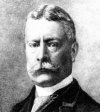 |
|
Transportation Company. He was born in Sacramento, educated in Sacramento public schools, then at McClure’s Academy (California Military Academy) in Oakland for two years, and finally at the Brooklyn Polytechnic School where he failed to graduate due to poor eyesight. He joined the family railroad business as a clerk at the age of 22, was appointed by the governor as a Colonel in the National Guard and by 1888 was president of the San Joaquin and Sierra Nevada Railroad. He was also president of the Board of Trustees of the California Academy of Sciences, a member of the |
Board of Regents of the University of California, and on the staff of the governor of California. His wife died during the birth of their third child, and he died from complications of Bright’s Disease at his home in San Mateo. The genus Crockeria was published by Edward Lee Greene in 1884.
-
Crocos'mia: from the Greek crocus, "saffron," and osme, "smell," because of the smell of the dried
flowers in warm water. The genus Crocosmia was published in 1851 by Jules Émile Planchon.
-
crocosmiiflor'a: with flowers like Crocosmia.
-
cros'byae: named for Virginia Lee Crosby Pyles (1950- ) who graduated
in botany from Oregon State University where a number of her specimens
are in the herbarium. She worked for the Bureau of Land Management
and moved to Colorado.
-
Crossoso'ma: from the Greek krossos,
"fringe or tassel," and soma, "body," because of
the aril, which is an appendage or fleshy thickening growing at or near the scarry point of attachment of a seed. The genus Crossosoma was published by Thomas Nuttall in 1848.
-
crotalar'iae: from the Greek krotalon, "a rattle or clapper," with reference to the rattling seeds in the inflated pods, this is
one of the species of Astragalus that are often called rattleweed.
-
Cro'ton: from the Greek word kroton meaning
"a tick" because of the way the seeds look in some members
of the family. The genus Croton was published by Carl Linnaeus in 1753.
-
Crucianel'la: from the Latin crux, "a cross," and
the diminutive ending, and according to Umberto Quattrocchi, "referring
to the leaves, crosswise, or to the corolla lobes." The genus Crucianella was published by Carl Linnaeus in 1753.
-
Crucia'ta/crucia'ta: in the form of a cross, from Latin crux, "cross." The genus Cruciata was published by Philip Miller in 1754.
-
crucifor'mis: in the shape of a cross.
-
cruen'tum/cruen'tus: bloody, blood red, or blood-stained, from the Latin cruor, "blood," or cruentus, "blood-red."
-
Crum'ia: named for bryologist Howard Alvin Crum (1922-2002). He was born in Mishawaka, Indiana and after high
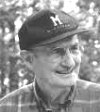 |
|
school he went to Western Michigan Teacher’s College (now Western Michigan University) in Kalamazoo. He volunteered for the US Army Air Force as a cryptographer in WWII serving from 1942 to 1945 in North Africa and the Middle East. After the war he returned to western Michigan and changed his major from German and literature to botany. He was awarded a BS degree in 1947 and began graduate school at the University of Michigan. He was drawn to bryology and became a scholar, his Latin and German skills allowing him to easily access older literature. He traveled |
to Mexico to gather material for his dissertation research. He examined many thousands of specimens during his career and gained a breadth of knowledge that was exceptional, and wrote many articles and books. He gained his PhD in 1951, followed by a 3-year postdoc at Stanford working on Arctic and Canadian mosses. He next accepted a position in the department of biology at the University of Kentucky, and a year later took up the curator of cryptogams position at the National Museum of Canada in Ottawa in 1954 where he remained for eleven years. In 1965 he accepted the offer of associate professor of botany at the University of Michigan. Because many mosses have wide distributions, he took a global view of his field, one of the first bryologists to do so. He was widely acknowledged as one of the finest bryological teachers of his day. He was the author of Mosses of the Great Lakes Forest, Structural Diversity of Bryophytes, Liverworts and Hornworts of Southern Michigan, The Moss Flora of Mexico, Mosses of Eastern North America, and other works. The genus Crumia was published in 1966 by Wilfred Borden Schofield. (Photo credit: JSTOR)
-
crumia'na: named for botanist Ethel Katherine Crum (1886-1943), an American botanist, noted for collecting and studying California flora. She was born in Lexington, Illinois, and studied literature and the classics at the University of Illinois where she graduated in 1907. From 1909 to 1929 she was a public school teacher, an experience of which she spoke as "traversing an intellectual desert of the most barren sort." She was then awarded an MA degree in botany from the University of California, Berkeley. She worked as a research assistant for Dr. Willis Linn Jepson on the manuscript for volume two of A Flora of California. In 1933 she was hired as assistant curator at the UC Herbarium, where she worked until her death in 1943. She discovered and formally described at least 13 species and varieties of plants. She also served as the secretary to the editorial board of the California Botanical Society from 1933 to 1943, and for the Editorial Board of Madroño she assumed the burden of editing and preparing manuscripts. Her early training in the classics, her command of the English language and her experience in handling manuscript combined to make her particularly suited to these tasks. An article in Madrono by Herbert L. Mason said: "Upon acquaintance one soon became impressed with the fact that Miss Crum was a woman of outstanding intellectual brilliance, that she had an engaging personality and a ready flow of wit and humor. She was devoted to her work and her several hobbies crowded one another for her attention. Her passing ends a career of uncommon usefulness ; her life was a milestone in the history of a journal." She died in Lexington, Illinois.
-
Crupi'na: according to Stearn, Latinized from a Belgian or Dutch vernacular name. A note in the Jepson Manual says simply that it is an ancient Latin name. Flora of North America notes: "Pre-Linnaean generic name of unknown derivation." The genus Crupina was originally published by Christiaan Hendrik Persoon but subsequently published by Augustin Pyramus de Candolle in 1810.
-
crus-gal'li: from the Latin crus, "the leg or thigh," and gallus, "a cock," this specific epithet is supposed
to mean "cock's spur."
-
crus-pavon'is: from crus, "leg or thigh," and pavonis,
"peacock," see previous entry.
-
crusta'cea: having a shell or rind, from Latin crusta, "crust, rind, bark, hard shell."
-
crux-mal'tae: name refers to a Maltese cross.
-
cruzen'sis: presumably named for the Arroyo de la Cruz Creek and/or
Arroyo de la Cruz Lagoon in San Luis Obispo County. The taxon in California with this epithet is Arctostaphylos cruzensis.
-
crymo'phila: from the Greek krymos, "frost, cold, ice," and the suffix -phila which means "loving," this
species is called subalpine cryptantha because it likes cold, icy environments.
-
Cryp'sis: from the Greek krypsis, "hiding, suppression,
concealment," from the partly hidden inflorescence, the same root as for the word cryptic. The genus Crypsis was published in 1789 by William Aiton.
-
cryptan'drus: with hidden anthers.
-
Cryptan'tha: from the Greek krypto,
"to hide, hidden," and anthos, "flower," and thus meaning "hidden flower," a reference to the first
known species which had small inconspicuous flowers which self-fertilized
without opening. The genus Cryptantha was given by Johann Georg Christian Lehmann in 1832, but not validly published until 1937 by George Don so can be cited as: Cryptantha Lehmann ex G. Don.
-
cryptocer'as: from cryptos, "hidden," and keras,
"horn or antlers."
-
Cryptogram'ma: from the Greek cryptos, "hidden," and gramme, "line," perhaps because of the concealed
or protected lines of sori. The genus Cryptogramma was published in 1823 by Robert Brown.
-
cryptopleur'a: from the Greek cryptos, "hidden," and pleuron,
"side, rib, lateral."
-
crystallin'um: crystalline, referring
to the many ice-like bubbles on the herbage.
-
Cucu'mis: from the Latin cucumis and before that from the Greek kykyon, "cucumber." Wiktionary says "A wanderwort (a migrant or loan word) likely ultimately from Sumerian for “cucumber,” or an unidentified pre-Indo-European Mediterranean substrate language." Originally from Asia, cucumbers have been around for millenia, and were very popular with the Romans. By the early Middle Ages they were being grown and harvested in France and England and elsewhere. Somewhere around the 17th or 18th century they developed the reputation of being poisonous which came from a belief that it was dangerous to eat uncooked vegetables, and they attained the name 'cowcumber,' because supposedly they were only good for animal fodder. Fortunately, we overcame that prejudice. The genus Cucumis was published in 1753 by Carl Linnaeus.
-
Cucur'bita: a Latin name for the gourd. The Wiktionary website says "Possibly related to cucumis, “cucumber,” or to corbis, “basket,” corbīta, “freight vessel.” Maybe from Sanskrit." The genus Cucurbita was published by Carl Linnaeus in 1753.
-
culbertson'ii: named for James Downer Culbertson (1879-1954). David Hollombe
has provided the following information: "He was born in Superior,
Nebraska, one of eight children, earned a BA at Pomona College in the early 1900s, made
collections in the southern Sierra Nevada (mostly Tulare County) in
1904 and in Alaska in 1905. He worked most of his life as assistant
manager, foreman and manager for the Limoneira Company lemon ranch
in Santa Paula." And from the LA Times, "Culbertson collected
plants for Charles Fuller Baker. When he collected in the southern
Sierra Nevada in 1904 he traveled with Ed. R. Milliken and Ernest
M. Johnstone, who apparently were collecting geological specimens
for Baker." He died in Ventura.
-
culinar'is: culinary, from the Latin culina, "kitchen,
food."
-
-cula/-culum/-culus: a Latin suffix used as a diminutive for adjectives
or nouns, e.g. arbuscula, "like a small tree," minuscula,
"somewhat small," brevicula, "somewhat short," Dracunculus, "small dragon," Cardunculus, "small thistle," Ranunculus, "little frog."
-
cultrifor'mis: shaped like a knife blade, from the Latin words culter meaning "a knife" and the suffix -formis meaning "in the form of" in reference to the knife-like shape of the phyllodes. The one taxon in California with this epithet is Acacia cultriformis, one of whose common names is knifeleaf wattle.
-
cumberlanden'se: referring to the Cumberland Plateau of Kentucky.
-
cumingia'num: named for Hugh Cuming (1791-1865), a natural history collector in conchology and botany. He was
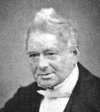 |
|
born in Washbrook, Devon, England, He was very interested in shells and plants as a youth, and was inspired by his acquaintance with the naturalist George Montagu. He was apprenticed to a sailmaker at the age of 13 and in 1819 shipped out on a voyage to South America and settled in Valparaiso, Chile. He began collecting shells and in 1826 retired from the sailmaking business to devote himself entirely to natural history. He built a schooner specifically for collecting trips and in 1827 made his first voyage to Tahiti via the Juan Fernandez Islands, Easter Island and Pitcairn, |
seeking shells and plants.In 1828 his second voyage traversed the west coast of South America, reaching as far north as the edge of El Salvador and Chiloe Island in the south, stopping off in numerous locations to make collections. He returned to England in 1831 to sell collections. Many of his plant specimens were purchased by William Hooker and George Bentham. He was elected a fellow of the Linnean Society in 1832. In 1836, he left for the Philippines, Singapore, St. Helena, and the Malacca area where he collected enormous amounts of plant and animal material over the next three-and-a-half years and pioneered the shipment of live orchids from Manila to England. He made a magnificent collection of land snail shells and assembled the richest collection gathered by a single individual up to that time. A few of the 147 cases with which he returned in 1840 were water damaged, but the fruits of the voyage (plants, birds, reptiles and insects) were eagerly studied by systematists. His dried plant specimens numbered over 100,000. He became a shrewd dealer in natural history objects and hired others to collect for him. Within a few years of his excursion to the Philippines, however, his health began to deteriorate and he suffered a stroke in 1846 which left him partially paralysed and with chronic bronchitis. Many important conchological works were based on his collections, including Lovell Reeve's Conchologia Iconica in twenty volumes and George Brettingham Sowerby's Thesaurus Conchyliorum in five volumes.
-
-cun'dus: a Latin adjectival suffix intended to impart a sense of
aptitude or constant tendency (e.g. verecundus, "bashful, modest," from verecundia, "modesty, shyness;" fecundus, "fecund,
fertile," from fecundare, "to fertilize.")
-
cunea'ta/cunea'tus: wedge-shaped, from the Latin cuneus, "wedge, wedge-shaped."
-
cuneifo'lia: with leaves tapered to the base.
-
Cuniculoti'nus: Flora of North America gives the derivation
of this as from the Latin cuniculus, "rabbit," and tinus, "shrub." The genus Cuniculotinus was published by Lowell Edward Urbatsch, Roland P. Roberts, and Kurt Maximilian Neubig in 2005.
-
cupania'na: see next entry.
-
Cupaniop'sis: resembling the genus Cupania, which was named for the Sicilian botanist and Franciscan monk
 |
|
Francesco Cupani (1657-1710), an author of books on Sicilian plants. Born in Messina, he undertook medical studies and then pursued a religious vocation, studying philosophy and theology to take a degree in these disciplines and teach courses at Palermo and Verona and elsewhere in Italy. He soon however shifted his main focus to the natural sciences and in particular botany. He was a pupil of another botanist who already had a high reputation, Paulo ‘Silvio’ Boccone, author of Museo di piante rare, and the two became great friends. Boccone was already a systematist of |
note and his influence on Cupani was such that some of the classifications in Boccone’s work prefigured the binomial nomenclature of Linnaeus. Cupani became the first director of the botanic garden at Misilmeri and established contacts with such highly regarded naturalists as Joseph Pitton de Tournefort, Caspar Commelin, William Sherard, James Petiver, Johann Georg Volckamer, Felice Viali and Giovanni Battista Triumfetti. Among his works were the Catalogus plantarum sicularum Noviter adinventarum (1692), Syllabus plantarum Siciliae (1694) and Pamphyton siculum (1713), but the work that made him most famous was the Hortus Catholicus (1696) which was dedicated to the Duke of Misilmeri and included illustrations of the plants present in the botanical garden there. He traveled all over Sicily collecting botanical, mineral and fossil specimens and also included in the garden plants from other parts of the world. He died on 19 January 1710. The genus Cupaniopsis was published by the Bavarian taxonomist Ludwig Adolph Timotheus Radlkofer in 1879.
-
cup'reus: having a coppery color, from the Latin cuprum, "copper."
-
Cupres'sus: the Latin name for the Italian
cypress tree Cupressus sempervirens. A website of the New Zealand Plant Conservation Network says: " Classical name, said to be derived from the Greek kuo, "to produce and pari, "equal," alluding to the symmetrical form of the Italian cypress; alternatively the name is derived from an ancient Latin word for box, the wood once being used for coffins." The genus Cupressus was published by Carl Linnaeus in 1753.
-
cupula'ta/cupula'tum/cupula'tus: cup-shaped.
-
curassavi'ca/curassavi'cum: of Curacao of the Dutch Antilles in the southern Caribbean Sea, where one of the first collections was made, and - ica, a Greek adjectival suffix indicating a state of
belonging to or relating to, as in californica. In California there is Asclepias curassavica and Heliotropium curassavicum.
-
curtipen'dula: seemingly derived from the Latin curtus, "short,
shortened, mutilated," and pendulus, "hanging down,"
because of the hanging spikelets.
-
cur'tipes: with shortened 'feet' or stalks.
-
curtis'sii: named for botanist Allen Hiram Curtiss (1845-1907). He was born in Central Square, Oswego County, New York, but moved to Virginia with his family in 1862 and began his botanical collecting in that state the following year. He collected extensively in Bedford County, Virginia, and many of his specimens are identified as from the Peaks of Otter. From 1875 Curtiss was based in Florida where he continued his professional collecting activities in connection with the US Department of Agriculture. Later in his life he began to extend his botanical activity to some parts of the West Indies. Curtiss was editor of the Florida Farmer and Fruitgrower and also produced several floristic works including Catalogue of the phaenogamous and vascular cryptogamous plants of Canada and the north-eastern portion of the United States (1873) and List of Forest Trees of Florida (1884). He collected in the West Indies (1902-1905), Florida, Georgia, and Virginia (1884-1899), and Texas and Arkansas (1881-1886). His specimen collections were widely dispersed to institutions such as the British Museum, the Herbarium of the National Museum of Ireland, the Herbarium of the Botanic Garden in Geneva, Kew Gardens, the Herbarium of the Russian Academy of Sciences, the Herbarium of Botanische Staatssammlung München, the Herbarium of the Botanical Museum, University of Oslo, the Department of Botany, Academy of Natural Sciences of Philadelphia, and others. Curtiss died in Jacksonville, Florida.
-
-
curvicar'pus: with curved fruit.
-
cur'vipes: with curved 'feet or stalks.'
-
curvisili'qua: from curvi for "curved" and siliqua, "a narrow many-seeded capsule of the family Brassicaceae."
-
curvispi'na: with curved spines
-
cur'vula: from the Latin curvus, "bent, crooked" and the suffix - ula which is a diminutive, so this might mean
something like "slightly bent or crooked," referring to
the curved leaf blades.
-
Cuscu'ta: a name of Arabic derivation meaning
"dodder." Wikipedia says: "Derived from the Arabic word kechout, Cuscuta was the name used for this plant by Rufinus, a thirteenth-century botanist." According to a website called the Alliance for the Chesapeake Bay, "The name dodder comes from thre Middle English word 'dadaren,' which means to quake or tremble, but it is uncertain what the actual connection is between trembling and this plant." Some of its common names are strangle weed, wizard's net, devil's guts, hellbine, gold threads, vampire plant, and witch's hair. The Cambridge Dictionary gives the definition of dodder as "to move slowly and weakly, as if you might fall, especially because of being very old." The genus Cuscuta was published by Carl Linnaeus in 1753.
-
cushingia'na: named for Sidney Barlow Cushing (1857-1909). He was born in San Francisco and died in Mill Valley, Marin County. He was president of the San Rafael Gas and Electric Company and president of the Mill Valley and Mt. Tamalpais Scenic Railway.
-
Cusickiel'la/cusick'ii: named for William Conklin Cusick (1842-1922), a teacher, rancher
and plant collector in
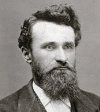 |
|
Oregon. He was born in Illinois and moved to
Oregon while still a youth. He began botanical collecting and distribution
sometime in the 1870s, encouraged by Harvard’s Asa Gray. Most
of his plants came from the area of the Wallowa and Blue Mountains.
He was profoundly interested in botany, and especially in mountain
plants. His collection forms a substantial part of the herbarium collection
of the Marion Ownbey Herbarium. In 1913 he sold the bulk of his original
collection to Oregon State University, and it is his second major
set of collections
which resides in the Marion |
Ownbey Herbarium. Encouraged by Charles
Vancouver Piper, Cusick’s second herbarium project included extensive
and exhaustive botanical surveys of the area in the two mountain ranges.
Unlike his earlier efforts, this second
phase did not include large distributions of plants. The genus Cusickiella was published by Reed Clark Rollins in 1988. (Photo credit: Oregon Encyclopedia)
-
cusickio'ides: like genus Cusickia.
-
cuspida'ta/cuspida'tum/cuspida'tus: tipped
with a firm point, usually the leaves, from the Latin cuspidata, "having a cusp, tip or point; cusped, pointed," and in turn from cuspis, "a point."
-
Cutan'dia: named for Vicente Cutanda y Jaraula (1804-1865), a Spanish botanist and director of the botanical garden of Madrid 1846-1866. He was also a professor of plant physiology and a prominent explorer of the flora of the Madrid region. The genus Cutandia was published in 1860 by Heinrich Moritz Willkomm.
-
cuyama'cae: of or from the area of Lake Cuyamaca.
-
cuyamen'sis: of or from the Cuyama Valley in Santa Barbara County. The name "Cuyama" comes from an Indian village named for the Chumash word kuyam, meaning "clam" or "freshwater mollusk."
-
cyan'eus: dark blue, from the Greek kyaneos.
-
cyanocar'pum: blue-fruited.
-
cyan'us: from the Greek kyanos, old name of some dark blue
substance or lapis-lazuli.
-
cyathif'erum: there is a Greek root, kyatheion, meaning "a
little cup," so this could mean "bearing some cup-like structure." The involucre for this taxon is described in the Jepson Manual as
bowl-shaped. The taxon Trifolium cyathiferum is called bowl clover.
-
Cycladen'ia: from the Greek kyklos,
"ring or circle," and aden, "a gland," referring to the annular disk. The genus Cycladenia was published by George Bentham in 1849.
-
Cyclolo'ma: from the Greek cyclos or kyklos, "a ring
or circle," and loma, referring to the calyx-wing, so
"circular wing." The genus Cycloloma was published in 1840 by Christian Horace Bénédict Alfred Moquin-Tandon.
-
cy'clops: one suggestion is like the gigantic mythological Cyclops, the name derived from the Greek kyklos, "a circle," and -ops, "eye." The Cyklopes were a tribe of one-eyed giants. One of the common names of Acacia cyclops is one-eyed wattle. Wikipedia says "Both the common and species names refer to the appearance of the pods when first open in late spring: each shiny black seed is encircled by a thick orange-red stalk, resembling a bloodshot eye."
-
cyclop'tera: from Greek kyklos, "circle, ring," and pteron, "wing," and alluding to the fact that the wing of the fruit (a nutlet) completely encircles the nutlet body in this variety.
-
cyclosor'um: probably has something to do
with the sori being in a circle or ring, or at least having appeared
that way to the person who originally described it.
-
Cyclosper'mum: from the Greek kyklos, "circle, ring," and sperma, "seed," referring to the shape of the
fruit and its seeds. The genus Cyclospermum was published by Mariano Lagasca y Segura in 1820.
-
cycloste'gia: from the Greek kyklos,
"circle, ring," and stegos, "a covering or roof."
-
Cydon'ia: from the Latin cydonia, "a quince, quince-apple," derived from the town of Cydon (now Khania) on the northwest coast
of Crete. The genus Cydonia was published in 1754 by Philip Miller.
-
cygnor'um: like a swan, from Greek kyknos and Latin cyknus, "a swan." The Jepson Herbarium says from the Greek for heron, for the bill-like fruit. The word cygnet, a young swan, comes from Latin cygnus, a variant of cycnus, from Greek kýknos, “swan.” The taxon in California with this epithet is Erodium cygnorum, and the Erodiums are typically called storksbills, heron's bills or cranesbills, but not swans bills, and yet cygnorum clearly relates to swans.
-
cylindra'ceus: long and round, cylindrical.
-
cylin'drica: cylindrical, long and round.
-
Cylindropun'tia: from the Greek kylindros,
"a cylinder," plus genus Opuntia, this is now the
new genus of the so-called 'true chollas.' The genus Cylindropuntia was published by Frederik Marcus Knuth in 1930.
-
Cymbalar'ia/cymbalar'ia: a name for ivy-leaved toad
flax, from the Greek kymbalon and/or the Latin cymbalum for "cymbal," and referring to the rounded leaf shapes of
some species. The genus Cymbalaria was published in 1756 by John Hill.
-
cymbalario'ides: resembling the genus Cymbalaria.
-
Cymop'terus: from the Greek kuma,
"wave," and pteron, "wing," some species
having wavy wings. The genus Cymopterus was published by Constantine Samuel Rafinesque in 1819.
-
cymo'sa/cymo'sum: bearing cymes, more or less
flattened flower heads blooming from the middle out.
-
cynancho'ides: like genus Cynanchum.
-
Cynan'chum: from the Greek kyon or kynos, "dog," and anchein, "to strangle," in reference to its supposed
use or capacity as a dog poison. The genus Cynanchum is called swallow-wort and was published by Carl Linnaeus in 1753.
-
Cynar'a: from the Greek kyon, "dog," the phyllaries likened to dogs' teeth. The genus Cynara was published by Carl Linnaeus in 1753.
-
Cy'nodon: from the Greek meaning "dog
tooth" from the hard tooth-like scales on the rhizomes or stolons.
The genus Cynodon was published in 1805 by Louis Claude Marie Richard.
-
Cynoglos'sum: Greek for "dog's tongue" from kynos,
"dog," and glossa, "tongue." The genus Cynoglossum was published by Carl Linnaeus in 1753 and is called comfrey.
-
Cynosur'us: from the Greek kynos or kyon, "a dog," and oura, "a tail," thus "dog's tail." The genus Cynosurus was published by Carl Linnaeus in 1753.
-
cyperin'us: resembling genus Cyperus. Linnaeus described this taxon as having the overall appearance
of a Cyperus, but spikelets like a Scirpus. One source says "Likely a Latinized form of 'Cyperus,' a related genus in the sedge family, indicating similarity to those plants."
-
cypero'ides: resembling Cyperus.
-
Cy'perus: from a Greek word kupeiros meaning 'sedge.' The genus Cyperus was published by Carl Linnaeus in 1753.
-
Cypripe'dium: lady's slipper, moccasin flower. Stearn says "from Greek kypris, or kupris, and Latin cypria, an early reference in Greek myth to Aphrodite (aka Venus), who was worshipped especially on Cyprus, and pedilon, "a slipper," unfortunately Latinized as pedium by Linnaeus, from the shape of the flower." With regard to the second part of the name, FNA suggests that there may have been an orthographic error, and it was pes, "foot," and not pedilon, "slipper." The Flora of Wisconsin website says incorrect Latinization of ancient Greek words meaning "Venus's shoe." Other common names include references to things such as feet, moccasins, and shoes. The genus Cypripedium was published by Carl Linnaeus in 1753 and is called lady's slipper.
-
Cypsel'ea: from the Greek kypsele, "beehive, basket,
chest, box," in reference to its leaves. The genus Cypselea was published by Pierre Jean François Turpin in 1806.
-
Cyrto'mium: from the Greek kyrtos, "arch," in reference
to the pattern of netted veins. The genus Cyrtomium was published in 1836 by Carl Bořivoj Presl.
-
cyrtostach'ya: from the Greek kyrtos, "arch," and stachys, "a spike." The taxon in California with this epithet is Carex cyrtostachya and one of its common names is Sierra arching sedge. There is also a genus (not in California) called Cyrtostachys, the derivation of which is given as the Greek kyrtos, "arched or curved," and stachys, "an ear of grain."
-
Cystop'teris: from the Greek cystis or kystis, "bladder," and pteris, "fern," alluding to the subglobose indusium. The genus Cystopteris was published by Johann Jakob Bernhardi in 1805.
-
Cy'tisus: from kutisus or kytisos, a Greek name
for a kind of clover with reference to the similar-looking leaves. The genus Cytisus was published in 1798 by René Louiche Desfontaines.
|


