-
gabilanen'sis: of or from the Gabilan Mountains of the Pacific Coast
Range of California's Central Coast along the Monterey County and
San Benito County line.
-
gabrielen'se/gabrielen'sis: of or from the San Gabriel
Mountains.
-
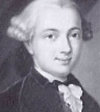
Gaertner'ia: named for German botanist and botanical collector Joseph Gaertner (1732-1791). He was born in Calw in
 |
|
the south of Germany west of Stuttgart. He unfortunately lost his parents at an early age and his primary education was provided by a family friend who was a theologian at Tübingen University. Originally meant to follow a similar vocation, he was attracted by natural history. He briefly studied law 1750-1751 in Tübingen and then medicine at Göttingen under Albrecht von Haller, Swiss anatomist, physiologist, naturalist, encyclopedist, bibliographer and poet. He got his medical degree in 1753. He was appointed professor of anatomy at Tübingen in 1760 and professor of |
botany and natural history in St. Petersburg in 1768. In 1770 he directed the botanical garden and natural history collections. He was elected a member of the Royal Society in 1761 and later a member of the Academy of Sciences of St. Petersburg. He was considered the founder of carpology, which is the study of hulls and seeds. He is the author of De fructibus et Seminibus Plantarum (1788-1791) which included 180 copper-plate engravings and introduced a new era in plant morphology. He also produced the work Supplementum Carpologiae [Supplement to Carpology] (1805-1807). He traveled extensively throughout Europe to visit other naturalists. His son was the physician and botanist Karl Friedrich von Gaertner who conducted some of the early experiments in hybridization of tobacco plants. The genus Gaertneria in the Asteraceae was published by Friedrich Kasimir Medikus in 1789 and the genus Gaertneria in the Gentianaceae was published by Nöel Martin Joseph de Necker in 1790.
-
Gaillar'dia: named for Antoine René Gaillard de Charentonneau (1720-1791), a French magistrate, naturalist and patron of botany, member of the Académie Royale des Sciences. He received seeds of plants from the French colonies which he both cultivated himself and shared with other botanists. He was an officer of the courts from 1740 to 1771 and then again from 1774 to 1779. He may have owned the castle of Charentonneau which had been acquired by a René Gaillard in 1671, and this may have been an ancestor. His father was also possibly named René (died 1744) and may be the René Gaillard who acquired the castle in 1671, and his grandfather was possibly named Pierre (died 1717), but there is very little information that I can confirm about him. One reference is to a "Rene Gaillard (1632-1709), lord of Monmiré and Charentonneau since 1671" and another to an Antoine Gaillard (1650-1716) who was possibly Pierre's brother. Another French source gives René Gaillard as buying the castle in 1671, then ownership passed to his brother Pierre (died 1717), Pierre's son René (died 1744) and finally to his son Antoine René, so the René Gaillard who bought the castle may have been the brother of Antoine René's grandfather. It was in the possession of the family until 1793 when it was seized by the government for some unexplained reason and later sold for the benefit of the nation. Antoine René was apparently alive at least as late as 1788. It's very difficult when you pretty much have only French websites to explore. The genus Gaillardia was published in 1786 by his friend French plant physiologist, archaeologist, and naturalist Auguste Denis Fougeroux de Bondaroy.
-
gaillardio'ides: like genus Gaillardia.
-
gaird'neri: named for Dr. Meredith Gairdner (1809-1837). I don't
know anything about his early years except that he was born in London
and received his medical degree in Edinburgh, Scotland. He studied
science in Germany, and then left England for North America in 1832
and was employed by the Hudson's Bay Company on the Columbia River.
He was a natural historian interested in plants, birds and fishes,
and his name was given to the steelhead trout, Salmo gairdneri.
He was constantly frustrated by the demands of his clerical
work and his inability to spend more time on the things he loved.
He was plagued by tuberculosis and traveled with Thomas Nuttall
to the Sandwich Islands sometime in the winter of 1835-1836. He
also witnessed eruptions of Mt. St. Helens in 1831 and 1835. He
became perhaps most famous (or infamous) for digging up the body of
the Chinook Indian chief Comcomly and severing his head, which he
eventually sent back to England for study. He was interested
in phrenology and the Chinook custom of head-flattening, and wanted
to make some contribution to science before he died. He had
been sent to Fort Vancouver by the Hudson's Bay Company in 1833 to help
deal with an outbreak of smallpox, or what was referred to then as
the 'cold sick', which had claimed the life of Comcomly and many others.
Unfortunately, he came down with tuberculosis himself and died
of that disease in Honolulu in 1837 at a very early age.
-
galbin'um: greenish-yellow, from the Latin galbinus, yellowish, a reference to the yellow-green fruit.
-
galeobdo'lon: said to be from the Greek galee, "a weasel or some other animal of the same type,"
and bdolon, "an unpleasant smell, a fetid scent" alluding to the unpleasant smell of the crushed leaves.
-
gale'ae: named for Nettie P. Prescott Dolan Gale (Mrs. Francis X. Dolan, Mrs. Isaac Alfred Gale) (1868-1957). She was born in Union Mills, Clackamas County, Oregon, and died in Portland. Leonard Wiley, author of Rare Wild Flowers of North America, referred to her as "my friend, Nettie Gale, one of Portland's outstanding authorities on our native flora."
-
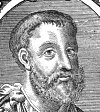
Galen'ia: named for Claudius Galenus (130-c.200/216), aka Galen, Galen of Pergamon, or Aelius Galenus, widely
 |
|
considered as the most prolific and influential of all medical writers of early antiquity and the greatest physician of the Roman Empire. The city of Pergamon, sometimes written as Pergamum, which then was in the eastern Roman empire, is today in modern-day Turkey. At that time Pergamon was an important cultural locality with a highly active intellectual community and a library exceeded only by that of Alexandria. Galen was Greek and his father, Nicon, was a very prosperous architect and mathematician, and ensured that his son was educated in the classic |
Greek fields of geometry, philosophy, logic, and literature, but encouraged him to become a physician. He authored more books still in existence than any other of the ancient Greeks. He wrote more than 200 treatises, and his medical doctrines dominated the western and Arab worlds for close to 1,500 years. He had great expertise in anatomy, surgery, pharmacology, and therapeutic methods. As a young man, because he had been left a good deal of money by his father, he traveled around the Mediterranean learning the latest techniques in medicine and healing. He spent almost five years studying at the medical school in the great city of Alexandria. After returning to Pergamon, he became physician to the gladiators of the Temple of Pergamon’s High Priest. According to Galen, his four years in this practice enabled him to learn even more about medicine. In 162 Galen went to Rome but conflicts with Rome’s established physicians who resented him led to his fleeing from the city in 166. He had however made his mark and in 169 he was summoned by Emperor Marcus Aurelius to be his personal physician. He continued as physician to Marcus Aurelius’ son Commodus who became emperor in 180 and remained with him until his murder in 192, following which he was physician to the new emperor Septimius Severus. He was an extraordinary man who was an intellectually curious innovator in the field of medicine, but also a person who willingly credited the work of others such as Hippocrates, Herophilos, Celsus, Alcmaeon, Praxagoras, Herophilos, Erasistratus and Asclepiades, and much of what is known about them is thanks to Galen’s writings. He took their earlier work and compared it with his own experimental and practical findings. If he could confirm their work, he would use it; otherwise, he would criticize it, and say why it was wrong. It was not until the end of the dark ages and the beginning of the Renaissance in the 1500s and 1600s that flaws in Galen’s understanding of human anatomy and blood circulation led to a resurgence of medical thought. The website Credo Reference says: “Galen was the most prolific and influential of all medical writers of antiquity. The incomplete but indispensable standard edition by Carl Gottlob Kuhn comprises twenty volumes. Prolixity is no guarantor of ability or reputation, but Galen's claims to each rest not only on his immense output, but on the depth and scope of his writings. Galen's treatises range from anatomical, physiological, pharmaceutical, prognostic, and therapeutic works, treatises on dietetics and plant medicine, Hippocratic commentaries, works devoted to attacking medical rivals such as Asklepiades of Bithynia and competing medical sects such as the Empiricists and Methodists, texts on epistemology, language, logic, psychology, ethics, and moral philosophy, excurses on literary criticism, philology, and rhetoric (including an Attic dictionary in forty-eight volumes), and commentaries and compendia on Plato, Aristotle, Epicurus, and the Stoics. A number of these works are either lost or exist only in fragments. Some, such as the second half of Anatomical procedures, exist only in Arabic translation. Galen's extant works account for some 50 percent of his known output, and make up almost 11 percent of all surviving Greek literature to 350 CE (the largest percentage for any single author), and only 25 percent of Galen's work has been translated into a modern language.” The exact year of his death is uncertain, sometime between 200 and 216, but he probably died in Rome. The genus Galenia was published by Carl Linnaeus in 1753.
-
Galeop'sis: from a Latin name used by Pliny for some nettle-like
plant. The genus Galeopsis was published by Carl Linnaeus in 1753.
-
galeottia'na: named for Henri Guillaume Galeotti (1814-1859), a French-Belgian botanist and geologist of Italian parentage who was born in Paris and specialized in the cactus family. He moved to Brussels with his family at an early age and was passionate about the natural sciences. He graduated in 1835 from the Etablissement Géographique de Bruxelles where he studied geology and natural history and spent five years doing geological, paleontological and botanical research in Mexico, where he assembled the finest and most complete collection of Mexican orchids of its time. He collected and described numerous new species especially of the family Cactaceae and assembled a herbarium of 7,000 species of plants. Back in Belgium he was offered a teaching position at the University of Brussels, which he rejected preferring to work at the nursery he established outside of Brussels to import and sell Mexican flora in Europe. In 1852 he became editor of the Journal d'Horticulture Pratique and the following year he was appointed as director of the Jardin botanique de Bruxelles, a position he held until his death. In 1857 he created the Bulletin de la Société Royale d’Horticulture de Belgique et du Jardin botanique de Bruxelles, and then died in 1859 of tuberculosis. His personal herbarium was purchased by the Botanical Garden of Brussels.
-
galericula'ta: with a small cap or hat, from the Latin galea,
"a helmet."
-
Galinso'ga: named for Mariano Martinez de Galinsoga (1757-1797), a Spanish doctor in Madrid, at one time physician to Queen consort Maria Luisa of Parma of Spain, superintendent of the Royal Botanical Garden of Madrid, and member of the Spanish Royal National Academy of Medicine which he may have helped to establish. Galinsoga wrote a 1784 book Demostración mecánica de las enfermedades que produce el uso de las cotillas about the health hazards of the wearing of corsets, and pointed out the absence of such health problems among peasant women who did not wear them. His father was ambassador to Hungary and Viscount of Royal Grace. His brother Luis was director of the Barcelona newspaper La Vanguardia Española. The genus Galinsoga was published in 1794 by the Spanish botanists Hipólito Ruiz López and José Antonio Pavon.
-
galio'ides: resembling the genus Galium.
-
Ga'lium: a name used by Dioscorides from the Greek word gala, "milk,"
and alluding to the fact that certain species (like G. verum) were used to curdle
milk in cheese-making. This derivation is accepted by Gledhill, Stearn and the Jepson eflora. A website of the University of Michigan presents an alternative derivation, saying "Galium is named after the Greek word for bedstraw, galion." According to Jaeger's Source-book, the Greek word galion did mean a plant called bedstraw. These two derivations don't necessarily conflict. The genus Galium was published by Carl Linnaeus in 1753 and is called bedstraw, cleavers and woodruff.
-
Galliar'ia: named for Bernardino Galliari (1707-1794), an Italian painter, scenic designer and decorator of theaters. He was born at Andorno in the Province of Biella in the Piedmont. Together with his brothers Fabrizio and Giovanni Antonio, he was one of the founders of the pictorial workshop that bore their name, that of the Galliari brothers, active in the eighteenth century in the field of painting and baroque style in use at the time in major European theaters, palaces and villas. He was sought after not only in Italy but also in Germany and France. His father, Giovanni, two brothers, and three nephews all became painters. His nephew Gian Antonio Galliari was a still-life painter of flowers. After Bernardino arrived in Milan, he set up with his brothers in nearby Treviglio. They were active in Lombardy and Veneto, and also in the Piedmont, in French Savoy, in Paris, in Berlin and in Vienna. As the principle among the Galliari brothers, Bernardino was most influential especially in relations with clients. In particular, he was able to have frequent encounters with very powerful personalities, including Frederick II of Prussia, of whom he became a confidant. The genus Galliaria was published by Pietro Bubani in 1897.
-
gal'lica/gal'licum: of or from or referring
to France.
-
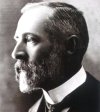
galpin'ii: named for the South African botanist and banker Ernest Edward
Galpin (1858-1941). The following is
 |
|
quoted from Wikipedia: "One
of seven sons born in Grahamstown to Henry Carter Galpin, watchmaker
and jeweller, and Georgina Maria Luck. Ernest Galpin started his education
at the local St. Andrews School. Due to his father's ill-health, Ernest
left school at 14 to assist with the business. A short spell of active
service on the frontier followed, after which he joined the Oriental
Banking Corporation, later the Bank of Africa. After being transferred
to Middelburg in the Cape, he developed an interest in the local plants
and spent long hours dissecting and identifying wild |
flowers with
the aid of the three volumes of Flora Capensis by Otto Wilhelm Sonder and William Henry Harvey and Harvey's The Genera of South African Plants which was published in 1868. However it was not until 1888, when he became bank manager
in Grahamstown, that his collecting took on a serious turn. In 1889
he was transferred to Barberton and became intrigued by the relatively
unknown local flora. His specimens now started reflecting his meticulous
nature in that they were carefully pressed, preserved and labelled
with extensive notes on locality, habitat and plant form. His duplicates
soon found their way to Kew, Zurich and a number of notable botanists
such as Harry Bolus, Medley Wood and Peter MacOwan. Not surprisingly
his collection became internationally known. In Barberton he befriended
a young lawyer and plant collector Douglas Gilfillan, later to become
his brother-in-law through their marriages to the de Jongh sisters.
Galpin had had some new plant discoveries painted by Marie Elizabeth
de Jongh (the daughter of Countess Mimi von Schönnberg) and married
her in 1892. She shared his love of the outdoor life and accompanied
him on many of his excursions and expeditions. In 1892 Galpin was
transferred to Queenstown, where he was to remain until his retirement
in 1917. By now his herbarium specimens had grown to about 1,500 in
number. He made extensive collecting trips to the mountains in the Eastern
Cape, including Great Winterberg, Katberg, Stormberg and Andriesberg.
In 1904 his wife accompanied him on a trip to the Basutoland border
where they collected around Ben MacDhui and Satsannasberg. In 1897
he set out on a trip from Port Elizabeth to Humansdorp, Knysna, George,
Riversdale, Swellendam and Caledon districts, ending in Cape Town.
Here he spent some time at the Bolus Herbarium. In 1905 he visited
Rhodesia with the British Association, collecting at the Victoria
Falls and the Matopos. In 1907, in the company of Prof. Henry Harold Welch Pearson,
he undertook a trip to South West Africa to study the curious Welwitschia,
making stops at Port Nolloth, Lüderitz Bay, Swakopmund, Welwitsch
Station, and following the Swakop River to Haikamkab. In 1910 he and
his wife departed Lourenço Marques for Kenya and Uganda, collecting
in the Aberdare Mountains and returning with a new species of tree
Lobelia. From 1913 on he added few specimens to his collection, which
even so numbered about 16,000 by 1916 when he donated the entire collection
to the National Herbarium in Pretoria. In 1917 he retired to his farm
Mosdene on the Springbok Flats near Naboomspruit north of Pretoria.
Here he became inspired to start collecting again. Following the lead
of Dr. Illtyd Buller Pole-Evans, he started an intensive botanical study of
the countryside surrounding his farm. Despite failing eyesight, he
was taught to drive by his son, and together they set out on a trip
through the Transkei and the Eastern Cape. His wife suffered a fatal
heart attack in Durban in 1933 while he was on an expedition in the
mountains of the eastern Transvaal. He was a life member of the Linnean
Society and joined the South African Association for the Advancement of Science a year
after its founding. Vol. 13 of Flowering Plants of South Africa was
dedicated to him, and the University of South Africa conferred an
honorary doctorate on him."
-
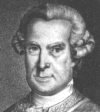
Galve'zia: named for José Bernardo de Gálvez y Gallardo (1720-1787), Marquis del la Sonora, a Spanish colonial
 |
|
administrator. The following is quoted from the Encyclopedia Britannica: "He was noted for his work as inspector general in New Spain (Mexico) in 1765-1771, where he reorganized the tax system, formed a government tobacco monopoly, and occupied Upper California. As minister of the Indies (America) from 1775, he worked to expand commerce. He devised the intendancy system [administrative and territorial subdivisions of viceroyalties, headed by an intendant or super- intendent, and implemented in Latin America in the last half of the eighteenth century] that |
was introduced in 1786. Gálvez is considered Spain's greatest colonial administrator." He was born in Málaga, Spain and after being a shepherd he gravitated toward the seminary to become a priest. This however was not to be his calling and he completed a degree in law at the University of Alcalá and became a successful attorney. He came to the attention of some of King Charles III’s ministers and thanks to a royally-connected wife, he worked as legal adviser at the French embassy in Madrid. He was chosen as personal secretary to Jerónimo Grimaldi, minister to the newly ascended king and then became attorney to Prince Carlos, the future King Carlos IV. In 1765 he was appointed as Visitador generál (Inspector general) of New Spain where he was in charge of public finances and reform issues, including overhauling revenue collection, strengthening crown monopolies, and expelling the Jesuits from the vice-royalty. He also initiated the permanent settlement of Alta California, arranging for Franciscans to take over management of the missions that had been controlled by the Jesuits. He used the rumored threat of British, Dutch and Russian colonization of the California coast to move more forcefully into Alta (Upper) California. His next move was to appoint Dominican friars to positions of authority over the Baja missions and assigned Father Junípero Serra to head the missionary team in the Alta California expedition. He established a naval base at San Blas north of Puerto Vallarta and extended his influence well north in California, issuing further instructions to build proper fortifications at Monterey, reconnoiter the ports of Monterey and San Francisco, and prepare detailed accounts destined for top officials in Mexico and Spain. He established missions at Monterey and Carmel. Unfortunately for Galvez, the Spanish occupation of Alta California would prove to be more of a drain than a source of revenue. He returned to Spain in 1772 as an honorary member of the Council of the Indies and performed special services for the king. In 1776 he assumed the prestigious post of Minister of the Indies, from which he could direct the Bourbon reforms that affected the Spanish empire from Argentina to Texas. He was zealous to more effectively organize the overseas administration to expand areas of settlement and stimulate the economy. As Minister of the Indies he was able to secure the appointment of his brother Matías as governor-captain general of Guatemala. Matías went on to serve as viceroy of New Spain. The genus Galvezia was published in 1794 by the Spanish botanists Hipólito Ruiz López and José Antonio Pavon.
-
Gambel'ia/gambelia'nus/gambel'ii: named for William Gambel (1823-1849), an assistant curator at the Philadelphia Academy of Natural Science and an avid western plant collector who died at the early age of 26. He was born in Philadelphia to an educated Irish family and not much is known about his earliest years, except that his father died when he was nine. His mother took to teaching to support the family. William was drawn toward the study of nature and came into contact with and began working for Thomas Nuttall who was engaged in writing up his botanical findings from the Pacific Coast. He trained and traveled with Nuttall on a collecting trip to North Carolina and to New England as far north as Maine. In 1841 he embarked on his own on a collecting trip for Nuttall and traveled to St. Louis and Independence, Missouri, and then along the Santa Fe and Old Spanish Trails. He collected the type specimen of Quercus gambelii near Santa Fe in New Mexico in 1841. 1842 was spent mostly collecting along the California coast and then, running short of funds, he was hired by the Navy as a secretary and spent the next several years sailing on a number of ships and collecting along the Pacific coasts of both North and South America and also visiting the Sandwich Islands. He arrived back in Philadelphia in 1845, where his discoveries of several birds new to science had brought him to the attention of some of the leading scientists of the day, even meeting John J. Audubon. Much of his material was incorporated into a book about the birds of California by John Cassin, and he drew plates for Nuttall’s book on trees. He decided to become a doctor and studied medicine at the University of Pennsylvania, gaining his degree in 1848. His plan was to set up a medical practice in California and traveled there overland in 1849. It was fairly late in the year by the time they got to the Sierras and most of his companions died. He was one of the few who made it through, but while helping some sick gold miners he contracted typhoid himself and died. He was a significant naturalist and undoubtedly would have had a bright future as an ornithologist and botanist. He is remembered best perhaps because of Gambel’s oak and Gambel’s quail. He also collected on Santa Catalina Island. The genus Gambelia was named for him in 1847 by Thomas Nuttall.
-
Gamochae'ta: from the Greek gamos, "marriage, stigma,
female part, union" and chaite or chaete, "bristle, mane, loose and flowing hair," thus meaning
"united bristle or united hair" in reference to the basally connate pappus bristles. The genus Gamochaeta was published in 1855 by Hugh Algernon Weddell.
-
gan'deri: named for Frank Forest Gander (1899-1976), a botanist and zoologist in San Diego, California, and curator of botany at the San Diego Museum of Natural History 1934-1939. He was born in Kansas, and initially working at the O'Rourke Zoological Institute in San Diego, he studied the mammals and birds of the local area and published papers on the western mourning dove, mockingbirds and wood rats. Later he switched his focus to botany, and as curator of botany at the San Diego Museum of Natural History he served as head of the botany department there (1934 to 1939) and conducted systematic plant collections of San Diego County, compiling the most complete list of its plants up to that time which formed the basis of Ethel Bailey Higgins' Annotated Distributional List of the ferns and flowering plants of San Diego County (1949). His knowledge of the natural history of San Diego was extremely broad and he was also responsible for herpetological specimens in the museum.
-
gankin'ii: named for Roman W. Gankin (1931- ), a horticulturist and botanist. He was born in Oakland, California, and grew up in Menlo Park where his interest in botany was stimulated by his mother. He got a bachelor's degree in botany and genetics from UC Berkeley. In the 1960s he was on the staff of the UC Davis Arboretum. In the 1970s he was senior environmental planner for the Environmental Management Department, Planning Division, San Mateo County. He was the author of several Arctostaphylos taxa, and also author of The Variation Pattern and Ecological Restrictions of Arctostaphylos Myrtifolia Parry.
-
gar'beri: named for American physician and botanist Dr. Abraham Paschal
Garber (1838-1881), some of whose collections are at the University
of Florida Herbarium. Despite a life that was cut short by consumption,
Dr. Garber accomplished a lot. He grew up in a house that was saturated
with botany on a farm that was appropriately enough called Floral
Retreat. His father had built a greenhouse said to be the first in
Pennsylvania west of Philadelphia. His father was also an editor/author
of note on horticultural subjects with many published articles to
his credit. Abraham began his education in 1856 at a normal school that
had been established only a few miles from his home, graduating in
1865. A normal school is a school for the training of teachers, and
during this time he did teach at public schools and even became a
principal. During this time also he spent a brief time in the military
after joining the 195th Pennsylvania Volunteers with whom he saw service
in West Virginia, Maryland and Pennsylvania. Following the war, he
entered the junior class of Lafayette College, graduating in 1868
and becoming an assistant in natural history until 1870. He conducted
numerous and extensive botanical explorations, amassing a significant
collection for the herbarium at Lafayette. His interest in botany
led him along a path toward medicine which actually began at Lafayette
College and continued at the School of Medicine at the University
of Pennsylvania, graduating in 1872. Little did he know then that
he had but nine years of life remaining to him. He became assistant
resident physician in the Harrisburg State Lunatic Hospital in charge
of some 200 patients and continued there until poor health forced
him to resign in 1875. He tried to set up his own doctor's office
but the climate of Pennsylvania was not amenable and he sought relief
by spending time in Florida. The flora of that part of the country
was little known and Dr. Garber worked diligently to rectify that,
again collecting a great number of specimens of interest and distributing
many thousands of specimens to herbaria both in the United States
and Europe. He made one trip to the West Indies at the suggestion
of a Danish botanist, Baron Eggers, and added many specimens to his
collection. He also made a trip to Puerto Rico in the early part of
1881 and made a small collection there. It was not long after he returned
to Lancaster County in Pennsylvania in June of that year that his
condition worsened and he died. He was a most respected and beloved
individual who no doubt could have accomplished a great deal more
had he been blessed with better health, but nevertheless left his
mark on the field of botany. An odd note on a Find-a-Grave website says: "The cemetery in which he supposedly lies has been reported as a plowed field, so the whereabouts of his remains are a mystery."
-
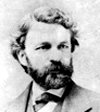
gard'neri: named for James Terry Gardiner (Gardner) (1842-1912), a surveyor, engineer, public health pioneer, son-in-
 |
|
law of Bishop William Croswell Doane, and author of Notes on the Rocky Mountain Ranges of Colorado Territory (1875). His family name was originally Gardiner, but his father discontinued the use of the ‘i.’ James Terry resumed its use halfway through his life. He was born in Troy, New York, and briefly attended the Sheffield Scientific School in New Haven, Connecticut, and Rensselaer Polytechnic Institute. In 1863 he traveled on horseback with his boyhood friend the geologist Clarence King to San Francisco, where he entered the service of the United States Army |
Corps of Engineers as a civilian assistant working on the construction of fortifications along the coast. The following year he joined the California Division of Mines and Geology under Josiah Whitney. King was already working there as a geologist and together they participated in the first scientific survey of the high country of the Sierra Nevada and Yosemite region under the leadership of William Brewer. He stayed with the Survey for several years and explored much of California. In 1867 Gardiner joined the Fortieth Parallel Survey, led by King, and then joined the Hayden Survey in 1872 serving as chief topographer until 1876. He became involved in the mining industry, writing a report on coal and iron in Colorado in 1875. Thereafter, Gardiner returned to New York where he was appointed director of the New York State Survey. In 1879 Frederick Law Olmsted, who had known Gardiner for some years, and he were asked to inspect Niagara Falls and prepare a report. From 1880 to 1886 he was also a member of the state board of health and was instrumental in establishing proper sewage systems throughout the state. He became president of the Mexican Coke and Coal Company in 1899. He helped establish the community of Northeast Harbor on Cadillac Island in Maine, built a large summer home there in 1883 which he named Ye Haven and which still stands today. He started a water company, and engineered roads and public utilities. It is appropriate that Gardiner and King are honored by the Sierra peaks only two miles apart. Mt. Gardiner, located in the center of Sequoia-Kings Canyon National Park, is one of the 33 designated ‘Mountaineer Peaks’ in the Sierra Nevada. It is the highest peak within the area bounded by the 50-mile Rae Lakes Loop, one of the most popular backpacking routes there. Mt. Gardiner is overshadowed by the more popular and technically more difficult Mt. Clarence King that lies to the northeast. He died in Northeast Harbor. ( Ptychomitrium gardneri) (Photo credit: Geni)
-
gard'neri: named for Alexander Gordon (c.1795-?) who collected the
type specimen along the Platte River in Nebraska in 1843, and then
was given the name gardneri because the author, Christian Horace Benedict
Alfred Moquin-Tandon, misread the specimen label (See gordonii). (Atriplex gardneri)
-
garret'tii: named for Utah botanist, mycologist and plant collector Albert Osbun Garrett
(1870-1948), author of Spring Flora of the Wasatch Region, Some Introduced Plants of Salt Lake County, Utah, Fungi
Utahensis, and The Uredinales or Rusts of Utah. Garrett was a botany professor who taught for East High School and Brigham Young University (BYU). He was consulted by various professors and botanists around the nation for his authority in Western American flora. Besides teaching, Garett also did work in regards to plant identification and classification both privately and through various agencies. In 1911
he undertook an exploration of southeast Utah with Per Axel Rydberg.
-
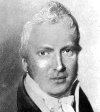
Gar'rya/garrya'na: named for Nicholas Garry (c.1782-1856) of the Hudson's Bay Company. He was an associate of
 |
|
David Douglas in his explorations of the Pacific Northwest, and was helpful to Douglas when he was in western North America in 1826 looking for native plants suitable for horticultural intro- duction in Great Britain, and it was Douglas who honored Garry with the published generic name Garrya in 1834. Garry's mother was named Isabella Garry and his father, Nicholas Langley, died when he was about 1. The boy was raised by Langley’s brother Thomas where he learned to speak German, French and Russian fluently. At some point he was involved in a business which was |
engaged in trade between England and Russia. Thomas Langley had been appointed a director of the Hudson’s Bay Company in 1807, and in 1817 Nicholas joined him as a director. At this time there were negotiations underway to merge the Hudson’s Bay Company and the North West Company. It was decided that a representative from each company should meet with the wintering partners at Fort William in Ontario to explain the new trade arrangements and obtain the partners’ concurrence, and Nicholas Garry volunteered. He left London in 1821 and although at first reluctant to go along with the proposal the partners eventually agreed. The new company was divided into a Northern Department and a Southern Department, and before leaving to return to England he placed George Simpson and William Williams as governors of the two departments. Beginning in 1822 Garry became the deputy governor of the Hudson’s Bay Company and remained in this position until he suffered a mental breakdown, and although he had previously been considered a tactful, shrewd and humane diplomat who had handled the business affairs of the company very satisfactorily, was declared of unsound mind and removed, dying in 1856 never having recovered his sanity. I have been unable to determine why he didn't take his father's name. (Photo credit: Archives of Manitoba)
-
Gastrid'ium: Umberto Quattrocchi gives the
following: "Diminutive of the Greek gaster, 'abdomen,
belly, paunch,' referring to the base of the spikelets, swollen."
The Jepson Herbarium note says: "Greek: small pouch, from swollen glume base." The genus Gastridium was published by Ambroise Palisot de Beauvois in 1812.
-
gaten'se: from the type locality, Los Gatos Creek northwest of Coalinga
in western Fresno County, an area made famous to folk music fans because
of Woody Guthrie's poem about the "Plane Wreck at Los Gatos (Deportees)."
-
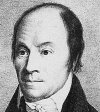
Gaudin'ia: named for Swiss botanist Jean Francois Aimé Philippe Gaudin (1766-1833), a clergyman and professor of
 |
|
botany at Lausanne. He was born at Longirod in the district of Nyon, canton of Vaud, and attended Geneva Academy, then studied theology at the University of Zurich. While there he was influenced in the direction of botany by the naturalist Johannes Gessner who was a friend of the founder of the Botanical Garden of Zurich. He became co-director and then director of the renowned Snell Institute in Nyon which Gay attended as his pupil and protégé and was taught by Gaudin how to collect and classify plants. In 1811 he published a description of grasses entitled Agrostologia |
helvetica and in 1820 was admitted to the Linnean Society of Paris and became an honorary professor of botany at the University of Lausanne. The first six volumes of his master work Flora Helvetica were published between 1828 and 1830, followed in 1833 by a geographical dictionary of all the places mentioned previously called Topographia helvetica. He compiled a herbarium of around 5,500 specimens of some 3,500 species which he bequeathed to his friend Jacques Étienne Gay. He was a founding member in 1815, with Henri-Albert Gosse, of the Swiss Society of Natural Sciences, and also the first president of the Evangelical Mission Society in Nyon in 1826. Jean Gaudin successively occupied the ecclesiastical office of pastor at the German church of Nyon, Longirod (1817-1821), then Nyon (1821-1833). The genus Gaudinia was published by Gay in 1829.
-
Gaulther'ia: named for Jean François Gaulthier (1708-1756), a French-Canadian botanist of Quebec, appointed King's physician for Quebec in 1741. His name is variously spelled as Gautier, Gauthier, Gaulthier or Gaultier. He was born in Normandy and little is known of his early childhood and youth but he studied and practiced medicine in Paris for a number of years. After the position of King’s physician in Quebec City had been vacant for several years, Gaulthier was appointed to it and he sailed for New France in 1742. He was also appointed physician of the teaching hospital Hôtel-Dieu de Québec and the seminary. He knew the botanists Antoine and Bernard de Jussieu who gave him a copy of a book entitled History of the Plants of Canada which he carried with him. In May, 1745, he was elected Henri-Louis Duhamel du Monceau 's foreign correspondent for the Royal Academy of Sciences for subjects such as meteorology, arboriculture, and agriculture. He established the first Canadian meteorological station at Quebec in November, 1742. Gaultier was hospitalized in July, 1756, for typhus and died that year. The disease was brought on the ship The Leopard, one of the squadron ships that brought Governor Louis-Joseph de Montcalm to Canada and affected about 1,000 people . He was not replaced because a first designated successor, Mr. Chomel, died before crossing, while a second, Mr. Lebeau, was prevented from coming to Canada because of the raging Seven Years' War. The translation of French Wikipedia says: “It was botany that, after meteorology, absorbed the bulk of his intellectual effort. Popular medicine, botanical pharmacopoeias and the use of woods held his attention. He helped to popularize several crops, pharmaceuticals and others, and the so-called 'tea of the woods' (Gaultheria procumbens). He compiled Canadian botanical vocabularies and prepared several treatises on maple sugar and the manufacture of pitch and resin which were published. Duhamel du Monceau published about 115 pages of Gaulthier's works. In 1752, Gaulthier sent samples of minerals to minerologist Jean-Étienne Guettard, which allowed him to develop an overall theory on the distribution of minerals and the structure of continents, a theory he had already applied in studies on Egypt, France, and Switzerland. Thanks to Gaulthier, Guettard extended his theory to North America. Creating a network of local correspondents, Gaulthier made several shipments of preserved animals to the French naturalist René-Antoine Ferchault Réaumur, birds, fish and mammals especially, some of which were accompanied by descriptions of the habits of those animals. He was credited with excellent work in entomology. The genus Gaultheria is called wintergreen or teaberry and was published in 1753 by Carl Linnaeus based on an earlier description by the Finnish botanist and explorer Pehr Kalm.
-
Gau'ra:
from the Greek gaure, feminine of gauros, "majestic, most elegant, splendid," for the beautiful flowers of some of the species. Carl Linnaeus published the genus Gaura in 1753.
-
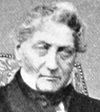
gayan'a/gayan'um: named for Jacques Etienne Gay (1786-1864), a French botanist, plant collector, taxonomist and
 |
|
civil servant who was born in Nyon, Switzerland, and studied at the renowned Snell Institute. Progressing rapidly he took an interest in botany and soon became associated with Jean François Aimé Gaudin, a renowned botanist then involved with the direction of the Snell Institute, who guided the youngster and taught him to collect and classify plants. Gay began to explore the flora of the Swiss Alps from a young age, and contributed to Gaudin's Flora Helvetica which would be published between 1828 and 1833 in seven volumes. He moved to Paris in 1811 and was soon |
taken in by Charles Louis Huguet, Marquis de Sémonville, who gave him a job in his office working for the Senate, and several years later, at the Restoration, Huguet named him secretary for the Committee of Petitions of the restored Chambre des Pairs (the Peerage of France), and he worked there until it was abolished in 1848. He carried out extensive research in descriptive botany, and played a major part in the foundation of the Société Botanique de France in 1854. He produced many taxonomic works spanning a range of plant families, and collected a great deal of herbarium specimens from western Europe. As a botanist Gay thrived in Paris, meeting many prestigious botanists of the time and, while still a follower of the school of Linnaeus, he was introduced to the natural system which opened his mind to many new ideas. In 1818 Gay published his first botanical work, a description of several grass genera, and the following two years were spent occupied by the genus Crocus. From this time until 1854 he studied a number of taxa including the Caryophyllales and the families Brassicaceae, Fumariaceae, Resedaceae, Liliaceae, Cyperaceae and Asteraceae. Writing monographs for many genera, he produced an important treatment in 1821 which covered five genera of the Byttneriaceae family, a family he spent much time studying. Gay also produced some work on the topic of phytogeography and as a dedication to the two patrons of his youth, he published the genera Semonvillea and Gaudinia in 1829, the latter of which was ruled illegitimate since it was already in use by Ambroise Palisot de Beauvois. In 1824 he received the declaration of the Legion of Honor and in 1826 he married Rosalie Nillion. The genus Gaya was named for him in 1828 by Gaudin.
( Delphinium gayanum)
-
Gaylussac'ia: named for French chemist and physicist Joseph-Louis Gay-Lussac (1778-1850). He was born at Saint-
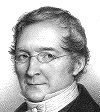 |
|
Léonard-de-Noblat in the present-day department of Haute-Vienne. His father was a lawyer, prosecutor and judge. After studying at the École Polytechnique and the École Nationale des Ponts et Chaussées (School of Bridges and Highways), and then becoming a research assistant to chemist Claude-Louis Berthollet, his first publication was on the thermal expansion of gases. He established that hydrogen and oxygen combine in a ratio of 2:1 to form water, and then identified a class of substances later called carbohydrates which contained hydrogen and oxygen in that ratio. He was a |
joint editor of Annales de chimie et de physique, held several teaching posts, and in 1818 he became a member of a government gunpowder commission. In 1829 he was appointed as the director of the Assay Department at the Paris Mint where he created a new and accurate method for assaying silver. He worked on methods for determining the strength of alcoholic liquids and was a consultant to a glass factory. In 1839 he was elected to the French Chamber of Deputies. He was the co-discoverer of boron and identified iodine as a new element. In 1804 he ascended in a hydrogen balloon with Jean-Baptiste Biot to a height of 13,000 feet and in a following ascent reached an altitude of 23,000 feet, a record which stood for a half-century. In 1805-1806, amid the Napoleonic wars, Gay-Lussac embarked upon a European tour with another Arcueil colleague, the Prussian explorer Alexander von Humboldt. The genus Gaylussacia is called huckleberry and was published by Karl Sigismund Kunth in 1819.
-
Gayophy'tum/gayan'um: named for naturalist Claude Gay (1800-1873), a French botanist, geologist, surveyor,
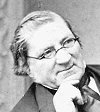 |
|
illustrator, historian, and author of Flora of Chile, born in Draguignan, France, near Provence. In childhood he developed a deep fascination with the natural sciences. In his youth, he traveled extensively in parts of Europe under the direction of the Italian botanist Juan Bautista Balbis, visiting the French Alps, northern Italy, Greece, Asia Minor, and several Mediterranean islands. He went to Paris to study medicine, but quickly gave up this idea to become a researcher in natural history. He went to Chile in 1828 to teach physics and natural history, becoming professor of |
physics and chemistry at Santiago College, and determined to study the flora of South America, eventually amassing a herbarium of some 4,000 plant specimens. His interests went far beyond botany however, and in 1829 he accepted a position as a researcher for the Chilean government to carry out a general scientific survey of the country including detailed astronomical observations and some of the first investigations about Chilean fauna, geology and geography. He went back to France in 1832, and gave his collections to the Museum of Natural History in Paris, returning to Chile in 1834 and exploring the country for a further four years. He also traveled to Peru in 1839. His great work, the multi-volume Historia Fisica y Political de Chile, was published over the period 1843 to 1851, in 24 volumes. He returned to France in 1843, and in May, 1856, he was elected a member of the French Academy of Sciences. He was also a member of the Muséum national d'histoire naturelle. He made a journey through Russia and Tartary from 1856 to 1858. At the end of 1858, he was sent by the French Academy of Sciences to study the mining system of the United States. He returned to France in 1860, and in 1863 he journeyed to Chile for the last time. He died in France. The genus Gayophytum was published by Adrien Henri Laurent de Jussieu in 1832.
( Solanum gayanum)
-
Gazan'ia: named for Theodorus Gaza (1398-1478), a Greek-born Italian scholar, humanist and translator of the works
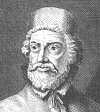 |
|
of Theophrastus and Aristotle from Greek into Latin. He was known by many other names including Theodoros Gazis, Teodoro Gaza, Theodorus Gazes, Theodore Gazis, Thessalonicensis, and Thessalonikeus. He was born into an illustrious family in Thessalonika, Macedonia. The city was under Turkish rule at the time, was returned to Byzantine authority in 1403, and then finally captured again by the Turks in 1430 when Theodorus, like many learned Greeks, and not wanting to submit to Turkish rule, escaped to Italy. Not much is known of his life prior to this, but in Italy he |
came under the influence of Vittorino da Feltre who presided over the celebrated humanist school La Giocosa, acquired a
good knowledge of Latin, studied medicine, and supported himself by giving Greek lessons. By 1447 his fame had spread widely and he was chosen as a professor of Greek at the University of Ferrara to which students flocked from all over Italy. He went to Rome in 1450 at the invitation of Pope Nicholas V and for a number of years worked by translating into Latin the works of Aristotle and other classical writers like Alexander of Aphrodisias, Aelian, Theophrastus, Dionysius of Helicarnassus and Cicero. When Pope Nicholas died in 1455 he moved to Naples and worked under King Alphonso the Magnanimous and then upon his death was awarded a benefice in Calabria (a financial arrangement that served as a reward for past services and a retainer for future services) by Cardinal Bessarion in Rome, the titular Latin Patriarch of Constantinople and a renowned Greek scholar in his own right. Theodorus also wrote a widely regarded Greek grammar which was published in Venice in 1495 and served for years as a major textbook. Joseph Gaertner published the genus in 1791.
-
geisia'na: named for Helen Dudu Geis (1873-1955), an American botanist and early Sierra Club member. She was born in Plainsburg, California and died in Orange. She graduated from the California State Normal School in San Jose, a teaching institution which eventually evolved into San Jose State University. She received an AB degree in German and botany from Stanford in 1902 and became a high school teacher. Her father was Silas Wright Geis.
-
geissea'na: named for Wilhelm Geisse (Guillermo Geisse Ulrich) (1846-1925), plant collector in Chile and died there.
-
gemel'lum: from the Latin gemellus, "a twin, one born
at the same time," from the paired heads.
- geminiflor'um: uncertain but appears to derive from the Latin for "a twin, born at the same time, doubled."
-
gemma'ta: jeweled, from gemmata, gemmatus, "jeweled,"
or gemmo, "a bud or gem." CasaBio says derived from the Latin gemmare meaning "to put out buds."
- gemm’ea: a new specific epithet for genus Verbena that is not yet included in the Jepson eflora. The author, Neil A. Uelman, in Phytoneuron 41:1–20, 2024, says “The epithet alludes to the overall glittering, gemstone-like appearance of plants in the field due to dense covering of glandular trichomes that reflect the sunlight. Suggested common name: glittering vervain.” The name derives from the Latin gemma, “a gem, gemstone, jewel, precious stone.”
-
-gena: a suffix that often indicates an origin from a particular
area or an affinity for a particular area, e.g. nubigena, "born
among the clouds," alpigena, "alpine," glaciogena,
"from glaciated areas."
-
genicula'ta/genicula'tus: jointed, bent like a knee at a node, from the Latin genus, "knee."
-
Genis'ta: a Latin name from which the Plantagenet
kings and queens of England took their name, planta genesta or plante genest.
The plant was the common broom
flower, called planta genista in Latin. It was
Geoffrey of Anjou who was nicknamed the Plantagenet because
he carried a yellow-flowered sprig of broom on his helmet as a badge (genêt is the French name of the broom shrub), and it was his son, Henry
II, who became the first Plantagenet king. Other historical explanations are that Geoffrey planted this shrub as a hunting cover or that he used the broom to scourge himself. It was not until Richard, Duke of York, father of both kings Edward IV and Richard III, that members of this family adopted the name Plantagenet, and it was then retroactively applied to the descendents of Geoffrey of Anjou as the dynastic name. The genus Genista was published in 1753 by Carl Linnaeus.
-
genistifo'lia: with leaves like genus Genista.
-
Gentia'na: named for Gentius, last King of Illyria, who ruled a kingdom in 181-168 BC, near what is now Montenegro. He was a royal member of the Illyrian tribe of the Ardiaei, who in the 2nd century BC found the roots of the herb yellow gentian or bitterwort to have a healing effect on his malaria-stricken troops. Little seems to be known about his early life, but according to the Roman historian Livy he had a brother, Plator, and a half-brother. He succeeded his father Pleuratus III who had remained loyal to Roman rule, but he led a resistance that came to be known as the Third Illyrian War in 167-168 BC. In 171 BC he was allied with the Romans against the Macedonians, but in 169 he changed sides. In that same year he apparently arranged the murder of his brother Plator and then married his (Plator’s) fiancé. The war against Roman authority ended badly, and Gentius, his queen, his half-brother, and his sons were all taken into custody. The year of his death is not known for certain, but it was after 167 BC The genus Gentiana was published by Carl Linnaeus in 1753. The names of the genera Gentianella and Gentianopsis while not specifically in honor of him are nevertheless derived from Gentiana and thus indirectly from his name.
-
Gentianel'la: "little Gentian,"
reflecting its having been split off from the genus Gentiana because while very similar was of different enough character and measurements
to warrant its own genus. The genus Gentianella was published in 1794 by Conrad Moench.
-
gentiano'ides: resembling genus Gentiana.
-
Gentianop'sis: resembling or having the form of a Gentian . Yu Chuan Ma published the genus in 1951.
-
gen'tilis: from the Latin gentilis, "family, hereditary,
related, of or belonging to the same people or nation," from gens, "clan, tribe, people, family."
-
gent'neri: named for Louis Gustave Gentner (1892-1980). The following
is quoted from a website of the Oregon
State University Library: "Louis G. Gentner, was born in
Portland, Oregon, in February, 1892. Gentner received his BS from
Oregon Agricultural College in 1915, his MS from the University
of Wisconsin in 1918, and completed his doctorate at Oregon State
College in 1953. He did his post-graduate work at Oregon State College
in 1945 and 1946. After working as an entomologist in Wisconsin and
Michigan, he became associate entomologist and assistant superintendent
of the Southern Oregon Branch Experiment Station in Medford in 1930.
Gentner's studies with alfalfa varieties led to the selection and
naming of "Talent" alfalfa, now grown extensively for seed
production exports. His work with beetles led to the elimination of
the Klamath goat weed infestation on southern Oregon infested rangeland
enabling thousands of acres to be become viable again. Gentner
retired from the station in 1962 and died July 16, 1980."
-
gent'ryi: named for Howard Scott Gentry (1903-1993), an economic botanist, president of the Society of Economic
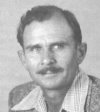 |
|
Botany and one of the world’s leading authorities on the agaves. He was born in Temecula, California, and when he was six moved with his family to the Imperial Valley where his father managed a dairy farm and grew melons and other produce. As a teenager he acted as guide for duck hunters around the Salton Sea and explored the nearby mountains. After a freshman year at Oregon State College, he transferred to UC Berkeley where one of his professors was Joseph Grinnell and from which he received a bachelor’s degree in vertebrate zoology in 1931. He also received a PhD |
in botany from the University of Michigan in 1947. He made his first field trip to the Sierra Madre Occidental in Mexico and spent most of the following twenty years exploring, collecting and recording the plant life of northwestern Mexico. From 1950 to 1971 he worked for the US Department of Agriculture and made botanical trips to Europe, India and Africa. After 1971 he was a research botanist with the Desert Botanical Garden in Phoenix and collected many of the specimens that are now at the Huntington Botanical Garden in San Marino. He was also interested in ethnobotany. An article about him by Isabel Shipley Cunningham in the journal Economic Botany says: “Gentry’s keen eye for plant variation, detailed observation of the ecological environment of the plants he collected, and his rare ability to interpret the genetic diversity of wild species are distinguishing characteristics of his work. He was an authority on the centers of origin of cultivated crops. His meticulous scholarship is reflected in the seventy publica- tions he wrote or co-authored. His colleagues remember a painstaking collector who was also an entertaining companion and an unassuming, generous, and loyal friend. Despite hardships, danger, and advancing age, he pursued his search for useful plants and his quest for knowledge. He strengthened agricultural ties between the United States and Mexico and inspired many fellow scientists, especially younger botanists whom he encouraged.” His major works were Río Mayo Plants of Sonora-Chihuahua, The Agave Family of Sonora, and The Agaves of Baja California. He is buried in Murrieta, California. (Photo credit: Economic Botany, Vol. 48, No. 4, 1994)
-
genuflex'a: presumably from the root words genu, "knee,
joint, knot," and flex from Latin flexus, "bent,
turned, curved." The English word "genuflect" of course means "to lower one's body briefly by bending one knee to the ground, typically in worship or as a sign of respect."
-
-gera/-gerous: a suffix denoting "bearing or carrying" (e.g. setigera,
"bearing bristles;" scapigera, "bearing a scape or stalk;" barbigera, "bearing a beard").
-
georgia'na: of or from the state of Georgia.
-
Gerae'a: from the Greek geraios for old,
for the white-haired involucre. The genus Geraea was published in 1846 by John Torrey and Asa Gray.
-
Geran'ium: from the Greek geranos,
"crane," from the beak-like fruit. The genus Geranium was published in 1753 by Carl Linnaeus.
-
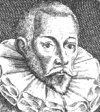
Gerard'ia: named for John Gerard (1545-1612), an English botanist with a large herbal garden in London and author
 |
|
of the 1,484-page illustrated Herball, or Generall Historie of Plantes (1597), which became the most prevalent botany book in English in the 17th century. His work was largely an unacknow- ledged (if not plagiarized) English translation of Rembert Dodoens's herbal, published in 1554. He was born at Nantwich, Cheshire, and received his only schooling at nearby Willaston. Little else appears to be known about his early life, parentage or additional schooling, but about the age of 17 he became a barber-surgeon apprentice to Alexander Mason of the Company of Barbers and |
Surgeons in London. In 1569 he was permitted to open his own practice, and at some time in his later youth, he is said to have made a single trip abroad, possibly as a ship's surgeon on a merchant ship sailing around the North Sea and Baltic, for he refers to both Scandinavia and Russia in his writings. He lived his entire adult life in London and had a successful career with the Barber–Surgeons' Company. He developed the tenement garden in Holborn and published a popular list of the plants there. In 1577 he began work as superintendent at the gardens of William Cecil (the Queen's Lord High Treasurer) and in 1586, the College of Physicians established a physic garden with him as curator, a position he held until 1604. He became associated with many people of nobility who had beautiful gardens, and no doubt plants and seeds were exchanged widely, and apparently impressed Queen Elizabeth I and Anne, the Queen Consort to King James I. In 1596, Gerard published his Catalogue which was a list of rare plants (1,039 different kinds) he cultivated in his own garden at Holborn, where he introduced exotic plants from the New World, and was the first catalogue of this type ever produced. The Flemish botanist Matthias de l'Obel wrote an introduction to the text. Wikipedia says: “Gerard's lack of scientific training and knowledge led him to frequently include material that was incorrect, folklore or mythical, such as the barnacle tree that bore geese. Nevertheless, the work, which includes more than 1,000 plants in 167 chapters remained popular, providing in English much information about the names, habits and uses of many plants known and rare. At the time it was considered the best and most exhaustive work of its kind, and a standard reference for some time.” No doubt he did include plants from his own garden and ones that he had received from the New World, but much of the Herball was not original. He was buried at St Andrews, Holborn on 18 February, 1612, but the grave is unmarked. The genus Gerardia was published in 1846 by George Bentham.
-
gerard'ii: named for the eminent French botanist and physician Louis Gérard (1733-1819). He was born in Cotignac and after studying in Draguignan, he turned to medicine at the encouragement of a friend of his father’s and received a medical degree of some kind. He joined the faculty of Montpelier where he took up botany. He then traveled to Provence to harvest the plants that appeared in his Gallo-provincialis Flora, published in Latin in 1761 while he was living in Paris. Bernard de Jussieu offered him a teaching position in the Jardin des Plantes, but he preferred to return to Provence to practice as a country doctor. He did however continue his activities as a botanist by publishing and maintaining a correspondence with other botanists, and was elected corresponding member of the Royal Academy of Sciences in 1787. He was imprisoned during the Terror for protesting the death sentence of the French magistrate, botanist and statesman Chrétien Guillaume de Lamoignon de Malesherbes but was later released. He died in 1819.
-
german'ica: of or from Germany, German.
-
germanor'um: literally means "for the Germans" in Latin, the -orum ending is usually applied to a personal name to convert it to a specific
epithet when the name applies to two or more men or two people with
mixed sexes represented.
-
ger'ryi: named for Willard Dean Gerry (1945- ), a descendant of Elbridge Gerry, founding father of the United States and a signer of the Declaration of Independence and Articles of Confederation. He owned the property where the taxon Monardella sinuata ssp. gerryi was found. A website of the Wild Farms Foundation says: "Will Gerry is a career agriculturalist, having managed various agricultural operations and the family citrus/avocado ranch for nearly 40 years. Will is currently a partner in Gerry Management, an organization formed to manage the 169 acres of blueberries of the Coastal California Blueberry Operations LLC. Will and his brother are responsible for the land redevelopment, planting, cultivation and harvesting of the blueberries for CCBB."
-
gertrudia'num: named for Gertrude Sinsheimer (1871-1960), a lifelong resident of San Luis Obispo born in Mississippi. With the onset of World War I, she continued in her mother's tradition by heading the SLO Chapter of the Red Cross and serving on the California Tuberculosis Association Board. And twenty-five years later, World War II saw Gertrude still active in supporting the troops and those in need, donating sheet music, instruments, flower seeds, chocolate, and cash contributions around the state. With her brother, Mayor Louis Sinsheimer, Gertrude lived in the family home at 1020 Marsh St. Gardening was her avocation. She was active in the San Luis Obispo Garden Club and Wild Flower Association, distributing circulars to save the wildflowers and drafting a letter to the County Board of Supervisors arguing against unsightly highway signs when the new Cuesta Grade route was being built in 1937. She had nine siblings.
-
Ge'um: an ancient Latin name, from the Greek geno, which means "to give off a pleasant fragrance." When crushed, the roots of Geum plants smell like cloves. The genus Geum was published by Carl Linnaeus in 1753.
-
gey'eri/geyeria'na: named for Karl Andreas Geyer (1809-1853), a German botanist who
traveled across the continent in 1843 with a group of missionaries,
collecting plants particulary in the camas-dominated prairie areas
of northern Idaho and southeastern Washington which were at the time
considered 'Upper Oregon.' He collected some 10,000 specimens representing
600 species, and had thirteen species named in his honor by the great
British botanist William Hooker. The following was extracted from
the Bulletin of the Native Plant Society of Oregon: "Born
in Dresden, Germany, in 1809, Geyer was trained in botany as a youth
[no doubt influenced by his gardener father and assisting at the Dresden
Botanic Garden], and traveled to America in the 1830s heading for
St. Louis which he knew was the stepping-off place for exploration
of the upper Missouri River and the poorly surveyed western part of
the continent. Upon arrival, he attached himself to several expeditions
and gained experience in wilderness travel. In 1843 he found a patron
in the famous Dr. George Engelmann (of the Engelmann spruce) who financed
a collecting trip into the northwest with the understanding that Geyer's
plant specimens would come back to Engelmann in St. Louis. Traveling
as part of a large and well-supplied party, Geyer started west along
the Oregon Trail in 1843 -- the same year as the first major migration
of pioneers in covered wagons. Leaving the large party as he neared
what is now Idaho, Geyer traveled with smaller groups, staying at
Indian villages and missions as he explored much of what is now Idaho
and Washington state. As he traveled and collected, Geyer kept a detailed
journal of his observations. He was particularly interested in Indian
uses of plants and his ethnobotanical notes are especially useful.
Fortunately for us, this narrative of Geyer's travels was published
by William Hooker along with the names of the plants discovered by
the explorer. Geyer returned to Germany after his adventure in the
American west and there he died, a relatively young man in his early
40s, perhaps worn out by his strenuous explorations of a raw new land."
Geyer was also engaged by the French professor of mathematics and
physical geographer Joseph Nicholas Nicollet and accompanied him on
an expedition to the Upper Mississippi [Minnesota] in 1838. Many of
Geyer's plants were described by John Torrey. He joined John C. Frémont
in 1841 on a trip to Iowa, again collecting plants wherever he went.
After sailing to England to study collections at Kew, he returned
to his native Saxony in 1845.
-
gianon'ei: named for Swiss dairyman and immigrant Ambrogio Gianone
(1843-1922) who ran a dairy on the Swanton Pacific Ranch in Santa Cruz County. He had settled in the area around 1867, constructed first a cheese house and later a barn in 1880 (both of which are still standing), and eventually bought a third of the ranch land on the northern end now known as Gianone Hill. The cheese produced there was called Santa Cruz Jack Cheese, said to be the forerunner of Monterey Jack. From an obituary in the Santa Cruz Evening News, Thursday, August 3, 1922: "Veteran dairyman called by death. Pioneer dairymen of the coast Mr. Gianone, for about the past ten years, has been living a life of retirement, but frequently visited the dairy, which is now under the management of his two sons, Emil and Joe. Mr. Gianone located up the coast about 40 years ago and his place was known by all the older Santa Cruzans, especially those that made it a point to camp up the coast and who were always accommodated with favors by Mr. Gianone. He was a man of fine principles, honest in all dealings and one who had a high regard for all his close friends. For some time past Mr. Gianone has not enjoyed the best of health and this began to manifest itself shortly after the death of his wife, which occurred shortly over a year ago. Mr. Gianone was a conspicuous figure on the streets of Santa Cruz for some years and previous to his last illness made it a daily practice to, spend a few hours each day with his friend Frank Roberts, at the latter's store. In the death of Mr. Gianone Santa Cruz loses a type of citizen that is a valuable asset to any community. While born in Switzerland, Mr. Gianone came to this country when a young man. He was 79 years of age. The surviving children are Emil, Joe and Emma Gianone, and Mrs. Virginia Gillen." Thanks to David Hollombe for digging that up.
-
gib'ba: swollen on one side, from Latin gibba, gibbus, for "hump" or "swelling."
-
gib'bonsii: named for William Peters Gibbons (1812-1897), an American naturalist and ichthyologist of Alameda, CaliforniaHe was born in Wilmington, Delaware, where his father was a distinguished physician, and died in California. He was president of the state medical society in 1886. He collected the type specimen of Senecio gibbonsii at the mouth of the Columbia River in 1889.
-
gibbo'sa: swollen on one side, from the Latin gibbosus, "hunch-back, gibbous," referring to an object more swollen in one place than another, with a pouch-like swelling or hump-like.
-
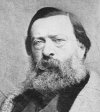
gibbs'ii: no definitive information on who this individual was, but it may refer to a George (Wolcott?) Gibbs (1815-
 |
|
1873), who was an American ethnologist, naturalist and geologist who contributed to the study of the languages of indigenous peoples in Washington Territory. Known for his expertise in native American customs and languages, Gibbs participated in numerous treaty negotiations between the U.S. government and the native tribes. He was born in Ravenswood (now called Sunswick, a part of the borough of Queens in New York City), to a father who was a minerologist. Until the age of seventeen, he attended the Round Hill School, and after failing
to gain an appointment to West
|
Point he took an extended tour of Europe. That was followed by study at Harvard from which he graduated with a law degree in 1838, returning to New York City to practice law. From 1842 to 1848 he worked as a librarian at the New York Historical Society which he had been instrumental in reviving. He was not keen on the law and was drawn to the west by the California gold rush in 1849. He first traveled to Fort Leavenworth and attached himself to the Regiment of Mounted Riflemen which his brother Alfred had already joined, and which followed an overland route along the Oregon Trail to Fort Vancouver in the Oregon Territory. Once there he worked as a deputy collector of customs at the port of Astoria, and then in 1851 joined the Oregon Indian Commission to travel through the Willamette Valley and negotiate with the indian tribes who lived there. After that he was hired to participate in the California treaty excursion in the Humboldt Bay/Klamath River region and sailed to San Francisco. In 1852 he wrote Observations on the Indians of the Klamath River and Humboldt Bay, Accompanying Vocabularies of Their Languages. After doing some prospecting, he once again took up the post of collector of customs at Astoria. In mid-1853 he moved to Steilacoom, Washington, where he was hired by George McClellan to work along with James Graham Cooper as an ethnologist, geologist and naturalist in McClellan's section of the Northern Branch of the Pacific Railroad Survey, gathering and preserving many specimens which became part of Cooper's zoological reports of the expedition and were later supplied to the Smithsonian. By 1854 he had earned a reputation as the "most apt student of the indian languages and customs in the Northwest" and was hired by Washington Territorial Governor Stevens to assist him with negotiating treaties with the various tribes. In early 1855, the Territorial Legislature appointed Gibbs Brigadier General of the Militia although he never officially acted in that capacity. In 1857 Gibbs joined The Northwest Boundary Survey of the Canada–United States border, and served until 1860 when he relocated to Washington, DC, working for the survey until mid-1862. John Strong Newberry wrote an article about the fossil plants Gibbs collected on the survey. Following a brief visit to New York, he spent most of the last decade of his life in Washington, DC, and after the Civil War he served on a commission settling claims of the Hudson's Bay Company against the US. He also expanded his studies of indian languages while working at the Smithsonian Institution. He married his cousin Mary Kane Gibbs and moved to New Haven, Connecticut in 1871, where he died in 1873.
-
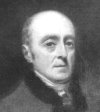
gieseckia'na: named for Charles Lewis Giesecke (aka Carl Ludwig Giesecke) (1761-1833), an actor, librettist, ex-
 |
|
plorer, and mineralogist. He was actually born Johann Georg Metzler and his father of the same name was a tailor in Augsburg, Germany. He was unusual in the sense that he had two completely unrelated careers. He attended the gymnasium in Augsburg and the University of Göttingen from 1781 to 1784, studying law. He also developed a side interest in mineralogy, attending the lectures of the naturalist Johann Friedrich Blumenbach, something that presaged his later career. It was in 1781 that he took the pseudonym by which he is now known, and what appears to be the case is that |
he wanted to disguise his ancestry for some reason. It was not until 1910 that a Danish geologist discovered his original name. In 1784 he left the university and become an itinerant actor who worked in various theaters, acting and singing, writing original plays and operas for the theatre, and traveling through Germany, Austria, and other parts of central Europe. An article by A. Whittaker entitled "The Travels and Travails of Sir Charles Lewis Geisecke” (Geological Society, London, Special Publications, 287, 149-160, 2007) says “Additionally, during his theatrical career he was engaged not only in stage management but also in the adaptation and translation of many varied works for the theater especially in the genres of comedy, parody and travesty. At intervals he also worked as a journalist or critic, covering theatrical performances in various cities. Most importantly, for twelve years or so he was a senior member of, and official playwright to, the famous Freihaus Theatre Company in Vienna, a company run by the impresario Emanuel Schikaneder, who together with the composer Mozart, conceived and staged the celebrated and seminal opera The Magic Flute in 1791. Giesecke played the role of the first slave in this opera and was stage manager for many of its performances. Later in his life, while visiting Vienna in 1818, and during his professorial appointment to the Dublin Society, Giesecke was reported to have claimed authorship of important parts of the opera's famous libretto.” In 1794 his original interest in minerology began to resurface and he obtained a mineral dealer’s license in Vienna in 1800. He studied for a time with the famous German minerologist Abraham Gottlob Werner at the Bergakademie in Freiberg. After leaving Vienna, he conducted minerological surveys in Sweden in 1803 and 1804 and then in Norway in 1805, after which he settled in Copenhagen where he worked as a mineral dealer, collector, and tutor. He next turned to the Faroe Islands and Greenland, where he conducted extensive and successful scientific surveys, but while there his existing collections in Copenhagen were destroyed when the British bombarded the city. Then a major collection of materials from Greenland aboard a Danish ship was taken by the Royal Navy and auctioned off in Edinburgh in 1808. Finally his stay in Greenland extended from two years to seven as the British had captured the Danish navy and he had no means of returning home. He explored much of the Greenland coast, contributing much to the knowledge of its geography, information which was later useful to Sir John Franklin and William Scoresby In the search for the northwest passage. He was not merely interested in rocks however, and collected botanical specimens such as the Greenland bellflower eventually named for him, and recorded information about the human history and ethnography of Greenland based on his observations of the Eskimos and of the extinct Viking settlements there. Because the collection of materials taken by the British had been recognized as significant, his name was put forward for the position of professor of minerology at the Royal Dublin Society, and he was chosen in 1814 and remained there until 1833, taking the name Charles Lewis instead of Carl Ludwig. Between 1817 and 1819 he took a leave of absence and traveled back to Copenhagen, Augsburg and Vienna with other stops along the way, renewing theater acquaintances from his past and delivering a collection of mineralogical specimens to the Emperor of Austria, Francis I. In the 1820s he conducted much minerological fieldwork in rural Ireland, visiting such locations as Galway, Mayo, the island of Achill, Donegal, Londonderry, Antrim, Tyrone, and Co. Down. He died rather suddenly in Dublin. (Much of this information from Wikipedia)
-
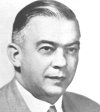
gifford'ii: named for American anthropologist, ornithologist and conchologist Edward Winslow Gifford (1887-1959).
 |
|
He was born and educated in Oakland, California, where his formal schooling ended with a high school diploma. Although he became a professor of anthropology and director of the Museum of Anthropology at the University of California, Berkeley, he never attended college. He became associated first with the California Academy of Sciences in 1903 as a student conchologist on an expedition to Revillagigado Island, Mexico. From 1904 to 1912 he was assistant and then assistant curator in the Academy’s Department of Ornithology. He took part as ornithologist on the 1905- |
1906 expedition to the Galápagos Islands. In 1912 he left the Academy to become assistant curator of the Museum of Anthropology at UC Berkeley, becoming curator in 1925. In 1920 he was appointed a lecturer in anthropology at Berkeley. He retired in 1955 as professor emeritus and accepted the honorary curatorship of anthropology at the California Academy of Sciences, which he held until his death. He was one of the few men of the century to hold a full professorship at a major university without having attended college. Other field trips he was involved with were the 1920-1921 Bernice P. Bishop Museum's expedition to Tonga where he was anthropologist-in-charge, a five-month intensive archaeological excavation in the Fijis in 1947, the seven months spent in New Caledonia in 1952, and then four months in archaeological exploration and excavation in 1956 at Yap in the Caroline Islands of the western Pacific. He was accompanied by his wife on all of these expeditions. Much of his work was on various aspects of the indigenous peoples of California and the southwestern United States, although this was overshadowed by his work in the Pacific. He published extensively in journals such as Aviculture, J ournal of the Polynesian Society, American Anthropologist, and Proceedings of the California Academy of Sciences, and journals of the Bishop Museum and the University of California. He died in his sleep in 1959 in Paradise, California, after a year of illness. (Photo credit: Cambridge University Press)
-
gigan'tea/gigan'teum:
gigantic, from Latin giganteus, " of extraordinary size or proportions."
-
gigantosper'mum: huge-seeded.
-
gi'gas: giant, from Greek gigas, "giant."
-
Gil'ia: named for Filippo Luigi Gilii (1756-1821).
The following is quoted from the website "Southwest
Colorado Wildflowers" created and maintained by my friend
Al Schneider and I thank him for it: "Italian naturalist, [astronomer],
clergyman, and director of the Vatican Observatory, for twenty-one
years Gilii made twice daily meteorological readings at the Observatory,
and he had the meridian line and obelisk placed in front of St. Peter's
for readings of the seasons. With the first Argentinean botanist,
Gaspar Xuarez (1731-1804), Gilii co-authored the three volumes of Observazioni Fitologiche (1789, 1790, 1792), a work on the value
of American (primarily South American) cultivated plants, their sexuality,
form of reproduction, anatomy, etc. Most of the plants had been cultivated
by the natives before the discovery of America and some were grown
in the Vatican gardens." I quote the following from the book Science in the Vanished Arcadia: Knowledge of Nature in the Jesuit Missions of Paraguay and Rio de la Plata (2014) by Miguel de Asua: "In 1786 there appeared in Rome a translation into Italian of John Hill's folio volume A Decade of Curious and Elegant Trees and Plants, Drawn After Specimens Received from the East Indies and America (London, 1773). The book is dedicated to Filippo Luigi Gilii by the Roman priest Father Cesare Majoli who drew the ten pictures that illustrate the work. Gilii, a Roman cleric patronized by Pope Pius VI who had studied in the Jesuit Collegium Romanum, enjoyed a benefit at the Basilica of Saint Peter. This scientific polymath was eventually put in charge of the Vatican Observatory and in 1817 transformed Saint Peter's Square into a gigantic sundial. Besides his activities as astronomer in charge of La Specola Vaticana and his work as assiduous meteorologist - he installed lightning rods in the dome of the Basilica of St. Peter and other Roman churches - Gilii was interested in botany and natural history. He had organized a small museum of natural history, collected an herbal of more than 1,200 plants, and published ten books on physics, natural history, instrumentation and horology. Father Giuseppe Lais claimed that Gilii left 31 manuscript volumes among which were 14 botanical memories and short works. In 1783 Gilii founded in Corneto the Societas Georgica Tarquiniensis under the auspices of Pius VI. This was one of the many agrarian academies that flourished in Italy in the last decades of the eighteenth century in the wake of the movement of agrarian modernization..." According to Umberto Quattrocchi, his major works were Agri Romani Historia naturalis (1781) and Delineazione dei generi naturali (1785). David Hollombe has also confirmed that
this particular botanist's name should be correctly spelled Gilii,
not Gilli or Gil, and that its pronunciation should follow the Italian rule
which makes a 'g' before 'i' soft. Also in Italian the 'i' is pronounced
as 'ee,' so in order to preserve the pronunciation of the original
name, Gilia should properly be said as 'JEE-lee-uh." I find no evidence that he was Spanish as is sometimes said or that a Spanish pronunciation should be given to his name. Al Schneider has convincingly (to me) explained the situation by saying "It was apparently assumed by some botanical historian, probably in the 19th century, that since Ruiz and Pavon [who published the genus name in 1794] were Spanish and the dedication states that Gilia honors a "Felipe Gil," Gil must have been Spanish. But this assumption overlooked the fact that the dedication of the genus in 1794 says that it is to the person who co-authored Observazioni Fitologiche with Xuarez. That person was not a Spaniard named Felipe Gil but an Italian named Filippo Luigi Gilii. Ruiz and Pavon could have averted the confusion by using the proper Italian spelling of Gilii's name."
-
gilio'ides: like genus Gilia.
-
gilles'piei: named for John Wynn Gillespie (1901-1932), an American plant collector and botanist, explorer and writer on the flora of Fiji, who died at the age of 30 and was buried in Albany, Georgia. . Some of his collections are at the Botanical Garden and Botanical Museum, Berlin. The genus Gillespiea was also named for him. The taxon in the California flora is Chaenactis gillespiei which was published by William Palmer Stockwell in 1940 and is a synonym for Chaenactis stevioides. No furthern information available.
-
gillies'ii: I have encountered some discrepancies
in references to the man whose name was given to the plant here in
question. One source says it was named for John Gillies, an early
19th century botanist in Argentina. Another reference is to the Scottish
physician John Gillies who traveled in the Argentinian Andes, but this is probably the same person. L.H.
Bailey's Manual of Cultivated Plants attributes the name of Caesalpinia gilliesii to John Gillies (1747-1836), a traveller
in South America, again probably the same person but it appears certain that Bailey got the dates
confused with the John Gillies who was a well-regarded Scottish historian
and classical scholar, neither a physician or a botanist, or a person
who ever traveled in South America. Finally, the Darwin Correspondence
Online Database created by the Darwin Correspondence Project at University
Library, Cambridge, England, which I believe to be a dependable source,
has a reference to a John Gillies (1792-1834), a naval surgeon
who went to Buenos Aires in 1820 and collected plants in Chile and
Argentina, returning to Scotland in 1829. This is the person I think
this plant is named for. Sara Scharf, PhD candidate at the University
of Toronto, contacted me with the following information which I think
clears up the matter quite adequately: "He was not just a naval
surgeon but an avid botanist. He was from the Orkney Islands and learned
medicine in Edinburgh. Forced to leave the UK due to bad health, he
lived in Argentina and other South American countries in the 1820s.
During this time he was in constant contact via letters with many
of the leading botanists of his day, including Robert Brown, Hooker,
John Lindley, H.C. Watson and even the young George Bentham. He sent
them plants and biogeographical information, they sent him books.
He returned to Scotland in January 1829." Thanks to Sara
for resolving these discrepancies. The only addition I have to make is from David Hollombe who has done a family search which shows a John Gillies, son of John Gillies and Helen Frazer, born 10 July 1790, christened 17 July 1790 at Orphir, Orkney. John Gillies, Sr. was steward of Lord Armadale's Orkney estates on the island of Mainland where Orphir is located. The birth year of 1792 has been widely repeated but may in fact be incorrect. He was educated at the University of Edinburgh and it was apparently tuberculosis that caused his removal to South America.
-
gillman'ii: named for Henry Gillman (1833-1915), an ethnologist, curator for the Detroit Scientific Society, librarian
 |
|
at the Detroit Public Library, plant collector, and civil engineer. He was born in Kinsale, Ireland, and was educated first by tutors, then at Hamilton Academy in Bandon, County Cork, Ireland. His family emigrated to Detroit, Michigan, in 1850. A webpage entitled “Biographies of People who Contributed Plants to the Putnam Museum Herbarium” (part of the Plants of Iowa website) says: “Gillman's multifaceted career illustrates his personal versatility. He was part of the topographic and hydrographical team associated with the US Geodetic Survey of the Great Lakes from 1851 |
to 1869, and from 1870 to 1876 Henry was an assistant supervisor for construction in lighthouse districts ten and eleven on the Northern Lakes (an area, part of which, encompassed Lakes Erie, Huron, Michigan, and Superior. The Detroit Scientific Association was established in 1874, with Henry Gillman as one of the original organizers and a collection curator. During the years 1880 to 1885 Henry worked as superintendent and librarian with the Detroit public library. In 1886 Gillman's political support of Grover Cleveland in the presidential campaign translated into his appointment as US Consul to Jerusalem from 1886 to 1891, during which time he was a leader in the effort to prevent the expulsion by Ottoman rulers of Jews from Palestine. Beyond that, Mr. Gillman was involved in botanical and archaeological research. Prior to 1885 a number of short botanical pieces authored by H. Gillman appear in the issues of The American Naturalist." At some point early in his career he contracted as a survey assistant for the US Department of War and made charts of many Michigan locations. He forwarded a proposal to the Peabody Museum of Archaeology and Ethnology of Harvard University that he undertake an excavation of the Detroit area indian mounds, and sometime in the early-to-mid-1870s, with the approval of the US government, he opened the Fort Wayne burial mound in the River Rouge area and other indian mounds nearby. He corresponded with George Engelmann, and was a believer in phrenology, which is the study of racial characteristics as supposedly revealed by the cranial capacity of humans. He was married and had at least four children. He died in Detroit. (Photo credit: Detroit Public Library)
-
Gilman'ia/gilman'ii: named for Marshall French Gilman (1871-1944), a California naturalist, botanist and ornithologist. He was born in Banning, Riverside County, California, and grew up on the Gilman family ranch which was a stage station before the advent of the railroad and is now a Riverside County historical park. He took field trips with the noted naturalist Edmund Jaeger. He received his early education at Banning but did research and field work in ornithology and botany in many areas of California, Arizona and New Mexico. After graduating from high school he was appointed principal of Upland Elementary School but then returned to Banning as editor of the Banning Herald. Subsequent to that, positions he held included horticultural inspector, deputy quarantine officer and forest ranger in western Riverside County. When the US Forest Service came into being he moved to Palm Springs as postmaster. He met Sarah Morris, a teacher on the Morongo Indian Reservation, and they were married in 1899. He worked as an administrator for the US Indian Service at Ft. Lewis, Colorado, Shiprock, New Mexico and Sacaton, Arizona. He also served as mayor of Banning for a term, and was a deacon there in the First Baptist Church. He did significant work with propagation of desert plant life in Death Valley. From 1901 until his death he was a member of the Cooper Ornithological Society of Los Angeles, for which based upon his field research he wrote about California condors. When he became interested in Death Valley, he worked with Frederick Coville, a botanist with the Bureau of Plant Industry of the USDA. As a result of that work, he was appointed a custodian of the new Death Valley National Monument when it was first established in 1933. Some years later a checklist of Death Valley plants was published including a memo from the park naturalist who said that the number of plants in the Monument was between 600 and 700, and he noted that “all but a very few of the specimens were collected by Mr. M. French Gilman…who undoubtedly knew the flora of Death Valley more thoroughly than any other person.” The number of activities he was involved in are almost too numerous to list, but include experimental work on the grafting of walnuts, peaches, persimmons and oranges, studies on birds such as the poor-will, Gambel’s quail, mountain quail, California quail, and the saguaro screech owl, supervision of cotton experimentation near Palm Springs, studies of native American ethnobotany at the Papago Reservation in Arizona, field research on sand dunes with the US Department of Agriculture, and superintendency of the school on the Pima Indian Reservation. At almost seventy he climbed 11,000’ Telescope Peak, a hike of some 15 miles. He died in hospital in San Bernardino after suffering from severe sunstroke in the Valley. The genus Gilmania was published in 1936 by Frederick Vernon Coville.
-
girdia'na: named for Henry Harrison Gird (1826-1913),
who was born in New York and moved with his family as a baby to Louisiana
where his father, Henry Hatton Gird III, was appointed the second
president and professor of mathematics and natural history at the
College of Louisiana, at that time the largest university west of
the Mississippi River. He was educated at private schools in Jackson
and then at the College. He did not finish his education however, because
in 1844 he moved with his father and his brother Edward to Illinois,
where his father had been buying land since 1837, and they engaged
in farming and stockraising. He married Martha Lewis in 1849. His
father and younger brother Richard died shortly thereafter. A son,
Henry Lewis, was born in 1851 but unfortunately died during a malaria
epidemic the following year. These tragedies and his dissatisfaction
with conditions in Illinois prompted him to move west, not for gold
but for fertile land, and he sold the farm and emigrated to California.
Henry and his wife Martha and brother Edward started out from St.
Louis with three wagons in 1853 and crossed the plains successfully.
A daughter, Mary, was born in a tent en route. The first Gird Ranch
was near Hangtown, later renamed Placerville, a booming mining town
in 1853. Henry never felt the lure of the mines, but went into farming,
raising stock and selling his produce to the miners. Their son, William,
was born in Hangtown on January 22, 1856. Deciding to go further north,
they moved to a ranch near Nicholas, in Sutter County. A third child,
Lucy Ellen, was born here on February 28, 1859, and she lived until
the age of 103. The fall of 1861 found them at Calto Lake, Mendocino
County, where they spent a hard, cold winter. In the spring, they moved
down the coast to San Jose. By the fall of 1862 they reached Los Angeles,
where they purchased the Cienega Rancho, where they remained for almost
20 years. This ranch of nearly 1,000 acres was in the Crenshaw/Angeles
Vista/La Brea section of modern Los Angeles (now the heart of downtown
LA). The famous La Brea Tar Pits was on part of their ranch. It was
then an ideal farming and stock raising location and the family prospered.
Two more daughters were born here, Sarah Ann (called "Sally")
on February 24, 1863, and Katie Lenora, born on May 17, 1868. Sally
died October 23, 1884, but Katie lived until 1945. Henry and Martha
had had another daughter, Carrie Augusta, born July 4, 1866, but she
lived only a few months, dying on October 6, 1866. With the children
growing up, they needed a school. Henry Gird became active in organizing
a school district, with the result that a district bearing his name
was formed. It was bounded on the south by Vernon, on the east by
Los Angeles, on the north by Santa Monica, and on the west by the
Pacific Ocean. In 1876 he heard about some land in northern San Diego
County which lay along both sides of the San Luis Rey River, a short
distance above Bonsall, and was a tract of 4,590 acres called Rancho
Monserate. The land was a north county Mexican land grant, originally
planned to have been the dwelling place for the last of the California-Mexican
governors, "Pio Pico". To the Alvarado family, to whom Governor
Pico granted the ranch, it became Rancho Monserate, named for a mountain
is Spain where a monastery had stood since 800 AD. The Virgin Mary
is said to have appeared there. A small pox epidemic had broken out
there in 1863, killing 21 persons, including the owner who had been
nursing the sick. His son inherited the Rancho and lived there for
a time afterward, constructing a new adobe ranch house. It was later
to be his wedding gift to his daughter, Senora Serano, but she was
killed and Don Alvarado decided to sell it- too many tragedies for
one family in that once happy place. The ranch lands reached east
to the Pala area. The San Luis Rey Valley was a lush fertile valley
that lay below the sage covered foothills of the San Jacinto Mountain
Range of the Sierra Madres. Henry Gird saw this place as ideal and
the deal was closed at Pala (Palomar Mountain) in 1876, where at that
time the only notary public was located. So in 1880 he moved his family
south from Los Angeles. They traveled down the coastline and then
across country through the small villages of Anaheim, Santa Anna,
and Capistrano, and across the big Santa Margarita Rancho, camping
at the ford across the San Luis Rey River near the mission. Because
of the mountains, they had to go down the coastline, about 10 miles
farther south of their destination, and double back east and north
through the San Luis Rey River Valley past the famous mission, an
added 20 miles or more to the already long trip from Los Angeles.
Henry and Martha Gird, with the help of their son, Will, were very
successful in their new home. They raised fine horses, mostly trotting
stock, and had many cattle. A family orchard was started and at one
time contained practically every kind of fruit suited to the location.
There were fruit trees from Australia, Africa, and the three northern
continents. The Gird Ranch was a popular place. There was a saying
at that time that "All roads lead to Girds." The road that
led to the Gird Ranch was later named "Gird Road." It was
Henry Harrison Gird who brought the grape species that eventually
bore his name to the attention of Thomas Volney Munson (1843-1913),
a grape breeder in Dennison, Texas, and one of the leading experts
in native American grape species, who described and named it. Henry
and Martha died within a few months of each other at Fallbrook in
1913. [Personal information and stories pertaining to Henry Harrison
Gird very kindly provided by Teddie Anne "Annie" Driggs,
a great-great-granddaughter to whom I am very much indebted.]
-
girgensohn'ii: named for Estonian botanist and bryologist Gustav Carl (Karl) Girgensohn (1786-1872), author of
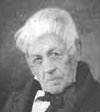 |
|
Naturgeschichte der Laub- und Lebermoose Liv-, Ehst- und Kurlands. He was born and raised in Irgli, Latvia, but moved to Estonia where he began teaching, and to explore the mosses. He compiled several collections of specimens, the largest of which is at the University of Tartu’s Museum of Natural History. He compiled a collection of 109 specimens of fungi and myxomycetes sampled from the Livonian Governorate, mostly from the vicinity of Tartu, in years 1844–1859. Girgensohn’s collection is kept in the fungarium of the Estonian University of Life Sciences. He |
was listed as a corresponding member of the Baltic German society Die Dorpater Naturforscher-Gesellschaft, which later developed into the Estonian Naturalists’ Society. His highest achievement was the Demidov Prize of the Russian Academy of Sciences of St. Petersburg which he was awarded in 1861. He was also a court councelor in Tartu and died in Dorpat. Girgensohn’s main legacy in the Estonian and Latvian natural sciences are his bryophyte collections, consisting of approximately 3,000 specimens deposited in different herbaria. He was honored with the moss taxon name Sphagnum girgensohnii and the genus Girgensohnia.
-
githa'go: from the Latin and Old English gith, the name of
a kind of plant with aromatic black seeds (corn-cockle or Roman coriander),
and -ago, a Latin substantival suffix used to indicate a resemblance
or property. A. githago is now called corn-cockle, whereas
Roman coriander is Nigella sativa, a plant with similar blackish
caraway-like seeds.
-
Githop'sis: from the Greek for " Githago-like."
Thomas Nuttall published the genus Githopsis in 1843.
-
glabel'la: somewhat smooth, smoothish, glabrous, from the Latin glabellus, "without hair, smooth," diminutive of glaber, "smooth, bald."
-
gla'ber: without hairs, glabrous.
-
glaberri'ma/glaberri'mum/glaberri'mus:
completely glabrous.
-
gla'bra/gla'brum: smooth
or hairless.
-
glabra'ta: somewhat glabrous.
-
glabres'cens: becoming glabrous.
-
glabrisep'ala: with glabrous sepals.
-
gla'brius: glabrous.
-
glabrius'cula: derived from two Latin
words meaning "bald, smooth" and "tending towards," hence "rather
or a little bit smooth and hairless."
-
glacia'lis: from icy-cold regions, from Latin glacialis, "icy, frozen, full of ice," from glacies, "ice."
-
glaciogen'a: from glaciated areas. David Hollombe sent along the
following: "All localities are granitic ones and were formerly
glaciated; the exposed rocky areas thus allow the two parents to occur
very near one another, rather than elevationally separated as is usually
the case." In California there is Pellaea X glaciogena.
-
Gladio'lus: from the Latin gladiolus, "little sword,"
for the leaf shape. Gladiolus was one of the vast number of genera published by Carl Linnaeus in 1753.
-
Glandular'ia: according to Umberto Quattrocchi, this is from the
Latin glandulae, "a little acorn, tonsils," but SEINet says Glandularia means "with small glands or full of glands." The genus Glandularia was published by Johann Friedrich Gmelin in 1791.
-
glandulif'era/glandulif'erus:
bearing or producing glands.
-
glandulo'sa/glandulo'sum/glandulo'sus:
means "provided with glands," referring to the secreting
structures on the surface ending in hairs or other plant parts.
-
glandulovis'cida: viscida means 'viscid,' describing the small, sticky
globules of brown, viscid liquid on the ends of the hairs on the stem or other plant parts, and glandulosa means "provided with glands," so this must mean "with viscid glands."
-
glau'ca/glau'cum/glau'cus:
glaucous, from the Greek meaning "bluish-gray," referring primarily
to the leaves, and specifically to "bloom," the fine, whitish
powder that coats the leaves of certain plants.
-
glauces'cens: somewhat glaucous.
-
glaucifo'lius: having gray-green leaves.
-
Glau'cium: from the Greek word glaukos for "glaucous, gleaming, gray" The genus Glaucium was published by Philip Miller in 1754.
-
glaucomol'lis: soft and glaucous.
-
glaucophyl'lum: with glaucous leaves.
-
glaucoval'vula: glaucous-valved.
-
Glaux: a name used by Pliny and applied by Dioscorides to another
plant, wart cress, a species of Coronopus. The Greek glaux means owl and comes from glaukos, meaning “bright,” referring to an owl's bright yellow eyes. The genus Glaux was published by Carl Linnaeus in 1753.
-
glaziovia'na: named for the French civil engineer, landscape designer and botanist Auguste
Francois Marie Glaziou
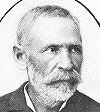 |
|
(1828-1906) who was trained at the Museum de Historia Natural de Paris and was a plant collector in Brazil. After arriving in Brazil in 1858 at the age of 25, he was appointed general director of public gardens for the city of Rio de Janeiro and designed the beautiful gardens at the Quinta de Boa Vista which was the official home to the Royal and Imperial Family from 1809 to 1889. His duties later expanded to include the entire state and its forests. Brazil was Portugal's most important colony and when the troops of Napoleon forced the King, Dom João VI, to abdicate, he fled with |
his family to Rio de Janeiro where he was crowned Emperor Pedro I of Brazil in 1822. Today the area is known as Campo de Santana Park or the Auguste Francois Marie Glazious Gardens. The herbarium which Glaziou amassed contained more than 24,000 specimens of some 12,000 species, and he sent live plants and seeds to European botanical gardens. He was also honored with the generic names Neoglaziovia, Glaziova, Glaziostelma, Glaziophyton, Bisglaziovia, Glaziophytum, and Glaziocharis, and was the co-author with Antoine Laurent Apollinaire Fée of the two-volume Cryptogames vasculaire (Fougères, lycopodiacées, hydroptéridées, équisétacées) du Brésil (1869-1873).
-
glea'soni: named for Mt. Gleason, location of the species called Castilleja gleasoni according to the Jepson Manual.
Mt. Gleason was apparently named for pioneer miner George Gleason, a native of New York. He was superintendent of Eureka Mine in Soledad Canyon near Acton. Gleason figured the mountain would be an ideal source of timber, which was used to brace the mine’s tunnels. His crew dug a rough road in 1869 and built a sawmill near the summit. He was also the postmaster of Ravenna, a small town that served the local mines.
-
Glebio'nis: from the Latin gleba, "soil," and - ionis,
"characteristic of," of uncertain application, FNA suggests "perhaps to agricultural association." Another source says perhaps for preferring agricultural habitats with plenty of soil. The genus Glebionis was published in 1826 by Alexandre Henri Gabriel de Cassini.
-
Glecho'ma: from the Greek glechon, an old name for a kind of mint, possibly the pennyroyal, Mentha pulegium. The genus Glechoma was published in 1753 by Carl Linnaeus.
-
Gledit'sia: named for German botanist and physician Johann Gottlieb Gleditsch (1714-1786) known for his pioneer
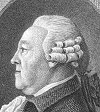 |
|
investigations of plant sexuality and reproduction. He was born in Leipzig and died in Berlin. Wikipedia says: “He studied medicine and other subjects at the University of Leipzig (1728–35), where one of his instructors was naturalist Johann Ernst Hebenstreit (for whom the genus Hebenstreitia was named). From 1742 he gave lectures in physiology, botany and materia medica at the University of Frankfurt, afterwards relocating to Berlin as a professor of botany at the Collegium Medico-chirurgicum and director of the local botanical garden. Beginning in 1770, he |
gave lectures at the recently established Institute of Forestry, where he was instrumental in providing a scientific basis for the field of forestry. In his experiments involving plant movement, he demonstrated the influence that climatic factors had upon plant organs. Also, his views on the role that insects play in pollination of plants was considered to be ahead of its time. The botanical genus Gleditsia is named in his honor, as is the botanical journal Gleditschia.” He was one of the founders of what we know as the study of economic botany, and published several important works, including Methodus Fungorum (1753), Systema Plantarum (1764) and Botanica Medica (1788-1789). John Clayton published the genus in 1753.
-
Glehn'ia: named for Peter von Glehn (1835-1876), a Russian botanist and plant explorer in Baltic Russia, author of
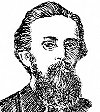 |
|
Flora der Umgebung Dorpats. He was born in Estonia to a Baltic German landowner and died in St. Petersburg. He graduated in mathematics and physics from the University of Tartu, but had been interested in botany from his earliest years. He met the Estonian botanist and geologist Friedrich B. Schmidt, also known as Carl Friedrich Schmidt and Fyodor Bogdanovich Schmidt, and agreed to accompany him to northern Siberia. The expedition, mounted by the Imperial Russian Geographical Society, was to traverse the Transbaikal, Sakhalin, Daurian, Amur and Manchurian regions. In |
March, 1860 they departed from St. Petersburg and in May they came to the upper reaches of the Amur River. From July to September, they botanized together at Sakhalin. Beginning in April and for the entire summer of 1861, Glehn botanized along with the ethnographer and plant collector A.D. Brylkin in the Douai region and along the coast of the Japanese Sea. In September he first returned to the Amur River and then traveled back to St. Petersburg along with an extensive collection of botanical, geological and ethnographic material. The report from this expedition was published in 1868 in Russian and in German in the Proceedings of the Russian Geographical Society. In January, 1867, Glehn was appointed director of the Botanical Garden in Petrograd. Here he dealt with the processing of the collected Siberian collection of plants in collaboration with other botanists, such as Igor Poláková and Alexandr L. Czekanowski. Peter von Glehn died at the young age of 41. His name is also on Picea glehnii, called Glehn’s spruce or Sakhalin spruce. The genus Glehnia was published by Schmidt in 1867.
-
Glin'us: Greek for "sweet juice," glinos and glinon were names used by Theophrastus and Pliny for a maple tree, a plant
with sweet sap. The genus Glinus was published by Linnaeus in 1753.
-
globif'era/globif'erus: bearing globe-shaped or spherical clusters.
-
globo'sa/globo'sus: spherical or globe-shaped, usually referring to
the flower head.
-
globular'is: pertaining to a small sphere or globe.
-
globulo'sus: small and globular.
-
glob'ulus: globular, from the Latin globosus for "as round as a ball."
-
glomera'ta/glomera'tum/glomera'tus:
clustered.
-
glomeriflor'a: having flowers in glomerules.
-
glorio'sa/glorio'sus: superb, glorious, from Latin gloriosa.
-
glos'sa: from Latin glossa, "tongue," also used to mean language.
-
Glossopet'alon: from the Greek meaning
"tongue petal" from the shape of the petals. The genus Glossopetalon was published in 1853 by Asa Gray.
-
gluma'ceum: with chaffy bracts, from Latin gluma, "a hull or husk."
-
glutinicau'le: with sticky stems.
-
glutino'sa/glutino'sum: sticky, referring
to the leaves.
-
Glycer'ia: from the Greek glykys, "sweet," referring
to the edible grains of Glyceria fluitans. The genus Glyceria was published in 1810 by Robert Brown.
-
Glycyrrhi'za: from the Greek glykys,
"sweet," and rhiza, "a root," and referring
to the root of G. glabra which is the source of commercial
licorice. The reason that there is a double R in the epithet Glycyrrhiza is that there is a spelling convention in Greek that says that if a stem element begins with the letter rho (the 17th letter in the Greek alphabet and a letter that is equivalent to an English R) and is preceded by an element that ends in a simple vowel, the rho or R is doubled. This convention goes back to ancient Greek which was eventually adopted by botanical Latin and modern English. Another instance of the double R in botanical names is Antirrhinum. The genus Glycyrrhiza was published in 1753 by Linnaeus.
-
glyptocar'pus: from glypto, "to carve or sculpt,"
and carpos, "fruit."
-
Glyptopleur'a: from the Greek glyptos, "carved",
and pleura, "side," referring to the sculptured fruit.
The genus Glyptopleura was published by Daniel Cady Eaton in 1871.
-
glyptosper'ma: from glypto, "to
carve," and sperma, in compound words signifying "seeded,"
thus "carved-seeded," the ashen-gray globose seeds being
coarsely pitted.
-
gme'linii: named for Johann Georg Gmelin the Younger (1709-1755), a German naturalist, botanist and geographer.
 |
|
He was born in Tübingen in southwest Germany and clearly a gifted student began attending university lectures at 14. In 1727 he graduated with a medical degree at the age of 18, then traveled to St. Petersburg where he obtained a fellowship at the Academy of Sciences the following year. In 1730 he was a lecturer at the university and the next year was appointed professor of chemistry and natural history. He was chosen as the natural historian of Vitus Bering’s Second Kamchatka Expedition (1733–43). He started out by traveling through the Urals and western Siberia to |
Yeniseysk with the student Stepan Krascheninnikov (see Krascheninnikovia). He determined the Yeniseyev River as the boundary between Europe and Asia and arrived at Yakutsk in late 1736. All his natural history collections, instruments and other equipment, drawings and notes were destroyed in a fire, but he re-collected many of the specimens the following summer. He returned to St. Petersburg in 1743 after spending nine and a half years and traveling some 24,000 miles, and returned to the University of Tübingen in 1747 to become professor of medicine and later director of the botanic garden. He was elected a foreign member of the Royal Swedish Academy of Sciences in 1749. Over the years 1747-1769 he published his four-volume Flora Sibirica which was based on his observations and collections and contained descriptions of almost 1,200 species. A fifth volume mostly on cryptogams was written by Krasheninnikov but never published. Gmelin remained in Tübingen for the remainder of his life.
-
gnaphaloi'des: like genus Gnaphalium.
-
Gnaphal'ium: derived from the Greek gnaphalon,
"a lock of wool," describing these plants as floccose-wooly.
The genus Gnaphalium was published in 1753 by Carl Linnaeus.
-
gno'ma: Edmund Jaeger's A Source-Book of Biological Names and Terms says that this is from the Greek gnoma, "a mark or sign," but David Hollombe says "I think Dudleya gnoma is from 16th century Latin, not Greek or Classical Latin; as in 'gnomus' of Paracelsus [in the book A Book on Nymphs, Sylphs, Pygmies, and Salamanders, and on the Other Spirits], that we get the modern 'gnome' from. The author (Stephen McCabe) mentions that the plant was in cultivation under the name "D. greenei 'White Sprite'." May come from New Latin gnomus, used by Paracelsus as a synonym for pygmaeus, “pygmy,” or elemental earth-dwellers, possibly from Greek genomos, "earth-dweller." One of its common names is munchkin dudleya or munchkin liveforever.
-
goddard'ii: named for Pliny Earle Goddard (1869-1928), a linguist, ethnologist and especially an authority on the
 |
|
languages and cultures of the Athabaskans of western North America. He was born n Lewiston, Maine to a Quaker family. He attended Earlham College in Richmond, Indiana, where he received an AB in 1892 and an MA in 1896. Between 1892 and 1896 he taught Latin in secondary schools in Indiana and Kansas, then accepted a position as interdenominational missionary to the Hupa people in northern California, which necessitated him learning a language quite different from any he had ever experienced. He resigned from the missionary post in 1900 and began graduate study at |
Berkeley, and in 1901 was given an assistantship in the university's newly formed anthropology department. In 1904 he was awarded a PhD for his work on Hupa linguistics. He was promoted to assistant professor in 1906 mostly in charge of undergraduate anthropology and linguistics programs. He extended his researches to compiling information on the other surviving varieties of California Athabaskans including the Kato, Wailaki, and Sinkyone. He resigned in 1909 to take a curatorship in ethnology at the American Museum of Natural History, in New York, engineered for him by the great German-American anthropologist Franz Boas, and he expanded his researches to include the Athabaskans of the Southwest, Canada, and Alaska. He wrote extensively on general ethnological topics and served as editor of the American Anthropologist (1915–20). In 1917 Boas and Goddard co-founded and edited the International Journal of American Linguistics, which soon became the principal organ of American indian linguistic scholarship. For years he was involved in a controversy with another anthropologist, Edward Sapir, over whether Athabaskan languages were tonal, possibly with a relationship to Chinese and Tibetan. He died in 1928. One of his sons, David R. Goddard, also attended UC Berkeley where he studied botany, going on to have a distinguished academic career as a plant physiologist and geneticist. (Photo credit: University of California)
-
Godet'ia: named for Charles-Henri Godet (1797-1897), an internationally renowned Swiss entomologist, botanist and pteridologist who made extensive botanical collecting trips to Russia, the Ukraine and Italy. He was schooled in Neuchâtel, then undertook studies in classical philology in Zurich, followed by a stint as a Greek teacher at the Hofwil Normal School. He pursued a somewhat itinerant lifestyle, performing as a preceptor (teacher) in Russia where he began to study in depth entomology and botany, and embarking on an exploratory trip in the Caucasus. He worked as preceptor in Paris in 1829 where he made contact with Georges Cuvier. He was in Berlin studying natural sciences in 1832, then made a trip to Sweden the following year. Returning to Neuchâtel in 1834 he began his study of the regional flora and published Flore de Jura (Flora of the French and Swiss Jura region which included Neuchâtel) in 1852. Later he was librarian of the city of Neuchâtel, and he was friends with Alexander von Humboldt and one of the founders of the Neuchâtel Horticultural Society and Botanical Gardens. He was the author of Souvenir de la flore des Alpes (1869) and wrote another book on the poisonous plants of the Neuchâtel area. He was a member of the Swiss Society of Natural Sciences and other learned societies. His brother was the famous theologian Frederick Godet (1812-1900), and his son was Paul Godet (1836-1911), professor of natural history at the Neuchâtel Gymnasium, a pioneer in the study of molluscs and director of the Neuchâtel Museum of Natural History. The genus Godetia was published in honor of Godet in 1835 by Édouard Spach.
-
god'freyi: named for botanist Robert Kenneth Godfrey (1911-2000), professor emeritus, Florida State University. He
 |
|
was born in Bloomsbury, New Jersey, where he was first educated, then undertook undergraduate training at Maryville College in east Tennessee. He began his postgraduate studies at the University of North Carolina, Raleigh, acquiring much knowledge of plants and ecological systems, and gaining a master’s degree, after which he continued postgraduate training from Harvard University with another master’s degree. He then spent a brief period in the early 1940s as a horticulturist and gardener on the Orton Plantation near Wilmington, North Carolina. When WWII broke out, he |
enlisted in the Navy and served as a LtJG in the Pacific. After the war he returned to Orton and married Eleanor "Nell" Niernsee, who was also a veteran having been a US Army nurse in the Pacific. He earned his doctorate in 1952 at Duke University with a thesis on Pluchea, and taught botany and served as curator of the herbarium at Florida State University from 1954 until his retirement in 1973. The herbarium which he developed and which included more than 180,000 plants was formally named in his honor in 2002. He was a well-known and respected authority on the flora of northern Florida and adjacent areas of Alabama and Georgia. He was the author of Trees, Shrubs, and Woody Vines of Northern Florida and Adjacent Georgia and Alabama (1988) and co-author of Trees of Northern Florida and two volumes of Aquatic and Wetland Plants of Southeastern United States. He died in Key West and is buried in Talahassee. (Photo credit: Florida State University Department of Biological Sciences)
-
gold'manii: named for zoologist and biologist Edward Alphonso Goldman (Goltman) (1873-1946). He was born
 |
|
Edward Alphonso Goltman in Mount Carroll, Illinois, to French-German parents. After moving from Pennsylvania to Illinois and then to Nebraska, his father changed the spelling of their surname to Goldman. They finally moved to Tulare County, California, in 1888. Little is known about his early education, if any, but the young man had an interest in natural history, and at the age of 17 he accepted the position of foreman in a vineyard near Fresno. Around 1891, at the conclusion of the Bureau of Biological Survey’s expedition to Death Valley, which had included such notables as C. |
Hart Merriam, Theodore Sherman Palmer, Frederick Coville and the naturalist and ethnologist Edward William Nelson. It so happened that Nelson was proceeding by buckboard through the San Joaquin Valley when he experienced a broken singletree, which is the crossbar to which the horses’ traces were attached. He fetched up at the Goldman ranch for assistance and discovered that Goldman Sr. was an avid amateur naturalist. Nelson was looking for an assistant, and the young man’s name was brought forward, and it was in this manner that Edward became an assistant to Nelson. The following year he was appointed as assistant field agent by the USBS (United States Biological Survey), and he remained a friend and colleague, almost a surrogate son, of Nelson’s until the latter’s death in 1934. He collected first with Nelson in California and then embarked on what was to be a three-month trip to Mexico with him that turned into four years and resulted in visiting most areas of the country and collecting over 20,000 mammal specimens. From 1911 to 1917 he conducted biological field surveys in Panama and Arizona for the USBS. During WWI he was a Major in France in the Sanitary Corps. and worked on rodent control. After the war he returned to the USBS and in 1920 published Mammals of Panama. He served as president of the Biological Society of Washington from 1927 to 1929 and then for the next fifteen years was senior biologist for the US Fish and Wildlife Service. From 1943 to 1946 he was an associate in zoology at the Smithsonian Institution, publishing during that time The Wolves of North America with Stanley P. Young. In 1946, shortly before his death, he was chosen as president of the American Society of Mammalogists, but his time there was cut short by a fatal stroke. He was buried in Arlington National Cemetary. After his death, his last work, The Puma, Mysterious American Cat, co-authored by Young, was published. Over the course of his career, he described more than three hundred new forms of mammals, and over fifty species and subspecies are named for him. He was also an excellent photographer and writer. During the 1930s he became involved in the development of protective legislation for Mexican mammals and migrating birds. He was considered one of the turn of the century’s great field biologists. (Photo credit: Journal of Mammalogy, Vol. 28, No. 2, 1947)
-
goldstein'iae: named for Lutie Deborah Goldstein (1866-1955), A philanthropist, patron of music, and nature lover. She was born in San Francisco and died there at the age of 88. Her pioneer father came to San Francisco in 1852, and she was an early member of the California Botanical Club and one of Alice Eastwood's devoted admirers. The taxon was published by Eastwood in 1905 in the Bulletin of the Torrey Botanical Club. The taxon in California with this epithet is Lathyrus goldsteiniae.
-
Gonolo'bus: angled-fruit, from Greek gonia, "a corner, joint, angle," and lobos, "a lobe," also "a capsule or pod." The genus Gonolobus called anglepod was published by André Michaux in 1803.
-
goodding'ii: named for Leslie Newton Goodding (1880-1967), a botanist and collector, who was born in Macon County, Missouri, and attended the University of Wyoming from 1899 to 1903, learning botany under Dr. Nelson, founder of the Rocky Mountain Herbarium of the University of Wyoming. He was one of the first to explore the southern Arizona area, and as a student journeyed to Yellowstone National Park to collect there and in the Montana/Idaho/Tetons area with Dr. Nelson. He discovered the rare Goodding's ash, and had other plants named after him. He was interested particularly in the flora of the western United States and biodiversity conservation, and traveled throughout the southwest in his formative years, collecting plant specimens for commercial sale. He was educated at the University of Montana, studied botany, plant pathology and pedagogy (the method and practice of teaching) before teaching at various high schools in Arizona. He also worked for various governmental agencies during the course of his life and contributed especially to erosion control. He was recognized for the creation of the Godding Research Area in Sycamore Canyon by the US Forest Service, a region protected from grazing, mining and prospecting. Many of his specimens, collected across the western states throughout his life, represented undescribed species, and there are many species named for him, including Aster gooddingii, Plantago gooddingii, Salix gooddingii, Verbena gooddingii and Allium gooddingii, among others.
He died in Tuscon.
-
Goodman'ia/goodmania'na/goodman'ii: named for George Jones Goodman (1904-1999), an Oklahoma botanist
and authority on Chorizanthe. The following is quoted from
a February, 2000 newsletter of the American
Society of Plant Taxonomists. "Dr. George Jones Goodman,
94, Regents professor emeritus of botany and curator emeritus of the
Bebb Herbarium at the University of Oklahoma, died peacefully at his
home 23 May, 1999. Dr. Goodman was born to Elizabeth Jones Goodman
and Arthur Duane Goodman on 5 November, 1904 in Evanston, Wyoming.
He attended the University of Wyoming, graduating in 1929 with a bachelor
of arts degree with honors in botany. From Washington University in
St. Louis he received an MS in 1930 and a PhD in 1933. Dr. Goodman
joined the faculty of the University of Oklahoma in 1933 as assistant
professor of botany and herbarium curator. From 1936 to 1945 Goodman
left OU to serve as associate professor of botany and curator of the
herbarium at Iowa State College in Ames, Iowa. In 1945 Goodman was
invited to return to OU as professor and curator and he remained there
until his retirement in 1975. Goodman married Marcia McCay of Muskogee,
Oklahoma, in 1948. During his career as a botanist Goodman came to
be known as a leading expert in the field of plant taxonomy of Oklahoma
and the western United States. He was respected, admired, and beloved
by his many undergraduate and graduate students and colleagues. He
authored 73 publications, described 36 new plant taxa, made 9 new
combinations, and had 4 plants named for him. Dr. Goodman was a charter
member of the American Society of Plant Taxonomists, the International
Association of Plant Taxonomists, the Society for the Study of Evolution,
the Southwestern Association of Naturalists, and the Colorado-Wyoming
Academy of Science. In addition, he was a member of Phi Beta Kappa,
Phi Kappa Phi, Phi Sigma, Phi Chi, Sigma Xi, and the Oklahoma Academy
of Science. He received the Phi Sigma Orteriburger Award, the Oklahoma
Academy of Science Award of Merit, and a Distinguished Service Citation
from OU. Shortly after his 90th birthday, the University of Oklahoma
Press published Retracing Major Stephen H. Long's 1820 Expedition:
The Itinerary and Botany, a book which Goodman co-authored with
a former graduate student, Dr. Cheryl Lawson of Shawnee, Oklahoma.
Reviewers described the book as 'a worthy botanical and historical
milepost' and 'the challenging model for future accounts of America's
past exploring expeditions.' When Rhodora, the Journal of the
New England Botanical Club, decided to publish a series of recollections
of leading American botanists, Goodman was among the first invited
to submit his recollections. Dr. Lawson authored the article from
tape recordings she had made of Goodman's reminiscences during their
years of field trips together as they conducted research on the Major
Long expedition. At the time of his death, Goodman and Dr. Lawson
were working on a publication on the plant types of Oklahoma."
The genus Goodmania was published by James Reveal and Barbara Ertter in 1976.
-
goodridg'ei: named for John Octavius Goodridge (1811-1865), a British Royal Navy ship’s surgeon. He was born in Sturminster Newton, Dorset. He became a doctor like his father and entered service in the Royal Navy. When the Opium War broke out in 1840 between England and China, he served as an assistant surgeon on the survey ship HMS Starling. After the war he was transferred to the HMS Royal William at Davenport, and then in 1845 began service as ship’s surgeon on the survey ship HMS Herald which included in its crew the naturalist Thomas Edmonston. The Herald was assigned to make surveys along the Pacific coast from Chile to Alaska. Goodridge discovered a new species of Mammillaria on Cedar Island off the coast of Baja California. In 1848 the Herald was tasked to join the search for polar explorer John Franklin which was ultimately unsuccessful, and the ship returned to England in 1851 where Goodridge was awarded the Arctic Medal for his participation. He was married in 1852 and had four children. In 1853 he was classified as unfit for service and he died of blood poisoning.
-
Good'yera: named for the English botanist John Goodyer (1592-1664). The
following is quoted from the Wikipedia
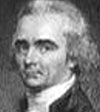 |
|
entry on Goodyer: "Goodyer's
reputation was so great that, in 1643 during the English Civil War,
Ralph Hopton, one of the senior royalist commanders, ordered troops
to defend and protect John Goodyer, his house, family, servants and
estates. John Goodyer was born in Alton, Hampshire. It’s unknown
where he was educated but he lived in Petersfield [Hampshire, England]
where his house still exists. He was buried in an unmarked grave at
St. Mary’s church, Buriton, where a stained glass window can be
found within the church as a memorial to him showing the Goodyer coat
of arms. |
Following his death the Goodyer charity Weston was set up
using some of the proceeds from his estate to help the poor. His work
and books are now stored at Oxford University and in recognition of
his work, the “Goodyera” a small terrestrial herb has been
named after him." In 1655, he produced the first translation
in English of the Materia Medica of Dioscorides (the first century
Greek physician, who served as a medical doctor in the Roman army).
Dioscorides' work served as the basis for the practice of western
medicine well into the sixteenth century. When he was a youth he evidently received a good education, possibly at the grammar school at Alton, and became fluent in Latin and Greek. He began his professional career as an apprentice prior to his employment as an estate manager (steward). Proceeds from the residue of his estate were used to establish the John Goodyer Charity to help the poor of Weston, a charity that still exists today. He bequeathed his papers and extensive collection of 239 printed works to Magdalen College, Oxford in 1664. He was married but childless. The genus Goodyera was published by Robert Brown in 1813.
-
gordonia'nus: named for George Gordon (1806-1879), a British botanist and horticultural writer who worked for the London Horticultural Society as foreman of the Horticultoral Society Gardens at Chiswick, near London. Wikipedia says: “Gordon is particularly noted for his work on conifers, publishing The Pinetum in 1858, followed by a Supplement in 1862 and a fully revised second edition of The Pinetum in 1875. He described many new species of conifers from specimens collected by Karl Theodor Hartweg in Mexico and California.” He was born at Lucan, Co. Dublin, and trained by his father who was land-steward and gardener at Sterling House near Dublin. Another page at WikiSource says: “From 1823 to 1827 he was employed in the gardens of two country gentlemen. In 1827 he was in the nursery of J. Colvill in King's Road, Chelsea, when, on 18 Feb. 1828, he was taken on the staff of the Horticultural Society at Chiswick, and, with a brief exception, remained there during the rest of his life. He rose to be one of the foremen, two of his contemporaries being Robert Fortune, the Chinese traveller, and Robert Thompson, well known for his standard volume on garden management. Gordon was foreman of the arboretum, and, having paid special attention to coniferous trees, he brought out his 'Pinetum' [The pinetum: being a synopsis of all the coniferous plants at present known, with descriptions, history and synonyms, and a comprehensive systematic index] in 1858, Robert Glendinning being associated with him in this and a 'Supplement' in 1862, of which book a second edition was produced by B. G. Bohn, the bookseller, in 1875. Dr. Lindley used Gordon's practical knowledge in some papers on conifers in the 'Journal of the Horticultural Society' in 1850 and 1851, hence the authority of Lindley and Gordon for certain species and varieties. The 'Pinetum' was unfortunately neither popular nor scientific, but between both those extremes. His herbarium was bought at his death by Sir Joseph Hooker, and by him presented to the herbarium of the Royal Gardens, Kew. Gordon died at Kew 11 Oct. 1879, having been an associate of the Linnean Society since 16 Feb. 1841.”
-
gordon'ii: named for the Scottish horticulturist and nurseryman Alexander Gordon (c. 1795?-?). Not much is known about his early life, but an article in The Gardener’s Magazine dated 1827 refers to an Alexander Gordon as gardener to Sir William Wake. This may or may not be the same person. He apparently arrived at New York in 1827 with a shipment of nursery stock. He collected extensively in South Carolina and Georgia in 1831 on a trip during which he visited the principal nurseries and private gardens of the region. He established a nursery at Rochester around 1833 and then moved to Toronto where he was associated with and wrote a series of articles for The Genesee Farmer and was listed as a secretary of the Toronto Horticultural Society founded in 1834. A website article called "The Roots of the Toronto Horticultural Society" says: "He had arrived in the city the previous year from Rochester in New York, established a nursery on Spadina Avenue, and written a series of articles “On Gardening” that appeared in the Toronto newspaper The Patriot." He appears to have worked as a nurseryman in various places in order to raise funds to finance his trips, in 1843 over the Oregon Trail through the Wind River Mountains, and in 1845 over the Santa Fe Trail out through New Mexico. He was a colleague at least by correspondence of George Engelmann and may have visited him in 1848. It is also likely that he was in correspondence with Thomas Nuttall. Alexander Gordon collected the first specimens of Ivesia gordonii for science along the upper Platte River in 1844 (from the Southwest Colorado Wildflowers website). The JSTOR website refers to a letter from Gordon in Mobile, Alabama to Sir William Hooker dated 23 Dec. 1844: "Gordon informs Hooker that he has not gone further on his intended journey than Mobile. He explains that he left New York, traveling via Philadelphia, crossed the Allighaney [Allegheny] Mountains, reached the head of the Ohio River at Pittsburgh and descended the river to its junction with the Mississippi. Whilst going down the Mississippi to New Orleans on a steamboat called 'The Belle', there was a collision and the boat sunk. Gordon held on to a plank until he was picked up, but lost everything except his shirt, pantaloons and four dollars change in his pocket. This misfortune has prevented Gordon from continuing his journey as intended, but since being at Mobile he has made a large collection of southern plants that he thinks will be saleable at New York. He hopes the revenue from this collection will allow him to continue his journey in the spring. He will probably go to the Santa Fe mountains or maybe to the Texan ranges. Assuming he chooses Santa Fe he will join the regular traders at St Louis and travel onwards under their protection. Dr. Torrey was a hundred miles from New York when Gordon was there, but wrote him a long letter, which Gordon received at New Orleans." It should be pointed out that his reference to not having gotten farther than Mobile had only to do with that particular trip because of course he had indeed been farther west the previous year. The Dictionary of British and Irish Botanists and Horticulturists lists an Alexander Gordon as a person who collected in the Rocky Mountains and South Carolina for nurseryman G. Charlwood and for Kew, and this would correspond with some of the above, but it records his dates as 1813- c. 1873, but an article in Magnolia, a publication of the Southern Garden History Society, says that "In 1827-28 Gordon made a 1,200 mile tour through America visiting nurserymen and gardens," which would seem to make those dates incorrect. The Magazine of Horticulture, Botany and All Useful Discoveries and Improvements dated May, 1849, has an article by Alexander Gordon, listed as botanical collector, Baton Rouge, Louisiana, in which he says: "A long period has elapsed since I raised my pen to address you. Since then I have traversed many a dreary waste, and many fertile regions, having twice, during the interim, extended my researches to the Rocky Mountains, California, Oregon, and New Mexico, on botanical pursuits..." A website of the Lewis and Clark Herbarium in reference to the species Atriplex gardneri, says: "Gardner’s saltbush, Atriplex gardneri, was mistakenly assigned the epithet gardneri by [Alfred] Moquin (in A.P. de Candolle & A.L.P.P. de Candolle, Prodr. 13(2): 114. 1849) when he proposed Obione gardneri. In fact, the plant Moquin saw was collected by Alexander Gordon who made his collection in 1843 while serving as botanist on the Sir William Drummond Stewart expedition along the Platte River of Nebraska while heading westward to the Wind River Range of Wyoming. Moquin simply misread the collector’s name." Moquin misread Gordon's handwriting and honored Gordon with the name of "gardneri"! According to botanical rules, the spelling of the name cannot be corrected. Lesquerella gordonii was collected in New Mexico in 1848 by Alexander Gordon.
-
Gorman'ia/gorman'ii: named for Martin Woodlock Gorman (1853-1926). The following
is quoted from an appreciation by Mr. James Nelson in Rhodora,
the Journal of the New England Botanical Club, March, 1927: "The
death of M.W. Gorman, which occurred in the Good Samaritan Hospital
in Portland, on Oct. 7, 1926, removes from the scanty ranks of Oregon
botanists the last of our picturesque trio of pioneer field-botanists, Howell, Cusick, and Gorman, men of a type now rapidly becoming
extinct, who, without formal scientific preparation or academic position,
were animated by an intense love of science, and who devoted their
energies to a study of the native flora, often under the most adverse
and discouraging conditions. It is idle to speculate on what, with
better preparation, they might have accomplished. Howell’s Flora
of Northwest America, considering the circumstances under which it
was produced, raises its author almost to the rank of a genius, and
forcibly calls to mind the work of that other tireless investigator
and pioneer, Joao de Loureiro, in Cochin China; and during the years
in which Howell was struggling with difficulties and discouragements
of every sort, Mr. Gorman was his constant associate and faithful
friend, whose modesty and self-effacement alone prevented him from
claiming the title of collaborator. Martin Woodlock Gorman was born at Douglas
in the Province of Ontario, Nov. 10, 1853, the son of Peter and Mary
(Woodlock) Gorman. His father, a Canadian of Irish descent, was engaged
in the lumber business in his younger days, but retired from active
business after inheriting the paternal homestead at Douglas. His mother,
a native of Ohio, was also of Irish descent. The young Martin seems
to have inherited an interest in trees from his father; he was fond
of telling his friends how he spent many youthful hours transplanting
ail the species of trees he could find in the forest to a little plantation
of his own -a sort of miniature “Arboretum." After securing a common-school education,
he left home at the age of 16 to clerk in a store, and at 20 went
to Montreal, where he spent eleven years in office work. During this
time he occasionally attended the lectures of J. W. (afterward Sir
William) Dawson, the geologist, at McGiIl University, and made the
acquaintance of John Macoun (see macounii), then botanist of the Canadian
Department of Agriculture. In 1885 he came to Portland, Oregon, where
he was at first a clerk in a bank, but after a few years became traveling
representative of a salmon cannery operated by relatives of his in
Alaska. This work gave him the longed-for opportunity to study the
flora and fauna of the Pacific Coast. In his business capacity he
made five trips to southeast Alaska between 1890 and 1895. In 1898
he joined the gold-seekers who were flocking to Dawson, and penetrated
into the Yukon Territory to a point on the White River 200 miles above
its confluence with the Yukon. Although wholly unprovided with facilities
for pressing or drying specimens, "the call." as he often
phrased it, "was strong," and he collected assiduously during
the trip. Many of his specimens were lost in a tragic accident resulting
in the drowning of his companion, and his own miraculous rescue by
a wholly unexpected boat; but he brought out at least ten new species,
and as great an authority as E. L. Greene declared that the results
of this trip surpassed in value those of the fully-equipped Harriman
Expedition. At the close of the Lewis and Clark Exposition,
held in Portland in 1905, all the buildings were demolished except
the Forestry Building, which was taken over by the city as a permanent
memorial, being constructed wholly of Oregon timber in its native
state, in the form of a gigantic Swiss chalet. Of this building Mr.
Gorman was appointed curator, and held the position until his death—
which ensued as the result of pneumonia following a cold caught while
raking leaves about the grounds. His little room in the building,
filled to overflowing with books, papers and specimens, was the unfailing
resort of all botanists who visited Portland. In his summer vacations
he made collecting trips to all parts of Oregon and Washington; he
has left a record of 17 of these trips, almost every one of which
resulted in notable extensions of range or discovery of new species.
He minutely botanized the environs of Portland, making a special study
of the disappearance of native species under the encroachment of civilization;
and to accompany him on one of these trips was a rare privilege, for
he not only saw everything and detected the slightest change of environment,
but had the happy faculty of pouring forth a running commentary of
reminiscence and illustration, tinged with genial Irish wit, that
made his society eagerly sought. He never married, but his kindly
and unselfish disposition prevented him from developing into the classic
old-bachelor type. His interest in humanity was unfailing, and his
charity and tolerance seemed never to be exhausted. Much-abused as
the word 'gentleman' has been, it could with little exaggeration
be literally applied to him; he represented the finest ideals of his
race. He was wholly free from vanity or self-seeking, painfully modest
as to his own attainments, always ready to subordinate his own judgment,
and never indulging in harsh or carping criticism even of those whose
views were most widely divergent from his. To the end of his life
his botanical interest was chiefly directed toward the trees and shrubs;
but he collected everything, and devoted a large part of his time
to making determinations for his many correspondents. His long association
with Thomas Howell made him an admirable commentator on the Flora
of Northwest America; he had accompanied Howell on many of his expeditions,
and was able to give detailed information as to time and place of
collection of many of his species. His own large collection he never
wholly reduced to order, but by the terms of his will it becomes,
along with his books and papers, the property of the University of
Oregon." The genus Gormania was published in 1903 by Nathaniel Lord Britton.
-
Gorter'ia: named for David de Gorter (1717-1783), a Dutch physician and botanist. He obtained his medical doctorate
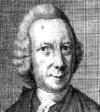 |
|
from the University of Gelderland in Harderwijk, at the age of 16 in 1734. His father, Johannes de Gorter, was a professor at the university. When Linnaeus came the following year to obtain his doctoral degree he was particularly impressed by David who was ten years younger. Linnaeus accompanied the youngster on a few collecting trips, and was much impressed. Some of the specimens they gathered are now at the Rijksherbarium in Leiden. In 1737 de Gorter received a doctorate in philosophy and then was appointed lecturer in 1742 and professor in 1743, remaining |
in this position for over a decade. He came to be an adherent of the Linnaean classification system and he published several regional floras which were faithful to the Linnaean system, including his first, the Flora Gelro-Zutphanica, in 1745. Both father and son were offered positions as personal physicians to Elizabeth, Empress of Russia, and they moved to St. Petersburg in 1754. There David became a member of the Imperial Academy of Sciences, and also joined the Royal Swedish Academy of Sciences and other academies and learned societies. In St Petersburg, de Gorter edited and published Stepan Krascheninnikov's last work, Flora Ingrica. While in Russia he collected local plants and remained there until 1764. His specimens from Russia are housed in the Linnaean herbarium in London. He was married in 1775. Most of the rest of his life was spent in Wijk bij Duurstede (near Utrecht) where he settled down to the life of a local physician. He produced another Dutch flora in 1781, Flora VII Provinciarum Belgii Foederati indigena, and the following year, Leer der plantkunde, which was an extensive description of the Linnaean doctrine and its 'natural orders'. De Gorter spent his last years in Zutphen, where he wrote his Flora of the Seven Provinces. The genus Gorteria was named for him by Linnaeus in 1759.
-
gossypi'na/gossypi'num: cottony, resembling
cotton or Gossypium.
-
Gossyp'ium: cotton, from Latin gossypinus, a name used by Pliny, and Greek gossypion, ultimately probably from Arabic goz or gothn, a silky or soft substance. The genus Gossypium was published by Carl Linnaeus in 1753 and is called cotton.
-
gougetia'num: named for Charles Joseph Gouget (1792-1875), a French Army physician and author of Essai sur la topographie medicale de la ville de Dí´le, sous-préfecture du Département du Jura who collected plants from all over France. The taxon in California with this epithet is or was Limonium gougetianum.
-
gouin'ii: named for Dr. François-Marie-Gabriel Goüin (1818-1873), a French naval surgeon and amateur plant collector. He was born in Merdrignac in Cötes-du-Nord, Bretagne, and graduated from Rennes University. He joined the navy in 1841 and served in west Africa and south Asia. He was also a participant of the Crimean War (1853-1856). He was a sanitary officer and was decorated by the Ottoman and French governments for his outstanding service in the cholera epidemic of 1855-1856. He was appointed director of the naval hospital at Vera Cruz following the French occupation of Mexico (1864-1867) and was part of the botanical research team of the French scientific mission and was particularly interested in collecting specimens of grasses endemic on the eastern coast of Mexico. He retired in 1867 to continue his botanical research in collaboration with the Museum d' Histoire Naturelle de Paris, and died from typhoid fever which he contracted from a patient. The genus Gouinia of grasses was named by Eugene Fournier in his honor in 1883.
-
goulard'ii: named for Dr. Charles Prosper Goulard (1845-1894) who first found the moss taxon Hygrohypnum smithii var. goulardii. He was born at Argentan in northwestern France and was educated at Caen High School and the seminary of Sées, where he became interested in natural history and soon thereafter was enamored with botany. He was particularly interested in phanerogams, the Muscneae, the seaweeds (especially diatoms and the Desmidieae), made plantings around Falaise, Vire and Argantan, and discovered in 1867 Fabronia pusilla on the rocks of the grotto Saint-Ortaire Campeaux near Vire, the northernmost location for this Mediterranean species. While in the navy he traveled extensively in 1868/69 and remained in South America for a time. He participated in the Franco-German War in 1870 and after hostilities were concluded he began medical studies in Montpelier and continued delving into natural history. By this time he had become a well-known bryologist, and in 1873 he explored the Pyrenees and in 1878 Corsica. He received his medical degree in 1879 and established himself as a doctor in Tinchebray, then health matters necessitated a move to the milder climate of Banyuls-sur-Mer in the Pyrenees-Orientales, where he worked in a laboratory of marine zoology and collected mosses and lichens around the area. He died in Saint-Germain-en-Laye.
-
gould'ii: named for American botanist and agrostologist Frank Walton Gould (1931-1981). He was a leading pasture specialist at Texas A & M University, until retiring as distinguished professor emeritus in grass systematics. He authored some 35 plant names. The taxon in the California flora named for him is Elymus X gouldii.
-
govenia'na: named for James Robert Gowen (1783-1862), a British
horticulturist, secretary and then treasurer of the
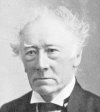 |
|
Horticultural Society, honorary member of the Lunacy Commission, confidential secretary to three successive earls of Carnarvon, fellow of the Geological Society, director of the New Zealand Company, particularly interested in orchids and rhododendrons. "Cupressus goveniana ssp.goveniana was named 'Gowen cypress' to commemorate the services to horticulture of James Robert Gowen." (Sargent, C. S. 1896. The silva of North America, Vol. X). The cypress was found by Karl Theodor Hartweg (1812- 1871), a German plant collector in California working at the |
behest of the Horticultural Society of London, and named by George Gordon who was also a member of the Horticultural Society.
-
gowen'ii: named for Hammond David Gowen (1946- ), volunteer at the Jepson Herbarium who has been involved in monitoring rare and unusual plants for the East Bay CNPS and is a co-contributor on the coming Jepson treatment of Eriastrum.
-
gra'cile/gra'cilis: slender, graceful, from Latin gracilis, "slender."
-
gra'cilens: probably the same as gracile.
-
gracilen'ta/gracilen'tum/gracilen'tus:
slender.
-
graciliflor'a: slender-flowered.
-
gracil'ior: more slender.
-
gracil'ipes: slender-stalked (compare brevipes, crassipes, filipes,
planipes).
-
gracil'lima/gracil'limum: most graceful
or slender.
-
grae'ca: Greek, Grecian.
-
grae'cizens: named for the Greeks Theophrastus and Dioscorides.
-
Gratio'la: from the Latin gratia, "agreeableness, pleasantness,
loveliness," in reference to its medicinal qualities of these
herbs. The genus Gratiola was published in 1753 by Carl Linnaeus.
-
gregar'ia: of or belonging to a herd or flock, from Latin gregarius, "pertaining to a flock; of the herd, of the common sort, common," from grex, "flock, herd."
-
graham'ii: named for Edward Harrison Graham (1902-1966), an American botanist and conservationist. He was born
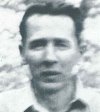 |
|
at New Brighton, Pennsylvania, and attended the University of Pittsburgh where he received a BS degree in 1927 and a PhD in botany in 1932. In 1924 he collected plants in British Guiana, and also in Arizona, Colorado, and Utah and elsewhere. From 1929 to 1937 he was assistant curator of botany at the Carnegie Museum in Pittsburgh and then joined the Soil Conservation Service of the US Department of Agriculture, advancing from biologist, to chief of the division of biology, and finally to assistant administrator for international programs. In 1939 he was elected to the Wash- |
ington Biologists’ Field Club. He was a lecturer in land management ecology in the graduate school of the United States Department of Agriculture from 1942 to 1952, at Harvard University in 1949, and a Guggenheim fellow in 1954. He represented the United States at numerous scientific conferences in Mexico, Venezuela, Denmark, France, Scotland, and Greece. JSTOR adds: “He was a member of the Washington Biologists' Field Club (1939), a lecturer at the Graduate School of the USDA (1942-1952) and also at Harvard University (1949). A leader in the conservation of natural resources, he was a consultant to the Nature Conservancy of Great Britain, and was elected president of the Soil Conservation Society of America.” He was also a member of the United States National Committee for the International Biological Program. He was the author of Legumes for erosion control and wildlife, The Land and Wildlife, The Natural principles of land use, Poisonous plants of Pennsylvania, and co-author of Water for America : the story of water conservation. He retired in 1964 at the age of 62. Following his retirement he was a consultant to the Ford Foundation and a senior associate of the Conservation Foundation in Washington. He died of pneumonia in 1966. At the time of his death he was chairman of the Commission on Ecology of the International Union for Conservation of Nature and had been scheduled to become president of the Union later that year. ( Phlox grahamii)
-
graham'ii: named for George John Graham (1803-1878), a British plant collector who was born in Brampton, Cumberland. He collected botanical material in Mexico from 1827 to 1829. Much of the material was later worked on at Kew by George Bentham, who named the taxon Salvia grahamii in his honor in 1830. Graham died at Ventnor on the Isle of Wight.
-
graham'ii: named for James Duncan Graham (1799-1865). The following is
a passage quoted from Appleton's Cyclo-
 |
|
pedia of American Biography found on the website of the US
Corps of Topographical Engineers: "James Duncan Graham, topographical
engineer, was born in Prince William County, Virginia, 4 April, 1799,
and died in Boston, Massachusetts, 28 December, 1865. He was graduated
at the United States Military Academy in 1817, and became Lieutenant
of artillery. He was promoted several steps in this arm of the service,
and employed on topographical duty, but it was not until 1829 that
his specialty was recognized. He was then brevetted Captain and afterward Major, that he |
might enter the Corps of Topographical Engineers, receiving
the full commission of Major in 1838. In 1839-1840 he was astronomer
of the surveying party that, on behalf of the United States, established
the boundary line between the latter and the then new Republic of
Texas. In 1840 he was appointed commissioner for the survey and exploration
of the northeast boundary of the United States, and was employed along
the Maine and New York frontiers until 1843. In the same year he was
ordered to duty as astronomer on the part of the United States for
the joint demarcation of the boundary between the United States and
the British provinces, under the treaty of Washington. He was thus
employed during the Mexican war. On its conclusion he was brevetted
Lieutenant Colonel, the commission reading, 'for valuable and
highly distinguished services, particularly on the boundary line between
the United States and the provinces of Canada and New Brunswick.'
In 1850 Colonel Graham was engaged by the states of Maryland, Pennsylvania,
and Delaware, to examine certain disputed questions regarding the
intersection of the boundary line of those states. He made a thorough
survey of the line originally made by Mason and Dixon, and published
a voluminous report thereon. He was employed in the final settlement
of the questions resulting from the war with Mexico, and during 1851
was United States astronomer in the survey of the boundary line between
this country and Mexico. For the next ten years he was in charge of
various harbor improvements on the northern and northwestern lakes,
in which he discovered the existence of a lunar tide (1858-1859). At
the time of his death he was superintending engineer of the seawalls
in Boston harbor, and of the repairs of harbor works on the Atlantic
coast from Maine to the capes of the Chesapeake. He was promoted to
be Colonel of the Engineer Corps, 1 June, 1863. He was a member of
several scientific societies." ( Mamillaria grahamii)
-
graham'ii: named for Scottish physician and botanist Robert Graham (1786-1845). He was born in Stirling to a father
 |
|
who was also a physician. He was educated first at Stirling Grammar School and then attended the University of Glasgow and and the University of Edinburgh where he graduated in 1806. He finished his MD two years later. He trained further at St. Bartholomew's Hospital, London, where he qualified as a surgeon. He then returned to Scotland to practice at Glasgow Royal Infirmary 1812-1813 and 1816–1819. He began lecturing in botany at the University of Glasgow and had a major hand in the creation of the Glasgow Botanic Garden. He opened the largest palm house in |
Great Britain. He became the inaugural chair of botany there in 1818, moving to Edinburgh in 1820 to become professor of botany and medicine at the University of Edinburgh, a position he held until 1845. He was also physician to the Royal Infirmary of Edinburgh and Regius Keeper of the Royal Botanic Garden Edinburgh. In 1821 Graham was elected a fellow of the Royal Society of Edinburgh. He served as president of the Royal College of Physicians of Edinburgh from 1840 to 1842. He campaigned on public health issues, particularly the combination of unsanitary conditions and overcrowding that led to the typhoid outbreak in Glasgow in 1818, and was a founder and the first president of the Botanical Society of Edinburgh (1836). He published a number of botanical papers, chiefly describing new species, in the Edinburgh New Philosophical Magazine, Curtis's Botanical Magazine, and Hooker's Companion. He collected in Britain, mainly in Scotland, and in Ireland, and worked on a flora of Great Britain which remained incomplete at the time of his death at Coldoch in Perthshire after a long illness. ( Boechera grahamii)
-
gramin'ea/gramin'eus: resembling grass, grassy, from gramen, "grass, turf."
-
graminifo'lia: with foliage like grass.
-
grana'tum: many-seeded, from granum, "grain," and granatus, "full of seeds."
-
gran'de/gran'dis: big, showy.
-
grandiceph'alum: large-headed.
-
grand'iceps: large-headed.
-
grandiflor'a/grandiflor'um/grandiflor'us:
large-flowered.
-
grandifo'lia: large-leaved.
-
-
granitico'la: granite-dweller, from graniticus, "granite," and -cola, "dweller of."
-
granitophi'lus: living on or having a preference for granitic rocks, from the root for granite and -philus, a suffix which frequently means loving or having an affinity
for. The species Cyperus granitophilus is commonly called granite sedge.
-
grantia'num/grant'ii: named for botanist and computer designer George Barnard Grant (1849-1917). A website called
 |
|
"History of Computers" provides the following: “[He] was born in Farmingdale, Gardiner, Maine, as the son of a Maine shipbuilder, and descendant from families who came from Britain in the 17th century. Grant attended Bridgton Academy in Maine, then studied for three terms at the Chandler Scientific School of Dartmouth College, and in 1869 entered the Lawrence Scientific School at Harvard, where he obtained his bachelor's degree in engineering in 1873.” In 1876 he unveiled at the Philadelphia Centennial Fair a device called a ‘differential engine,’ designed to automatically |
calculate mathematical tables. His machine was eight feet long, five feet wide and contained 15,000 moving parts, many of which were gears, and followed after the development of Charles Babbage's groundbreaking analytical engine. His design and construction of gears led him to become one of the founders of the gear industry in the United States, eventually founding the Lexington Gear Works, the Grant Gear Works, the Philadelphia Gear Works and the Boston Gear Works, the latter three of which are still operating. He also wrote several very successful books on the subject such as A treatise on gear wheels, A handbook on the teeth of gears, their curves, properties and practical construction, and Odontics, or, The Theory and Practice of the Teeth of Gears. His hobby however was botany. David Hollombe provided the following: "He was collecting on Mt. San Gorgonio on July 25, 1904 with his cousin, Walter Wheeler, and a guide, when Wheeler was struck and killed by lightning." There followed an incredibly difficult descent of the mountain with Wheeler's burned and frozen body in the midst of almost continuous thunder and hailstorms, a descent that was interrupted by a flood of thousands of tons of water and debris across the path ahead basically washing out the trail they were using. Grant collected the type specimen of mountain carpet clover on Mt. San Gorgonio only two days before Wheeler was killed.” In the 1900s he settled in California and began the pursuit that caused his name to be on plants like Trifolium monanthum ssp. grantianum and Saltugilia splendens ssp. grantii. (Photo credit: History of Computers).
-
grantia'nus: named for Adele Gerard Grant (née Lewis) (Mrs. George Francis Grant) (1881-1969), an American botanist specializing in Mimulus. She was born in Carpenteria, California, graduated with a BSc degree from the University of California, Berkeley and an MSc and PhD from the Henry Shaw School of Botany at Washington University, St. Louis, Missouri. While there she served as a teaching fellow and was associated with the Missouri Botanical Garden. She taught at Cornell University and then moved to South Africa in 1925 where she lived for five years, during which time she visited Rhodesia, the Belgian Congo, Kenya and Mozambique. She taught botany for several years at Huguenot College in Wellington, South Africa. JSTOR adds: “Working with botanists at the University of Cape Town's Bolus Herbarium she published little at the time but developed an important herbarium. On her return to the USA in 1930 Grant began to work at the Missouri Botanical Garden, but soon returned to California with her collection to study the material at the University of California, Los Angeles. In 1969, when the Missouri Botanical Garden was recognized as the official center for the study of African plants in North America, the collection was moved there for study. Grant continued to teach, working at San Francisco State College, the University of Southern California and at George Pepperdine College, and on retiring became supervisor of science for the Los Angeles County schools. As a botanist she published monographs of the genera Mimulus and Hemimeris L., but was also interested in ornithology and marine life.” She died at the age of 87 and is buried in Carpenteria, California.
-
Graphephor'um: probably from grapheion, "paint brush, pencil or stylus," and phoros, "bearing, carrying," for the hairy appendage formed by the extension of the rachilla of the spikelet. The genus Graphephorum was published by Nicaise Augustin Desvaux in 1810.
-
Gratio'la: both Gledhill and Stearn say 'agreeableness or pleasantness," in allusion to the medical uses or these herbs, diminutive of Latin grati or gratia, "pleasing, favor." FNA says "Latin gratia, "graceful," and -ola, diminutive, alluding to medicinal qualities of some species."
-
gratis'sima: very pleasing.
-
gra'tus: pleasant or pleasing.
-
graveo'lens: strong or ill-smelling (compare
beneolens, suaveolens), from gravis, “heavy” and olens, “smelling.”
-
graya'na/graya'num: see following
entry.
-
gray'i/Gray'ia: named for Asa Gray (1810-1888), one of the most eminent American botanists and professor at Har-
 |
|
vard, who played an important part in the identification of many Sierra wildflowers, and whose guides in Yosemite were John Muir and Galen Clark. He was born of Scotch-Irish ancestors in Sauquoit, New York, in the back of his father's tannery, and attended Clinton Grammar School 1823-1825, then enrolled at Fairfield Academy. He graduated from Fairfield Medical College with an MD in 1831 and opened a medical office in Bridgewater, New York, where he had served an apprenticeship with a doctor, yet he never truly practiced medicine. Botany was more important. He |
taught chemistry, mineralogy, and botany at Bartlett's High School in Utica, New York, and at Fairfield Medical School, and later became an assistant to John Torrey at the College of Physicians and Surgeons in New York City. In 1835 he left his position with Torrey (although they became lifelong friends) and the following year became curator and librarian at the Lyceum of Natural History in New York, now called the New York Academy of Sciences. In 1838 Gray became the very first permanent paid professor at the newly founded University of Michigan and then was appointed professor of botany and zoology. He was sent to Europe to contact botanists and botanical institutions there, visiting Glasgow, London, Paris, Genoa, Rome, Florence, Venice, Bologna, Padua, Trieste, and Vienna, and meeting Sir William Hooker and many others along the way. In 1842 he began his career at Harvard. Around that time he met George Engelmann who became a lifelong friend and valued plant collector for Gray. He asked Wilhelm Nikolaus Suksdorf, the German immigrant who had become a specialist in the flora of the Pacific Northwest, to come to Harvard to be his assistant. Over the intervening decades, he traveled, worked on the herbarium collection, corresponded widely, was elected as a foreign member of the Royal Swedish Academy of Sciences, was one of the original 50 founding members of the National Academy of Sciences, was president of the American Association for the Advancement of Science in 1872 and of the American Academy of Arts and Sciences 1863–1873, a regent at the Smithsonian Institution in 1874–1888, a foreign member of the Royal Society of London in 1873, and donated 200,000 plant specimens and 2,200 books to Harvard, in effect creating the botany department there. In 1872 he resigned his professorship to devote himself full time to botanical work and to finish his Flora of North America. More than 10,000 letters to Gray have been preserved from hundreds of correspondents including John Torrey, George Engelmann, Charles Darwin and John Muir, and this was one of his greatest accomplishments, the ability and desire to create a vast network of scientists who communicated with each other and shared their work with each other. Gray made st least two other trips to Europe to collaborate with leading European scientists of the era such as George Bentham and William Henry Harvey, as well as trips to the southern and western United States. He also built an extensive network of specimen collectors. His life's goal was to describe all known plants of the United States, a task that no one man could ever achieve, but he dominated American botany like no other, and was honored by the naming of the genus Grayia by Sir William Hooker in Glasgow. One of his most popular books was Manual of the Botany of the Northern United States, from New England to Wisconsin and South to Ohio and Pennsylvania Inclusive, referred to now simply as Gray’s Manual, but he wrote many others including Gray’s School and Field Book of Botany, Synoptical Flora of North America, How Plants Grow, How Plants Behave and Darwiniana. Many of the most significant plant collectors who scoured the West for new species sent their samples back to Asa Gray at Harvard for identification. To say that he was a giant in the field of botany is a gross understatement. The genus Grayia was published in 1841 by William Jackson Turner and George Walker Arnott Walker.
-
great'ae: named for Louis Agustin Greata (1857-1911),
a plant collector of significant repute acknowledged as such by no
less a figure than Harvey Monroe Hall. He was born in London, educated in Paris, and came
to the US in 1870, and as of 1880 was a railroad clerk in Louisville,
Ky. He had moved on to San Francisco by 1884 and arrived in Los Angeles
around 1894, becoming secretary to an organization of hardware dealers called the Pacific Coast Hardware and Metal Association.
He was friends with Hall and went on collecting trips with him. Jaeger's Desert Wildflowers states that Greata "...with Dr. H.M. Hall made a lengthy trip in the early 1900s in search of California compositae, traveling with a horse named Molly and a buckboard fitted with water casks and an umbrella." He especially collected around the Los Angeles area.
In the Kurtz Street Marsh, a freshwater marsh that existed a hundred
years ago near downtown Los Angeles, he collected a sample of Helenium
puberulum which was housed at the herbarium of the Southern California
Academy of Sciences, closed sometime in the 1990s. [Info from an online article by Robert van de Hoek about Los Angeles County naturalist Mickey Long] That specimen
is now at the herbarium of the California Botanical Garden.
He was a member of the Academy of Sciences and for many years secretary of the botanical section and in charge of the herbarium. He had two species named for him, Aster greatae and Salvia greatae, and in both cases the specific name was originally published as greatai but later corrected to greatae. Normally, the specific ending - ae indicates that it commemorates
the name of a woman, but the rule is that if the name of the person
being so honored ends in an 'a', then it takes a final 'e.' The pronunciation
of Greata's name is something that has caused me great difficulty. Akrigg
& Akrigg's British Columbia Place Names apparently gives the pronunciation
as GREET-a, but a representative of the Cedar Creek/Greata Ranch Vineyards
in British Columbia told me that they pronounce the name as GRET-a.
Since I know of no connection between Louis Greata and this Greata Ranch, the foregoing may be inconsequential. I have heard other people pronounce it as GRATE-a. Even if it were
an English word, its pronunciation would be problematic given the
various soundings of the vowel combination 'ea' as in 'mean,' 'pear,'
'great,' 'heard,' 'heart' and 'leapt,' but in the case of the overwhelming majority of English words, the 'ea' vowel combination is pronounced as a long 'e' as in 'read.' Of course, as a personal name its pronunciation did not necessarily conform to any rules. I can't
say definitively how he pronounced his name unless I am contacted
by a relative. The 'ae' ending should be pronounced as 'ee,' so the possibilities for the pronunciation of this specific name would appear to be 'GREET-ee,' 'GRET-ee,' or 'GRATE-ee.' I have opted for 'GREET-ee.' If anyone can shed any further light on this
question, please let me know. (Obituary by Theodore Payne in Bulletin of the Southern California Academy of Sciences) .
-
green'ei: named for Edward Lee Greene (1843-1915), a churchman, teacher, and botanical collector. He was born in
 |
|
Hopkinton, Rhode Island, and moved to Wisconsin in 1859 to study at Albion Academy. While there he came into contact with a Swedish naturalist named Thure Kumlien and, sharing an interest in botany, he accompanied him on field trips, then with his father and brothers, he joined the 13th Wisconsin Volunteer Infantry Regiment of the Union Army. He remained a private throughout his three years of service, but collected botanical specimens while passing through Tennessee, Kentucky and Alabama. He returned to Albion and earned a bachelor of philosophy degree in |
1866, then set his sights on the land west of the Mississippi, being assisted in this aim by Asa Gray and George Engelman of St. Louis. In Colorado in 1871 he became a botany teacher and was ordained an Episcopal priest. In 1874 he assumed pastorship of a church in Vallejo, California, and during the following years traveled throughout the southwest, staying at churches and collecting plants, making forays into Arizona, New Mexico, Colorado and Mexico. During this time he acquired as much or more field knowledge than any other worker of his day. In 1876-1877 he was a priest in Yreka, California, and then accepted a position as rector of St. Mark's Episcopal Church in Berkeley, California, but after some years there he began to drift away from the Episcopal Church toward Roman Catholicism, which cost him his ministry and caused him to resign and convert a year later. He became curator of the herbarium at the California Academy of Sciences, and then in 1885 he was hired as the first professor of botany at UC Berkeley, but his controversial advocacy of nomenclature reform brought him into conflict with the president of the university, leading him to accept a position at the Catholic University of America in Washington, DC from 1895 to 1904, in which year he became an associate in botany at the Smithsonian Institution where he remained for ten years. He began to focus on the history of his field, publishing his seminal work Landmarks of Botanical History, Part 1 in 1909, and then took his library and herbarium to South Bend, Indiana, and the University of Notre Dame. Part 2 was only completed and published after his death. During his career he described over 4,000 species of plants in the American West. Like Marcus Jones, who despised him, he was a believer in the western botanical establishment and supported it in many of its conflicts with Asa Gray and the easterners, with whom he had numerous verbal battles. One of his controversial views was that research on plant names should extend back as early as possible to preserve the absolute first name a plant had ever been given, and this seems to have been a precursor of our contemporary situation where plants have often been renamed in favor of an earlier recognized name. He came at botany from an essentially religious point of view, that all plant species had been created individually by God and that there could be no variations or changes in species such as hybrids evolving into new species. He was a splitter, and applied this practice to many genera, not the least of which was Eschscholzia. Of the 116 new species, subspecies and varieties of this genus he named, only 8 are still recognized. It was said that he could collect a plant, name it a new species, then collect from the same plant later in the season and name it another new species! Also like Jones, he did not shun controversy, and once, after having been locked out of his church for reasons that I am unclear on, he chopped the door down with an axe and delivered his sermon. Karen Nilsson's quote from Willis Linn Jepson (referring to Greene's style of solving problems) seems appropriate to end this paragraph: "He rode it at full-tilt like a medieval knight. The conflict was short, sharp, decisive, and often highly interesting."
-
Greeneo'charis: named for Edward Lee Greene (1843-1915) (see entry above), and charis,
"grace, beauty." This is a former genus name which has been resurrected. The genus Greeneocharis was published in 1899 by Robert Louis August Maximilian Gürke and Hermann August Theodore Harms.
-
gregar'ia: from Latin gregis, "a flock," and thus
meaning "of or belonging to a herd or flock, or being one of
a large group" or by extension to a population of another sort.
A.A. Heller in a 1903 Bulletin of the Southern California of Sciences wrote about this taxon: "It is abundant, growing in dense mats,
often carpeting the ground in suitable situations." It shares its root with the English word gregarious.
-
greg'gii: named for Josiah Gregg (1806-1850), a frontier trader, merchant, explorer, naturalist and author, who sent
 |
|
many many specimens to Dr. George Engelman in St. Louis from little known areas of the southwest. In 1849 he traveled to the northwestern corner of California where he hoped to find gold, and continued his somewhat erratic quests as a naturalist. He was born in Tennessee and moved with his family to Missouri at the age of six. By the time he was 18 he had become a school teacher. He studied law and surveying but his health declined from consumption and chronic dyspepsia, a situation which caused him to travel with a merchant caravan to Santa Fe, New Mexico in 1831. |
Over the following years he became a bookkeeper, merchant and wagonmaster. He brought the first printing press to New Mexico. He crossed the plains numerous times, went into Mexico and survived indian attacks. All the time he had been observing and taking notes about the natural history and culture of the areas he visited and he eventually published the two-volume Commerce of the Prairies, including commentary on the geography, botany, geology, and culture of New Mexico, the local people, and indian artifacts. He produced a map of the Santa Fe Trail which was the most detailed at the time. In 1845 he began studying medicine and graduated from the University of Louisville, and actually started practicing a few years later, but it was never his main occupation. He collected many previously undescribed plants on his merchant trips, and about eighty plants were originally assigned the name of greggii, of which Ceanothus greggii might be the most prominent. He took a trip to Mexico between 1848 and 1849 with Friedrich Adolph Wislizenus and sent specimens back to his friend George Engelmann in St. Louis. In 1849 he was attracted by the California gold rush, traveling to San Francisco and visiting placer mines along the Trinity River. He led a group of miners from north of Helena to try to reach the Pacific on a trip that indians had said was an eight-day journey but which actually took six weeks. They did at last find what they called Trinity Bay but which came to be known as Humboldt Bay, but in attempting to find a way back to San Francisco they encountered much rough country, and their provisions and ammunition were in short supply. He was apparently not popular with those he associated with, and although the details are not clear he reportedly died at the early age of 44 of a fall from his mount due to starvation on 25 February, 1850.
-
Grenie'ra: named for Jean Charles Marie Grenier (1808-1975), a French botanist and naturalist who was a professor in
 |
|
the faculty of sciences at the University of Franche-Comté at Besançon. He received a doctorate in medicine in 1844 followed by another degree in the sciences in 1844. At Besançon, he taught classes in natural history, zoology and botany, being appointed doyen of the school in 1869. He is credited with the description of hundreds of botanical species, many of them in collaboration with Dominique Alexandre Godron (1807–1880), a professor of natural history at Nancy. With Prof. Godron he published a three-volume work on French flora called Flore de France (1848–1856). |
Grenier was also author of Flore de la châine jurassique (Flora of the Jura Mountain chain) (1865–1869). The genus Greniera was published in 1845 by Jacques Étienne Gay.
-
Grevil'lea: named for Charles Francis Greville (1749-1809), a British horticulturist, antiquarian, collector, politician,
 |
|
and one of the founders of what is now the Royal Horticultural Society. He was the second son of Francis Greville, 1st Earl of Warwick and was educated at the University of Edinburgh from 1764 to 1767. He had a significant collection of classical and renaissance artwork, and of minerals and precious stones, one of his special interests, and later purchased via Act of Parliament for the British Museum. He was a close friend of Sir Joseph Banks and accompanied him at the organizing meeting of the Society for the Improvement of Horticulture, which later became the Royal Horti- |
cultural Society. He served as a Lord of the Treasury from 1780 to 1782, as Treasurer of the Household from 1783 to 1784 and as Vice-Chamberlain of the Household from 1794 to 1804 and was sworn as a member of the Privy Council in 1783, taking his place in that body. He indulged his passion for gardening in a large garden provided with glasshouses in which he grew many rare tropical plants, aided by his connection with Banks, and managed to coax Vanilla planifolia to flower for the first time under glass, in the winter of 1806-07. His contributions to the herbarium assembled by Sir James Edward Smith are preserved by the Linnaean Society of London. He never married but took a woman by the name of Emma Hamilton as mistress for several years until he arranged her marriage to his uncle. The Australasian genus Grevillea was named in his honor by the British botanist Robert Brown in 1809, the year of Greville's death.
-
grevillea'num: named for Robert Kaye Greville (1794-1866), an English mycologist, bryologist, botanist, and an accomplished artist and natural history illustrator. He was born at Bishop Auckland, Durham, but brought up in Derbyshire when his father became rector of the small village of Edlaston and its nearby hamlet of Wyaston. From an early age he had a great interest in the natural world, but thinking he would need an income of some sort he studied medicine. Once he realized that that was not the case, he gave up medicine and turned instead to botany. In 1823 he began the illustration and publishing of the journal Scottish cryptogamic flora and also contributed other articles in the field. He received a doctorate from the University of Glasgow in 1824 and gave a large number of lectures in the natural sciences and built up collections that were bought by the University of Edinburgh. In 1828 he was honored by the naming of a mountain in Queensland, Australia, as Mount Greville, which is now part of Moogerah Peaks National Park. Moogerah is the aboriginal name for the mountain and the area around it. In the 1830s he was living in Edinburgh and in 1839-1840 he served as president of the Botanical Society of Edinburgh for the first time. In 1840 he was one of the four vice-presidents at the World's Anti-Slavery Convention at Freemason's Hall in London. Abolitionism had long been one of his major interests. He was honorary secretary of the Biological Society and a fellow of the Royal Society of Edinburgh, and an honorary member of the Royal Irish Academy and the Howard Society as well as being a corresponding member of natural history societies including Brussels, Paris, Leipzig and Philadelphia. In 1865–1866 Greville served as president of the Botanical Society of Edinburgh for the second and last time. He died at his home, Ormelie Villa, in Murrayfield, Edinburgh.
-
griffin'ii: named for ecologist and oak authority James Richard Griffin (1931-2004). Griffin received a bachelor's degree (1952) and a master's degree (1957) both in forestry, a PhD in botany from UC Berkeley in 1962 and worked from 1967 until his retirement in 1992 as a research ecologist at the Hastings Natural History Reservation, a biological field station of the University of California, Museum of Vertebrate Zoology and Natural Reserve System, in Monterey County. He was also resident manager there from 1982 to 1988. In 1995 he authored a Flora of Hastings Reservation based on over 3,000 specimens preserved by him and kept in the Hastings herbarium. He was also co-author in 1972 with William Critchfield of the book Distribution of Forest Trees in California, a publication of the USFS. One of his greatest qualities was his ability and willingness to be a mentor for younger scientists, many of whom have carried on his work.
-
griffithi'anum: named for John Wynne Griffith (1763-1834), a Welsh Whig politician born in Garn, Henllan, Denbigh, Wales. He graduated from Trinity Hall, Cambridge, in 1781, and was married in 1785. He served as a member of parliament (MP) for Denbigh Boroughs from 1818 to 1826, and his main focus was on hunting, agricultural interests, and botany. Over the course of his life he remained an active spokesman in county and borough politics, although one detractor, a Lady Delamere, described him as "the greatest bore in England or Wales (with a constant and alternate flow of words out of his mouth and brandy into it)." He was also an amateur lichenologist with a particular interest in mycology. He had ten children.
-
Grimald'ia: named for Giovanni Gabriello Grimaldi (1757-1837), an Italian clergyman and naturalist, and one of the people to whom has been attributed the name Fibonacci, which refers to the sequence of numbers in which each number is the sum of the previous two. He was born in Naples and was placed by his religious parents into the college of Monte Oliveto and ordained a priest in Bologna. He was particularly interested in the physical sciences and was assigned by Grand Duke Leopold I to teach those subjects in Florence. He remained there for several years then went with the superior of the order to visit monasteries under the office of secretary general. In 1790 he accepted the position of chair of physics for the Republic of Lucca, one of the historic states in central Italy, which he regarded for the rest of his life as his homeland, rebuffing attempts of Russian Tsar Paul I to establish him as a professor in Vilnius. He was elected as permanent secretary of the Accademia di Lucca and was declared a professor emeritus in 1825. The genus Grimaldia was published in 1805 by Franz von Paula von Schrank.
-
Grim'mia: named for German physician and botanist Johann Friedrich Karl Grimm (1737-1821). He was born in Eisenach and studied medicine in Göttingen with Albrecht von Haller, becoming a doctor in 1758. He practiced first in his hometown and then moved to Gotha as chief physician to the Duke of Saxony-Gotha-Altenburg. One of his major works was a 4-volume translation of the writings of the physician Hippocrates. He made explorations through Germany, France, England, Holland, and the Prussian states, but it is unclear to me whether he was investigating diseases or flora. He did study the flora of Eisenach and described numerous plant species. He was well respected in his time for his humanity and his medical knowledge, and the botanical community paid tribute to him by honoring him with the name Grimmia for a genus of mosses. The Swiss botanist Samuel Élisée von Bridel dedicated to him Volume II of the Muscologia Recentiorum. He died at the age of 85 in Gotha. The genus Grimmia was published in 1801 by Johann Hedwig.
-
Grinde'lia: named for David Hieronymus Grindel (1776-1836), born Davids Hieronims Grindelis, a Latvian pharma-
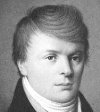 |
|
cologist, physician, chemist, botanist, author of textbooks on physics, and professor of chemistry and pharmacy at the University of Tartu in Estonia. Grindel attended school in Riga and also received private tutoring. He studied botany and medicine at the University of Jena from 1795 to 1797 and then returned to Riga in 1800. He was the first Latvian in Saint Petersburg to pass his exams as a pharmacist and chemist, and in 1802 the University of Jena awarded him a doctorate. Establishing himself as a pharmacist, with his teacher and mentor Johann Gottlieb Struve, he |
founded the Riga Pharmacist and Chemist Association in 1803. He returned to Tartu in Estonia in 1804 where he became professor of chemistry and pharmacy and rector of the university. He gave up his professorship in 1814 and took over the pharmacy in Riga that he had owned previously. His thoughts turned back to medicine and from 1820 to 1823 he studied to become a doctor at the University of Tartu while at the same time giving lectures in chemistry. He began practicing in Riga in 1823 and the next year became Riga district doctor. From 1807 he was a corresponding member of the Academy of Sciences and the Academy of Medicine and Surgery in St. Petersburg. The genus Grindelia was published in 1807 by Carl Ludwig Willdenow.
-
grindelio'ides: like or having the form
of genus Grindelia.
-
grinnel'lii: not named as is often thought for the 19th/20th century University of California zoologist Joseph Grinnell
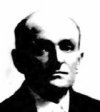 |
|
(1877-1939) whose specialty was the fauna of the San Bernardino Mts, but rather after his brother, the entomologist
Fordyce Grinnell, Jr. (1882-1943), who collected both Penstemon grinnellii and Hieracium grinnellii in 1903 and Gilia grinnellii in 1904. He was born at Pine Ridge Indian Agency, South Dakota, and was educated at Stanford University. He was assistant curator of entomology at the Southwest Museum from 1916-1917, the founder of the Lorquin Natural History Club, and an early member of the Southern California Academy of Sciences. He published |
numerous papers in such journals as the Entomological News, Canadian Entomologist, Journal of Entomology and Zoology, Bulletin of the Brooklyn Entomological Society, Journal of the New York Entomological Society, Lorquinia and the Bulletin of the Southern California Academy of Sciences. The Lorquin Natural History Club which he began was founded in honor of the 19th-century French entomologist Pierre Lorquin, who worked in California during the gold rush years and discovered a butterfly that became known as Lorquin's admiral, among other species.
Grinnell died in San Francisco.
-
gris'ea/gris'eus: gray, from Latin grisea meaning "pearl-grey."
-
groenland'ica: of or referring to Greenland.
-
gross'heimii: named for Ukraininan botanist Alexander Alfonsovich Grossheim (1888-1948) who was an expert on
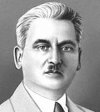 |
|
the flora of the Caucasus. He was born in Lichovka in Dnipropetrovsk Oblast, and after graduating from the University of Moscow with a doctorate in 1912, he became the director of the Azerbaijan Institute of Botany. In 1929 he relocated to the Tiflis (Tbilisi) Botanic Garden in Georgia, carrying out plant collecting expeditions. Between then and 1924 he recorded almost six thousand species of plants and published his Flora Kavkaza (Flora of the Caucasus). In 1939 he began a second volume. In 1946, Grossheim was appointed curator of the Caucasian Herbarium at the Komarov Botanical |
Institute in Leningrad (Saint Petersburg), and also director of the Department of Plant Systematics and Morphology at St. Petersburg University. When he died in 1948, he was still working on the second edition of his Flora Kavkaza, which was continued by his colleague Andrej Fedorov. The genus Grossheimia was named in his honor in 1945 by Dmitri Ivanovich Sosnowsky and Armen Leonovich Takhtajan.
-
grossulariifo'lia: with leaves like genus Grossularia.
-
grossulario'ides: like the gooseberries.
-
gruin'us: resembling a crane, from Latin grus, "a crane."
-
Gruson'ia: named for Hermann August Jacques Gruson (1821-1895), a German engineer, inventor, entrepreneur, and
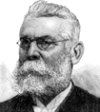 |
|
privy councillor who had a particular interest in the Cactaceae, which is the family of the genus Grusonia. Gruson was born in Magdeburg, Germany. After attending lower school and doing military service, he studied at the University of Berlin, devoting himself to the natural sciences and mathematics. He worked in an engineering firm for five years and became familiar with mechanical engineering, and at the same time began to indulge his passion for tropical and subtropical botany. From 1843 to 1851 he worked for the Berlin-Hamburg Railway and then worked at an iron foundry |
in Berlin for several years. In 1854 he became first technical director of the United Hamburg-Magdeburg Steamship Company, and improved the strength of cast iron to the extent that products from the Gruson plants became a well known brand. In years to come he became very involved with producing products for the German military such as armored towers and rotating turrets for tanks. His company was eventually acquired by the Krupp company. He continued to study the sciences and he carried on successful work as a botanist. He owned the largest cactus collection in Europe. With his death he donated his extensive plant collection and a large amount of money to the city of Magdeburg. In 1896, the Gruson greenhouses contained a collection of many rare, now endangered exotic plants which were made accessible to the people of Magdeburg. The genus Grusonia was published in 1896 by Friedrich Reichenbach and Karl Moritz Schumann.
-
Gruvel'ia: named for a French physician named Gruvel (1749?-1816?) born in Paris. He was a translator of scientific works, and was the librarian of the Conservatoire national des arts et métiers. He seems likely to have been the same as Dr. Gruvel, translator of Molina's Saggio sulla Storia Naturale del Chili., for whom the genus was named. Wikipedia's attribution of this generic name to a Jean Abel Gruvel (1870-1941), a French marine biologist, is wildly wrong because the genus Gruvelia was published in 1846 by Alphonse Louis Pierre Pyramus de Candolle, and the genera named for Jean Abel Gruvel are acorn barnacles not plants.
-
gryposep'ala: from the Greek grypo, "curved, hooked,"
and sepala, "sepal."
-
guadalupen'sis: the species Lupinus guadalupensis which is native in California is also found on Isla Guadalupe, Mexico, off the coast of Baja, and has the name Guadalupe Island lupine. iNaturalist says that aside from Guadalupe Island it is known only from San Clemente Island.
-
Guembel'ia: named for German bryologist Wilhelm Teodor Gümbel (1812-1858), born in Dannenfels in the Rhineland-Palatinate region of Germany. One of his younger brothers was the geologist Karl Wilhelm von Gümbel, and he had seven other brothers. His father was a royal district forester. He studied theology at Heidelberg, then technology at the University of Würzburg and natural sciences in Munich, and from 1837 taught classes in natural sciences, agriculture and technology at the vocational school in Zweibrücken. He also taught mathematics at the Latin school in Zweibrücken. At this time, his interest in botany deepened, in particular, the morphological aspects of botany. He met and became friends with the bryologist Philipp Bruch and because of this association began concentrating on the study of mosses. In 1843 he relocated as a teacher of natural sciences to the vocational school in Landau, where in 1853 he was named rector of the institution. In 1853 he was also elected a member of the German Academy of Sciences Leopoldina. He was a co-founder and board member of the nature research and conservation association Pollichia, and was co-author along with Philipp Bruch and Wilhelm Philippe Schimper of the book Bryologia europaea. He died in Landau in the Palatinate. The genus Guembelia was named for him by Georg Ernst Ludwig Hampe in 1846.
-
guepin'ii: named for French mycologist and botanist Jean Pierre Guépin (1779-1858). He was born in Angers and received a doctorate in medicine. He practiced as a physician and then taught medicine and pharmacy at a school there, becoming director for seven years. In 1830 he published the first volume of his monograph on the flora of Maine and Loire. He died in Angers and his herbarium is currently divided between the University of Caen and the Paris Museum of Natural History.
-
guggolzior'um: named for Jack Guggolz (1917-2001), an avid birder and
a long time member of Madrone Audubon and the Redwood Region Ornithological
Society, and Betty L. Sennett Lovell Guggolz (Mrs. Harry Francis Dillon, Mrs. Raymond Edward Lovell, Mrs. Jack Guggolz) (c. 1924-2020). The Guggolzes
were also long time members of the Milo Baker chapter of the California
Native Plant Society and monitored two wild populations of yellow
larkspur (Delphineum luteum) for over twenty years. The following
is quoted from the newsletter of the Milo Baker CNPS chapter: "Jack
had a career as a research chemist for the USDA until he retired in
1972 and moved to Cloverdale. The rigorous scientific approach that
he used in the laboratory served him well as he pursued his interest
in the California flora and fauna. At the memorial service, Dr. Mike
Parmeter remembered Jack as a knowledgeable birder and he also talked
about Jack's museum quality collections of shells and insects, all
accurately classified. These collections are now at the UC Berkeley
and Sonoma State University. In the early 1970s Jack's interests turned
from birds to plants and he naturally became active in the California
Native Plant Society, serving on the board of the
state organization. Jack was not a charter member of the Milo Baker
Chapter, but certainly was among the first to join and was one of
the first treasurers. He was the third president, serving in 1976
and 1977. At that time, he led many field trips, especially to the
Warm Springs Dam area where he did a lot of botany field work before
the dam was built. He served on the board in many capacities for 27
years--most of the life of the chapter. He and Betty were the Rare
Plant and Conservation committee for most of their 17 years together.
His wisdom and knowledge will be missed. Jack grew up on a farm near
Lodi and loved plants all his life. His Cloverdale garden was full
of California native plants that he had grown from seeds or cuttings. Every
year he grew many plants to contribute to the plant sale."
-
Guillemin'ea: named for Jean Baptiste Antoine Guillemin (1796-1842),
a French botanist and author. He began working in a notary's office
and then in 1814 went to Geneva to study under Augustine Pyramus de
Candolle, botanist father of the great Alphonse de Candolle. In 1820
he went to Paris and worked in the library and herbarium of botanist
Benjamin Delessert. He began work at the National Museum of Natural
History in 1827 and received a medical degree in 1832. He succeeded
Adolphe Brongniart as an assistant naturalist in the botany department.
In 1838 he led a botanical expedition to Brazil to study the horticulture
of tea. The genus Guilleminea was published by Nöel Martin Joseph de Necker in 1790.
-
Guillen'ia: named for Father Clemente Guillén
de Castro (1677/1678-1748), a Mexican Jesuit missionary, explorer, and Superior of missions. He was born in Zacatecas, Mexico, and in 1708 completed his training at the San Ignacio de Puebla de los Ángeles school, where he devoted himself to the study of philosophy. Between 1709 and 1713 he taught philosophy at the Oaxaca College. In 1713 he embarked for California but he was shipwrecked off the coast of Sonora. He survived the shipwreck, and in January, 1714, he arrived at the San Juan Malibat mission to replace Father Francisco Peralta. Between 1717 and 1719 Guillén de Castro worked at the mission of San Juan Bautista. At the beginning of 1719 he went to the mission of Loreto with the Cochimí indians, where he stayed for a brief time, since in March of that same year, by orders of Viceroy Baltasar de Zúñiga y Guzmán, he undertook the exploration of the Pacific coasts in search of a port of call for ships sailing from the Philippines to Acapulco. The trip culminated in the discovery of Magdalena Bay, considered one of the best natural harbors in the world. In 1720 he set out in search of a land route to La Paz where they discovered a suitable site for the Mission of Nuestra Señora de los Dolores del Sur, of which he was the superior for 25 years, and after 34 years of evangelizing the indians of mexico, and by reason of age, he was sent to Loreto to rest, and that is where he retired and died. The genus Guillenia was published in 1906 by Edward Lee Greene. Information traslated by Google and not always easily understood.
-
guirado'nis: named for José Juan Francisco "Pancho" de Jesús Guirado y Urquídez who was born at Los Angeles, Alta California, México, and was baptized at the Los Angeles Plaza Church June 27, 1840. He became a US citizen with the transfer of California's sovereignty in 1848. Juan was commissioned a 1st Lieutenant August 16, 1861, and was mustered into Company B, 1st California Cavalry, at the Presidio of San Francisco, September 16, 1861. Lieutenant Guirado accompanied the California Column on its march across the Mojave and Sonoran Deserts to drive the Confederates back into Texas. He was appointed aide-de-camp to the staff of Brigadier General Joseph R. West on April 26, 1864, and was mustered out of the California Volunteers at Fort Union, New Mexico Territory, September 30, 1864, and transferred to Little Rock, Arkansas, where he was mustered into Company L, 11th Missouri Cavalry. Lieutenant Guirado was mustered out at New Orleans, Louisiana, July 27, 1865. Two of his brothers were also Union veterans, Leandro and Francisco de Paulo. Both served in Company D, 1st Battalion, Native California Cavalry. After the war he returned to Los Angeles where he married María Ester Sepúlveda y Alvarado at the Plaza Church on June 16, 1880. Juan Francisco Guirado y Urquídez died at Los Angeles July 15, 1886.
-
Guizo'tia: named for Francois Pierre Guillaume Guizot (1787-1874), a French historian, orator and statesman who
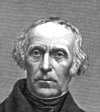 |
|
was a dominant figure in French politics prior to the Revolution of 1848, opposed the attempt by King Charles X to usurp legislative power, and worked to sustain a constitutional monarchy following the July Revolution of 1830. In 1794 when François Guizot was 6, his father was executed on the scaffold at Nîmes during the Reign of Terror. He was educated in Geneva and arrived in Paris in 1805, entering into the position of tutor for the family of the former Swiss minister in France. Over the next few years he wrote a review of François-René de Chateau- |
briand's Martyrs, which won Chateaubriand's approbation and thanks, and he continued to contribute largely to the periodical press. In 1812 he published a translation of Edward Gibbon's The History of the Decline and Fall of the Roman Empire. In 1814 he was selected to serve the government of King Louis XVIII, in the capacity of secretary-general of the ministry of the interior, but resigned upon the return of Napoleon from Elba. During the following years he held a number of positions in various governments as the political history of France continued to be fairly chaotic. He was minister of education, ambassador to London, and foreign minister during the reign of Louis Philippe, and finally prime minister of France from September 1847 to February 1848. He supported restricting suffrage to propertied men and opposed those who wanted a larger extension of the franchise, actions which helped to inspire the revolution of 1848 which overhrew Louis Philippe and initiated the Second Republic. His position being insecure, he escaped to England where he was received warmly. Back in Paris in 1850 he proceeded to published two more volumes on the English revolution, Pourquoi la Révolution d'Angleterre a-t-elle reussi? and Discours sur l'histoire, de la Révolution d'Angleterre, and subsequently produced Histoire de la république d'Angleterre et de Cromwell in two volumes in 1854 and Histoire du protectorat de Cromwell et du rétablissement des Stuarts in two volumes in 1856. Then came his massive nine-volume work Mémoires pour servir à l'histoire de mon temps from 1858 to 1868. His final work was Histoire de France racontée à mes petits enfants. He remained mentally vigorous until the time of his final peaceful death in 1874. The genus Guizotia was named for him by Alexandre Henri Gabriel de Cassini in 1829, although I have no information as to why he was so chosen.
-
gummif'era: bearing or producing gum.
-
Gun'nera: named for Johan Ernst Gunnerus (1718-1773), a Norwegian botanist
and bishop, author of Flora Norvegica
 |
|
(1766-1772), founder
of the Royal Norwegian Society. Gunnerus was born at Christiania.
He was bishop of Trondheim from 1758, and professor of theology at
the University of Copenhagen. The following is quoted from the Wikipedia
website: "Gunnerus was very interested in natural history and
accumulated a large collection of specimens from visits to central
and northern Norway. He also encouraged others to send him specimens.
Together with the historians Gerhard Schönning and Peter Friederich
Suhm he founded The Trondheim Society in 1760. In 1767 it received
royal recog- |
nition and became the Royal Norwegian Society of Sciences
and Letters. Gunnerus was vice-president and director perpetuus of
the Society from 1767 to 1773. The society began publishing its journal
in 1761, entitled Det Trondhiemske Selskabs Skrifter, still
published today as Det Kongelige Norske Videnskabers Selskabs Skrifter.
In 1765 Gunnerus published a description of a basking shark in this
journal, giving it the scientific name Squalus maximius. Gunnerus
was the author of Flora Norvegica (1766-1776). He contributed
notes on the ornithology of northern Norway to Knud Leem's Beskrivelse
over Finmarkens Lapper (1767), translated into English in 1808 as An Account of the Laplanders of Finmark. In this Gunnerus was
the first person to give a scientific name to the subarctic bird known as the greenshank. Gunnerus
was the first to suggest that since the northern lights were caused
by the sun, there also had to be auroras around the moon, Venus and
Mercury." The genus Gunnera was published by Carl Linnaeus in 1767.
-
gussonea'num: named for Giovanni Gussone (1787-1866), an Italian botanist and academic remembered for his work
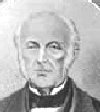 |
|
in plant taxonomy and his research on Sicilian flora. He was born in Naples and studied medicine there, where he met and came under the influence of botanist Michele Tenore. While there he was chosen as an assistant for the Flora Napolitana which Tenore was creating at the time. After graduating he worked as a manager at the Orto Botanico di Napoli (Royal Botanical Garden of Naples). He moved to Sicily in 1817 and was appointed director of the botanical garden at Bocca di Falco, outside of Palermo. Based on his extensive studies of the flora of Sicily, he published two |
major works, Florae Siculae Prodromus and Florae Siculae Synopsis. He returned to Naples in 1827 as superintendent of the botanical gardens. He remained there until, in 1861, he succeeded Tenore as director and was named professor emeritus of the University of Naples. His written works also included Plantae rariores (1826) and Enumeratio plantarum vascularium in insula Inarime (1855). Plants with the specific epithet of gussonei or gussoneanum are named in his honor.
-
Gutierre’zia: one of the names that there has been considerable etymological disagreement about and a lack of hard
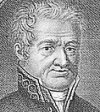 |
|
evidence for. The website Southwest Desert Flora says: “The genus Gutierrezia is named for Pedro Gutiérrez (Rodriguez), name sometimes given as Pedro Gutiérrez de Salceda, a 19th century Spanish nobleman, botanist and apothecary at the Madrid Botanical Garden called the Real Jardin Botanico founded by King Carlos III. Umberto Quattrocchi’s massive compendium of plant names does not have an entry for it, and neither does Stearn. Gledhill was content to say only “for P. Gutiérrez, Spanish nobleman.” However in 2020, Kathleen Keeler in Phytoneuron, 35:1-2, says: |
“Mariano La Gasca y Segura, known as Lagasca, named [in 1816] a southwestern North American plant Gutierrezia without recording who he was honoring. The association of Lagasca with Pedro Gutiérrez Bueno, a leading chemist and pharmacist in Madrid at the same time that LaGasca was director of the Royal Botanical Garden there, makes it likely that Gutiérrez Bueno was the intended honoree. The genus Gutierrezia was clearly named for Gutiérrez, but who was Gutiérrez? Nesom in The Flora of North America (2006) wrote ‘Possibly for Pedro Gutiérrez, Spanish nobleman, not specified by Lagasca.’ Fernald (1970) wrote ‘Named in 1816 for Pedro Gutiérrez, correspondent of the botanical garden in Madrid.’ Seeking dates for the life of Pedro Gutiérrez, I found Pedro Gutiérrez Bueno (1745-1826), who seems likely as the person honored by Lagasca. Gutiérrez Bueno was a well-known apothecary, chemist, and pharmacist in Madrid. Born April 28, 1743, at Cáceres, he studied at the Royal Studios of San Isidro and was admitted to the Royal College of Apothecaries in Madrid. He opened an apothecary shop there in 1777. In 1785, he was appointed professor of chemistry at San Carlos College of Surgery in Madrid and in 1787 received an appointment to the Museum of Natural History. In these roles he recognized the need for better textbooks and so wrote them. The first edition (in Madrid, 1782) of his book, Un Curso de química, teórico y práctica, para la enseñanza del Real Laboratoriode Química de esta Corte { Chemistry Course, theoretical and practical, for the teaching of the Royal Laboratory of Chemistry of this Court), taught the traditional view of chemistry, in particular that phlogiston [ in early chemical theory the hypothetical principle element of fire, of which every combustible substance was in part composed].was responsible for burning and rusting. The new edition of his textbook (in 1788) taught Lavoisier’s theory of oxidation, using new terms such as oxygen and hydrogen. In addition, Gutiérrez Bueno translated the latest French papers and incorporated their ideas into Spanish chemistry at least two years before those works were available elsewhere in Europe. In 1792 Gutiérrez Bueno was appointed the chief apothecary of His Majesty Charles VI, which gave him intellectual control of how chemistry was taught at the Ministry of State, one of the three major laboratories in Spain. His prestige — he was probably the most eminent chemist in Spain in the last decade of the 18th century — and his much-reissued books led to rapid support of modern chemical ideas in Spain.” Wikipedia provides this: “Gutiérrez Bueno continued to occupy his chair of chemistry at the College of Surgery of San Carlos during the first years of the 19th century, and in 1804 he went on to take charge, as director and professor of chemistry, of the new College of Pharmacy of Madrid. The government commissioned Gutiérrez Bueno during those years to carry out work related to his field of knowledge, such as censorship of books and reports on issues such as the manufacture of gunpowder, the installation of lightning rods, and the recognition of mines and the manufacture of dyes, the latter topic to which Gutiérrez Bueno dedicated several works. An important part of these commissions consisted of the analysis of various products of mineral and plant origin as well as various mineral waters. All of this shows that Gutiérrez Bueno's chemistry work extended beyond the possible medical uses of this science, including numerous issues related to what, in those years, was called chemistry applied to the arts, as did other doctors or pharmacists of that period, and which focused on different industrial activities related to chemistry. In the town of Cadalso he directed "solimán" factories (a mercuric chloride compound used for therapeutic purposes), in Manzanares one of sulfuric acid (perhaps being the one who introduced the lead chamber method to Spain), and in La Granja de San Ildefonso a fabric bleaching factory according to a process adapted by Berthollet. Gutiérrez Bueno retired with the establishment of the new chairs (1815, after the War of Independence ended), being replaced by Andrés Alcón Calduch. From his marriage to Mariana Ahoiz y Navarro he had a daughter Antonia Gutiérrez Bueno, a writer who was the first woman to be granted access to the Royal Library of Madrid (1835). Among his friends also was the enlightened Leandro Fernández de Moratín, who called him by his Latinized name Petrus Bonus, and his daughter by her French name Toinette.” Even in the article by Keeler there are discrepancies, giving his birth date as 1743 and 1745. Also some sources record his name as Bueno Gutiérrez and some Gutiêrrez Bueno. Keeler concludes by saying “I cannot directly link Lagasca to Gutiérrez Bueno. However, in the first two decades of the 19th century both men were leading members of the scientific community in Madrid. Gutiérrez Bueno was an apothecary, pharmacist, and chemist. Lagasca was a physician and botanist. Lagasca’s publication appeared in 1816, the year after Gutiérrez Bueno’s retirement. Lagasca did not specify the Gutiérrez for whom he named the plant: it may have been too obvious.”
-
gutta'ta/gutta'tus: from the Latin meaning "a
drop-like spot" which describes the red dots on both petals and
sepals.
-
gymnan'thum: I could find no etymological explanation for the derivation or meaning of this name, but I presume it is from the Greek gymnos, "naked," and anthos, "flower."
-
gymnocar'pa/gymnocar'pon: naked fruit, from gymnos, "naked, lightly clad," and karpos, "fruit."
-
gymnoceph'alum/gymnoceph'alus: bare-headed.
-
gymnocla'da: bare-branched, from the Greek word gymnos for "naked" and klados for "branch."
-
Gymnoster'is: Umberto Quattrocchi says: "Probably from the Greek gymnos, "naked," and sterizo, "to stand
fast, to fix" (in the sense of a support or foundation.) The
Jepson Manual simply says: Greek for "naked stem." The genus Gymnosteris was published by Edward Lee Greene in 1898.
-
gynodyna'ma: presumably from the Greek gyne, "a woman,
female," and dynamis, "power, strength," of
uncertain application.
-
Gypsoph'ila/gypsoph'ilum: loving gypsum, due to the habitat of one
species. The genus Gypsophila was published by Carl Linnaeus in 1753.
-
gypsophilo'ides: having a resemblance to genus Gypsophila.
-
-gyra: from the Greek gyros, "round, a circle."
|


