-
hi'ans: gaping, from hio, "to yawn or gape."
-
Hibis'cus: from ibiskos, and hibiscum, ancient Greek and Latin names
used by Dioscorides for some mallow-like plant, possibly Althaea officinalis. Flora of North America says: "Greek hibiscus or ibiscum, alluding to cohabitation with Ibis, stork, in marshes." The genus Hibiscus was published by Carl Linnaeus in 1753.
-
hickman'ii: named for James Craig Hickman (1941-1993), an American botanist, longstanding member of the California Botanical Society, and editor of the Jepson Manual. He was born in Ottumwa, Washington, and died in Alameda County, California. He went to Oberlin College as a chemistry major, but was much more interested in the biological sciences. When a sophomore he switched majors and studied fish, taking his first botany course as a senior. His decision as to whether to be a botanist or a marine biologist was literally made by the flip of a coin. He did doctoral work at the University of Oregon on plant ecology and taxonomy, after which he began working as a professor at Washington State University and then at Swarthmore College in Pennsylvania, where he taught botany and biology for eight years. Later he took a one-year position as a program officer for Systematic Biology at the National Science Foundation in Washington, D.C. In 1977 he moved back to California, edited the journal Madroño for three years and taught some botany courses at UC Berkeley. A project with Larry Heckard to write a flora of Snow Mountain, one of the high peaks in the North Coast Ranges, eventually grew into the development of the Jepson Manual. Hickman's tragic early death came as a result of AIDS-related pneumonia. There is little question that he would have accomplished even more and greater things had he been allowed to live longer. (Polygonum hickmannii)
-
hickman'ii: named for John Bale Hickman (1848-1929). From Cantelow and
Cantelow, "Biographical Notes on Persons in whose Honor Alice
Eastwood Named Native Plants," (Leaflets of Western Botany 8 (5): 83-101): "Teacher, horticulturist; born in Oxford, England,
1848, died at Watsonville [actually at Aromas] California, 4 Feb. 1929.
He taught school at Carneros Canyon on the Natividad road in the San
Miguel Hills in Monterey County, California, and spent his spare time
and vacations searching that area and the Monterey Bay area for interesting
plants; sent some to Prof. Greene, University of California, Berkeley,
and some to the California Academy of Sciences." And David Hollombe
adds: "He was also horticultural commissioner for Monterey County
'for years.' He came to the US as an infant, lived in Marshall,
Michigan and Buffalo, New York before coming to California probably
about 1868. He married twice and had two daughters." (Allium hickmannii, Plagiobothrys chorisianus var. hickmannii, Potentilla hickmannii, Sidalcea hickmannii)
-
hieracifo'lia: with leaves like genus Hieracium.
-
hieracio'ides: having the appearance of Hieracium.
-
Hierac'ium: the classical name hierakion comes from the ancient Greek hierax, "a hawk."
The Roman naturalist Pliny believed that hawks fed on this plant to
strengthen their eyesight and thus it became the Greek and Latin name
for this and similar plants, the common name of which is hawkweed. The genus Hieracium was published by Carl Linnaeus in
1753.
-
Hierochlo'e: from the Greek hieros, "sacred, holy,"
and chloe or chloa, "grass," alluding to the
fact that because of its fragrance it was strewn before church doors
and on floors at holy festivals and ceremonies. The genus Hierochloe was published by Robert Brown in 1810.
-
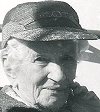
hig'ginsae: named for Ethel Bailey Higgins (1866-1963), curator of botany at the San Diego Natural History Museum
 |
|
from 1943 to 1957, associate curator from 1957 to 1963, and author in 1931 of Our Native Cacti and in 1949 of Annotated Distributional List of the Ferns and Flowering Plants of San Diego County. She was educated at the Wesleyan Seminary and Female College (now Kents Hill School) in Readfield, Maine then taught school for two years before moving to Los Angeles with her parents in 1900. She worked as a photographer specializing in botanical subjects, and during her career produced a series of some 250 wildflower portraits. She got married in 1914, and moved |
to San Diego in 1915. Her husband died in 1931 and two years later she joined the staff of the Natural History Museum. When Frank Gander retired as curator of botany in 1943 she succeeded him, compiling the first checklists of San Diego County plants. She collected plants in Baja and on the islands of the Gulf of California. She helped build the herbarium's specimen collection and continued collecting plant specimens well into her mid-90s.
-
higuch'ii: named for Masanobu Higuchi (1955- ) of the department of botany, Division of Land Plants of the National Museum of Nature and Science. From 1995 to 2013 he was an associate professor in the Graduate School of Science at the University of Tokyo, and since 2013 a full professor. He was president of the Bryological Society of Japan 2010-2011, and from 2007 to 2011 the first vice-president of the International Association of Bryologists.
-
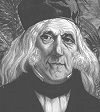
Hilar'ia/hilaria'na: named for Auguste François César Provençal de Saint-Hilaire (1779–1853), a French biologist,
 |
|
botanist, plant collector and traveller, born at Orléans. He was writing on botanical subjects at an early age. He traveled in South America from 1816 to 1822 and then again in 1830, concentrating particularly on parts of Brazil. On his first trip he accumulated some 24,000 specimens of 6,000 species, also 2,000 birds, 16,000 insects and 135 mammals, plus various reptiles, fishes and minerals. Many of these species were described for the first time. He spent a great deal of time attempting to describe, classify and publish, but his progress was impeded by the lingering effects |
of diseases contracted during his travels. Recognizing his value, the Académie des Sciences appointed him as a correspondent in 1819. Ffrom 1825 to 1832 he published together with Adrien de Jussieu and Jacques Cambessèdes the Flora Brasiliae Meridionalis in three volumes, a work illustrated by Pierre Jean François Turpin. He was also the author of Histoire des Plantes les plus Remarquables du Brésil et du Paraguay (1824), Plantes Usuélles des Brésiliens (1827–1828), also with de Jussieu and Cambessèdes, and Voyage Dans le District des Diamants et sur le littoral du Brésil, in two volumes (1833). His Leçons de Botanique, Comprénant Principalement la Morphologie Végetale (1840), was a comprehensive exposition of botanical morphology and its application to systematic botany. Contained within his writings was a large amount of data on history, physical geography, indigenous languages and culture, and various other subjects. He died where he was born, at Orléans. The genus Hilaria was published in 1815 by Karl Sigismund Kunth.
-
hilend'iae: named for Martha Luella Hilend (Mrs. Edgar Lee Kinsey) (1902-1964).
Born in Cannonville, Utah, she got her BA at Pomona College in 1924 and
an MA at Pomona College in 1927. Her thesis was on Zauschneria.
She was an associate in botany at UCLA 1927-1933 and curator at the Jepson Herbarium. She was an expert on Galium in the New World. Hilend married UCLA physics professor, Edgar Lee Kinsey, on June 22, 1933. Martha Hilend collected plants on Anacapa Island with Alfred Canby and John Thomas Howell in May 1928.
-
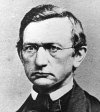
hillebrandia'nus/hillebrand'ii: named for German physician and botanist Wilhelm Hillebrand (1821-1886). He was
 |
|
born in Nieheim, Province of Westphalia, Prussia, and studied medicine at Heidelberg and Berlin. Due to a lung problem, probably pulmonary tuberculosis, he sought a warmer climate and traveled first to South Australia in 1849 for a six-month visit, moving on to the Philippines and Hawaii, which became his home for the next 20 years. He made significant contributions to the knowledge of the flora there, not least his Flora of the Hawaiian Islands published by his son two years after his death. In Hawaii he lived first at what is now Foster Botanical Garden in Honolulu, and after |
being married in 1852 he purchased a 13-acre plot of land near the Garden. By this time he was a practicing physician with a keen interest in plants, and over the years, planted a number of exotic and native trees in his garden. He was able to speak the Hawaiian language in addition to Latin, German, English and French. Upon his arrival in Hawaii, he very quickly became involved in the problem of syphilis which at the time was epidemic there. He advocated strongly for the building of more hospitals for the sick and in 1856 founded the Hawaiian Medical Society (which later became the Hawaiian Medical Association) along with nine other physicians. In 1858, he was appointed physician to the royal family of King Kamehameha IV. In the 1860s, leprosy was rapidly spreading in Hawaii, and he advocated in 1862 for the Legislature to find ‘some efficient, and at the same time, humane measure’ by which to isolate people affected by leprosy. This led to the establishment of the Kalaupapa and Kalawao leprosy settlements on Molokai Island in 1866. Wikipedia continues: “Hillebrand also served as chief (and only) physician at The Queen's Hospital (now The Queen's Medical Center) from 1860 to 1871. In 1865 he was appointed to the king's Privy Council, the Board of Health, and Bureau of Immigration. In April 1865 Hillebrand traveled to Asia and the East Indies on behalf of the Hawaiian government. He had three main goals: to find sources of labor for the sugarcane plantations, to learn about the latest treatments for leprosy, and to collect and import plants and animals that would be useful to the islands. Hillebrand wrote an article on leprosy that was published in 1883. Hillebrand moved back to Germany in 1871. In 1877 he arranged for the first immigrants from Portugal to come to Hawaii as plantation workers. For nearly a decade he considered returning to Hawaii. In 1880, he determined that would never happen, so sold his home to shipping entrepreneur Captain Thomas Foster and his wife Mary, who lived on an adjacent lot. Years later, Mary Foster bequeathed the land to the city, which opened it to the public as Foster Botanical Garden in 1930.” In the last half of the nineteenth century, Hillebrand sent much dried plant material of rare Hawaiian plants to the Melbourne Herbarium. In subsequent years, many of' these Hawaiian species became extinct and their only known plant material in the world is that housed at the National Herbarium, Melbourne. He died in Heidelberg.
-
hillman'ii: named for Frederick Hebard Hillman (1863-1954),
a Nevada botanist for the US Department of Agriculture who studied seed morphology,
and wrote on Nevada grasses and the flora of the Truckee Valley. He published many articles for the Nevada State University Agricultural Experiment Station.
-
hindsia'na/hinds'ii: named for Richard Brinsley Hinds (1812-1847), a surgeon in the British
Royal Navy, born in Aldermaston, Englan. In 1829, he began studying at St Bartholomew's Hospital. In 1830, he matriculated at London University, where he gained an honors degree. He is reported to have been awarded the Gold Medal of the Worshipful Society of Apothecaries for botany, but no record of that seems to have survived. He was accepted as a fellow of the Royal College of Surgeons in 1833, and became the naturalist on HMS Sulpher, which sailed from Plymouth in December, 1835, visited Madeira and Teneriffe, Rio de Janeiro, Magnetic Island off the coast of Panama, Nicaragua, El Salvador, Honolulu, Alaska, San Francisco, Monterey, Acapulco, the Galapagos Islands, China, Ceylon, Madagascar, the Cape of Good Hope, St Helena and Ascension Island, returning to England in July, 1842. Hinds was invalided home in April, 1841. He brought specimens from China which he presented to George Bentham, spent some years working on his collections, and published many articles in Annals of Natural History by Sir William Hooker.He matriculated at London University in 1830 and joined the Royal Navy in February, 1835. California's Frontier Naturalists by Richard G. Beidleman quotes Hinds as saying " Sulphur was the school in which I more particularly studied geographical botany." Hinds described many marine animal species including 346 marine species (as listed in the World Register of Marine Species) (many of which have become synonyms). He died in Swan River, Western Australia. Darwin's annotated copy of Hinds' The Regions of Vegetation, etc. is preserved in Cambridge University Library.
-
Hippur'is: from the Greek hippuris meaning "horse tail or mare's tail."
Hippuris was published by Carl Linnaeus in 1753.
-
hippuro'ides: like genus Hippuris.
-
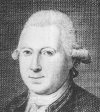
Hirschfeld'ia: named for Christian Caius Lorenz Hirschfeld (1742-1792), a German horticulturist, and university
 |
|
teacher of philosophy and art history in the service of the Danish state as well as author of numerous books. He was employed as a tutor in 1765 by Friedrich August, Prince-Bishop of Lübeck for Wilhelm August and Peter Friedrich Ludwig, the sons of Georg Ludwig of Schleswig-Holstein-Gottorf, but was dismissed two years later. His first book, Country Life, appeared and was well received in 1767, followed by Notes on the country houses and garden art in 1773 and Theory of garden art in 1775. Catherine II appointed him secretary of a commission to reorganize |
Christian Albrechts University and he held regular lectures, and later he was made a full professor of philosphy and the fine arts. He toured gardens in Denmark (1780), Germany (1781/1783) and Switzerland (1783), but his position at the University deteriorated after the death of his mentor there Heinrich Carl von Schimmelmann. At the same time however his regional fame was growing because of his publications including Handbuch der Fruchtbaumzucht (Manual of Fruit Tree Breeding) and Theorie der Gartenkunst (Theory of Garden Art) in five parts. In Denmark a fruit tree nursery was established which was managed by Hirschfeld. He became a member of the Norwegian Academy of Sciences in 1784 or 1785 and the Royal Prussian Academy of Sciences in Berlin accepted him as an honorary member in 1788. His major work, Theory of Garden Art, was known primarily through its French translation. He was particularly drawn to the English style of landscape gardens, although he never traveled to England. He died in Kiel at the age of 50. The genus Hirschfeldia was published by Conrad Moench in 1794.
-
hirshberg'iae: named for Jerilyn Burdette Hirshberg (1942- ), a Southern California
botanist and naturalist at the San Diego Museum of Natural History. Her Vascular
Plants of the Cuyamaca and Laguna Mountains (2003) is an entirely
updated version of Duffie Clemons' Plants of Montane San Diego
County (1986). She was born in Berkeley, California, and received a bachelor's degree in zoology from UC Davis in 1965, and a master's degree of science in ecology from San Diego State University in 1980. She has been the owner of JBH Biological Surveys in Julian since 1985. The taxon in the California flora that is or was named for her is Arabis hirschbergiae, now a synonym for Boechera johnstonii.
-
hirsutis'sima/hirsutis'simus:
very hairy, referring to the hair stems and/or leaves.
-
hirsut'ula: somewhat hairy.
-
hirsu'ta/hirsu'tus: covered with hair, hairy, from Latin hirsutus "rough, shaggy, bristly, hairy."
-
hir'ta/hir'tum: hairy, from the Latin hirtus, "hairy."
-
hirtel'la: pubescent with very small, coarse,
stiff hairs.
-
hirtel'lum/hirtel'lus: rather hairy.
-
hirticau'le: hairy-stemmed.
-
hirtiflor'um: hairy-flowered.
- hir'tipes: from hirtus, "hairy, shaggy" and pes, "foot." thus hairy-footed.
-
hirt'ula: somewhat hairy, same as hirtellum.
-
hispan'ica/hispan'icus: of Spain, Spanish.
-
his'pida/his'pidum/his'pidus/hispidis'sima: rough, with bristly
hairs, from Latin hispidus, "spiny, shaggy, rough."
-
hispid'ula/hispid'ulus: with little bristly
hairs, minutely hispid.
-
hitchcockia'na: named for Albert Spear Hitchcock (1865-1935), a Smithsonian Institution agrostologist and botanical
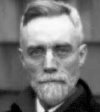 |
|
illustrator, author of Manual
of the Grasses of the United States, Manual of the Grasses
of the West Indies, and North American Species of Agrostis.
The following is quoted from a website of the Hunt
Institute for Botanical Documentation: "Botanical explorer
and systematic agrostologist Albert Spear Hitchcock was born in Owosso,
Michigan, on 4 September 1865, grew up in Kansas and Nebraska, and
attended Iowa Agricultural College (later Iowa State College and now
Iowa State University of Science and Technology) in Ames. Although
he had long been interested in |
plants and studied botany under professor
Charles E. Bessey, he earned a BS in agriculture and graduate degrees
in chemistry and went on to teach chemistry at Iowa State from 1886
to 1889. When he could no longer resist the lure of botany as a full-time
occupation, he accepted positions as librarian and curator of the
herbarium at the Missouri Botanical Garden and also taught in the
Engelmann School of Botany, Washington University. In 1890, he married Rania Belle Dailey, with
whom he had five children. He moved to Kansas State Agricultural College
in Manhattan, where from 1892 to 1901 he was a professor of botany
and botanist for the Experiment Station. During this period he began
to travel extensively, seeking types of grasses for his research on
the world's grass genera. Hitchcock's colleague Mary Agnes Chase knew
well Hitchcock's dedication to his science, recounting how he had
once walked 242 miles in 24 consecutive days and camped at night,
all the while toting a special wheelbarrow he had designed especially
for botanizing. On the subject of his fieldwork in the salt marshes
of the Gulf Coast, Hitchcock remarked: 'I waded through water
almost up to my knees, pushed my wheelbarrow, and still managed to
keep my collection dry. The mosquitoes were very bad. I had to put
on my coat, put cheesecloth around my head and a pair of extra socks
on my hands. My shoes had worn through and my feet were blistered....
But, for all the discomforts, the collecting was magnificent, and
I felt fully repaid.' The fruits of this period's botanical labors
were over 80 papers, including papers on grasses and the flora of
Kansas, and Experiment Station bulletins and circulars. In 1901 Hitchcock became assistant chief in
the USDA's Division of Agrostology in Washington, DC, and in
1905 he was promoted to systematic agrostologist at the USDA and
also appointed custodian of the newly established Section of Grasses;
Chase assumed the custodianship of the grass herbarium at Hitchcock's
death (see also: Morton, C.V. and W.L. Stern. 1966. The United States
National Herbarium. Pl. Sci. Bull. 12(2): 1–8). USDA made
the grass collection a priority, and Hitchcock built upon the work
of his predecessors George Vasey and Frederick Lamson-Scribner. Determined
to build the grass collection and 'insatiably eager to see every
part of the earth,' Hitchcock visited every
state in the US, as well as the West Indies, Cuba, Alaska, Canada,
Mexico, the Philippines, Japan, and China, and traveled throughout
Africa, Indochina, Central and South America as well. In 1928 he was
promoted to principal botanist in charge of systematic agrostology
in the USDA. From 1905 on, he filled 45 field books with
notes, and for nearly 40 years, beginning with an account of the grasses
of Kansas (1896–1898), published extensively on Gramineae, authoring
over 250 works, several jointly with Chase. His publications include
A Text-Book of Grasses (1914), The Genera of the Grasses of the United
States (1920), Methods of Descriptive Systematic Botany (1925), Manual
of the Grasses of the United States (1935), and Manual of the Grasses
of the West Indies (1936), and monographs of the American species
of Agrostis, Leptochloa, Panicum (with Chase), and Aristida. Hitchcock died of heart failure on 16 December
1935, at sea on board the steamer City of Norfolk while
returning home with his wife from Europe, where he had attended the
Sixth International Botanical Congress in Amsterdam, visited many
European herbaria in preparation for a work on the grass genera of
the world, and celebrated his 70th birthday. Hitchcock was held in
high esteem by his peers and colleagues: 'He was a lovable
and unassuming man. To the student of systematic botany who knew only
his work, he was a tireless and productive student of a technically
difficult and to many botanists quite uninteresting group of plants,
the grasses. His contribution to our understanding of this economically
most important family of plants has been unequalled in America'
(Fernald, M. L. 1937. Proc. Amer. Acad. Arts Sci. 71(10): 505–506).
Enriched by the hundreds of thousands of specimens acquired by Hitchcock
and Chase throughout their collaborative careers, the Smithsonsian
Institution's grass herbarium became the largest and one of the most
complete such grass collections in the world. Hitchcock and Chase
also bequeathed to the Smithsonian in 1928 their private agrostological
library; among its 6,000 books and pamphlets were Linnaean titles,
early systematic works, and rare books on the grasses." ( Festuca hitchcockiana)
-
hitchcockia'nus/hitchcock'ii: named for Charles Leo Hitchcock (1902-1986), an American botanist who published a monograph on North American Lathyrus in 1952, and was also the author of Flora of the Pacific Northwest: An Illustrated Manual (1973), and with others the 5-volume Vascular Plants of the Pacific Northwest. He discovered 20 species of plants and he taught thousands of botanists over the course of his teaching career at the University of Washington. He was chairman of the department of botany at the University from 1942 to 1962. His specialties were spermatophytes and the flora of the Pacific Northwest. A hall at the University of Washington is named in his honor. (Lathyrus hitchcockianus, Luzula hitchcockii, Sisyrinchium hitchcockii, Spiraea X hitchcockii, Thysanocarpus laciniatus var. hitchcockii)
-
hittellia'num: named for Charles Jacob Hittell (1861-1938), an American painter known for his paintings of California adobes and western landscapes as well as figures, portraits and seascapes. He ws born in San Francisco. His father, Theodore Hittell, was a prominent lawyer, a California state senator, and a respected historian who was the author of a four volume "History of California." His parents created a culturally stimulating environment for Charles and his brother, Franklin, and sister, Catherine, including providing them with drawing lessons as children. He died in Pacific Grove, California. The taxon in the California flora with this epithet is Ribes hittellianum which is a synonum of Ribes nevadense.
- hoffmann'ii: named for Freedom William Hoffman (1880-1959), an amateur botanist, born in California, interested in plants of serpentine areas in northern California, especially Streptanthus. He was honored with the names Allium hoffmannii, Eriogonum libertini, Streptanthus brachiatus ssp. hoffmannii and Streptanthus glandulosus ssp. hoffmannii. Libertinus
is Latin for freedman (a freed slave). He had five brothers and sisters, his father's name was George Washington Freeman, and he was married to Jemelia Gertrude Peugh who predeceased him by six years. He died in Sonoma, California.
-
hoffmann'ii: named for Ralph Arthur Hoffmann (1870-1932), a graduate of Harvard, an ornithologist (author of two
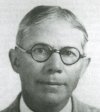 |
|
books on ornithology) and botanist (author of A Flora of Berkshire County, Massachusetts in 1922), and director of the Santa Barbara Museum of Natural History. He did a great deal of his work on the Channel Islands, in the Santa Barbara region, in the higher San Rafael Mountains, and in the desert areas of Southern California. He was a natural history teacher and author of the first true bird field guide. He was born in Stockbridge, Massachusetts, and attended Harvard University, graduating in 1890. He began teaching at Buckingham Browne and Nichols School in Cambridge |
and then helped to establish the Alstead School of Natural History in Alstead, New Hampshire. He was selected as the first head of the Country Day School in Kansas City. Nine years later he relocated to Santa Barbara to teach natural history at the Cate School for Boys. In 1925 he became the director of the Santa Barbara Museum of Natural History and served in that capacity until his death. He was the author of A Guide to the Birds of New England and Eastern New York (1904) and Birds of the Pacific States (1927). In 1932 he was on an expedition searching San Miguel Island for remains of the prehistoric pygmy mammoth when he fell from a steep cliff searching for a rare flower and was killed. (NOTE: All other epithets other than the ones noted directly above were named for him) (Photo credit: Islapedia)
-
Hoffmannseg'gia: named for Johann Centurius Hoffmann, Count Von Hoffmannsegg (1766-1849), a German botanist,
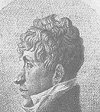 |
|
entomologist, ornithologist and co-author of a flora of Portugal. He was born at Rammenau, Germany, and by the age of seven spoke fluent French and had mastered the fundamentals of Latin. After the death of his parents he inherited the paternal family estate in 1780 and from then until 1782 he studied history, geography and natural sciences, especially botany and entomology, at Leipzig and Göttingen. According to Wikipedia, “He traveled through Europe acquiring vast collections of plants and animals. He visited Hungary, Austria and Italy in 1793–1794 [collecting |
plants and insects] and Portugal from 1795 to 1796 and from 1797 to 1801. He sent his collections to Johann Karl Wilhelm Illiger, then in Brunswick, so that he could study them. Hoffmannsegg worked in Berlin from 1804 to 1816, and was elected a member of the Academy of Science of the city in 1815. He was the founder of the Zoological Museum of Berlin in 1809. Hoffmannsegg proposed Illiger for the position of curator, and all of his collections were then transferred to Berlin." After Illiger’s death in 1813, Hoffmannsegg withdrew from the museum. He was nominated as a member of the Academy of Science in 1815 and in 1816 moved to Dresden. He was the author of Flore Portugaise (1809-1820) with botanist Johann Heinrich Friedrich Link. Later in his life he resumed the operation of the family nurseries in Dresden-Neustadt and Rammenau, built their capacity and regularly published the extensive range of what he had commercially available. In 1823, the total plant inventory of his gardens comprised about 2,000 species. He was able to draw on his own extensive collection of seeds and plant material, and sold both native and exotic ornamental and fruit trees, perennials, cut flowers, fruits and vegetables, pelargonium, dahlias and orchids. He died in Dresden. The genus Hoffmannseggia was published by Antonio José Cavanilles in 1797.
-
Hofmeister'ia: named for Wilhelm Friedrich Benedict Hofmeister (1824-1877), a German botanist whose extensive
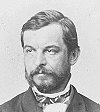 |
|
investigations of plant structure made him a pioneer in the science of comparative plant morphology. He was born at Leipzig and educated at the Realschule of Leipzig, following which he apprenticed for two years in a book shop in Hamburg before entering business along the same lines as his father as a music and book publisher. Much of his botanical work was done while he was so employed until 1863 when he was nominated, without intermediate academic steps, to the chair in Heidelberg. Britannica says: “Although he was completely self-taught, in 1863 he was appointed |
professor of botany and director of the botanical garden at Heidelberg; he became professor at Tübingen in 1872. Hofmeister’s first botanical paper was published in 1847. Die Entstehung des Embryo der Phanerogamen (The Genesis of the Embryo in Phanerogams) was published two years later and won for him an honorary degree from the University of Rostock. In that paper he described in detail the behaviour of the nucleus in cell formation and proved the invalidity of the theory that plant embryos develop from the tip of the pollen tube. Hofmeister’s most brilliant achievements are to be found in his book on comparative morphology, Vergleichende Untersuchungen . . . (1851; On the Germination, Development, and Fructification of the Higher Cryptogamia and on the Fructification of the Coniferae, 1862), in which he points out the relationships among various cryptogams and establishes the position of the gymnosperms ( e.g., conifers) between the cryptogams ( e.g., ferns, mosses, algae) and the angiosperms (flowering plants). Hofmeister was also the discoverer of the regular alternation of a sexual and an asexual generation in mosses, ferns, and seed plants.” He was married in 1847 and had nine children. His wife died before him in 1870 and seven of his children predeceased him. Eventually he fell into ill-health, and retired from his academic duties some time before his death at Lindenau, near Leipzig, on the 12th of January, 1877. Wikipedia adds that: “Hofmeister's contribution to biology is still far from widely acknowledged. This may partly be attributed to the fact that only one of his works was translated from German to English. However, Kaplan & Cooke conclude that ‘his reputation became eclipsed because he was so far ahead of his contemporaries that no one could understand or appreciate his work.’ Study of Hofmeister's work is also limited because it is published in German, though translations for some papers have been made.” The genus Hofmeisteria was published by Wilhelm Gerhard Walpers in 1846.
-
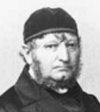
hohenack'eri: named for Rudolph Friedrich Hohenacker (1798-1874), a missionary, physician, botanist and botanical
 |
|
collector who was born in Zürich, Switzerland. Some describe him as Swiss, some as German, and some as Swiss-German. In the 1820s he was assigned to the Swabian colony of Helenendorf in the South Caucusus where he served as a doctor and missionary. Eventually, his main focus involved collecting plants from the region. He apparently settled in Azerbaijan in 1821. From 1829-1942 Hohenacker was associated with the Botanische Reiseverein, a German company established to dispatch botanists to other parts of the world to acquire herbarium material for sale to naturalists. |
Hohenhacker returned to Basel in 1841 where he took up residence. Shortly afterwards he relocated to Esslingen, Germany (1842-1858), and in 1858 moved to the town of Kirchheim unter Teck. Following his return from the Transcaucasus, Hohenacker earned his living selling exsiccatae (collections of dried pplant material) based on specimens of many other collectors. Species collected in localities cited as Chile, Ethiopia, India, Italy, Saudi Arabia, South Africa or Suriname are attributable to other collectors. He was the author of Enumeratio Plantarum quas in itinere per provinciam Talysch collegit. The taxon in the California flora with this epithet is or was Tamarix hohenackeri. He was also honored with the genus Hohenackeria which was published in 1835 by Carl Anton von Meyer and Friedrich Ernst Ludwig von Fischer. Photo credit: Herbarium of the L.H. Bailey Hortorium, Cornell University.
-
Hoi'ta: David Hollombe sent along the
following: "Hoita, with short i, long a and accent
on the middle syllable, was recorded by Victor King Chesnut (1867-1938)
as a name for 'Psoralea' in the ConCow (or KonKow) Maidu
language spoken by a native American people of the Feather River region
(Butte County, California) who were relocated to a reservation in
the Mendocino area." The KonKow Valley is about 20 miles north
of present day Oroville, California. A reference is Victor K. Chesnut,
"Plants used by the Indians of Mendocino County, Calif.", Contributions from the US National Herbarium, 1902. Another
website with some interesting history and cultural information about
the Maidu tribe is www.maidu.com.
So it appears that the correct pronunciation of this name, rather
than "hoy-ta," should be "ho-IT-ay" with the middle
syllable accented. Victor K. Chesnut was also co-author of " Ilex
vomitoria as a Native Source of Caffeine," in the Journal
of the American Chemical Society 41: 1307-1313, 1919. A collection
of the papers relating to his interest in Yellowstone National Park
history and containing an original transcript of the diary from the
Folsom-Cook Expedition (a privately funded expedition in 1869 and
the first of six into what would later become Yellowstone National
Park) is in the Renne Library at Montana State University. A website
of MSU includes the following biographical information: "Victor King
Chesnut was born in Nevada City, California on June 28, 1867. He attended
high school in Oakland, California and college at the University of
California, the University of Chicago, and George Washington University
specializing in chemistry and botany. He worked for the Bureau of
Plant Industry, US Department of Agriculture from 1894 to 1904, and
as a professor of chemistry and geology at Montana Agricultural College
(Montana State University) from 1904 to 1907. Following his work in Montana,
Chesnut relocated to Washington, DC, where he finished his career working
in a variety of positions for the USDA. He retired in 1933 and died
in August, 1938. Letters, diary transcripts and research notes pertaining
to the 1869 Cook-Folsom expedition into Yellowstone National Park
were gathered or created by Chesnut during his employment at Bozeman
Montana (1904-1907) and Washington, DC (1921-1922). In 1904, Chesnut
met Charles W. Cook, an elderly farmer living in White Sulphur Springs,
Montana. Cook, along with David E. Folsom and William Peterson, had
explored the Yellowstone National Park region in 1869 and recorded
their journey in a joint 'diary' which had appeared in edited
form several times during the intervening years. Cook gave Chesnut
his original manuscript version of the diary from which Chesnut prepared
a typed transcript." The original was lost when he left it in
the Chemistry Building at Montana Agricultural College which burned
Oct. 20, 1916, thus Chesnut's transcription became the earliest extant
record of the expedition. Chesnut was one of a group of scientists
that were assigned by the US Department of Agriculture to investigate
livestock losses as a result of poisonous plants, and in 1898 he published
a list of 30 such species in and on Western grazing lands. A website
of the University
of Maryland indicates that Dr. Chesnut (misspelled Chestnut) in
1916-1917 was one of the founders and the first president of the Hyattsville
Horticultural Society, one of the oldest gardening clubs in America.
The taxon Ribes victoris is also named for him. The genus Hoita was published by Per Axel Rydberg in 1919.
-
holboell'ii: the taxon Arabis holboellii was named from Greenland
in 1828 by Jens Wilken Hornemann, a professor of botany at Copenhagen,
for the eminent Danish ornithologist Carl Peter Holbøll (1795-1856).
Actually, in Danish his name is spelled without an 'e', the second
'o' being one of those with a slash through it, one of the extra vowels
in the Danish alphabet that has a sound close to 'bird' or 'heard'
and often transcribed in English as 'oe.' He was a Royal Navy Lieutenant
in 1821, traveled in Greenland in 1822, and became royal inspector
of colonies and whaling in 1825, a position he held in North Greenland
until 1828 and then in South Greenland until his death in 1856. He
also authored a book about the birds of Greenland, and his interest
in natural history led him to name and describe several species of
birds, and have several named for him. His father was Frederik Ludvig
Holbøll, also a botanist and curator of the botanic garden in Copenhagen.
-
holcifor'mis: like Holcus, a Greek name for a type of grain.
-
Hol'cus: from the Greek holkos, an ancient name for some kind
of grain or grass. The genus Holcus was published by Carl Linnaeus in 1753.
-
Hollister'ia: named for (Col.) William Welles Hollister (1818-1886),
a California rancher and entrepreneur. He came
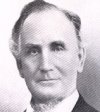 |
|
to California from Ohio
in 1853-1854 as the leader of a 2,000-mile-long sheep drive accompanied
by his brother Joseph Hubbard Hollister, their sister Lucy Brown and
50 herdsmen. His idea was that the miners of the gold rush needed
plentiful meat. Although only about a thousand sheep survived, he
was able to make a considerable fortune out of it and purchased a
large amount of land that would one day bear his name. He was a founder
of the town of Hollister in San Benito County, (“Because so many
California towns are named for saints,” said one of the town
organizers of |
Hollister in San Benito county, “let’s name
this one for a sinner”), remaining for some 14 years before
selling his part of the Rancho San Justo and moving his sheep south
to Santa Barbara. He married Ann (Hannah) James in 1862. During the
1870s, William Hollister made many contributions to the Santa Barbara
area including helping to finance or develop Santa Barbara College,
the Arlington Hotel, the local newspaper, Steams Wharf, and the Lobero
Theater. He was also an avid horticulturist. In 1875 he built a wharf
at Gaviota to ship lumber, wool, cattle and grain back to markets
on the Atlantic coast. The following is quoted from an online article
called "A
Man Named Hollister" by Alton Pryor: "Money was of little
consequence to the now-wealthy Hollister. He built more than six miles
of fencing, virtually unheard of in Santa Barbara County. He established
a dairy herd and imported a landscape gardener to plant velvety lawns
and exotic flora around the property. He widened the county road,
now Hollister Avenue, linking Santa Barbara and Goleta, and bordered
it with an avenue of palms and pines. Always adventurous, Hollister
imported 25 bushels of Japanese tea plants, which he thought would
grow in the soil and climate of his Dos Pueblos Rancho. He hired two
Japanese tea planters to plant his 50,000 seedlings. A frost killed
the entire tea project overnight. The Refugio Rancho is probably the
first working cattle ranch apart from mission operation in Santa Barbara
County. In the 1860s, Chinese workers were brought to Santa Barbara
County from Canton by Colonel W. W. Hollister to work on his Goleta
Valley estate and to serve as busboys, chefs, and waiters in his
hotel. Between 1869 and 1877, W.W. Hollister planted 25,000 almond
trees, 1,500 English walnuts, 1,500 orange trees, 1,000 lemons, 500
limes, and 750 olives. Col. Hollister’s land grants included
Lompoc. Here, vast herds of his sheep grazed before he sold part of
his holdings to the Lompoc Valley Land Company in 1874. The lands
consisted of the Lompoc Rancho and the Mission Vieja de la Purisima
[sometimes written as Purisma] Rancho. The town was laid out nine miles from the coast, near the
center of the Lompoc Valley." His son was rancher and California
state senator John James Hollister, Sr. The genus Hollisteria was published by Sereno Watson in 1879.
-
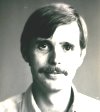
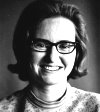
Holmgrenan'the/holmgrena'nus/Holmgren'ia/holmgrenior'um: named for Arthur Herman Holmgren (1912-1992), a
 |
|
professor
at Utah State University in Logan, research botanist, expert on grasses, and co-author of the Intermountain Flora, his son Dr. Noel Herman Holmgren (1937- ) (photo at left), senior curator emeritus at the New York Botanical Garden, a plant collector and explorer, and daughter-in-law Dr. Patricia May Kern Holmgren (1940- ) (photo at left), herbarium director at the New York Botanical Garden who worked on the the five-volume Vascular Plants of the Pacific Northwest, and helped edit the first volume of Intermountain Flora published in 1972. Prior to his professorship at Utah State University, Arthur Holmgren "worked for the Desert Range Experiment Station near Milford, Utah, 1936-37, served as chief-of-party of the Range and Economic Survey in Elko County, Nevada, 1937-41, and worked at the Squaw Butte Experiment Station, Harney County, Oregon (Oregon State University and Bureau of Land Management), 1942-43. He served as professor of botany and curator of the Intermountain Herbarium, Utah State University, from 1943 until his retirement in 1978. In the 1980s he taught at the Teton Science School, Jackson Hole, Wyoming." |
 |
(Obituary in the Deseret News) He was born in Midvale, Utah and graduated from Murray High School and received a BA degree from the University of Utah in 1936 and an MS from Utah State Agricultural College in 1942. He did additional graduate work at UC Berkeley. In 1972 he was the recipient of the Outstanding Educator in America award. He was active in many societies including the American Institute of Biological Science, the American Rock Garden Society, the American Society of Plant Taxonomists, the Botanical Society of America, the California Native Plant Society, the Northern Nevada Native Plant Society, the Sierra Club, the Utah Native Plant Society and the Utah Academy of Sciences, Arts, and Letters. He also played the violin in the University of Utah and Utah State University symphonies. He was a recognized environmentalist, conservationist, and gardener. He died at age 80 at his home in Logan, Utah. His son, Noel Herman Holmgren, was born in Salt Lake City, obtained a PhD from Columbia University in 1968, and joined the New York Botanical Garden as a research associate that same year. He had been associate professor at Oregon State University, and then associate curator, curator and senior curator at the New York Botanical Garden, now senior curator emeritus at NYBG. He was for 14 years the editor-in chief of the journal Brittonia. His specialty was the taxonomy of Scrophulariaceae and the floristics of western North America, and made major contributions to the Intermountain Flora project. He also taught at Lehman College, City University of New York, and was lead editor on an illustrated companion volume to Gleason and Cronquist's Manual of the Vascular Plants of Northeastern United States and Adjacent Canada, published in 1997. He is a member of the American Association for the Advancement of Science, the American Institute of Biological Science, the American Society of Plant Taxonomists, the Botanical Society of America, the California Botanical Society, the International Association for Plant Taxonomy, the New England Botanical Club and the Torrey Botanical Club. Patricia Kern Holmgren was professor of botany at Utah State Agricultural College, made extensive botanical expeditions to Mexico, Ecuador, Surinam, Venezuela, and Tierra del Fuego, and was curator and director of the herbarium of the New York Botanical Garden, currently director emerita of the herbarium and honorary senior curator. She received her bachelor’s degree from Indiana University in 1962, her master’s in 1964, and her doctorate in 1968 from the University of Washington. The genus Holmgrenanthe was published by Wayne J. Elisens in 1985 and the genus Holmgrenia was published by Sextus Otto Lindberg in 1863. (Wikipedia; JSTOR; NYBG)
-
holm'ii: named for Herman Theodor Holm (1854-1932), a Danish-American systematic botanist, agriculturalist and plant pathologist. He was primarily concerned with plants from the Arctic and from the Rocky Mountains, and mainly with their taxonomy and morphology. The following is quoted from Wikipedia: “Herman Theodor Holm was born in Copenhagen, Denmark. He studied botany at the University of Copenhagen under Professor Eugenius Warming and graduated in 1880. In 1882–1883, he participated in the expedition on board the Danish vessel Dijmphna to the territory between Russia and the North Pole during the First International Polar Year. The ship was icebound for a period in the Kara Sea. He also explored the flora of West Greenland as assistant to Eugenius Warming on the Fylla expedition in 1884. He emigrated to the US, landing in New York City on April 12, 1888. He soon was employed as assistant botanist by the US National Museum. In 1893 he received American citizenship. From 1893 to 1897, he was assistant pathologist with the United States Department of Agriculture. He obtained his PhD in botany from the Catholic University of America in Washington DC in 1902. He then moved to the countryside of Brookland, District of Columbia, and later to Clinton, Maryland and did assistant work as a botanist for the Smithsonian Institution and the USDA. Although a Lutheran, in 1932 he joined the faculty of the Catholic University of America, but died soon after. He published over 150 papers reflecting his research which included his series Studies on the Cyperaceae and Medicinal Plants of North America.”
-
holocar'pa: with unlobed fruit.
-
holo-: in compound words signifying "completely, whole."
-
Holocar'pha: from the Greek holos,
"whole," and karphos, "chaff," referring
to the entirely chaffy receptacle. The genus Holocarpha was published in 1897 by Edward Lee Greene.
-
Holodis'cus: from the Greek holos,
"entire," and diskos, "a disk," the disk
unlobed. The genus Holodiscus was published in 1879 by Carl Johann Maximowicz.
-
hololeu'ca/hololeu'cus:
wholly white.
-
holopet'ala: whole-petalled.
-
holop'tera: from the prefix holos-,
"complete or completely," and pteron, "wing."
-
holorho'dos: from holos-, in compound
words meaning "completely," and rhodo, "red."
-
holoseri'cea: wooly-silky.
-
holosteo'ides: like genus Holosteum.
-
Holos'teum: from the Greek holosteon, "entire bone,"
an ancient Greek and Latin plant name used by Dioscorides and Pliny
for a whitish plantain species, and derived in turn from holos,
"whole, all," and osteon, "bone." The genus Holosteum was published by Carl Linnaeus in 1753.
-
Holozon'ia: from holos, "whole, entire," and zone or zona, "a belt or girdle," hence "whole-girdled."
The genbus Holozonia was published by Edward Lee Greene in 1882.
-
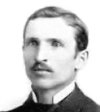
holzing'eri: named for John Michael Holzinger (1853-1929), a German-born American bryologist, expert on the
 |
|
bryoflora of Colorado, and third president of the Sullivant Moss Society. He was born in Hachtel, Germany. In 1874, he graduated from Olivet College. Holzinger went on to teach science and botany at Winona State Normal School from 1882 to 1890. In 1890, he left to join the United States Department of Agriculture Division of Botany, and in 1893, he returned to Winona where he remained until 1922. Holzinger made several noteworthy collections of bryophytes from North America. His Musci Acrocarpi Boreali-Americani exsiccatae was a valuable asset to 20th century |
bryology. Aside from the taxa named for him, Bestia holzingeri was named both for him and for Godfrey August Holzinger (1862-1925), who from those dates would appear to have been his younger brother.
-
homea'num: named for James Everard Home, 2nd baronet, CB, FS (1798-1853), an eminent nineteenth century British naval officer. He was born in Well Manor, Hampshire, England, and died in Sydney, Australia. The following is quoted from JSTOR: “British naval Captain and botanist, the son of surgeon and anatomist Sir Everard Home. James Everard joined the navy at the age of 11 and was later promoted to the command of the frigate North Star in which he served with distinction during the Opium Wars with China. In 1843 he visited Wellington harbour in the North Star and brought to an end a virtual siege by the Maori chief Te Rauparaha. Botanical collections were also made during his visit to New Zealand and are now at BM. Home made scientific observations on a solar eclipse in Shanghai (1842) and was elected a fellow of the Royal Society. In the latter part of his career he was Captain of HMS Calliope and senior officer of the Australian Station of the Royal Navy. He died in Sydney and was buried at the Camperdown cemetery in Sydney with a memorial erected at St. James' church in King Street. He was often referred to by his second name, Everard, and scientific specimens collected by J.E. Home are often attributed incorrectly to his father. Several taxa including Alpinia homeana from Fiji, Geranium homeanum from New Zealand and Podonephelium homei from New Caledonia were named in his honor.”
-
hood'ii: named for Robert Hood (1797-1821). He at born Portarlington, Ireland, the son of the Reverend Richard Hood, and in 1809 joined the Royal Navy as a first-class volunteer, serving in the Baltic, the Mediterranean and on the Cape of Good Hope station, being promoted to Midshipman in 1811. The following is quoted
from the website of the Arctic
Institute of North America (a website that appears to have disappeared, but from which much of the original is maintained as an Arctic Profile of the University of Calgary): "Robert Hood was a junior officer
with the badly timed, inadequately supplied first Arctic Land Expedition
led by John Franklin in 1819-1822. Hood made a major contribution
to the expedition's incredibly accurate mapping of over 600 miles
of coastline, which, in the words of L.H. Neatby, 'put a roof on the
map of Canada.' Hood was the first to prove the action of the aurora
borealis on the compass needle and to show that the aurora was an
electrical phenomenon. He also made important contributions to our
knowledge of terrestrial magnetism, climatology, anthropology, and
natural history. Hood's journal, a less formal and more sprightly
account of the journey than Franklin's, was published with many of
his watercolour paintings 153 years after his tragic death on the
Barrenlands. ... Hood contributed in full measure to the success of
the first expedition before he paid the supreme sacrifice - and his
journals and paintings remain one of the earliest and most vivid records
of life in the Canadian North. Although his promising career was terminated
prematurely, his memory is perpetuated by the moss phlox (Phlox hoodii), the Hood's sedge (Carex hoodii) [the latter two of which are in the California flora], the thirteen-striped
squirrel, Citellus tridecemlineatus hoodii, and by the mighty
Hood River that plunges over Wilberforce Falls before entering the
Arctic Ocean." A website called JISC Archives Hub which contains collections from over 350 UK institutions, provides this further information on how his career ended at such an early age: "After wintering at Cumberland House (Saskatchewan) in 1819, where Hood conducted meteorological observations and made sketches and watercolours of native people and natural history, the expedition traveled via Fort Providence to Winter Lake where they built their base, Fort Enterprise, and wintered in 1820. Leaving the fort in June 1821, the expedition traveled down the Coppermine River to its mouth, then proceeded east along the coast in two canoes, exploring and charting over 600 miles of newly discovered coastline before turning back at Point Turnagain on Dease Strait. Weakened by starvation and cold on the arduous return journey to Fort Enterprise, Hood was murdered on 20 October 1821 by the Iroquois voyageur Michel Terohaute [who was summarily executed a few days later by Franklin]. News of Hood's promotion to Lieutenant in January 1821 reached the expedition some weeks after his death. During the expedition, Hood recorded important meteorological, magnetic and auroral data, and his journal, describing his scientific observations, the natural history and local customs, formed the basis for part of Franklin's narrative, which was illustrated with eight engravings from Hood's drawings." And te Dictionary of Canadian Biography further fills out the grisly details of that return trip: "From 18 July to 18 August the party of five Englishmen, eleven Canadians, two Indian hunters, and two Inuit charted 675 miles of coastline never before seen by white men. Lack of food and the onset of winter forced it to halt at Point Turnagain on Dease Strait. Franklin chose to return to Fort Enterprise by way of Bathurst Inlet, the newly discovered Hood River, and the barren grounds, but this route proved far more difficult than could have been imagined. The trek over the barren grounds was made Indian file, the voyageurs taking turns at the head to break the snow, Hood in the gruelling second position directing their steps until, on 20 September, weakness forced him back. The group subsisted on small game and a lichen called rock-tripe, which unfortunately caused some, but especially Hood, to have diarrhea. Hood had volunteered to perform the “invidious task,” as Franklin put it, of issuing the food, and “always took the smallest portion.” On 7 October Franklin, Back, and the stronger voyageurs were forced to leave behind several men, including Hood, who were too weak to keep up the pace. Two had already been abandoned, and presumably had died, on the 6th. By the 18th Hood was nearing death from exhaustion, dehydration, and starvation, but his life was evidently ended instead by an Iroquois voyageur, Michel Terohaute, who seems to have shot him in the head on the 20th after a violent quarrel. Terohaute was subsequently executed by Richardson, who later suspected him of cannibalism." His manuscript, "Narrative of the Proceedings
of an Expedition of Discovery in North America under the Command of
Lieut. Franklin, R.N.," was published as To the Arctic by
Canoe, 1819-1821: the Journal and Paintings of Robert Hood, midshipmen
with Franklin, edited by C.S. Houston and published in 1974. Hood's
paintings of birds and other wildlife were exceptional for the time,
and at least five of the birds he painted were unknown to science.
Had they been published at the time of their arrival in London, and
the birds named, he would have received the credit for priority in
their discovery. His journals described the flora and fauna of the
regions they traveled through, and included information on geography
and the transportation, fishing and hunting techniques of the native
peoples they encountered. It is a miracle that Hood’s exquisite watercolours from Cumberland House arrived at York Factory in such good condition. No doubt they were carefully wrapped in beaver skins and well protected from the spray during the descent of frequent rapids. It is uncontested that science lost a valuable member that unfortunate day.
-
Hook'era: named for William Hooker (1779-1832), a British illustrator of natural history. He studied under Franz Bauer (1758–1840), becoming the official artist of the Royal Horticultural Society from 1812 until retirement in 1820, whose publications he illustrated. His paintings of fruit were particularly appreciated. Hooker also worked on the "Oriental Memoirs" of James Forbes and The Paradisus Londinensis with descriptions by Richard Anthony Salisbury (1761–1829).He contributed illustrations for "Hooker's Finest Fruits" until his death in 1832. (Quoted from Wikipedia) The genera Hookera in the Liliaceae was published by Richard Anthony Salisbury in 1808.
-
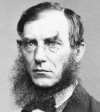
hook'eri: named for Sir Joseph Dalton Hooker (1817-1911), a botanist and
plant collector, biogeographer, and younger
 |
|
son of William Jackson
Hooker. He succeeded his father as director of Kew Gardens in 1865,
a position he held until he retired in 1885 due to ill health. He
traveled the world on botanical quests and became a friend of Charles
Darwin and John Muir. He participated in the Antarctic expedition
of the HMS Erebus (1839-1843) as naturalist and assistant surgeon.
His two-volume Flora Antarctica (published 1844-1847), Flora
Novae-Zelandiae (1851-1853), and Flora Tasmanica (1853-1859)
were based on the specimens collected during the Erebus expedition.
He suspected |
an ancient connection between the landmasses of Africa
and South America, an idea later confirmed by the concept of continental
drift. Between 1847 and 1850 he explored the Indian subcontinent including
Nepal, work which later resulted in his seven-volume Flora Indica.
He also produced with George Bentham a major work entitled Genera
Plantarum which was a world flora including the descriptions of
some 7,569 genera and 97,000 species! In 1859 he published his Introductory
Essay to the Flora of Australia. He visited Syria in 1860 and
Morocco in 1871, and traveled to Colorado and Utah in the United
States in 1877. He also served as president of the Royal Society from
1873 to 1877. ( Aquilegia hookeri, Eriogonum hookeri)
-
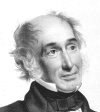
hook'eri/hookeria'na/hookeria'num/hookeria'nus: named for Sir William Jackson Hooker
(1785-1865), a professor of
 |
|
botany and director of the Royal Botanical
Gardens at Kew in the mid 19th century and author of several botanical
works. Some of his friends and colleagues were the Scot David
Douglas, the Englishman Thomas Nuttall, Sir Joseph Banks, and the
American Asa Gray, for whom he named the genus Grayia.
It was under his directorship that Kew became a world center for plant
study. His first botanical expedition was to Iceland at the behest
of Joseph Banks, but unfortunately his notes, drawings and collected
specimens were lost when his ship burned on the return journey. |
He was largely responsible for botanists being appointed to government
expeditions and his herbarium received large collections from all
over the world. Published works of his included the Muscologia (1818) on the mosses of Britain and Ireland, Musci exotici (1818-1820, two volumes) on foreign mosses and other cryptogamic plants,
and Flora Scotica (1821). (All hookeri species except those listed for Joseph Dalton Hooker)
-
hoopes'ii: named for Thomas S. Hoopes (1834-1925), who grew up, along with nine other siblings, on the family’s farm in Chester County, Pennsylvania, and was a member of the Society of Friends. In 1857, he traveled around the western United States in search of gold and various other business prospects. The website Southwest Colorado Wildflowers says: "A 1925 newspaper article states that Hoopes 'decided to make a short tour of the western States of the Union.' He was in Rock Island, Illinois for one of the Lincoln-Douglas debates in September of 1857; in Iowa he was in the lumber business; in Colorado he dabbled in gold prospecting, "general business", exploring, and plant collecting. In 1861 he was a member of Captain Edward Berthoud's exploring party looking for a rail route between Denver and Salt Lake; they discovered Berthoud Pass." At the end of the
1850s he was exploring in the Rocky Mountains area of Colorado and
collected a species previously unknown that was named by Asa Gray Helenium hoopesii and which subsequently became Dugaldia hoopesii,
and is now included in Hymenoxys. He returned to Chester County after only a few years where he became an entrepreneur in West Chester,
and with his brother William established a wheel works called Hoopes Brothers and Darlington (for Stephen Darlington, a relative of his mother's) which
produced wheels for carriages and wagons for 100 years. By the eighteen-eighties it was one of the largest wooden wheel makers in the country. Hoopes was married to a fellow Society of Friends member Amanda Russell and they had six children. He was related
to the well-known horticulturist Josiah Hoopes. Southwest Colorado Wildflowers adds this note: "The present day Hoopes families in West Chester, Pennsylvania indicate that their last name is not pronounced 'hoops,' as in 'hula hoop.' The families pronounce the 'oo' of 'Hoopes' as the 'oo' in 'took.' The species name should be pronounced the same." I can find no evidence that Thomas Hoopes was involved in botany through the latter part of his life.
-
Hoorebek'ia: named for Charles Joseph van Hoorebeke (1790-1821), a physician, herbalist, naturalist and chemist/pharmacist. He was born in Belgium and trained in medicine. He was especially interested in herbalism. He became a master pharmacist at an early age and had his own pharmacy. He previously worked in a military hospital. He also conducted natural history research and had collections of rocks. He later studied agronomy and joined various associations, including the Royal Society of Fine Arts and Letters, the Provincial Commission of Medical Research, the Provincial Commission of Agriculture and the Royal Netherlands Institute of Arts and Sciences. He also received the title 'Knight of the Royal Order of the Netherlands Lion.' Van Hoorebeke was curator of the natural history collection of Ghent University, where he also created handwritten herbaria and submitted them to competitions organized by the Société d'Agriculture et de Botanique. The herbaria were submitted anonymously and had to contain wild plants from the districts of Ghent, Oudenaarde, Dendermonde and Eeklo respectively. among other things, the quadrennial Ghent Floralies. From around 1818 until his death, Van Hoorebeke was one of the sixteen employees of Ghent University. These clerks assisted the professors who taught 190 students. He was also curator of the physical and mineralogical cabinet, and left seven manuscripts and a herbarium. The herbarium dates from around 1815 and is kept in the Ghent Botanical Garden, of which he was the director.After his death at the age of almost 31, his fame quickly faded. He received criticism for his work from, among others, Alexandre Lejeune and Barthélémy Du Mortier, who disputed the locations of his plants. Jean Kickx Jr. followed them in claiming that he attributed exotic plants to Flemish places. François Crépin described Van Hoorebeke's herbarium labels as shoddy. He was also generally described as a mediocre botanist due to his lack of distinction between, for example, native species, wild collection species, cultivated plants and adventitious species. This can be attributed to the time pressure of the competitions and his collaboration with plant collectors. (from Dutch Wikipedia)
-
hoo'veri/Hoover'ia/hooveria'nus: named for Dr. Robert Francis Hoover (1913-1970), an American botanist
who collected in California and whose wife was Bettina Louise Brown (1912-1992).
Robert Hoover received his bachelor's degree in botany from Stanford University in 1932. He was drafted into the Army toward the beginning of WWII and spent fifteen months in England and another six in France. He was one of the founding members of the California Native Plant Society, a fellow of the California Academy of Sciences, and a teaching and research assistant of Dr. Willis Lynn Jepson. He was a botany professor for over twenty years at California State Polytechnic College where he was responsible for founding the botanical garden and the herbarium which was named in his honor upon his retirement. He studied the flora of Placer County and was the author of The Vascular Plants of San Luis Obispo County, California, published in 1970, the same year he died of colon cancer. A subspecies of Dudleya abramsii ssp. bettinae, was named
by Hoover for his wife Bettina.
-
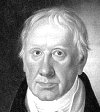
hoppea'na: named for David Heinrich Hoppe (1760-1846), a German pharmacist, botanist, entomologist and physician
 |
|
who made significant contributions to the study of alpine flora. The following is quoted from Wikipedia: "He was born in Bruchhausen-Vilsen the son of a merchant. He began his career as a pharmacy apprentice in Celle, and subsequently was an assistant pharmacist in Hamburg, Halle, Wolfenbüttel and Regensburg. From 1792 onwards, he studied medicine and natural sciences at the University of Erlangen, and following graduation returned to Regensburg as a physician. Here he taught classes at the Regensburg Lyceum. He studied the flora of the Danube region surrounding |
Regensburg. In June, 1798, he first explored the Untersberg massif near Salzburg, and almost each summer until 1843 continued his botanical excursions from Salzburg into the Eastern Alps. With bryologist Christian Friedrich Hornschuch (1793–1850), he published a treatise involving an extended scientific journey to the Adriatic coast and the mountains of Carinthia and Tyrol, and explored the region around Heiligenblut and the Grossglockner several times. In May, 1790, Hoppe founded the Regensburg Botanical Society, the first botanical society in Bavaria, and presently the world's oldest existing botanical society. Notable members included Johann Wolfgang von Goethe, Alexander von Humboldt, and Justus von Liebig. From 1812 until his death in 1846, Hoppe was its chair. He is credited for describing and naming over 200 plant species. Among his written efforts are a work on the flora of Regensburg, titled Ectypa plantarum ratisbonensium (1787–1793), and Caricologia Germanica (1835), a book of German caricology [the study of sedges] that he published with engraver Jacob Sturm. From 1818 to 1842, he was editor of the popular scientific journal Flora. In 1825 he collaborated with Christian Friedrich Hornschuch, Jacob Sturm and Jacob Johann Hagenbach to publish an illustrated work on alpine beetles entitled Insecta Coleoptrata, quae in itineribus suis, praesertim alpinis. Hoppe became an elected member of the Academy of Sciences Leopoldina in 1820."
-
hordea'ceus: having a resemblance to barley.
-
hordeo'ides: like genus Hordeum.
-
Hor'deum: an ancient Latin name for barley, from the Latin word horreo or horrere, for "to bristle," after the long prickly awns of the ear of grain. The genus Hordeum was published by Carl Linnaeus in 1753 and is called barley. This major cereal grain grown in temperate climates was one of the first cultivated grains, particularly in Eurasia. Wikipedia says "The earliest evidence of the consumption of wild barley in an archaeological context comes from the Epipaleolithic at Ohalo II at the southern end of the Sea of Galilee, where grinding stones with traces of starch were found. The remains were dated to about 23,000 BCE. The earliest evidence for the domestication of barley, in the form of cultivars that cannot reproduce without human assistance, comes from Mesopotamia, specifically the Jarmo region of modern-day Iraq, around 11,000 years ago." 70% of barley production is used as animal fodder, and 30% as a source of fermentable material for beer and certain distilled beverages, and as a component of various foods.
-
horizon'talis: flat to the ground, horizontal.
- Horkel'ia: named for Johann Horkel (1769-1846), a German plant physiologist, botanist and physician born in Burg auf Fehmarn in Schleswig-Holstein. He is sometimes listed as Danish-German. Wikipedia says: “From 1787 he studied medicine at the University of Halle [where his teacher was Johann Christian Reil, under whom he also became director of the state Schola Clinica in Halle after his studies], where in 1802 he was named an associate professor. From 1804 to 1810 he served as a full professor of medicine at Halle, afterwards relocating to Berlin, where he spent the rest of his career as a professor of plant physiology at the University of Berlin. In 1800/1801 he was editor of the journal Archiv für die thierische Chemie, and for a period of time, was an editor of the Deutsches Archiv für die Physiologie.” In 1818 he was elected a member of the German Academy of Natural Scientists Leopoldina and in 1830 a full member of the Prussian Academy of Sciences. Johann Horkel's most important discovery was the observation that the plant embryo develops at the end of the pollen tube after fertilization, which significantly influenced the discussion about plant fertilization.
Horkel was also honored with the genus name Horkeliella. He was married to Anna Schleiden from North Schleswig; their son was Johannes Horkel, later headmaster of the Magdeburg Cathedral High School. His nephew was Matthias Jakob Schleiden, later a professor of natural sciences at the University of Jena and a professor of botany in Dorpat, upon whose career Horkel had a significant influence. He died in Berlin. The genus Horkelia was published in 1830 by Friedrich Gottlieb Bartling based on an earlier description by H.G.L. Reichenbach.
-
Horkeliel'la: diminutive of Horkelia. The genus Horkeliella was published by Per Axel Rydberg in 1908.
-
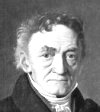
hornemann'ii: named for Jens Wilken Hornemann (1770-1841), a Danish botanist from Flackke, Marstal. He studied
 |
|
medicine and attended lectures by Martin Vahl at the Copenhagen Society for Natural History. He was a lecturer at the Copenhagen Botanical Garden and professor of botany at the University of Copenhagen, also the editor of Flora Danica from 1805 until his death. He traveled extensively in Germany, France, England, Denmark and Norway. From 1817 he was the director of the botanic garden. He was elected to the Royal Swedish Academy of Sciences as a corresponding member in 1815 and a foreign member in 1816. He traveled extensively in Denmark, England, France, |
Germany and Norway. The taxon Arabis holboellii was first described by Hornemann and named by him in honor of his friend the eminent Danish ornithologist Carl Peter Holbøll. There were originally two genera called Hornemannia but both have now been subsumed into other genera. His name is also on the Arctic or hoary redpoll ( Carduelis hornemanni) and there are a number of plants that currently or previously had hornemannii as their specific epithet.
-
hor'neri: named for Robert Messenger Horner (1854-1918), an American professor of biological science. He was born in Lamotte, Jackson County, Iowa, and his father died of typhoid fever when he was only three weeks old. A memorial on Find-a-Grave says he attended many universities, received several degrees one of them in law. He co-owned the law practice of Nevin and Horner in McKeesport, Michigan. He was the natural science professor at the Waitsburg Academy. He was married to Agnes Nancy Aitchison and they had three children. He died in Epworth, Iowa.
-
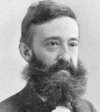
horn'ii: named for Dr. George Henry Horn (1840-1897), born in Philadelphia. He received a medical degree from the
 |
|
University of Pennsylvania in 1861, was commissioned as a cavalry surgeon and served in California for three years, during which time he studied and collected insects in California, Arizona and New Mexico, which was one of his primary interests. After moving back east he established a medical practice and was elected president of the Entomological Society of Philadelphia, which was the predecessor of the American Entomological Society, and he remained president until his death. In addition to a successful career in obstetrics, he published 265 scientific papers, estab- |
lishing 154 new genera and 1,582 new species of beetles. He traveled to European museums, attended foreign entomological society meetings, and studied type material firsthand. He became an authority especially on scarab beetles, and his collection and library is at the Academy of Natural Sciences in Philadelphia. While in California, he collected plants at Fort Tejon and Fort Independence in Inyo County on behalf of the eminent Asa Gray at Harvard. He was the co-author of John LeConte’s revised and expanded 1883 edition of the then-standard Classification of the Coleoptera of North America and co-author with LeConte of The Rhynchophora of America, north of Mexico. He was also the author of The Coleoptera of Baja California published in 1883. The taxon in the California flora is Astragalus hornii which was published by Asa Gray in 1868.
-
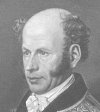
hornschuchia'na/hornschuch'ii: named for German botanist, bryologist, university teacher, entomologist and mineral-
 |
|
ogist Christian Friedrich Hornschuch (1793-1850). He was born in Bavaria and began his career as an apprentice pharmacist in Hildburghausen. He moved to Regensburg in 1813 to become an assistant to the botanist David Heinrich Hoppe (see hoppeana), and subsequently was an assistant to the pharmacist and bryologist Heinrich Christian Funck in Gefrees. It was there that he began carrying on research on mosses native to the Fichtel Mountains. He accompanied Hoppe in 1816 on a botanical expedition to the Adriatic coast, then returned to Coburg, continuing his research with |
Hoppe in Tyrol and Carinthia. Later he worked as a botanical demonstrator at the University of Greifswald, and for a period of time studied with Carl Adolph Agardh from the University of Lund. In 1820 he accepted a position as associate professor of natural history and botany, and was appointed as the director of the botanical gardens at the University of Greifswald. In 1827, he attained the title of full professor. Hornschuch specialized in the field of bryology, and with botanist Christian Gottfried Daniel Nees von Esenbeck (1776–1858) and engraver Jacob Sturm (1771–1848), he was co-author of Bryologia Germanica (1823–31). He translated a number of Danish and Swedish works, and was the author of several publications. He was also honored by Nees von Esenbeck who published the genus Hornschuchia in 1821.
-
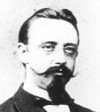
Hornun'gia: named for Ernst Gottfried Hornung (1795-1862), a German pharmacist, botanist and entomologist. He
 |
|
was born in Frankenhausen, and at the age of 15, he was able to begin training as a pharmacist in the pharmacy of the court councilor and professor Trommsdorf in Erfurt. From 1810 to 1813 he was an apprentice in his pharmacy. In 1813 he moved to the Chemical-Pharmaceutical Institute in Trommsdorff, which he left a year later. The years of service followed that took him to Coburg, Aachen and Geneva. There Hornung completed his knowledge of chemistry. He attended lectures at Berlin University. There he passed his state examination, which finally qualified him to man- |
age a pharmacy and to train apprentices and assistants in the pharmacist profession. The search for a suitable pharmacy led him to Aschersleben. In October 1823 he bought the council pharmacy. In the early years there was little time for botany. As his circumstances consolidated, this freedom opened up again. A circle of like-minded people found themselves who joined him. He married in 1829 and had 5 children. During his training in Erfurt he had a recognized botany teacher, Professor Berhardi. Hornung himself had already botanized so successfully in Frankenhausen and Erfurt that he was well known among Germany's botanists. This reputation was also based on his courageous appearance in a world of changing science. In 1753, Linnaeus brought order to the confusion of plant names with a new dictionary of plants. Every plant and animal had a two-part scientific name. As a botanist, Hornung was the undisputed authority. He had extensive knowledge of plants. Hornung wrote works for “Flora,” a botanical journal published by the Royal Botanical Society in Regensburg. He found a variety of plants in the Aschersleben-Staßfurt area, in the Eastern Harz and in the valleys of Wipper and Eine. From 1832 onwards, Hornung was an honorary councilor in Aschersleben for several years. Because of his efforts in designing the botanical garden in Aschersleben, he was given management when work began. Hornung soon became interested in the insects of the Harz and its foothills, particularly the interesting group of ground beetles. Hornung pushed for a directory of beetle species to be created. In 1835, Hornung himself presented a list of 1,400 species of beetles in the Harz Mountains. To supplement his income he became the general representative of the Erfurt Hail Damage Insurance Company. After he sold his pharmacy to his successor Bley, he worked in the trade association and the German National Association. However, he was not able to enjoy his deserved retirement for much longer because he died in Aschersleben on September 30, 1862. The genus Hornungia was published by Gottlieb Ludwig Reichenbach in 1837. (Photo credit: Halophila)
-
hor'rida/hor'ridum/hor'ridus: very prickly or bristly.
-
Horsfor'dia: named for Frederick Hinsdale Horsford (1855-1923), a New England botanist and collector. He was born and died in Charlotte, Vermont. He was a farmer and commercial seedsman who went into the nursery business with Cyrus G. Pringle in 1883. They traveled throughout North America collecting plants and in 1893 Horsford bought out Pringle and established the F. H. Horsford Nursery in Charlotte, Vermont, a nursery which is in existence today at the same location, 125 years later. Horsford was an avid hybridizer and deserved the reputation as an international pioneer in the hybridization of lilies, of which in 1895 he offered nearly 60 varieties for sale. The genus Horsfordia was published by Asa Gray in 1887.
-
horten'sia: of gardens, from the Latin hortus, "garden." From this same root comes the word "horticulture."
-
horten'sis: of or pertaining to gardens.
-
hortor'um: same as above entry.
-
hosacka'na: named for Edward Yataro Hosaka (1907-1961), an American botanist and plant collector who specialized in identifying plants of the Hawaiian Islands. His 1935 University of Hawaii at Manoa masters thesis was entitled "A Floristic and Ecological Study of Kipapa Gulch." He authored Sport Fishing in Hawaii published in 1944 which was republished in 1973 as Shore Fishing in Hawaii.
-
Hosack'ia: named for Dr. David Hosack (1769-1835), a noted physician, botanist and educator who was the originator
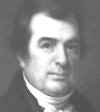 |
|
of the first botanical garden in the United States, called Elgin Botanical Garden in New York after his father's Scottish birthplace, with 1,500 species of plants. He was the doctor who attended to Alexander Hamilton after his deadly duel with Aaron Burr. He had also attended to the son of Alexander Hamilton who was shot in a duel at the same location three years earlier. He was born in New York City and was sent to New Jersey academies to further his education, first in Newark and then Hackensack. He then attended Columbia College where he became enamored with medicine, |
later transferring to the College of New Jersey (now Princeton) from which he graduated with a BA in 1789 at the age of 20. In 1790 he enrolled in a medical school in Pennsylvania and received a medical degree the following year. He opened his first medical practice in Alexandria, Virginia, and then returned to New York City with his wife in 1792. At some point he went to Britain to study at the University of Edinburgh and spent much of his time in the botanical gardens there. After returning in 1796 from his time in England, he established a practice in New York City. Very soon thereafter his son died, and then his wife died in childbirth. Much of his medical work was as a family practitioner specializing in pediatric and obstetric care. He was a professor of natural history, botany, and midwifery and surgery at Columbia College, the founder and first president of the New York Horticultural Society, and was elected a foreign member of the Royal Swedish Academy of Sciences. Hosack was one of the founders and the fourth president of the New York Historical Society, president of the Literary and Philosophical Society of New York, a member of the American Antiquarian Society, one of the founders of both Belleview Hospital and the American Academy of Fine Arts, a fellow of the American Academy of Arts and Sciences, and an honorary member of the National Academy of Design. With his second wife he had nine children, seven of whom lived to adulthood. Hosack was one of the first to introduce European-style landscape architecture into the United States. The Great Fire of New York in 1835 destroyed hundreds of buildings, and Hosack’s property loss was estimated at $300,000, over $8 million in today's monetary values. He died of a stroke one week later. The genus Hosackia was published by George Bentham in 1829 based on an earlier description by David Douglas.
- Houttuyn'ia: named for Marten Willem Houttuyn (1720-1794), a Dutch naturalist and physician. He was also an engraver and a bookseller, and was the author of a monumental work of botany entitled Deel Plaat L in 1773. The genus Houttuynia was published by Carl Peter Thunberg in 1794.
-
howald'iae: named for Ann M. Howald (1949?- ). Her brief bio on Calphotos says "Ann Howald is a professional botanist living in Sonoma, California. She has an MA in botany from UC Santa Barbara. As a hobby, she has been photographing the native plants of California since 1970." She retired from a career as a botanist and teacher, and her goal is to write a book about the plants of Mono County in the Eastern Sierra which she loves. And another website called Mono Basin Bird Chautauqua provides this: "Ann Howald first visited the Mono Basin at age eleven, fishing June Lake with her family. Now a retired botanist, she lives in Mono County each May-October in her used Airstream/mobile botany lab, and is well on her way to completing a book on Mono County plants. For many years she has led botany field trips throughout Mono County for the Bristlecone Chapter of the California Native Plant Society. She taught High Sierra field seminars for the Mono Lake Committee for 25 years, retiring in 2019. She still pulls weeds wherever she finds them, with help from her friends." Her name is on Erythranthe howaldiae.
-
howard'ii: named for Winslow J. Howard (c. 1827-1898). He was born in New Hampshire about 1827. The following information was extracted from a webpage called "W.J. Howard Notes" by Dr. Lawrence Lee created in December, 2008. Howard began working in jewelry sometime around 1846 and worked at one point for Tiffany & Co. in New York City. A W.J. Howard apparently booked passage on the SS Noremberg for its 1949 passage from New York to the California gold fields. By late 1858 he was in Santa Fe, New Mexico. An ad placed in the Santa Fe Weekly Gazette, 5 Feb., 1859, reads:
"Mr. W.J. Howard begs leave most respectfully to inform the citizens of Santa Fe and the public in general that he has taken room in the placita of the Exchange Hotel for the purpose of repairing fine Watches of every description, also Clocks, Music Boxes, Jewelry, and other mechanical contrivances. By the practical experience of thirteen years in the business, and with the recommendation of the largest Jewelry Establishment in this country—the house of Tiffany & Co., New York City—he hopes to merit a share of public patronage in his line." He was one of 25 people who met in late 1858 to form the New Mexico Historical Society, and he was elected curator and librarian. He resigned in 1860 and left for Colorado. A note in the Weekly Rocky Mountain News stated "W.J. Howard, jeweler and watchmaker long of Tiffany's and late of Santa Fe, has arrived and commenced business in this city. He is a thorough workman." His interest in natural history is indicated by a note in the Western Mountaineer of July, 1860, to wit: "The Idahoe Society of Natural History established in Denver on the 11th inst. Recording Secretary W.J. Howard, Board of Trustees W.J. Howard." In 1861 he moved to Central City, Colorado, and opened an assay office and continued working with gold, silver and opal jewelry. He took a partner named Colony and began the Howard and Colony Jewelry Store, and in 1863 exhibited a 29-pound meteor discovered n Russell’s Gulch, near Pleasant Valley, by a Mr. Otho Curtis. In 1865 he moved east, got married and settled down in Brooklyn, NY, and the following year advertised a large collection of botanical specimens gathered over three years in Colorado for sale. He was becoming known as a collector of botanical, mineral and entomological specimens, and soon was sending collected plants to Asa Gray at Harvard. In 1868 he was collecting in Montana, and the next year had set up again as a jeweler in Nevada. By 1875 the Rocky Mountain News was announcing that "W.J. Howard, the pioneer watchmaker and jeweler in Denver, who, since then, has ventured all kinds of fortune and adventure in New Mexico, Arizona, Montana, Idaho, Utah, Nevada and the east, has again settled down in our city [Denver], to engage in business." This does not seem to have lasted long since by later in the year he was in Prescott, Arizona. In 1878 he closed his business and the following year moved back to Denver and then in 1880 back to New Mexico, where he was divorced in 1881. The following years become increasingly difficult to document but no doubt he continued working as a jeweler/assayer/geologist/entomologist/plant collector and there is little to be sure of. He appears to have developed financial difficulties and his final years were probably not happy ones. "In Accidental Argonaut, [published in 2020], Steve Cary relates the wide-ranging escapades of Winslow Howard, a renaissance man of science and culture whose life spanned the 19th Century. Howard was a trained jeweler, businessman, husband and father. He journeyed West to seek respite from deadly consumption and his ensuing adventures exemplified the fortunes of many contemporary Americans who left home and comfort on quests for freedom and new life in the largely unknown West. Like the mythical Greek Argonauts, Howard was driven to seek his fortune in gold, but the real treasure lay in his journey, during which he achieved fame and success as a self-taught assayer, naturalist, scientist and society organizer, and during which fortunes were won and lost and personal accomplishments came at tragic costs. New Hampshire-born, Howard apprenticed at Tiffany & Co. in New York City. His thirteen years of training culminated in prized, journeyman jeweler credentials and Howard seemed destined for prosperity in America's financial center, but that dream shattered when he acquired consumption. Unwilling to wither and die at age thirty, Howard rolled the dice and headed to New Mexico Territory, home of Kit Carson, ancient Spanish gold mines and a health-restoring climate. For the next forty years, Howard operated jewelry and assay shops in gold rush towns and silver mine camps around the West. Along his life's journey, Howard collected everything from clocks and coins to fossils and Indian artifacts. He was of a curious and scientific disposition, so the Smithsonian's Spencer Baird was able to lure him into the world of natural history where Howard made a name for himself collecting new species of plants and insects across the West. While American science was coalescing, gaining momentum and matching European science, Howard rode the rising tide of reason, interacting with founding scientists John Torrey, John Newberry, Asa Gray and Henry Edwards. At home in his mining towns, Howard's business ventures and scientific achievements contributed to transformation of the American West as its myth was being made." (from a website of the Boswell Book Company) In 2002 Stephen Cary also wrote an essay entitled "Winslow J. Howard: Pioneer New Mexico Naturalist" in the Journal of the Lepidopterists' Society. The (former) taxon in the California flora was Linosyris howardii.
-
how'ei: named for Darley Frank Howe (1892-1985), a noted Chula Vista botanist and contributor to the San Diego
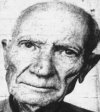 |
|
Natural History Museum. An obituary in the Chula Vista Star-News, April 25, 1985, provides this profile: "[He] was born in Verdon, Neb., and moved to Chula Vista with his family when he was 2 years old, remaining a resident until his death. His family purchased a five-acre lemon grove. [He graduated from Stillwater High School in 1911] and earned money to attend Pomona College by picking lemons. He graduated in 1916 with a liberal arts degree that included studies in botany and zoology. His first job was with San Diego Land and Town Co., collecting soil samples under |
guidance of the US Department of Agriculture to study the effect of irrigation on lemon grove soils. He went back to picking lemons for a living during World War I, not serving because he was not classified healthy enough for duty. Following the war he resumed his duties with San Diego Land and Town Co., branching out to study other variables affecting soil. Howe married Vera Belliner of Chula Vista in 1929. She was a musician who taught piano, violin and guitar. Sometime after 1930, Howe began a chicken farming business on his parents' land in Chula Vista, selling eggs to regular local customers. He retired from the business in 1959 and devoted more time to his passion - collecting plant specimens from the southwestern United States and Baja. Fellow botanist and friend Jack Reveal said Howe collected close to 5,000 different plant samples. He always duplicated what he collected and gave a set of his specimens to the San Diego Natural History Museum. His personal collection is now housed with San Diego State's botany department. Howe continued collecting until 1980 when his health forced him to stop." The taxon Echinocereus engelmannii var. howei is listed in the Jepson eflora as unresolved. (Photo credit: Chula Vista Star-News)
-
how'ei: named for Marshall Avery Howe (1867-1936), an American botanist, taxonomist, morphologist, curator and
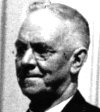 |
|
the third director of the New York Botanical Garden. The following is quoted from a website of the NYBG: “He was born in Newfane, Vermont, on June 6th, 1867. The eldest of 5 children he was named after his father Marshall Otis Howe and his maternal grandfather Avery Joseph Dexter and was insistent on using his full name. Marshall Avery Howe graduated from the University of Vermont in 1890, where he was roommated with his life long friend Dr. Abel Grout. On leaving college, Howe taught for a year in the Brattleboro High School but left in the summer of 1891 to |
become an instructor in cryptogamic botany at the University of California at Berkeley. At the end of the 1895-1896 college year, Howe resigned to accept a fellowship at Columbia University where he studied Hepaticae with Lucien Underwood. He received his PhD from Columbia in 1898 and from 1898 to 1901 was curator of the university herbarium. During this time, the plans for the creation of the New York Botanical Garden were materializing and the Columbia University Herbarium was deposited at the NYBG. In 1901 Howe became a member of the NYBG scientific staff and in 1906 became curator. From 1901 until his death in 1936, Howe was associated with the NYBG being appointed assistant director in 1923 and director in 1935 after the resignation of Elmer Drew Merrill. During his 35 year association with the New York Botanical Garden, Marshall Avery Howe served as a plant collector, participated in numerous expeditions, arranged exhibits, and distributed plant specimens primarily of algae and hepaticae. He was a taxonomist, a morphologist, an editor, an administrator as well as an expert on and cultivator of dahlias and other ornamental plants. Throughout his scientific and administrative career Marshall Avery Howe continued his research work primarily in hepaticology, phycology, algae and the cultivation of dahlias. His work was done meticulously, with insight and thoroughness. His home life was quiet and dignified. He made his home in Pleasantville, New York, where he was an active member of the Garden Club, and served as secretary and later president of the board of trustees of the Pleasantville Free Library. He married Edith Morton Packard in 1909 and had two children Gertrude Dexter Howe and Prentiss Mellen Howe.” (Photo credit: NYBG) ( Bestia breweriana var. howei, Dicranella howei, Isothecium howei, Orthotrichum lyellii var. howei, Pleuridium alternifolium var. howei)
-
Howellan'thus/howellia'na/Howelliel'la/howel'lii: named in honor of
John Thomas Howell (1903-1994), an assistant to
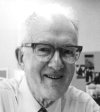 |
|
Alice Eastwood and her
successor as curator of botany of the California Academy of Sciences.
He had become assistant curator in 1930 and was appointed as
curator the day after she retired in 1949 serving until January 1969
and being succeeded in turn by Dennis Eugene Breedlove. With Eastwood,
he started a journal called Leaflets of Western Botany which
was published from 1932 to 1968. He was a scholar of the Eriogonums and was the author of Marin Flora: A Manual of the Flowering Plants
and Ferns of Marin County, and a co-author of A Flora
of Sonoma County with |
Catherine Best, Irja Knight and Mary Wells
as well as A Flora of San Francisco, California with Peter
Raven and Peter Rubtzoff. He was also a principal mentor of
Mary DeDecker. "More than 50 years ago, [he] came upon
wildflowers blooming in the charred 'remains' of a chaparral wildfire
on the side of Mount Tamalpais. He had never seen a display
to match it. 'It's a wonder,' he wrote, 'that ecologists don't
become arsonists in order to behold the beauty after burns.' "
(from Bay
Nature) The following memorium is from a website of the Flora
of North America Project: "Tom was born in Merced, California
and by the time he entered high school there, he had become particularly
interested in plants. He studied botany under W.L. Jepson at
the University of California at Berkeley and received his MA in
1927. From 1927-1929, Tom was the first resident botanist at the Rancho
Santa Ana Botanic Garden when it was still located on Susanna Bixby
Bryant's ranch in Santa Ana Canyon. There, he founded the herbarium
of the Rancho Santa Ana Botanical Garden (RSA). In 1929, Alice
Eastwood offered Tom a position in the herbarium at the California
Academy of Sciences where he spent the next 65 years in botanical
exploration, research, and public education. Although Tom collected
nearly 55,000 plants, mostly from throughout California and the western
United States, tropical botanists recognize his enormous contributions
to the study of the Galapagos Islands flora. From March to September
of 1932, Tom was a botanist on the Templeton Crocker Expedition to
the Galapagos where he collected 1,627 plants on 14 of the islands. These collections formed the basis for some of the first serious revisionary
studies of plant groups with significant radiation in the Galapagos
Islands. Tom's publications on the Galapagos flora dealt with
such groups as Mollugo, Cactaceae, Amaranthaceae, Tiquilia, Scalesia, and Polygala. In California,
Tom collected plants in the Sierra Nevada for some 25 years with the
prospect of writing a flora of that mountain range. The 20 herbarium
cases housing specimens generated by those efforts are now being incorporated
into the Academy's herbarium. Because they were largely unmounted,
Howell's Sierran plants were not readily accessible for use by authors
of the recent Jepson Manual. Botanically, Tom was a generalist
with a particular interest in regional floras. Plants named
for Tom include an alga, a fungus, a lichen, a liverwort, a moss,
monocots, and dicots. His 'specialities' included
the Asteraceae, Cyperaceae, Hydrophyllaceae, Poaceae, Polygonaceae, Rhamnaceae, and Rubiaceae. His bibliography includes more than
500 entries, most of which deal with California plants. He considered
his editing and publication of the private journal Leaflets of
Western Botany (10 volumes and index, 1932--1968) to be his most
important contribution to California botany. Another of Tom's
best known and most popular publications is Marin Flora, Manual
of the Flowering Plants and Ferns of Marin County, California.
Although Tom did not teach in a university classroom setting,
he probably taught botany to nearly as many people as most college
professors. His 'students' included Junior Academy schoolchildren,
Sierra Club chapters, the California Native Plant Society, and California
Botanical Club. Tom served as leader of this latter organization
(which was founded in 1891 by Katherine Brandegee) from 1950 to 1970.
Over the years he was a mentor to a loyal following of amateur
and professional botanists. Tom's influence extended beyond
informal botanical instruction and encouragement. In many cases
he nurtured dedication among his followers that led to important collaborative
publications such as A Flora of San Francisco (1958), A
Flora of Lassen Volcanic National Park, California (1961), The
Vascular Plants of Monterey County, California (1964), and A
Catalogue of Vascular Plants on Peavine Mountain (1992). In
the years preceding his death Tom was actively involved in a collaborative
study of the flora of Sonoma County. Tom was especially proud
of having received the Willdenow Medal from the Berlin Botanical Garden
and Museum (1979) and the Fellows Medal of the California Academy
of Sciences (1986). Following his retirement, the John Thomas
Howell curatorial chair of western American botany was established
at the Academy. The endowment for this chair continues to grow
and it will be activated when sufficient funds become available. His
many friends and colleagues will miss Tom's thoughtful counsel, ever
present humor, and zest for the flora of his native state. A
biographical sketch of Tom Howell's eventful and productive life appeared
in Fremontia 17(1):11-19. 1989." The genus Howelliella was published by Werner Hugo Paul Rothmaler in 1954 and the genus Howellanthus was published in 2010 by Geneviere K. Walden and Robert Patterson. (genus Howelliella,
genus Howellanthus, also Brodiaea howellii Eastw., Cuscuta howelliana, Allium howellii, Castilleja howellii, Chorizanthe howellii, Epilobium howellii, Eriogonum howellii, Juncus howellii, Linanthus howellii, Malacothamnus howellii, Puccinellia
howellii, and other taxa)
-
Howel'lia/howel'lii: named for Thomas Jefferson Howell (1824-1912) (see entry below) and his brother, the botanist and plant collector Joseph (1830-1912) who preceded him in death by only two months. Joseph Howell was born in Berwick, Pennsylvania, and died in Portland, Oregon. He and middle brother John bought the dairy farm next to their parents' land on Sauvie Island, Oregon, in 1873 and ran it successfully for many years. The genus Howellia was published by Asa Gray in 1880. (genus Howellia, Isoetes howellii, Montia howellii)
-
howel'lii: named for Arthur Holmes Howell (1872-1940), an American zoologist most notable for his field work on
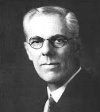 |
|
mammals and birds in Alabama, Arkansas, Florida, Georgia, Idaho, Illinois, Kentucky, Louisiana, Missouri, Montana, New Mexico, and Texas. He was born in Lake Grove, New York and at the age of fifteen graduated from Brooklyn High School. As a boy in New York state, he developed an interest in natural history, especially birds, and in 1898, he visited Great Gull Island and confirmed the extinction of the Gull Island vole. In 1889 he became a member of the American Ornitholo- gists' Union and later joined the Linnean Society of New York. In 1895, on the advice of the orni- |
thologist Harry C. Oberholser, he was offered a temporary appointment by Vernon Bailey of the United States Department of Agriculture, Division of Ornithology and Mammalogy, and accompanied Bailey as field assistant during surveys in Montana, Idaho, Washington, and Oregon. The website of the Smithsonian Institution Archives says: “Following a second temporary appointment in 1896, Howell became a permanent special assistant and was assigned work on the preparation of scientific study skins and the Bureau's mammal collection. Howell remained with the Biological Survey until his death and held the position of senior biologist in the Division of Wildlife Research, Fish and Wildlife Service, successor agency of the Bureau. During his career, Howell became one of the leading American ornithologists and mammalogists. He was a charter member of the American Society of Mammalogists, a member of the Society's board of directors, 1935-1940, and chairman of the editorial committee, 1938-1940. In addition, he was a fellow of the American Ornithologists' Union and a member of the Baird Ornithological Club, the Cooper Ornithological Club, and the Biological Society of Washington. Howell's major publications dealt with the fauna of the southeastern United States, particularly birds and mammals. Howell published 118 works. His major works included The Birds of Arkansas (1911), Birds of Alabama (1924), and Florida Bird Life (1932). At the time of his death, he was also preparing two manuscripts for the North American Fauna Series, A Revision of the Classification of Red Squirrels and The Mammals of Florida.” He died in Washington, D.C. ( Solidago howellii)
- howel'lii: named for Joseph Howell (1830-1912), brother of Thomas Jefferson Howell. (See entry above). (Brodiaea howelli, Sanicula crassicaulis var. howellii)
-
howel'lii: named for Thomas Jefferson Howell (1824-1912), a
collector of the flora of Oregon and Washington. Born
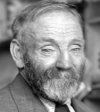 |
|
in Cooper County, Missouri, he moved at the age of eight with his family in 1850 by wagon train to the Oregon territory where they settled on Sauvie Island on the Columbia River outside of Portland. Only having six months of formal schooling and some education in Latin and the sciences from his father, he mostly educated himself while farming along the Clackamas River after leaving Sauvie Island. He collected plants found near his home and established an impressive herbarium, sending many specimens to Harvard and Europe, and to botanists such as Asa Gray, Sereno Watson and |
Liberty Hyde Bailey for identification. He discovered more than 50 species and ran what may have been the region's first native plant nursery. He operated several grocery stores in the Portland area and served as the first postmaster of the Willamette Slough post office on Sauvie Island starting in 1873. He later served as the first postmaster of Creighton post office in Oak Grove, Oregon, beginning in 1904. He was the author of A Catalogue of the Known Plants (Phaenogamia and Pteridophyta) of Oregon, Washington, and Idaho which was published in 1887 and listed 2,152 species. After this was accomplished, he undertook to describe all the species in his list and despite marginal literacy (he attended only a few months of school, being educated mostly by his doctor father) and lack of funds, he wrote, produced and printed his own Flora of Northwest America to fill a gap that he perceived to exist in the botanical documentation of his country. "To defray publication expenses, he learned how to set type, composed the pages of his book himself at home, then carried them into town for individual printing. He completed the manuscript for this, his Flora of Northwest America, in 1897, and it was not completely printed and issued until 1903. It remained the most complete account of the flora of the Pacific Northwest for nearly fifty years." Howell and his brother Joseph (1830-1912) both became ardent botanical collectors and came to the attention of Asa Gray when they sent him samples for identification. The great Harvard scholar even named one species they discovered after them to honor their contribution, Howellia aquatilis. Howell's opus eventually reached 800 pages and remains a major work of the region. In 1903 Howell donated his collection of approximately 10,000 plant specimens to the University of Oregon. He spent the 1903-1904 academic year cataloging the collection for the university. An article in the Oregon Encyclopedia quotes the comments of a number of major botanical figures regarding Howell: “Willis Lynn Jepson of Berkeley wrote ‘Mr. Howell . . . deserves no small meed of praise for the courage and resolution necessary in the face of such circumstances.’ The often-cranky E.L. Greene wrote that Howell ‘accomplished the greatest amount of meritorious and valuable scientific work that was ever done by any man of any epoch, on so very rudimentary an education in letters.’ Alice Eastwood of the California Academy wrote the kindest words of all. ‘The conscientious striving for the truth which distinguishes the work of this botanist, his independence in asserting his own views, and his thorough, careful work, command our respect; while the enthusiasm and self-denial which have resulted in the publication of a work of this magnitude by any author comparatively poor in money, at his own expense, commands, again, our admiration.’ " ( Agoseris howellii, Alopecurus howellii, Amsinckia howellii, Antennaria howellii, Carex howellii, Cirsium howellii, Cryptantha howellii, Dicranum howellii, Dimeresia howellii, Draba howellii, Erythronium howellii, Festuca howellii, Fontinalis howellii, Lilium howelli, Lomatium
howellii, Minuartia howellii, Montia howellii, Pedicularis howellii, Perideridia howellii, Poa howellii, Polygonum howellii, Potentilla howellii, Saxifraga howellii, Senecio howellii, Streptanthus howellii, Tauschia howellii, Thelypodium howellii, Trifolium howellii, Viola howellii and other taxa)
-
hoyt'ae: named for named for Minerva Hamilton Hoyt (Mrs. Albert Sherman Hoyt) (1866-1945), a California desert activist and conservationist. “She was born on March 27, 1866, on a plantation near Durant, Mississippi, to an upper-class family. She attended a local school for white students, many from the planter class. After marrying Dr. Albert Sherman Hoyt, they live for a time in New York and Baltimore, and had two sons together. In 1897 they moved to South Pasadena, California. In California, Hoyt used her influence as a wealthy socialite to support civic causes. Among these was the Los Angeles Philharmonic. There she gradually became deeply interested in desert plants and habitat. Hoyt became interested in Southern California's desert plants through her interest in gardening, particularly cactus and joshua trees. After the death of her husband in 1918, she became concerned that increased automobile traffic in the desert was threatening the area. Hoyt began to exhibit desert plants across the country, to educate people about their qualities. Exhibitions included the national 1928 Garden Club of America show in New York, where the work was seen and commented on by Secretary of Agriculture William Jardine. She later exhibited as far as London. The exhibitions were significant efforts—for the New York exhibition, seven freight cars of rocks, plants, and sand were shipped across the country, and fresh flowers were flown in. Throughout the 1930s she worked to encourage the state of California to create three parks, including Joshua Tree, Death Valley, and Anza-Borrego Desert. Though initially thwarted, in 1936, she gained support by the administration of President Franklin D. Roosevelt, which designated more than 800,000 acres in California desert area as the Joshua Tree National Monument. She also worked to appeal to the Mexican government, appealing to the latter to set aside 10,000 acres for cactus preservation.” She gained international fame as the ‘Apostle of the Cacti’ and the ‘Woman of the Joshua Tree.’ “ (from Wikipedia) An article in the LA Times says: “When Hoyt founded the International Desert Conservation League in March of 1930, the honorary vice presidents of the board included museum directors and university presidents, and the founder of the U.S. Forest Service. By 1934, Hoyt’s group had become powerful enough that the National Park Service was forced to take her proposal for a new park seriously. And so, in March of that year, the agency dispatched Roger Toll, superintendent of Yellowstone National Park, to the desert. ‘Toll was a major player, and his opinion carried or destroyed a number of places,’ Larry Dilsaver [author of Protecting the Desert: A History of Joshua Tree National Park] said. ‘If he said no, that was the end of it.’ Hoyt met Toll in Palm Springs with her chauffeur and the desert botanist Philip Munz. On her desert excursions, Hoyt often looked as if she was hosting a tea — dressed in long skirts, hats and heels. They spent three days touring the desert together at a relentless pace, but the weather was cold and unpleasant and Toll was not impressed.” He recommended a small area to be preserved. Unbowed, she continued to press infuential people until she got the attention of FDR and in 1936 he signed the proclamation creating Joshua Tree as a national monument of 825,000 acres. Much work remained to be done but the heavy lifting had been accomplished. Minerva died in 1945 and was buried in Altadena. Although mining interests succeeded in slashing Joshua Tree’s acreage by almost a third in 1950, that land was returned in 1994 when Joshua Tree became a national park. We wouldn't be able to enjoy it today were it not for this remarkable woman.
-
hubb'yi: named for Frank Winfield Hubby, Sr. (1841-1918). David Hollombe
sent me the following biographical information: "Frank W. Hubby, Ojai Valley, California. Born
in Cleveland, Dec. 23, 1841. Educated Cleveland grammar and high schools
and Kenyon College, graduating with "philosophical"
honor. Treasurer Jamestown & Franklin R. R. Co. and Gen. Accountant
Mercer Iron & Coal Co., 1865-1866. Then engaged in manufacture
of axes and edge tools as treasurer and manager of Powell Tool Co.,
from its founding till it was merged with the American Axe & Tool
Co. Still retains interests in various manufacturing enterprises of
Cleveland and elsewhere. Joined with "Squirrel Hunters"
campaign in defense of the Capitol at Washington. Member of Alpha
Delta Phi and Phi Beta Kappa fraternities, the Winon's Point Shooting
Club and other clubs, and member of St. Paul's Episcopal Church. Republican
for many years; now independent." [from Progressive Men of
Northern Ohio]. "At the age of forty he retired from active
business and became an active resident of the Ojai Valley, California.
He organized the Ojai Improvement Company, which developed the valley's
resources, and also planned and erected, with his associate, Mr. Foster,
the well-known Foothills Hotel at Ojai and laid out the tennis courts
where annual tournaments have been held for many years. Mr. Hubby
and associates were the builders of the big dam at Bear Valley in
San Bernardino County." [from History of Hollywood, 1937].
"The Hubby Herbarium, assembled about 50 years ago by Frank W.
Hubby and Nora Pettibone at Ojai, Ventura County, has been one of
the notable accessions of recent months. This herbarium is important
chiefly for specimens from Ojai Valley and supplements the fine recent
collections from the region that have been given to the Academy by
Henry M. Pollard. Among the most interesting specimens are some collected
by Miss Alice Eastwood in the 1890s around San Francisco, CA., duplicates
of specimens the Academy lost in the Great Fire of 1906. This outstanding
gift to the Academy was made by the Ojai Branch of the Ventura County
Library." [From the (California) Academy Newsletter,
Feb. 1949]
-
huddellia'na: named for Columbus Irvin Huddle (1875-1944), born in West Jefferson, Ohio, and died in Huntington Beach, California. An entry entitled "Contributions from the Rocky Mountain Herbarium: New Plants from Idaho" by Aven Nelson in the Botanical Gazette of Jul-Dec. 1912 says: “This fine species [Parrya huddleiana] was discovered by Columbus I. Huddle, supervisor of the Lemhi National Forest, Mackay, Idaho. It was growing in the loose black-limestone slide-rock, in Bear Canyon, altitude about 10,000 feet. The specimens, secured in good quantity, were in full fruit. The species is named for its discoverer, to whose courtesy the writer owes the memory of a glorious summer day's splendid collecting in the forest, under Mr. Huddle's watchful supervision, July 30, 1911.”
-
Hudson'ia: named for William Hudson (1730-1793), an early British botanist and apothecary born at the White Lion Inn in Kendal, Westmoreland, which his father managed, and educated at Kendal grammar school. He served an apprenticeship to an apothecary in Haymarket, London. The following is quoted from Wikipedia: “He obtained the prize for botany given by the Apothecaries' Company, a copy of Ray's Synopsis; but he also paid attention to mollusca and insects. In Pennant's British Zoology he is mentioned as the discoverer of Trochus terrestris. From 1757 to 1768 Hudson was resident sub-librarian of the British Museum, and his studies in the Sloane herbarium enabled him to adapt the Linnean nomenclature to the plants described by Ray far more accurately than did Sir John Hill in his Flora Britannica of 1760. In 1761 Hudson was elected a fellow of the Royal Society, and in the following year appeared the first edition of his Flora Anglica, which, according to Richard Pulteney and Sir J.E. Smith, 'marks the establishment of Linnean principles of botany in England.' Smith writes that the work was 'composed under the auspices and advice of Benjamin Stillingfleet.' Hudson, at the time of its publication, was practicing as an apothecary in Panton Street, Haymarket, and from 1765 to 1771 acted as 'praefectus horti' to the Apothecaries' Company at Chelsea. A considerably enlarged edition of the Flora appeared in 1778; but in 1783 the author's house in Panton Street took fire, his collections of insects and many of his plants were destroyed, and the inmates narrowly escaped with their lives. Hudson retired to Jermyn Street. In 1791 he joined the newly established Linnean Society. He died in Jermyn Street from paralysis on 23 May, 1793, being, according to the Gentleman's Magazine, in his sixtieth year. He bequeathed the remains of his herbarium to the Apothecaries' Company.” The genus Hudsonia was published in 1767 by Carl Linnaeus.
-
hudsonia'num: of or from the area around Hudson Bay in Canada. The taxon Ribes hudsonianum var. petiolare extends north to British Columbia.
-
Huegel'ia/Hugel'ia/hugel'ia: named for Karl Alexander Anselm Baron von Hügel (1795-1870), an Austrian noble,
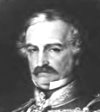 |
|
army officer, diplomat, botanist, and explorer. He was born in Regensburg, Bavaria, and studied law at Heidelberg University. In 1813 he became an officer in the Austrian Hussars and fought in the armies of the sixth and seventh coalitions against Napoleon. After Napoleon's defeat, he visited Scandinavia and Russia, before being stationed with other Austrian troops in southern France and then Italy. In 1824 he moved to Vienna and established a botanical garden. He is known especially for the grand tour of Asia which he engaged in from 1831 to 1836. He traveled to the Near East, |
the Indian subcontinent, the Far East and Australasia, before returning to Europe via the Cape of Good Hope and Saint Helena. He published a four-volume work called Kashmir and the Realm of the Sikh following his return to Europe, much of which relates to his journey across northern India. His visit to Australia and Tasmania was for the purpose of observing the flora and collecting seeds for his garden. Upon his return to Vienna he founded the Imperial Horticultural Society of which he was president from 1837 to 1848. In 1849 he was awarded the Royal Geographical Society's Patron's Gold Medal for his exploration of Kashmir. On the outbreak of the 1848 revolution, he sold his garden and rejoined the army, seeing action in the First Italian Independence War. He was Austrian envoy extraordinary (ambassador) to the Grand Duchy of Tuscany in Florence from 1850 to 1859 and in 1860 became the Austrian ambassador in Brussels, following which he published a second work about his grand tour, this time entitled The Pacific Ocean and the Spanish possessions in the East Indian archipelago. Retiring in 1867 he settled in Devon, England and died three years later in Brussels while en route to visit Vienna. One of his sons became a well-known Catholic theologian, another an anthropologist, and his daughter is regarded as the founder of Corpus Christi Church in Boscombe, now part of Bournemouth, in Dorset, England. The genus Huegelia in the Polemoniaceae was published by George Bentham and Joseph Dalton Hooker in 1876. Two other genera Huegelia were published in his honor in two other familes, the Rutaceae and the Araliaceae, as well as the genus Hugelia.
-
hullia'nus: named for Alvin C. Hull, Jr. (1909-1998). He married Mayme Laird and had three children. He was born in Whitney, Idaho, and served in the Mormon Swiss and German Mission from 1931 to 1933. He was a Forest Service employee in Idaho and Utah and worked on artificial reforestation. He died in Logan, Utah.
-
Hul'sea: named for Dr. Gilbert White Hulse (1807-1883), a US Army surgeon, botanist and plant collector. An entry in the Journal of the New York Botanical Garden, Vol. 22, by John Hendley Barnhart, bibliographer of the NYBG for 30 years, gives the following information: “Gilbert White Hulse was born 12 March 1807, in Blooming Grove township, near Washingtonville, Orange County, New York. He studied medicine at the College of Physicians and Surgeons in New York City, receiving his degree in 1835. He immediately entered the medical service of the United States Army, being stationed at Tampa Bay from February to April, 1836, in Arkansas during the summer and fall of the same year, returning to Fort Brooke, Florida. In 1837 he went again to Fort Gibson, Arkansas, returning to Fort Brooke in January, 1838. He was at Tallahassee in March, and before the middle of the year 1838 had settled as a medical practitioner at Rodney, Mississippi. Later he was a planter and slave owner in Louisiana, and about 1850 he visited northern California, where he collected plants for [John] Torrey as he had done in Florida and Mississippi. Throughout the Civil War he was a surgeon in the Confederate Army, and at its close, his property gone, he returned north, making his home at first with his sister, Mrs. Moffatt, at Rockford, Illinois, and later with her daughter, Mrs. Knapp, at Auburn, New York, where he died 13 November 1883.” He corresponded with John Torrey and the genus name Hulsea was given by John Torrey and Asa Gray in 1858.
-
hulten'ii: named for Oskar Eric Gunnar Hultén (1894-1981), a Swedish botanist, one of the greatest of twentieth
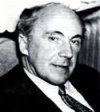 |
|
century plant geographers, explorer of the Arctic and in his time the pre-eminent student of circum- boreal floras. He was born in Halla, Södermanland, and inherited an interest in plants from his father who was a priest. He was educated at Stockholm University, obtaining his master's degree in 1919 and a PhD in 1937, and then doctor of science in botany at Lund University in 1937. He published Flora of Kamchatka and the adjacent islands 1927-1930. From 1931 to 1933 he was curator of the herbarium at the University of Lund, and during this time he was member of a |
botanical expedition to Mexico. In 1937 he published his Flora of the Aleutian Islands. From 1945 to 1961, he was a professor and head of the botany section at the Swedish Museum of Natural History. In 1953, he was elected to the Royal Swedish Academy of Sciences. An entry by Charles H. Smith on the webpage entitled Some Biogeographers, Evolutionists and Ecologists: Chrono-Biographical Sketches says the following about Hultén: “Beyond being equally adept as a field biologist, specimen collector, herbarium organizer, literature synthesizer, and plant taxonomist, he was also an important producer of new theories. It was Hultén, for example, who first significantly challenged the earlier view that during the Ice Age most or all circumpolar lands were completely covered with ice and unfit for vegetation: his research led him to hypothesize instead that numerous refugia had existed, a conclusion that has largely proved out through many subsequent researches. Hultén coined the term "Beringia" to describe one particular such refugium he thought existed around the Bering Strait area during the glacial period days of lower sea levels, and the term has stuck and provided a foundation for thinking in an array of related fields. Hultén is also known for his theory of equiformal progressive areas, an elaboration on the "age and area" notion of J. C. Willis in which plants are viewed as changing evolutionarily as they disperse out over time from refugial centers of origin. Several of Hultén's books became classics, including those on his model of Quaternary Arctic floral evolution [ Outline of the History of Arctic and Boreal Biota During the Quaternary Period] (1937), his regional surveys of Alaskan vascular plants [ Flora of Alaska and Yukon] (1941-1950 and 1968), his dot-map atlas of Scandinavian plant distribution (1950), and his phytogeographical syntheses of far-northern plant life (1958 and 1961).” In 1961 he retired, but was able to continue his exploration of Alaska until he was crippled by an apoplectic stroke which left him unable to walk and was hospitalised for the remainder of his life.
-
humboldtia'na/humboldt'ii: named for Friedrich Wilhelm
Heinrich Alexander von Humboldt (1769-1859), a German
 |
|
geographer
who Charles Darwin described as "the greatest scientific traveller
who ever lived." The following is from a website called Enchanted
Learning: "Baron Alexander von Humboldt was a Prussian naturalist
and explorer who explored much of Central and South America. Humboldt
and his friend, the French medical doctor/botanist Aime-Jacques-Alexandre
Goujoud Bonpland (1773-1858), explored the coast of Venezuela, the
Amazon and Orinoco Rivers, and much of Peru, Ecuador, Colombia and
Mexico (1799-1805). On their many expeditions, Humboldt and Bonpland |
collected plant, animal, and mineral specimens, studied electricity
(including discovering the first animal that produced electricity,
Electrophorus electricus, the electric eel), did extensive mapping
of northern South America, climbed mountains (and set altitude records),
observed astronomical phenomena, and performed many scientific observations.
The scientist Carlos Montufar (who later became a revolutionary in
Ecuador) acconpanied them on part of the trip. Humboldt discovered
what is now called the Humboldt Current off the west coast of South
America, while he was investigating why the interior of Peru was so
dry. It is a cold ocean current that runs along much of the western
coast of South America, and is also known as the Peru Current. Humboldt
was the first European to witness native South Americans preparing
curare arrow poison from a vine. He was also the first person to recognize
the need to preserve the cinchona plant (its bark contains quinine,
which is used to cure malaria, and it was terribly over-harvested
at the time). Humboldt was the first person to make accurate drawings
of Inca ruins in South America (he visited the ruins at Canar, Peru).
Humboldt and Bonpland discovered and mapped the Casiquiare Canal,
the only natural canal in the world that connects two major rivers
(the Orinoco River and the Negro River, a tributary of the Amazon).
Humboldt was also the first person to discover the importance of guano
(the dried droppings from fish-eating birds); it is an excellent fertilizer.
After their South American expeditions, Humboldt and Bonpland visited
the USA and were guests of President Thomas Jefferson in Washington,
D.C., for three months in 1804 (their visit happened just after Jefferson
had sent Lewis and Clark to explore the western US). At the age of
60, Humboldt traveled to the Ural mountains in Siberia and to Central
Asia to study the weather. He wrote extensively of his travels and
discoveries. One of his books, A Personal Narrative, inspired
a young Charles Darwin. His last work was his multi-volume book, Kosmos,
which tried to unify all of science. Humboldt died at age 90 (leaving Kosmos unfinished), and is buried in Tegel, Germany. Many landmarks
in the Americas, including a current, a river, a mountain
range, a reservoir, a salt marsh, parks, many counties and towns are
named for Humboldt. On the moon, the Mare Humboldtianum (Humboldt's
Sea) was named for Humboldt." Species named for him include
the Humboldt penguin ( Spheniscus humboldti), the Humboldt's
lily ( Lilium humboldtii), a South American oak ( Quercus
humboldtii), an orchid ( Phragmipedium humboldtii) and other
plants. And from Wikipedia: "The childhood of Alexander von Humboldt
was not a promising one as regards either health or intellect. His
characteristic tastes, however, soon displayed themselves; and from
his penchant for collecting and labelling plants, shells, and insects
he received the playful title of "the little apothecary."
The care of his education, on the unexpected death of his father in
1779, devolved upon his mother, who discharged the trust with constancy
and judgment. Destined for a political career, he studied finance
during six months at the University of Frankfort-on-the-Oder; and
a year later, April 25, 1789, he matriculated at Göttingen, then
eminent for the lectures of Christian Gottlob Heyne and Johann Friedrich
Blumenbach. His vast and varied powers were by this time fully developed,
and during a vacation in 1789, he made a scientific excursion up the
Rhine, and produced the treatise, Mineralogische Beobachtungen
über einige Basalte am Rhein (Brunswick, 1790). His passion
for travel was confirmed by friendships formed at Göttingen with
Georg Forster, Heyne's son-in-law, the distinguished companion of
Captain James Cook's second voyage. Henceforth his studies and rare
combination of personal talents became directed with extraordinary
insight and perseverance to the purpose of preparing himself for a
distinctive calling as a scientific explorer. With this view he studied
commerce and foreign languages at Hamburg, geology at Freiberg under
Abraham Gottlob Werner, anatomy at Jena under J. C. Loder, astronomy
and the use of scientific instruments under Franz Xaver von Zach and
Johann Gottfried Köhler. His researches into the vegetation of
the mines of Freiberg led to the publication in 1793 of his Florae
Fribergensis Specimen; and the results of a prolonged course of experiments
on the phenomena of muscular irritability, then recently discovered
by Luigi Galvani, were contained in his Versuche über die
gereizte Muskel- und Nervenfaser (Berlin, 1797), enriched in the
French translation with notes by Blumenbach. In the summer of 1790
he paid a short visit to England in company with [his friend Georg]
Forster. In 1792 and 1797 he was in Vienna; in 1795 he made a geological
and botanical tour through Switzerland and Italy. He had obtained
in the meantime official employment: appointed assessor of mines at
Berlin, February 29, 1792. Although this service to the state was
regarded by him as only an apprenticeship to the service of science,
he fulfilled its duties with such conspicuous ability that he not
only rose rapidly to the highest post in his department, but was as
well entrusted with several important diplomatic missions. The death
of his mother, on the 19th of November 1796, set him free to follow
the bent of his genius, and severing his official connections, he
waited for an opportunity to fulfill his long-cherished dream of travel
to distant lands."
- humboldtien'sis: of or from Humboldt County.
- humico'la: a dweller in the earth or ground, soil inhabiting), referring to the native environment, from Latin humus, "soil."
-
humifu'sa: trailing, sprawling, spreading over the ground, from the Greek humus, "earth, ground," and fusus, "spread out, expansive, creeping."
-
hu'mile/hu'milis: low-growing, humble, from Latin humus, "earth, soil."
-
Hum'ulus: a Latin name of uncertain origin, although it may have
descended from the Low German word humela for hop, which is
the common name of this genus placed by Munz in the Moraceae or mulberry family, but moved by Jepson along with Cannabis into the new family Cannabaceae. The genus Humulus was published by Carl Linnaeus in 1753.
-
Hunneman'nia: named for John Hunneman(n) (c.1760-1839), an English botanist, traveller, plant collector, and botanical bookseller in Soho, London. He was an agent for dried plants and was responsible for the introduction of new plants. Sources differ on whether he spelled his name Hunneman or Hunnemann. Guy Nesom in an article entitled "A Second Species of Hunnemannia and Synopsis of the Genus" in the journal Phytologia (October 1992) says: "The genus was named for John Hunnemann (ca. 1760-1839), a London bookseller who acted as agent for the sale of herbarium speamens and introduced new plants for cultivation (Desmond 1977). In Sweet's own words: 'We have named it in compliment to our friend, Mr. John Hunnemann, who, through his numerous correspondents in various countries, has been the means of introducing a greater number of plants to our collections than almost any other individual ...' " The genus Hunnemannia was published by Robert Sweet in 1828.
-
huntia'na: named for Loren Edward Hunt (1870-1916). David Hollombe contributes
the following from various sources: Hunt was born one of nine children in Austin, Minnesota,
and his family came to Santa Barbara in 1872. He taught engineering
at UC from 1893 to 1904 and was later principal assistant engineer
of San Francisco. He conceived the high-power fire protection that
was installed in San Francisco following the disastrous fire of 1906.
I don't have any details handy on his collecting in California, but
he went on a collecting trip to Alaska in 1899 with Setchell, Jepson
and A.A. Lawson. He was also captain of the U.C. football team while
a student there and also for a time in charge of the UC forestry
experiment station. He was married to Jessie Easton and died in San Francisco. The sole taxon in the California flora with this epithet is Clarkia amoena ssp. huntiana.
-
Husnotiel'la: named for Pierre Tranquille Husnot (1840-1929), a French botanist, bryologist, agrostologist, traveller
 |
|
farmer, and plant collector. He was born at Caen in northwestern France and studied at the Ecole d'Agriculture de Grignon and at the Université de Caen. From 1862 to 1875 he traveled extensively to Europe (the Pyrenees and Alps), Africa and America, and more particularly in the Caribbean (Grenada and the French Antilles) and the Canary Islands. When he returned he took over management of the family farm and became a cotrresponding member of a number of botanical societies. In 1874 he founded the Revue Bryologique, of which he was at the same time the editor, |
the director and the publisher until the end of 1927. In 1882 he published Flore analytique et descriptive des mousses du Nord-Ouest, and other works of his included Muscologia gallica, Sphagnologia europaca and Hepaticologia gallica. He was mayor of Caen from 1865 until his death. JSTOR provides the following: "French bryologist from Caen. Pierre Tranquille Brunot, founding editor of the Revue Bryologique, studied at the Ecole d'Agriculture de Grignon and at the Université de Caen. He later attended the botanical lectures of Adolphe Chatin at the Muséum national d'Histoire Naturelle, where his discovery of some rare plants drew the attention of Cosson, who cites him in his Flore des environs de Paris. Each year between 1863 and his marriage in 1876 he undertook one or more collecting trips, first in Britain, the Pyrenees, and Alps, later overseas to New Grenada, the French Antilles, and the Canaries. For more than five decades, until 1927, he edited the Revue Bryologique; he also produced floras and monographs illustrated with his own lithographs, on grasses, reeds, and the Cyperaceae of France, Belgium, Britain, and Switzerland, and his major works, Hepatologica Gallica (1881) and Muscologia Gallica (1894), which earned him the Prix Montagne of the Académies des Sciences. He received the Legion d'Honneur for nearly 60 years' service as the socialist mayor of Caen. A number of species bear his name, as well as the genus Husnotiella Cardot." The genus Husnotiella was published by Jules Cardot in 1909.
-
Hutchins'ia/hutchins'iae: named for Ellen Hutchins (1785-1815), Ireland’s first female botanist and a talented botanical artist who made beautiful and accurate drawings that were used by a number of botanists in their publications. She was particularly interested in cryptogams like mosses, liverworts, lichens, seaweeds and other seashore plants of the Bantry Bay and County Cork area where she lived. She also collected around Belfast and along the west coast of Ireland. Most of her collection is at Kew Gardens. She contributed to the Flora Hibernica by James Townsend Mackay, curator of the botanic garden at Trinity College. She discovered a great many plants new to science and contributed greatly to our understanding of seaweeds and other non-flowering plants. She was also an avid gardener and she tended plants in a field near her home which was referred to as Miss Ellen’s garden. Her health had been poor as a youth, and in the latter part of her life she suffered from tuberculosis and died in Cork just before her 30th birthday. The genus Hutchinsia ( Brassicaceae) was named in her honor by William Townsend Aiton in 1812 and, even if now replaced by the name Hornungia, the common name “Hutchinsia” persists in the UK for Hornungia alpina.
-
hutchinsifo'lia: with leaves like genus Hutchinsia.
-
hutchinson'iae: named for Susan Wipfler/Whipple (Mrs. William Wilson
Hutchinson) (1880-1970), born in Detroit, Michigan. Thanks to David Hollombe for the following:
"Her name was originally Susan Wiffler, and the family name had
originally been Wipfler when her grandparents and father came to the
U.S. (She probably changed to Whipple during World War I, because
of anti-German feelings in the U.S.) She and her husband were trained
as osteopaths, but she never practiced and her husband later (1917)
earned an MD degree and became an anesthesiologist. They came to
Los Angeles from Detroit in 1912. Marcus Jones called her 'the best
woman botanist in California.' She encouraged Joseph Ewan (see ewanii)
to study botany and eventually gave her herbarium to the University
of Colorado." She has collection items at Louisiana State University. She died in Ojai, California.
-
hutchison'ii: named for Paul Clifford Hutchison (1924-1997), a senior botanist at the University of California at Berkeley who specialized in cacti. He grew up in Antioch, California, and at age 12 worked at a nursery where he became enamored of Faucaria tigrina and fell in love with succulents. In 1937 he joined the Cactus and Other Succulent League of Oakland, California, and began collecting himself. He traveled to Alaska in 1941 and became interested in phytogeography, deciding at the same time to study botany at university. He enrolled at UC Berkeley, but after a year joined the Navy V-12 programme which sent him to the Hospital Corps School in San Diego. Out of the Navy, he graduated from Berkeley and in 1949 took up curatorial duties in the succulent section of the University of California Botanical Garden. He was later promoted to senior botanist, a post in which he remained until 1966. He had since 1948 been publishing articles in the Cactus and Succulent Journal (US) and took trips to the Caribbean and Chile, Bolivia and Peru in 1951-1952, 1956-1957 and 1964 to research South American cacti species, amassing hundreds of living cacti, seeds and other plants. He also collected in Mexico (1962), Puerto Rico, Hawaii and Brazil (the latter in 1983). He helped to found the International Succulent Institute in Millbrae, California, in 1958. In 1966 he left the university and began a nursery called Tropic World which eventually put a drain on his energies and finances, forcing him to abandon some of his research and finally to sell the nursery in the 1990s. He had a kidney transplant in the 1970s which failed some years later, leading to years of dialysis which lasted for the remainder of his life. He died in Escondido.
-
Hu'tera: named for Rupert Huter (1834-1919), an Austrian clergyman and botanist. He was born in Kals, Tyrol, and
 |
|
was interested in plants from an early age. He attended seminary and studied theology in Brixen, and after ordination worked in various parishes in East and South Tyrol. From 1861 to 1881, he served as a curate in several Austrian communities, later being named an expositur in Jaufental. From 1884 to 1918, he was a priest in Ried bei Sterzing. All of his spare time was spent exploring the flora of the area, and he found a supporter of his botanical work in the Bishop of Brixen, Vinzenz Gasser, who commissioned him to create a herbarium. With Pietro Porta, who published |
the genus Hutera in 1892, and Giorgio Rigo, he participated in several botanical expeditions, including trips to northeastern Italy (1873), southern Italy (1874, 1875, 1877), Spain (1879) and the Balearic Islands (1885). He collected plants and exchanged duplicates with other botanists, maintaining close contact with collectors throughout Europe, as well as in Turkey, Russia and many other countries. His goal was to create a herbarium of all the wild species of Europe, and while he didn’t achieve this he came close. His collection contains 14,646 different plant species, and several hundred type specimens carefully preserved. His herbarium of nearly 120,000 specimens was bequeathed to the Episcopal Institute Vinzentinum in Bressanone (South Tyrol) in Brixen, which is an educational institution of the Diocese of Bolzano-Bressanone for middle and high school students. He died in Sterzing in South Tyrol. (Photo credit: Osttirolheute)
-
hyacinthin'a/hyacinthin'us: hyacinthine
means "light violet to purplish-blue in color," which would
fit the color at least of Lupinus hyacinthinus. There are however other
possible and more likely derivations. One is that these names derive
from hyacinth and the Greek or Latin adjectival suffix - inus which indicates color, appearance or resemblance, thus meaning essentially
"like a hyacinth." Another stems from the fact that the
word "jacinto" in Spanish means "hyacinth," and
according to John Robinson's book on the San Jacintos, the original
Rancho San Jacinto, which was part of Mission San Luis Rey, was apparently
named for a Silesian-born Dominican missionary, Saint Hyacinth,
who was referred to as San Jacinto in Spanish, and perhaps the San
Jacinto Mts were named similarly. The connection between "jacinto"
and "hyacinth" is stronger in the case of the lupine because
it does grow there, whereas the Triteleia does not. The Greek hyakinthos was the name of a plant, but not the modern hyacinth. And Hyacinthos in mythology was a youth beloved of Apollo and accidentally killed by him in a discus throwing competition.
-
hyalin'um: translucent or transparent, from the Greek hyalinos, "glassy, shining."
- Hybanth'us: from the Greek hybos for "hump-backed" and anthos for "flower," referring to the drooping pedicels of plants that are part of this genus, which was published by Nicolaus Joseph von Jacquin (1760).
-
hy'brida/hy'bridum/hy'bridus: mixed, hybrid, from Latin hybrida, a variant of hibrida, “a mongrel; specifically, offspring of a tame sow and a wild boar.” Said to be derived from heterogeneous or incongruous sources, having a mixed character, composed of two diverse elements, and in a botanical sense referring to plants of mixed lineage.
-
Hydril'la: possibly a diminutive of hydra, "a water serpent,"
deriving from the Greek hydor, "water," and relating
to the aquatic environment. The genus Hydrilla was published by Louis Claude Marie Richard in 1811.
-
hydrocharo'ides: resembling genus Hydrocharis, from the Greek hydor, "water," and charis, "delicacy,
delight, grace, beauty."
-
Hydroco'tyle: from the Greek hydor, "water," and kotyle, "a small cup." Jepson eflora says apparently from the leaf shape. The genus Hydrocotyle was published by Carl Linnaeus in 1754.
-
hydrophilo'ides: the background of this name is as follows (and thanks
to Bob Allen for providing it): In 1841, Thomas Nuttall described Senecio hydrophilus, a very water-loving species found according
to the Jepson Manual in swamps, muddy places, and tolerant of standing
saltwater. In 1900, Per Axel Rydberg described Senecio hydrophiloides,
a very similar water-loving species but one which is a little less
water-loving than S. hydrophilus, and so he gave it the name
which means "looks like [Senecio] hydrophilus.
-
hydrophi'lum: water-loving.
-
Hydrophyl'lum: from the Greek hydor, "water," and phyllon, "a leaf." The genus Hydrophyllum is called waterleaf and was published by Carl Linnaeus in 1753.
-
hydropi'per: from the Latin prefix hydor- for "water"
and piper, "pepper," this taxon is commonly referred
to as waterpepper or marshpepper.
-
hydropipero'ides: having a resemblance to hydropiper.
-
hyema'le: of the winter, flowering in winter.
-
hymenely'tra: from the Greek hymen,
"membrane," and elytra, "a sheath or cover."
-
Hymeno'clea: from the Greek hymen,
"membrane," and kleio, "to enclose." The genus Hymenoclea was published by John Torrey and Asa Gray in 1849.
-
hymeno'ides: the - oides suffix denotes likeness
of form or resemblance to, and so this apparently means something
like "resembling a membrane," of uncertain application.
-
Hymenopap'pus: from the Greek hymen,
"membrane," and pappos, "pappus," because
of the hyaline (colorless or translucent) paleae, which are the chafflike
scales on many species of Asteraceae. The genus Hymenopappus was published by Charles Louis L’Héritierin 1788.
-
hymenosep'alus: in Latin means "having
membranous sepals."
-
Hymeno'thrix: from the Greek hymen,
"membrane," and thrix, "bristle," referring
to the scarious-aristate pappus scales. The genus Hymenothrix was published by Asa Gray in 1849.
-
Hymenox'ys: from the Greek hymen, "a membrane,"
and oxys, "sharp-pointed, sharp," and apparently
alluding to the pappus. The genus Hymenoxys was published by Alexandre Henri Gabriel de Cassini in 1828.
- Hyoscyam'us: from the Greek hyos, "hog," and kyamos, "a bean pod," alluding to the use of fruits as hog’s food, a name applied to the plant by Dioscorides. Wikipedia says "The poisonous, narcotic henbanes were associated with witchcraft since earliest times. The Assyrians recommended hanging them on one's door to ward off sorcery. Witches found them valuable especially due to their trance-inducing capabilities, and they were used in flying ointment rituals. They have been used to lessen pain, neuralgia and diminish convulsions. Dioscorides recommended them largely for external pain killing use. The leaves are made into a kind of cigarette to relieve asthma and other respiratory ailments." Hyoscyamus niger has been added to the Jepson efora as a waif.
-
Hyparrhen'ia: from the Greek hypo, "beneath, under, below,"
and arrhen, "male," alluding to the basal staminate
spikelets. The genus Hyparrhenia was published in 1855 by Nils Johan Andersson.
-
hypeco'ides: resembling genus Hypecoum. The sole taxon in the California flora is Eschscholzia hypecoides called San Benito poppy.
-
hy'per-: Greek prefix meaning "above, over," as of some
characteristic or dimension.
-
hyperbor'ea/hyperbor'eal: of the far north.
- hyperico'ides: resembling genus Hypericum.
-
Hyper'icum: an ancient Greek name derived
from hyper, "above," and eikon, "picture,"
from the old practice of placing Hypericum or other flowers above an image in the house
to ward off evil spirits at the midsummer festival of Walpurgisnacht,
which later became the feast of St. John held in late June when they
are in bloom, and thus took the name of St. John's wort. This is one suggestion. The A. Vogel Plant Encyclopedia offers others: "The origin of the Greek name for the family, Hypericum, is unclear. One version has it that it derives from hyper eikon, "exceeding any imagination," and refers to the plant's great healing power. However, it is more likely connected to the Titan Hyperion (the higher), whose union with Theia produced the sun god Helios. Helios (also sometimes known as Hyperion), wears a crown of rays and is called 'the illustrious.' " Wiktionary says it derives from from the Greek huper, "over, above," and ereikē, "heath." There are other ideas showing that it is not always possible to say where a given name came from. The genus Hypericum was published by Carl Linnaeus in 1753.
- Hypertel'is: One source (Flora of Australia) says "From the Greek hyper, "expand," and Latin telus, "spear," possibly referring to the long, thin stems separating the leaf-whorls." If this is the case, it would be an unusual combining of epithets from Greek and Latin. The genus name Hypertelis was given to a group of flowering plants by Ernst Heinrich Friedrich Meyer. Eduard Fenzl first described the genus in 1836. The taxon in California is Hypertelis umbellata.
-
hypno'ides: moss-like, from like Hypnum, a genus of mosses.
-
hypo-: Greek prefix meaning "below, under."
-
Hypochaer'is: it is not at all clear to me what the correct derivation of this name is. The entry for Hypochoeris [note spelling] in Stearn's Dictionary of Plant Names says "a name used by Theophrastus
for this or a related genus," and Hypochoeris was the name published by Linnaeus in 1753. However he published it subsequently as Hypochaeris, and it may be speculated that the derivation might be different for the two names, although they applied to the same plant. The prefix hypo- means "below, beneath or under," and suggests physical directionality or location, not quantity or amount, as opposed to hyper-, "above or over." Edmund Jaeger's A Source-Book of Biological Names and Terms says that the root chaer- derives from the Greek choiros, "a young pig." The Jepson Manual 1st edition says "Greek: less then joyous, from weedy habitat." The Jepson Manual 2nd edition says "Unabridged note: Etymology differs from that in Flora of North America North of Mexico), where the etymology on the Greek 'choeris' for pig; the correct spelling is 'chaeris' for joy." The Flora of North America website says: "Greek hypo, beneath, and choiras, pig, alluding to pigs digging for roots." And David Gledhill says: "a name used by Theophrastus; some suggest derivation as comparing the pig's belly bristles [i.e. those on the underside of the pig] to those on the abaxial [lower] surface of some species." Somewhere in there might lie the derivation, The most common name for this genus is cat's ear, although how you get from pig to cat is beyond me.
-
hypoleu'ca: whitish or pale beneath, as of
a leaf.
-
Hypopit'ys/hypopit'ys: from the Greek hypo, "under" and pitys,
"the pine," thus found under pines. The genus Hypopitys was published by John Hill in 1856 and is called pinesap.
-
hypotrich'ium: from hypo, "below," and trichos,
"hair," the original publication mentions that the leaves
are hairy below or on the underside.
-
Hyp'tis: from the Greek huptios for "turned
back," from the lower lip position of the flower. The genus Hyptis was published by Nicolaus Joseph von Jacquin in 1787.
-
hyssopifo'lia/hyssopifo'lium: having leaves like Hyssopus, an aromatic herb in Greece and elsewhere. It turns out the name hyssop has quite an interesting history although only tangentially related to Lythrum. The Ricola cough drop website says “The name hyssop is thought to derive from the Hebrew êzôw or ezob, which means “healing herb.” Etymonline adds “Old English ysope, from Irish Latin hysopus (Medieval Latin ysopus), from Greek hyssopos, a plant of Palestine, used in Jewish purification rites, from Hebrew 'ezobh. Since Old English the word has been used both of a small, bushy, aromatic herb native to southern Europe and the Biblical hyssop, a different plant, used in purification rituals, variously identified.” Hyssop (Latin name Hyssopus officinalis) is a semi-evergreen perennial or sub-shrub in the Lamiaceae (mint) family native to Europe, Asia, and Africa, however, it has naturalized in some areas of the USA. A website of Hamilton College says “It is said that hyssop was so well known in ancient times that the mention of its name never required a description. The Europeans used the herb as early as the Middle Ages, but the Greeks and Arabs used it far earlier. The mention of hyssop in the book of Psalms, not only illustrates the “holy herb’s” purgative power, but indicates the herb’s presence in society over 2,000 years ago. “Purge me with hyssop and I shall be clean; wash me and I shall be whiter than snow.” The herb is also mentioned in the New Testament. Just before Jesus died, he was offered a branch of hyssop with a vinegar/wine soaked sponge. Though, a comparative study was conducted between traditional Mediterranean herbs, which concluded that a version of Majorana syriaca is the “hyssop” of the Bible. While this evidence may suggest otherwise, many cultures still attach the purgatory connotations of the biblical herb solely to H. officinalis.” And Wikipedia weighs in with this: “A plant called hyssop has been in use since classical antiquity. Its name is a direct adaptation from the Greek hyssopo. The Hebrew word ezov, esov, or esob, and the Greek word ὕσσωπος probably share a common (but unknown) origin. The name hyssop appears as a translation of ezov in some translations of the Bible, but researchers have suggested that the Biblical accounts refer not to the plant currently known as hyssop but rather to one of a number of different herbs, including Origanum syriacum (Syrian oregano, commonly referred to as "bible hyssop"). It was burned with the red heifer and used for purification of lepers, and at Passover it was used to sprinkle the blood of the sacrificial lamb on the doorposts. Hyssop was also used for purgation (religious purification) in Egypt, where, according to Chaeremon the Stoic, the priests used to eat it with bread in order to purify this type of food and make it suitable for their austere diet.” So although it is difficult to exactly relate the modern plant hyssop with the Biblical plant hyssop, there is no question that something called hyssop has been around for a long time and has been significant in the history of the past two millenia.
-
hysterici'na/hystrici'na: although there is still some uncertainty
about the spelling of this name, the Jepson Herbarium has apparently
decided that it should be spelled hystericina, although they currently list an Opuntia polyacantha var. hystricina and a Carex hystericina. At this point I'm not
sure from what it is derived, but it seems the most likely etymology
is from the Greek hystrix, "porcupine." Late Latin hystrix was also for "porcupine." There are many examples of the names hystricina and histericina in the world's flora.
- hysterophor'us: one source called HerbiGuide says hysterophorus comes from the Greek hysteria meaning "womb" and phorus or phoros meaning "a carrying or bearing," and referring to the large amount of fruit and seed produced.
-
hystric'ula/hystric'ulus: means "like a porcupine," from
the Greek hystrix, "a porcupine," probably in reference
to the beaked fruits.
-
hys'trix: bristly, porcupine-like, from the Greek hystrix, "porcupine."
|


