- -ia: ending of Greek and Latin nouns denoting quality of or state of being.
-
-iae: suffix usually added to personal names, e.g. janishiae, davisiae, eastwoodiae, lottiae.
-
-ia'na/ia'num/ia'nus: suffix added to personal names, e.g. ivesiana, armourianum, davidsonianus.
-
iber'ica: named for the Iberian Peninsula where a plant might first
have been described from a species collected in Spain. The California flora has the introduced iberian knapweed, Centaurea iberica, native to southeastern Europe and southwestern Asia.
-
Ibicel'la: a diminutive form of ibex, the wild goat or chamois,
because of the curved horns of the fruit, this former genus's one
southern California representative, lutea, has been included
by Jepson in the genus Proboscidea. The genus Ibicella was published in 1929 by Glen Parker van Eseltine.
-
-ibilis: a Latin adjectival suffix indicating an ability or capacity
to do something, and used where the root infinitive ends in -ere (e.g. flexibilis, "capacity or ability to bend, bendable" from flectere,
"to bend").
-
-ica/-icum/icus: a Greek adjectival suffix indicating a state of
belonging to or relating to (e.g. californica, californicum, californicus, of or
belonging to or relating to California; arctica, arcticum, arcticus, of or belonging to or relating to the Arctic;
japonica, japonicum, japonicus, of or belonging to or relating to Japan) or from New Latin, a commonly used ending employed to emphasize or intensify a certain character, as in cylindrica (very cylindrical?) or phyllomanica (with wild or excessively leafy growth).
-
-icans: a Latin adjectival suffix used to imply a process of becoming
or a resemblance so close as to be virtually identical (e.g. nigricans,
"blackish," from niger, "black"; albicans,
"whitish," from albus, "white").
-
ico'nia: uncertain but a couple of possibilities are (1) derived from the ancient Greek word "Ikónion", which in turn is thought to be related to the word "eikṓn," meaning "image" or "likeness;" and (2) A city (Iconium, modern Konya) in south-central Asia Minor in a rich oasis at the edge of the central Anatolian plain. The latter etymology is perhaps buttressed by the fact that the native range of this species (Poa iconia) is eastern Mediterranean to Iran, and one of its common names is Turkish bulbous bluegrass.
-
icosan'dra: from the Greek eikosi, "twenty," and andros, "a man, male," referring to having twenty
stamens.
-
Idaho'a: see following entry. The genus Idahoa was published by Aven Nelson and James Francis Macbride in 1913.
-
idahoen'se/idahoen'sis:
of or from the state of Idaho.
-
ida-ma'ia: named for Ida May Burke (1862-1871). From David Hollombe:
"Ida May's father, Harrison ('Harry') Burk (or Burke) was a stage
driver who in 1866, according to the story, showed the flowers to
Alphonso Wood. (Soon after, he retired from stage driving and kept
a hotel at French Gulch.) Ida May died at Shasta on Feb. 24, 1871.
Calculating from the age given in the death notice in the Shasta Courier,
she was born about October 15, 1862." The original author of
the taxon, Alphonso Wood, apparently linked the ides of May as the
flower's blooming time and the girl's name.
-
-idea: suffix that indicates resemblance, e.g. discoidea, "discoid,"
deltoidea, "like a triangle (delta)," arachnoidea, "like
a spider," conoidea, "cone-like."
-
idrien'sis: named for New Idria, near San Benito Mountain south of San
Jose.
-
-idus: a Latin adjectival suffix often added to the root of neuter
verbs to indicate a state, quality or condition (e.g. nitidus, "shining,"
from niteo, "to shine"; algidus, "cold,"
from algeo, "to be cold"; rigidus, "rigid,"
from rigeo, "to be stiff or numb"; madidus, "moist,"
from madeo, "to be wet," etc.).
-
-ifera/-iferum/-iferus: a suffix derived from the Latin fero,
"to bear," and used in such names as vinifera, "bearing
vines," filifera, "bearing threads," piluliferum,
"bearing small balls as ball-shaped fruits," sebiferum,
"bearing tallow," glanduliferus, "bearing glands," conchuliferus, "bearing small shells or cup-shaped fruits,"
and proliferus, "bearing side shoots or buds, offspring."
-
igno'ta: hitherto unknown, foreign, alien.
- I'lex: holly, from the Latin name of the holm-oak, Quercus ilix, possibly borrowed from some non-Indo-european language. Etymonline says " 'evergreen oak,' late 14c., from Latin ilex 'holm-oak, great scarlet oak,' perhaps from an extinct non-Indo-European language." The genus Ilex was published by Carl Linnaeus in 1753.
-
Iliam'na: the Jepson Manual says "Greek: derivation uncertain."
David Hollombe unearthed an article by Weber and Fryxell in Sida,
Contributions to Botany (2002) that suggests that Edward Lee Greene had heard
of the Iliamna volcano, glacier and/or lake in Alaska and just liked
the sound of the name. Lake Iliamna is also given as a possibility by Flora of North America. The genus Iliamna was published by Greene in 1908.
-
ilicifo'lia/ilicifo'lius: having leaves like
the holly, Ilex.
-
-ilis: a Latin adjectival suffix used to indicate a capacity or
ability (e.g. fragilis, "easily broken," from frangere,
"to break"; flexilis, "flexible, capable of being bent,"
from flecto or flectere, "to bend").
-
illinoen'sis: of or from Illinois.
-
illo'ta: from the Latin illotus, "dirty, unwashed."
-
illyr'icum: of Illyria or Illyricum, an area corresponding approximately
to what was western Yugoslavia and comprising the regions of Liburnia
and Dalmatia.
-
-ima/-imum/-imus: a superlative adjectival suffix to descriptive words which implies "very
or most" (e.g. setossima, "very bristly"; hirsutissima,
"very hairy"; ramosissima, "very branched"; mollissima,
"very soft"; glaberrima, "very smooth"; gracillimum,
"very slender"; altissimum, "very tall, tallest";
viscosissimum, "very sticky" etc. As can be seen in these
examples, the use of this ending often drops the final vowel and doubles
the final consonant of the original word).
-
imber'bis: without a beard, from Latin imberbis or imberbus, "hairless."
-
im'bricans: see imbricata.
-
imbrica'ta: "overlapping, closely
put together," referring to the calyx lobes which are imbricate
laterally in fruit. Derives from the Latin word imbricatus which means "overlapping like shingles."
-
immacula'ta: spotless. Etymonline says " 'free from mental or moral pollution, pure,' from a figurative use of Latin immaculatus 'unstained,' from assimilated form of in-, 'not, opposite of' and maculatus, 'spotted, defiled,' past participle of maculare, 'to spot,' from macula, ;spot, blemish,' a word of uncertain origin."
-
immemo'ra: a modern Latin dictionary defines this as "unmindful,
forgetful, negligent." One of the authors of this taxon [Chorizanthe biloba var. immemora], Jim
Reveal, wrote me that "The var. immemora was long known,
discussed, and yet forgotten, until named in 1989," (by Reveal and Clare Butterworth Hardham.)
-
Impa'tiens: from the Latin impatiens, "desiring immediate
action," referring to the sudden dehiscence of the capsules. The genus Impatiens was published by Carl Linnaeus in 1753.
-
impedit'um: hindered, difficult of passage, tangled. The word is a form of the Latin impedio, "to hinder or impede," that led to the English word impede.
-
Impera'ta: named for the Neopolitan apothecary or pharmacist Ferrante
Imperato (1550-1625) who had one of the earliest collections of natural
history specimens in Italy (possibly in Europe) and was the author
of Historia Naturale (first published in 1599) which was a
catalog of his 'Museum' specimens containing animals, shells, birds,
sea creatures, fossils, clays, metallic ores, marble and gems. He
traveled extensively for the purpose of collecting and corresponded
with other contemporary naturalists. The genus Imperata was published by Domenico Maria Leone Cirillo in 1792.
-
imperfec'ta/imperfectus: from the Latin imperfectus, "not finished, incomplete," thus imperfect, but of uncertain application.
-
imperia'lis: showy, majestic or powerful.
-
implica'ta: from
the Latin implico or implicatus, meaning "involved,
entangled" perhaps referring to its leafy structure. The California flora has the species Malacothrix saxatilis var. implicata.
-
impol'ita/impol'itus: from the Latin impolitus, "unpolished, rough," from im, "not" and polita, "polished."
-
impres'sa/impres'sus: sunken or impressed, as with veins.
-
im'ula/im'ulus: I found one reference that said that imula came from the Latin for "little tip of," but I can no longer find it. One of my Latin dictionaries defines imula as "cute, little," while another defines it as "lowest in position, bottommost." The taxon with this epithet in California is Ericameria parryi var. imula, a species endemic to the Big Bear Valley, one of whose common names is low rabbitbrush, which would fit with one of those definitions.
-
in-: a prefix that usually but not always conveys the sense of "not, not with, without,
lacking" (e.g. incompta, "without adornment;" inerme,
"without prickles;" inodorum, "without a scent").
-
-ina/inum/inus: (1) a Latin adjectival suffix that can convey the
sense of likeness, often added to noun stems to form adjectives meaning
"belonging to or pertaining to," and also a suffix that
can be used as a diminutive; (2) a Greek adjectival suffix indicating
material or color, resemblance or possession.
-
inaequa'lis: unequal, from Latin inaequalis, "unequal, unlike, different (in size); changeable, inconstant," from in-, "not, opposite of" and aequalis, "equal."
-
inaequa'ta: unequal
-
inca'na/inca'num/inca'nus: grayish or hoary, from Latin incanus, " gray or white with age."
-
incarna'ta/incarna'tum:
flesh-colored, from Latin incarnare, "to make flesh," from carn,"flesh."
-
incer'tus: doubtful, uncertain., from Latin in-, “un-.” and certus, "certain." The taxon in California is Penstemon incertus, and the epithet may indicate some perceived uncertainty about its taxonomic position or some other feathure.
-
inci'sa/inci'sum: incised, deeply or irregularly cut, from the Latin incisus, "deeply cut into," from the deep incisions on the leaves.
-
incisifo'lia: with deeply cut leaves.
-
incomp'ta/incomp'tum/incomp'tus: unadorned, disheveled, unpolished, untidy, unkempt, from Latin incomptus, "unadorned, unkempt," from in, meaning "not," and comptus, meaning "neat."
-
inconspic'ua/inconspic'uus: inconspicuous, from Late Latin inconspicuus. "not conspicuous," from in-, "not, opposite of, without," and conspicuus, "visible, open to view, attracting attention, striking."
-
incrassa'ta: thickened.
-
incres'cens: growing, increasing.
-
incul'tum: unadorned, rough, from the Latin incultus.
-
-
incurvifor'mis: formed in a manner that is incurved, bent inward.
-
indecor'a/indecor'um: unattractive, without
decoration, from the Latin indecorus, "unbecoming, unseemly, unsightly," from in-, "not, opposite of, without," and decorus, "becoming, fitting, seemly, proper."
-
in'dica/in'dicus: of or
from or referring in some way to India.
-
indic'tum: from the Latin indictus, "announced, fixed," from indīco, “to declare, proclaim, appoint.”
-
ine'brians: intoxicating or intoxicated, from inebrio, “intoxicate.”
-
inep'tus: from the Latin ineptus, "not suitable or fit,
out of place, improper."
-
iner'me/iner'mis: from the Latin inerme, "unarmed, without prickles."
-
-ineus: a Greek and Latin adjectival suffix used to indicate material
or color, same as -eus (e.g. coccineus, "scarlet").
-
inexpan'sa: not spreading, possibly from the branches of the panicle
being erect, from in-, "not, opposite of, without," and expansa, “spread out or wide,” referring to the broad body.
-
inezia'na: named for Inez Emma Ray Smith (Mrs. Mahlon Clayton Harrison,
Mrs. James Bernard Smith) (1867-1937). David Hollombe provided the
following capsule biography: "She was born in Marion County,
Oregon. Her father had come to Oregon in 1850 and her mother in 1843.
She married her first husband around 1887 and her second about 1904.
Her second husband was vice-president of Western Fuel Company and
later president of King Coal Company. James & Inez Smith financially
supported the publication of Jepson's Manual and Inez collected
plants in San Francisco and San Mateo counties in 1914 and 1915. From
her second marriage until her death she lived in Hillsborough, CA." There was also a Smith Foundation which supported
the publication of Howard McMinn's Manual of the trees, shrubs
and vines of Mills College campus and an Inez Ray Smith chair
of botany at Mills College which was established in 1918. The reference to Mills College indicates that she was possibly a student of that school but this is only a supposition on my part and I have not been able to verify it. It is worth noting that Howard McMinn was a professor at Mills College. Willis Jepson mentioned her in his 1938 Madroño Vol. 4 article entitled "Viae Felicitatis: The Beginning Years of the California Botanical Society:"
-
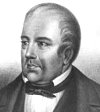
Infan'tea: named for José Miguel Infante Rojas (1788-1844), a Chilean lawyer, federalist politician, several times
 |
|
deputy and minister. He was born in Santiago and after secondary studies he took up the law and was accepted as a lawyer in 1806. He was a leader in the revolutionary independence movement and read in English and French important works by the authors of the Enlightenment such as Voltaire, works that were forbidden by the Catholic Church. He held the position of procurator in the Cabildo de Santiago in 1810, and then was a member of the First National Congress, elected deputy for Santiago. He was sent to Buenos Aires as a diplomat in 1814, however late in the year |
came the so-called “disaster of Rancagua,” when the forces of the Spanish royalists defeated Bernardo O’Higgins and almost totally destroyed the city, beginning the period called the Spanish Reconquest. The patriot leaders were forced to flee to Argentina, and Infante did not return to Chile until after the Battle of Chacabuco in 1817, which was a decisive victory for the emancipatory forces. O’Higgins abdicated in 1823, and Infante became part of the board that succeeded him and was elected a senator. He was a fervent federalist and his efforts resulted in 1826 in the repeal of the constitution of 1823 and the setting up of a new federal organization of the country divided into eight provinces each with a provincial assembly. However Chile was consumed with political disarray and upon the rise of President Francisco Antonio Pinto, the federalist experiment was ended. Infante was again elected deputy and then expelled from the chamber, but continued espousing the federalist cause in the newspaper that he had founded, the Federal Valdiviano. He was eventually appointed minister of the supreme court and later a member of the faculty of law of the University of Chile, positions that he nevertheless did not accept. In 1843 he was married and died the following year. The genus Infantea was published by Ezechiel Jules Rémy in 1849.
-
infect'ivus: from the Latin infectus, "stained, injected,"
thus meaning "having to do with dyeing."
-
infir'ma: feeble, weak, from Medieval Latin infirmaria, "a place for the infirm," from infirmus, "weak, frail."
-
infirminer'via: with weak nerves or veins.
-
infla'tum/infla'tus:
inflated, in reference to some floral part such as the stem, from Latin inflo, “to inflate, blow into.”
-
infra-: below.
-
infundib'ulum: funnel-shaped, from the Latin for "funnel."
-
infusca'tus: darkened, from the Latin infuscatus, past participle of infuscare, "to obscure or darken."
-
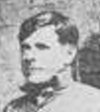
ingram'ii: named for Douglas Cameron Ingram (1882-1929), a field naturalist, plant collector, lily fancier and Forest
 |
|
Service officer of the Pacific Northwest Region. An article by Therese Ohlson entitled “The Legend of PNW Region’s First Botanist: Douglas Ingram” in the US Forest Service’s publication Cascade Lookout (2005) is deserving of being quoted in full: “During the Farewell Fire of 2003, Wayne Reggitorie was looking for a quiet fire camp for night crews to sleep and found the old Early Winters C.C.C. compound. He also found a cabinet with plant specimens dating back to 1912. A botanist’s dream, the dried and pressed plants were some of the first plant specimens |
collected in the Pacific Northwest. The collector was Douglas Ingram, who worked as a range examiner for the Forest Service in the early 1900s. Douglas Ingram immigrated to the United States in 1901 from Elgin Scotland to Roseburg, Oregon. In 1909, he attended the University of Washington, receiving a forestry degree. He began a career with the Forest Service at the age of 27 as a forest guard on the Ochoco National Forest. Between 1909 and 1918, he worked on various forests in Oregon as an assistant forest ranger, a forest ranger, grazing assistant, and by 1918, he was promoted to regional range examiner. In 1921 he was lead researcher of grazing studies for the Pacific Northwest Region, and in January 1929 was promoted to regional assistant chief of range management. Ingram traveled throughout Oregon and Washington collecting plants, and documenting habitats and livestock forage values. Over the years he proved to be one of the best photographers in the Forest Service, and his pictures of plants in their native habitat were unequaled according to historic records. It is a tragedy that these photographs have been lost. A eulogy written by the Journal of Forestry in 1930 declared, 'Douglas Ingram not only is a highly efficient forest officer and an authority on range management, but is also recognized as one of the best field naturalists of the northwest.' In August of 1929, Ingram was credited with leading a crew of fire fighters to safety when they became entrapped by advancing flames in the Camas fire north of Lake Chelan. Tragically, Ingram and 19 year-old Ernanine St. Luise perished later in the same fire while heading up a ridge to scout the blaze and look for a campsite. The location of their death is now known as Douglas Ingram Ridge. Today, a legacy of Douglas Ingram’s untiring interest, energy, and enthusiasm for nature remains. A hybrid lily was named in his honor by Dr. Griffiths from the USDA Bulb Station at Bellingham, Washington. An unusual flowering plant collected by Ingram on Mt. Nebo, near Roseburg, Oregon, was named Silene ingrami (also known as Silene hookeri). Author and botanist Art Kruckeberg will feature Ingram in his latest book commemorating the early botanists of the Pacific Northwest. During the 1920s, while Ingram was working on the Rogue River National Forest (then called the Crater N.F.), he called attention to a particular ponderosa pine of exceptional form and vigor in a timber sale. He recommended this tree be spared from logging. Soon after Ingram perished in the Camas fire, the tree was designated as the Douglas C. Ingram Memorial Tree. Eventually overcrowding stress resulting from fire exclusion, a familiar site in our dry forest today, led to the death of the pine. The Forest Service continues to maintain the site as an opportunity to educate the public about dry forest ecology while preserving the memory of Ingram’s legacy. The collection found at the Early Winters compound was donated to the University of Washington herbarium where the specimens will be maintained and available to researchers and the public." (Photo credit: Cascade Lookout 2005)
-
innomina'ta: unnamed, nameless, from Latin innominatus, "nameless."
- inodo'ra/inodo'rum: without a scent, from in-, “not” and odorus, “odorous.”
-
inopi'num: unexpected. The taxon in the California flora is Delphinium inopinum, called the unexpected larkspur for reasons that may be alluded to in its protologue, "remarkable for its high montane habitat," and thus was not expected to be founf there.
-
in'ops: from the Latin inops, "poor, helpless, weak."
-
inorna'tus: without adornment, unadorned.
-
inqui'nans: stained, flecked. The sole taxon in the California flora is Pelargonium inquinans. The specific epithet "messy" derives from the Latin verb inquino, "to pollute, stain or discolor," and inquinantis, "staining, making foul or impure," because the leaves leave a brown trace on the fingers when touched. The Pelargonium inquinans was grown in the garden of the Bishop of London, Henry Compton, an admirer of exotic plants. In 1713, when he died, Pelargonium inquinans was found in his collection. It is native to South Africa and is considered by the Jepson eflora to be naturalized in the San Francisco Bay region.
-
insaluta'ta: ungreeted, from in-, (“un-, not”) and salutatus, “greeted," of uncertain application. The sole use of this epithet in the California flora is the taxon Castilleja ambigua ssp. insalutata. Some common names for it are johnny-nip, ambiguous paintbrush, and saltmarsh owl's clover.
-
insig'ne/insig'nis: distinguished, remarkable, from Latin insignia, "unique, well-marked, extraordinary," and signum, "identifying mark, sign."
-
insoli'tum: unusual, strange, uncommon, from the Latin insolitus, "unaccustomed,
uncommon."
-
insula're/insula'ris:
pertaining to or growing on islands.
-
insulico'la: dwelling on islands.
-
integer'rimus: with a smooth edge, undivided, from the Latin integer for "entire, whole, or complete," and rimus, the superlative, thus "completely entire or unbroken."
-
integ'ra: entire, undivided, with no teeth.
-
integrifo'lia/integrifo'lium/integrifo'lius:
indicates that the leaf margins are entire, uncut, not toothed.
-
integ'rior: more entire.
-
inter-: the Latin inter, a preposition meaning "between,
among."
-
interce'dens: going between, from the Latin intercedo, "to be or go between."
-
inter'ior: inner, nearer, on the near side.
-
inter'ius: my Latin dictionary gives "inwardly, too short"
for the meaning of this word. Jaeger's Source-Book of Biological
Names and Terms says for interius, see interior, but there is
no entry for interior. David Hollombe says it is the comparative form
of interior, i.e. "more interior" for its distribution.
-
interme'dia/interme'dium/interme'dius:
intermediate, from Medieval Latin intermediatus, "lying between," from intermedius, "that which is between," from inter, "between," and medius, "in the middle," indicating an observation that a species was probably
considered as being halfway or partway between two others with regard
to some particular characteristic, e.g. tall, short, and "intermediate." Several taxa use this epithet including Symphyotrichum, Calochortus and Erigeron.
-
intermonta'na/intermonta'nus: between or among the mountains.
-
interra'ta: buried or interred. Appears to come from the Italian interrato, "underground."
-
interrup'ta/interrup'tus:
interrupted in some fashion.
-
intertex'ta: intertwined in some fashion. David Hollombe sent me
the following regarding Stylocline intertexta: "After
pointing out the similarities to Stylocline psilocarphoides and S. micropoides and speculating on a possible hybrid origin
for S. intertexta, J. D. Morefield wrote: 'The epithet intertexta
suggests this recombination of traits, as well as its intermediate
geographic distribution.' " From Latin intertexto, "to initerweave."
-
intrafrac'tum: from the Latin intra, "inside," and frango, "to break," fractus, "broken,"
this taxon's common name in the Jepson Manual is "jointed buckwheat."
-
-
intro-: inside.
-
intumes'cens: swollen, from Latin intumescere, "to swell up, rise, be elevated." One of the common names of Carex intumescens is bladder sedge.
-
in'tybus: from Latin intybus, "chicory," derived from Egyptian tybi,
"January," the month that this species was customarily eaten. California has the naturalized taxon Cichorium intybus, common chicory.
-
In'ula: a Latin name for a plant called elecampane (Inula helenium) which is itself
a corruption of the ante-Linnaean name Enula campana, so called
from its growing wild in Campania. This was an ancient herb described
by both Pliny and Dioscorides. Botanical.com says, "Inula, the Latin classical name for the plant, is considered
to be a corruption of the Greek word Helenion which in its
Latinized form, Helenium, is also now applied to the same species.
There are many fables about the origin of this name. Gerard tells
us: 'It took the name Helenium of Helena, wife of Menelaus,
who had her hands full of it when Paris stole her away into Phrygia.'
Another legend states that it sprang from her tears: another that
Helen first used it against venomous bites; a fourth, that it took
the name from the island Helena, where the best plants grew."
It had many medicinal uses such as among other things for coughs,
consumption, asthma and bronchitis. On the other hand, FNA says: " Greek inaein, "to clean," alluding to medicinal effects or Latin inula, an ancient name for elecampane." The genus Inula was published by Carl Linnaeus in 1753.
-
inunda'ta: flooded, or growing in places likely to be flooded or
at least immersed in water.
-
-inus/-inum: a Greek or Latin adjectival suffix which indicates
color or appearance, resemblance (e.g. ursinus, "like
a bear"; lilacina, "lilac in color") or belonging
to, of or from (bernardinus, "belonging to or from San
Bernardino"; clementinus, "belonging to or from San
Clemente Island").
-
invenus'tus: plain, unadorned, unlovely, unattractive, homely, ugly, from in- "not," and venustus," charming, friendly, lovely, pleasing, comely, beautiful, elegant."
-
inver'sus: turned over, inverted, from Latin inversus, perfect passive perticiple of inverto, “to turn upside down.”
-
invi'sa: unseen, not visible, from invisus, "overlooked, unseen."
-
involucra'ta/involucra'tus:
provided with an involucre, a ring of bracts surrounding or enclosing
a head of several flowers, fom involucrum, "a wrapper or envelope," from involvo, "to roll up, to wrape up."
-
invol'vens: rolled up, from involvo, "to roll up, to wrape up."
-
inyoen'se/inyoen'sis: of or from Inyo (County?
Mountains?). Taxa like Boechera inyoensis (Inyo rockcress), Linanthus inyoensis (Inyo linanthus or Inyo gilia), Laphamia inyoensis (Inyo rock-daisy), Mentzelia inyoensis (Inyo blazing star), and Phacelia inyoensis (nyo phacelia) presumably use the name is the general geographic sense as being from the Inyo region.
-
iodan'thus: violet-flowered, from Greek iodes, "violet-colored," and anthos, "flower."
-
Ionac'tis: from the Greek ion and aktis meaning "violet ray." The genus Ionactis was published by Edward Lee Greene in 1897.
-
i'one-griset'iae: named for Ione Agnes Walker (Mrs. Charles Albert Griset) (1885-1961), an American botanist and plant collector. She had one son and three daughters. Ione was born and raised in Los Angeles, and died in Santa Ana, California. The taxon named for her was Lupinus ione-grisetiae.
-
ionophyl'la/ionophyl'lus: from the Greek ion,
"violet," and phyllus, "leaves," thus having
violet-colored leaves.
-
-ior: a suffix commonly used to indicate a greater extent of whatever
adjectival characteristic it is attached to, e.g. brevior, "shorter,"
gracilior, "more slender," latior, "broader,"
robustior, "more robust," elatior, "taller."
-
Iph'eion: a Greek name for some plant of obscure origin. Umberto Quattrocchi says:
"possibly from the Greek iphyon, the name of the spike-lavender,
a species of Lavandula for Theophrastus or from iphios,
"strong, mighty," another of the many unexplained names
given by Rafinesque. The genus Ipheion was published by Constantine Samuel Rafinesque in 1836.
-
Ipomoe'a: from the Greek ips, "a worm that eats vines," and homoios,
"like," thus "like a worm," referring to the twining
habit of the plant's growth. The genus Ipomoea was published in 1753 by Carl Linnaeus.
-
Ipomop'sis: from the Greek ipo, "to
strike," and opsis, "appearance," thus of striking
appearance? An article written by James Edward Smith (?) in Rees's
Cyclopaedia gives the Greek root ipoo for "striking." " Rees's Cyclopaedia, or The New Cyclopaedia, or, Universal Dictionary of the Arts and Sciences was edited by
Revd. Abraham Rees (1743-1825). It appeared in parts between January
1802 and August 1820, and ran to 39 volumes of text, 5 volumes of
plates, and an atlas. It contains around 39 million words, and more
than 500 of the articles are of monograph length. An American edition,
with 42 volumes of text and 6 of plates was published by Samuel Bradford
of Phildelphia between 1806-1822, with additional American material.
It was written by about 100 contributors, most of whom were nonconformists.
They were specialists in their fields, covering the arts and humanities,
agriculture, science, technology, and medicine. Its engraved plates
are particularly fine, being the work of artists like John Farey,
Jr., and the engraver Wilson Lowry. At the time of its publication
Rees's Cyclopaedia was thought to be subversive, and the editors went
out of their way to emphasise their Englishness." (from Wikipedia)
The type of the genus, Ipomopsis rubra, was collected
by Mark Catesby and described by Johann Jakob Dillenius in Hortus
Elthamensis. Linnaeus named it Polemonium rubrum in his Species Plantarum. It was subsequently renamed Ipomoea rubra in J.A. Murray's update of Linnaeus' Systema Vegetabilium,
then renamed again Ipomopsis elegans in Andre Michaux's Flora
Boreali-Americana (1803). Carl Ludwig Willdenow published it as Cantua coronopifolia in 1797 and Christiaan Hendrik Persoon
had transfered it into Gilia in 1805, so this is what many
botanists continued to refer to it as. James Smith in Exotic Botany (1806) says: "About its genus there has been much uncertainty.
Linnaeus first made it a Polemonium and then an Ipomoea,
but it agrees with neither. The learned Jussieu supposed it might
be reduced to his genus of Cantua, and has lately again advanced
that opinion; but the want of winged seeds, the membranous calyx,
and the totally different habit, abundantly justify Michaux in establishing
it as a new genus; and we adopt his name, which seems to express the
dazzling brilliance of the flower." Thomas Nuttall in his Genera
of North American Plants, renamed it Ipomeria coronopifolia and said: "I have, in restoring this genus of Michaux, altered
his name merely for the sake of euphony [meaning an agreeable sound,
especially in the phonetic quality of words], but retained the allusion,
without venturing to criticize its questionable composition as formed
in part from the name of the preceding genus, Ipomoea, with
the addition of - opsis as indicative of their common resemblance...
That Michaux's name has been independently derived from the Greek,
without any reference to Ipomoea, and founded upon its striking appearance, as supposed by the editor of the [above referenced] article
in Rees's Encyclopedia, seems altogether improbable." The fern
authority and geologist Edgar T. Wherry was the first in 1936 to utilize
its current name. Both Umberto Quattrocchi's Dictionary of Plant Names and David Gledhill simply say of the generic epithet Ipomopsis, "resembling Ipomoea." The foregoing is a perfect example of how difficult
it is sometimes to say what a specific epithet or even a generic epithet means, what it refers
to, or from where it is derived. Thanks to David Hollombe for most
of the references included. The genus Ipomopsis was published by André Michaux in 1803.
-
i'ria: this name was used as a generic name by Hendrik van Rheede
tot Drakenstein in his 12-volume Hortus Indicus Malabaricus about 1693, but I have no idea what it refers to or means. Many websites discuss the meaning or origin of iria as a girl's name and relate it to "peace."The naturalized taxon Cyperus iria is the only one in the California flora that uses this epithet, and is called ricefield flatsedge inhabiting areas of marshes, swamps, ditches, and low wasteland, often growing in rice paddies.
-
i'rio: an old reference to a kind of cress.
-
I'ris: named for the Greek goddess of the rainbow. The genus
Iris was published by Carl Linnaeus in 1753.
-
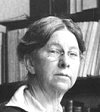
isabelia'nus: named for Mary Isabel McCracken (1866-1955), American entomologist, researcher and teacher, born in
 |
|
Oakland, California. She began her teaching career at Oakland’s public schools, and at the age of 34 after a decade of teaching she enrolled at Stanford University, being awarded a BA degree in 1904, an MA in 1905, and a PhD in 1908. Wikipedia relates the following: “While at Stanford she started her university teaching career during her senior year when she was employed as an assistant in physiology and entomology. While at Stanford McCracken also began to undertake field trips and laboratory research on the genetics of beetles. She published several papers founded on the |
results she obtained from these investigations. She also engaged in research on a wide range of other insects including mosquitoes, silkworms, aphids, and bees. McCracken also conducted field observation on numerous birds in the Sierra Nevada. Over the years she climbed the academic ladder to obtain the position of professor of zoology. The only period she took as a sabbatical from her teaching was from 1913 to 1914 during which she traveled to Europe where she studied at the University of Paris, returning at the beginning of World War I. She retired in 1931 having obtained professor emerita status. After her retirement from Stanford she held the position of research associate at the California Academy of Sciences from 1931 through 1942. McCracken worked in the bird and insect collections of the Academy. She was a member of the California Academy of Sciences from 1915 and was named a fellow in 1929.” She passed away in her home on the Stanford campus.
-
I'satis: from the classical Greek names isatis or isatidos applied to this herb which provided the blue dye that ancient Britons
used to stain their bodies. FNA says from "Greek isatis, name used for a dye plant, most likely woad." The genus Isatis was published by Carl Linnaeus in 1753.
-
ischae'mum: after much searching I found a single reference to the
meaning of this name on the website of the Robert W. Freckmann Herbarium
at the University of Wisconsin - Stevens Point, which says: "ancient
name, presumably from Greek ischaemos for 'styptic, blood-restraining,'
from supposed styptic properties," a name applied to some substance
used to reduce bleeding.
-
Isme'lia: this was a name that was originally published for an African
annual called I. carinata. Ismelia is a place name in Egypt,
but beyond that I haven't got any information on the eponymy of this
name. Cassini like Rafinesque often published names with no explanation
for them. Flora of North America says "Etymology unknown."The genus Ismelia was published in 1826 by Alexandre Henri Gabriel de Cassini.
-
Isnar'dia: named for Antoine-Tristan Danty d'Isnard (1663-1743), a French botanist, physician, and rpyal professor of plants in the king's garden who was born in London. The following is from Wikipedia: "His father was called on by King Charles II of England (1630-1685) to fight a plague epidemic in 1661. The Danty d'Isnard family returned to France in 1668. Antoine-Tristan obtained his doctorate in 1703 in Paris. On the death of Joseph Pitton de Tournefort in 1708, Danty d'Isnard briefly succeeded him at the Jardin des Plantes but resigned soon after and was replaced by Antoine de Jussieu. He became deputy botanist at the French Academy of Sciences on 25 January 1716, associate chemist on 11 August 1721 and associate botanist on 20 August 1722. He signed the Jardin du Roi plant catalogue in 1709. He collected numerous plants from the Parisian region, where he worked with Rournefort, Sébastien Valliant and Antoine de Jussieu. His herbarium, purchased by Philibert Commerson and then by Adrien-Henri de Jussieu is conserved in the National Museum of Natural History (France)." He died in Paris. The genus Isnardia was published by Carl Linnaeus in 1753.
-
Isoco'ma: equal
hair-tuft. FNA says from "Greek isos, "equal," and kome, "hair of the head," so called from its equal flowers” The genus Isocoma was published by Thomas Nuttall in 1840.
-
Iso'etes: from the Greek isos, "ever," and etas,
"green," implying the character of being evergreen. Note:
This is an example of the problem of defining Greek or Latin words,
i.e. "ever" in this item, and "equal" in the next.
Perhaps it is used with the meaning of equally green all year round,
thus evergreen. The genus Isoetes was published by Carl Linnaeus in 1753.
-
Iso'meris: from the Greek isos, "equal,"
and meris, "a part," describing the equally divided
pod. The genus Isomeris was published by Thomas Nuttall in 1838.
-
Isopy'rum: an ancient Greek name from Isopyron, a species
of Fumaria, for its grain-like fruit, and meaning roughly "looks like wheat." The genus Isopyrum was published by Carl Linnaeus in 1753.
-
-is'sima/-is'simum/-is'simus: a superlative adjectival suffix denoting the extreme form of
an adjective, as for example with aculeatissimus, "very prickly,"
from aculeatus, "prickly" and ramosissimus, "very branched,"
from ramosus, "branched" (see also -ima/-imum/-imus). Oddly,
Stearn's Botanical Latin does not seem to include this as one
of his explained suffixes although it is a commonly used one.
-
-ita/-itum/-itus: a suffix often (but not always) denoting possession,
as in vestita, "having clothes or clothed with hair," aurita "having ears," crinita, "having
long hair," tripartita, "having three parts," compositum, "having many parts."
-
ital'ica/ital'icum/ital'icus: of or belonging to Italy.
-
-ites: a Greek suffix meaning "belonging to, having to do with," e.g. Phragmites, "having to do with hedges."
-
-it'icus: a Greek adjectival suffix indicating fitness or capability
for something.
-
-ium/-ius: characteristic of (e.g. regius, "royal, princely,
characteristic of a prince" from rex, "king").
-
I'va: a Latin derivation from the mint Ajuga
iva, which has a similar aroma. The genus Iva was published by Carl Linnaeus in 1753.
-
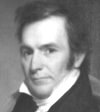
Ives'ia: named for Eli Ives (1779-1861), a
Yale University pharmacologist and professor active in the Connecticut
 |
|
Medical Society and involved with the founding of the Medical Institution
of Yale College. Botany was one of the courses he taught and he established
a botanical garden as part of the medical school. He pioneered in
the teaching of childhood medicine and gave the first course in pediatrics
in the United States. "Professor of diseases of children, materia
medica and botany, [he was] a graduate of Yale College in 1799, studied
medicine with his father and with Eneas Munson and attended medical
lectures under Benjamin Rush, Caspar Wistar, and Benjamin Smith Barton
at |
the University of Pennsylvania. Although his mentor Munson, was
named professor of materia medica and botany, the title was largely
honorary for Munson was over 80 years old. From the beginning, Ives
rather than Munson, taught the courses. Widely known for his knowledge
of materia medica, Ives established a botanical garden in association
with the medical school. He was a pioneer in the teaching of pediatrics
in the US." (Extracted from the website Medicine
at Yale 1701-1901.) "[He] lectured on materia medica and botany
throughout his tenure at Yale. Student notebooks containing his lectures
describe the medicinal values of numerous local and foreign botanical
treatments and cures as prescribed by Ives. Many of the species that
Ives described in his lectures can also be found in Fenn's four volume
herbarium. This implies that Ives required his students, or at least
those interested in pharmacology, to study and collect the local plants
related to medicinal botany. Ives created what is probably one of
the first botanical gardens in New England at what is presently the
northeast corner of Temple and Wall Street in New Haven. He arranged
the indigenous plants following the natural order of Jussieu, the
arrangement that Fenn used in his herbarium. Fenn may well have collected
local plants for Ives' garden or used plants from it for his collection."
(Quoted from a Yale Peabody Museum website on Horation Nelson Fenn,
one of his many students.) The genus Ivesia was published by John Torrey and Asa Gray in 1857.
-
ivesia'na: named for Joseph Christmas Ives (1828-1868),
a graduate of the US Military Academy at West Point
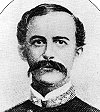 |
|
in 1852, who
despite his northern birth in New York City resigned his commission in 1861 to join the Confederacy and served
as an aide to President Jefferson Davis. Previously he had served as engineer and architect for the Washington Monument from 1859 to 1860. Before the Civil War began,
he was a 1st Lieutenant in the Corps of Topographical Engineers like
William Hemsley Emory, and he was commissioned to conduct an expedition
to determine the navigability of the Colorado River, about which little
was known, as a possible supply route to military posts in |
southern
Utah and New Mexico. He had already done survey work, having been
on the Whipple Expedition of 1853-1854. He arranged to have a steamboat
built in Philadelphia and its component parts shipped via the Isthmus
of Panama to San Francisco and then up the Gulf of California to the
mouth of the Colorado. He steamed up past Fort Yuma to approximately
where Lake Mead is today, then traveled overland into the Grand Canyon
region, exploring its floor for the first time by white men, and investigating
other parts of northern Arizona and southern Utah. It was a journey
of daring and danger, yet in writing about the Grand Canyon in his
diary, he recorded a sentiment that would demonstrate his inability
to predict the future of the region: "It looks like the Gates
of Hell. The region... is, of course, altogether valueless. Ours has
been the first and will undoubtedly be the last, party of whites to
visit the locality. It seems intended by nature that the Colorado
River along the greater portion of its lonely and majestic way, shall
be forever unvisited and undisturbed." A website called Profiles in Mojave Desert History adds: "While his military duties were essential, Lieutenant Ives also had a passion for the natural world. He possessed a keen interest in botany, the study of plants. He meticulously documented the flora he encountered along the way during his expeditions. His botanical findings contributed to scientific knowledge and highlighted the rich biodiversity of the regions he explored." After the war, he settled in New York City where he died November 12, 1868, at the young age of 39. He was named Christmas because he was born on Dec. 25. ( Phacelia ivesiana)
-
-ivum/-ivus: a Latin adjectival suffix indicating some capacity
or ability, or possession by or property of (e.g. aestivum, "capable
of flowering, ripening or developing in the summer," from aestas,
"summer"; sativus, "cultivated or capable of being
cultivated," from satus, "a planting"; redivivus,
"revived or capable of being brought back to life").
-
Iwatsukiel'la: named for Japanese botanist Zennosuke Iwatsuki (1929-2015), a bryologist of the Department of Biological Science, Graduate School of Science, Hiroshima University/Hattori Botanical Laboratory. He was the author of Catalog of the Mosses of Japan and Bryological Herbaria: A Guide to the Bryological Herbaria of the World. The genus Iwatsukiella was published in 1978 by William Russel Buck and Howard Alvin Crum.
-
Ix'ia: a name used by Pliny for the chameleon plant, from Greek ixos or ixia, "mistletoe or bird-lime" in reference to
the sticky sap. Stearn says "Greek name of a gum-producing plant transferred by Linnaeus to this South African genus, and Gledhill says "bird-lime, Theophrastus' name refers to a thistle with clammy sap." The genus Ixia was published by Carl Linnaeus in 1762. (see also entry for ixodes)
-
ixio'ides: ixia-like, Ixia being a
genus in the iris family.
-
ixo'des: from the Greek ixos, the mistletoe berry or the mistletoe
plant, also bird-lime which is prepared from mistletoe and is a sticky
substance smeared on branches to capture small birds. According
to Jaeger's Source-book of Biological Names and Terms ixodes means "like
bird-lime."
|


