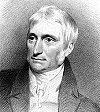
- sabinia'na: named for Joseph Sabine (1770-1837), a London lawyer, naturalist, noted botanist, writer on horticulture,
 |
|
and the discoverer of the Sabine gull, which he found on the Ross and Perry Arctic expedition along the west coast of Greenland in 1819 and named for his brother. He co-founded the Linnean Society, England's most prominent natural history society, and he was honorary secretary and treasurer of the Royal Horticultural Society from 1810 to 1830 and also secretary and vice-chairman of the Zoological Society of London. In 1832 Joseph Sabine suggested the name Pinus douglasii which English botanist and Linnean Society librarian David Don proposed for a tree species specimens of |
which were collected by Douglas in California and which became known as the Douglas fir. He was born into a prominent Anglo-Irish family in Tewin, Hertfordshire. His younger brother was Sir Edward Sabine, the Irish astronomer, geophysicist, ornithologist, explorer, soldier and the 30th president of the Royal Society. He had a lifelong interest in natural history. Wikipedia adds this: “Sabine practised law until 1808, when he was appointed inspector general of taxes, a position he held until 1835. The society's gardens at Hammersmith, then Chiswick, were established under his guidance. He sent David Douglas and others to collect specimens, initiating local societies as extensions of the society. He contributed around forty papers for their Transactions on garden flowers and vegetables. His management of the accounts led to large debts and after a threat of censure by a committee he resigned in 1830. Sabine then focused on the position of secretary and vice-chairman of the Zoological Society of London, significantly increasing their collection of animals. He was a recognised authority on the moulting, migration and habit of British birds. He was elected a fellow of the Royal Society in November, 1799. Sabine died in Mill Street, Hanover Square, London, on 24 Jan. 1837 and was buried in Kensal Green Cemetery on 1 February. There is a lithograph of him after a portrait by Eddis and his name was commemorated by de Candolle for a leguminous genus Sabinea.
- Sabuli'na: from the Latin root sab or sabulum, "sand," the Jepson eflora says "Latin: growing on sand, for habitat." The genus Sabulina was published in 1837 by Heinrich Gottlieb Ludwig Reichenbach.
- sabulo'num: sandy, or referring in some way
to sand, from the Latin sabulum.
- sacca'tus: resembling a bag, having pronounced sacs or nectar-producing
pits, from the Greek sakkos, "a bag or sack," possibly referring to a sack-like pouch at the base of the flower.
- sacchara'ta: appearing sprinkled with sugar, from Latin saccharatus, "sugery."
- sacchari'num: having a likeness to sugar in some way, or possibly
a diminutive of the genus name Saccharum.
- Sac'charum: from the Greek sakcharon, "sugar," and
other similar words in Latin, Malay and Sanskrit for "sugar or the juice
made from sugar cane." The genus Saccharum was published by Carl Linnaeus in 1753.
- sachalinen'se/sachalinen'sis: from the Sakhalin Islands north of Japan.
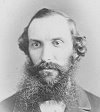
- sadleria'na: named for John Sadler (1837-1882), assistant secretary of the Botanical Society of Edinburgh
from 1858
 |
|
to 1879. His father was the gardener for Sir Thomas Moncriffe. He began working at the Royal Botanic Garden at Edinburgh in 1854 in the propagating department and herbarium. After being the assistant to Regius Keeper Professor J.H. Balfour for almost 25 years, he was appointed curator and principal gardener of the garden in
1879. He took charge of the Arboretum in 1881 but shortly thereafter died at the age of 45. He was a founding member of the Scottish Alpine Botanical Club and secretary of the Scottish Arboricultural Society from 1862 to 1879. He was a frequent lecturer |
at the Botanical Society of Edinburgh and a frequent contributor to its Transactions, and assisted John Hutton Balfour in the production of his Flora of Edinburgh in 1863. (Photo reproduced from the Collections of the Royal Botanic Garden Edinburgh and used with their permission, see RBGE Botanics Stories)
- Sagi'na: from the Latin sagina, "stuffing,
fattening," from the "fattening" qualities of forage
on which sheep quickly thrive. The genus Sagina was published by Carl Linnaeus in 1753.
- sagino'ides: like genus Sagina.
- Sagittar'ia: from the Latin sagitta, "arrow," because
of the leaf shape. The genus Sagittaria was published by Carl Linnaeus in 1753.
- sagitta'ta/sagitta'tus: from the Latin for "arrow" and hence
sagitate.
- Sairocar'pus: an old name for Antirrhinum, and a name still in use and that possibly will replace Antirrhinum. The Flora of North America website has this: "Etymology: Greek sairos, curling back lips to show teeth, and karpos, fruit, perhaps alluding to recurved teeth of capsules." The genus Sairocarpus was published in 1988 by David A. Sutton.
- Salazar'ia: named for Mexican mining engineer and politician Don José Salazar
Illargui (1823-1892), commissioner on the USA-Mexico boundary survey mandated by the Treaty of Guadalupe Hidalgo. He was appointed to the Ministries of State and Public Works. Some of his accomplishments were construction of artesian wells for rainwater management, construction of an astronomical observatory, delineation of the territory sold to the United States that would become Arizona and New Mexico, and acting as a representative of the state of Chihuahua on the Board of Notables which was to decide the future government of Mexico. He was appointed Imperial Commissar for the Yucatan Peninsula by Emperor Maximilian. In 1866 he was appointed Minister of the Interior in Mexico City and in 1882 he was appointed chief commissioner for the Guatemala-Mexico boundary survey. The genus Salazaria was published by John Torrey in 1859.
- salicar'ia: resembling the willow, Salix.
- salicifo'lia/salicifo'lius:
willow-leaved.
- sali'cina: willow-like.
- Salicor'nia: from the Greek words sal,
"salt," and cornus, "a horn," because these
are saline plants with hornlike branches. The genus Salicornia was published by Carl Linnaeus in 1753.
- salig'na: resembling the willow, from Latin saligna, salignus, "made of willow, relating to the willow."
- sali'na/sali'nus: from the Latin sal or salis, "salt," and the -inus suffix denoting
a belonging to or a resemblance to, thus salty or growing in salty
places.
- salinifor'mis: having the appearance or nature of salt.
- Sa'lix: a Latin name for the willow and meaning
"to leap or spring" in reference to its fast growth. The genus Salix was published by Carl Linnaeus in 1753.
- salmona'cea: the suffix -acea is a Latin adjectival suffix which
indicates resemblance, similarity of color, or material out of which
something is made. In this case, the limb of the corolla is salmon-orange colored.
- Salpichro'a: from the Greek salpe, "trumpet," and chroa, "color or complexion," because of the form
and color of the flowers. The genus Salpichroa was published by John Miers in 1845.
- Salso'la: from the Latin salsus for "salty." The genus Salsola was published by Carl Linnaeus in 1753.
- salsugino'sus: growing in places overflowed
by salt water, e.g. salt marshes.
- salsu'la: alternate spelling of salsola? This taxon was first described
from a salty plain near a dry lake east of Lake Baikal in Asia. The only taxon in California is Sphaerophysa salsula, common name Alkali swainson-pea.
- sal'sus: from the Latin salsus, "salted," past participle
of salio, "to salt or sprinkle with salt."
- saltico'la: there are several meanings of the Latin word saltus but the one that seems to make the most sense in this context is "woodland,"
thus this would mean a woodland dweller although that doesn't seem
to fit the habitat of this taxon. Another possibility is that it refers
to salt, since the most common name for it is salt gilia, but this
doesn't fit its habitat either and appears to be a misnomer based
on the root salsus. David Hollombe forwarded the following
to me: "The type locality of Gilia salticola was Carson
Pass and the only other location cited in the original publication
of Gilia alpina Eastwood not Brand (G. salticola was
a replacement name for the invalid G. alpina Eastw.) was Ebbet's
Pass, so most likely implication of 'saltus' in this case is
"a narrow pass, ravine, mountain - valley."
- saltuar'ium: the only thing I can come up with for the meaning of this epithet is the form of the word, saltuarius, which refers to one who has care of a forest or estate, a bailiff or steward, or saltus, "forest." The taxon in California with this taxon is Eriogonum luteolum var. saltuarium.
- Saltugil'ia: from the Latin saltus, "woodland" and the name Gilia which honors the Italian naturalist Filippo Luigi Gilii (1756-1821). The genus Saltugilia was published by Leigh Alma Johnson in 2000.
- Sal'via: comes from the Latin salvus,
"safe, well, sound," and salvēre, "to feel healthy, to heal," from its supposed medicinal value, and an herb, Salvia, used for healing. Pliny the Elder was the first author known to describe a plant called "Salvia" by the Romans, likely describing the type species for the genus,, Salvia officinalis. The genus Salvia was published by Carl Linnaeus in 1753.
- salvifo'lius: with leaves like those of genus Salvia.
- Salvin'ia: named for the Italian academic Antonio Maria Salvini (1633-1729),
a professor of the Greek language at Florence who helped his friend
the Italian botanist Pier Antonio Micheli with his botanical studies. The genus Salvinia was published by Jean François Séguier in 1754.
- Sambu'cus: from the Greek word sambuke for a musical instrument made from elderwood, and a name used by Pliny
for a tree possibly related to the elder tree. The genus Sambucus was published by Carl Linnaeus in 1753.
- Samo'lus: a Latin name meaning a plant growing in wet places, probably of Celtic
origin and known to the Druids, and referring possibly to this plant's curative powers. The genus Samolus was published by Carl Linnaeus in 1753.
- sanbeniten'se: from San Benito County.
- sanborn'ii: named for Solon Shumway Sanborn (1830-1875). The following
is quoted from an obituary in the San Diego Union, 11 February, 1875:
"Mr. Sanborn was a native of Vermont. He graduated from the colleges
of Dartmouth [AB] and Harvard [LLB]. He adopted the law as a profession.
Shortly after leaving school he emigrated to California (the precise
time we do not know) and attained a degree of considerable success,
as a lawyer in San Francisco. Finding his health failing in the latter
city, some six years ago he chose San Diego as his future residence.
For some time he found great relief from his affliction (consumption)
in the salubrious climate of this county, but the seeds of this terrible
malady had become so thoroughly rooted in his system that for the
past two years signs of slow but sure decay were painfully manifest.
That the deceased was a scholar of brilliant attainment is simply
a matter of course. His record as a student in the celebrated schools
above mentioned more than corroborate that fact. In the practice of
his profession in San Diego we believe he devoted most of his time
to probate matters, in which he was quite extensively employed."
His wife, Mary Lucy Sheffield of Nantucket, Mass., was a very brilliant
woman and principal of a female college in Boston, Suffolk, Mass.,
before her marriage. Their son Sheffield became a lawyer in Oakland,
California, and their daughter Mary died in her youth.
- sanctar'um: my guess originally was that this had something to do
with "sacred" from sanctus or sanctum, "holy place." The ending -arum is usually used to convert a personal name into a specific epithet
when the name refers to two or more women. But according to David
Hollombe, the name commemorates the saints Santa Barbara, Santa Ynez
and Santa Rosa. The taxon was described from specimens collected in
the Santa Ynez mountains near Santa Barbara and on Santa Rosa Island.
- sanctor'um: sanctarum and sanctorum are similarly
derived except that the former refers to female saints and the latter
is used in reference either to male saints or a combination of male
and female saints.
- sandberg'ii: named for John Herman Sandberg (1848-1917). a Swedish-born American botanist, agronomist, forester, and physician who collected extensively in the Pacific Northwest. He was a field agent for the US Department of Agriculture who also collected plants in Minnesota, Washington, Michigan, Wisconsin, Montana, and Idaho. He came to the United States from Sweden in 1868 at the age of twenty. He had studied medicine before becoming a field agent for Dr. George Vasey. He was honored with the genus name Sandbergia.
- san'derae: named for Elizabeth Fearnley (1841-1921), the wife of Heinrich (Henry) Frederick Conrad Sander, a German nurseryman from Bremen, referred to as the 'Orchid King.' He emigrated to England at the age of 18 and found work as a gardener in Kent, where he met his future wife. They were married in 1870, and in the mid-1870s he beginning buying land and creating the Sander nursery in St. Albans. At some point he met the Czech, Benedikt Roezl, a plant hunter who had ‘sought orchids in more lands than he could count on his fingers.’ Sander immediately realised that orchids would be his life’s work and resolved to found his own company to import them. Roezl became one of Sander’s principal plant hunters and introduced him to the Rothschild family whose assistance and patronage helped Sander immeasurably over the years. Sander and Roezl kept up their friendship until Roezl’s death in 1884. It isn’t clear when Sander first met fellow German, Reichenbach, but they were certainly close colleagues, if not close friends, by the time Sander arrived in St Albans. Reichenbach was the foremost European expert and taxonomist of orchids and it was to him that orchid growers would send new specimens for classification. Reichenbach could make fortunes for nurserymen like Sander, simply by identifying a new and therefore rare specimen; the rich and famous would clamor at the auctioneers’ doors, offering enormous sums for the pleasure of being a rare plant owner. Sander and Reichenbach would exchange numerous letters, sometimes in English to prevent continental rivals from understanding what they were discussing. Sander would cleverly glean information from Reichenbach about his opponents’ collectors' activities. Reichenbach was feared for his sarcasm and biting tongue. Sander, however, gave as good as he got. They remained close colleagues and kept in contact right until Reichenbach’s death in 1889. Frederick was furious, however, that in his will, Reichenbach stipulated that his herbarium should be sealed for 25 years after his death; a very selfish act which harmed ‘orchid science.’ In 1894, sensing that the orchid market was being saturated, Sander set up a nursery in St Andre on the outskirts of Bruges so that he could be nearer his European customers. He dispatched plant hunters abroad to collect for him. Frederick employed an extraordinary number of collectors, 23 at one point, who would brave hazardous sea voyages, extreme tropical climates, deadly disease, unpredictable and often dangerous tribes and unknown terrain for the precarious reward of being the (presumably well-rewarded) discoverer of a new specimen. They came from all over Europe and were frequently only paid after sending emergency cables to Sander and then he would often question them about their impecunious habits. It was a dangerous existence: Klaboch, Roezle’s nephew, was killed in Mexico; Arnold disappeared on a voyage up the Orinoco; Digence was shot by natives in Brazil; Falkenburg died in Panama; Wallis was murdered in Ecuador; Hendres murdered in the Rio Hacha; Brown murdered in Madagascar; and Osmers, Sander’s first traveller, was killed in the Far East. His nursery was to become the biggest nursery in Europe. and not entirely devoted to orchids. It was celebrated for its bay trees, azaleas, palms and ferns. There were 240 glasshouses, a smithy, carpenter’s shop, case-makers, barrel-coopers, packers and merchandisers. Sander took to spending half the week in St Albans and the other half in Bruges; the journey by train and steamer taking 8 hours. This routine continued for 12 years. His sons Fearnley and Louis were given charge of the Bruges farm. Sander was the author of Reichenbachia: Orchids Illustrated and Described, a four-volume text featuring life-size illustrations and descriptions of nearly two hundred orchids with text in English, French and German, named in honor of his friend. The first volume was published in 1886, and the subsequent three volumes were published in two-year intervals. His wife Elizabeth was described by her son, Fearnley, as a loving soul who had been really beautiful when a girl. She and Frederick had a loving and close relationship but it is said that she never showed any interest in orchids at all. (Information from The Orchid King by Arthur Swinson) The taxon in the California flora is Nicotiana X sanderae.
- sanders'ii: named for Andrew ("Andy") Charles Sanders (1950- ), a biologist specializing in botany, did research with the University of California and other places, currently (and for over 40 years) Curator/Museum scientist at the UC Riverside Herbarium. (Chenopodium sandersii, Heterotheca sandersii)
- sanders'ii: named for Joseph Myron Sanders (1876-1944), a cattle rancher. He was born in Fairview, Sanpete County, Utah, and died at Mesa, Arizona. He married Jessie Vromon June 2, 1914. They were later divorced. He had five children. (Echinocereus sandersii)
- sanford'ii: named for James Asa Sanford (1856-1931). The following is
from an obituary in the Stockton Daily Record, April 30, 1931:
"Sanford first came to Stockton in 1881 when as a druggist he
entered the employ of I.D. Holden, owner of the Forty-Nine Drug Company
at Main and El Dorado streets. Ten years later with Dr. Louis M. Haight,
Sanford purchased the drug business and continued in the same location
under the name of the Holden Drug Company. W.H. Hobin afterward bought
Dr. Haight's interest in the firm at which time a branch was formed
located in the Elks' building under the name of the WaKeen Drug Store.
After several years Hobin retired from the drug business to enter
the real estate field and Sanford maintained the drug company alone
until 1929 at which time he sold out. Since that time he had been
engaged with his son in the Sanford Truss and Belt company. Aside from his business career Sanford was active in civic and political
affairs. For 29 years he was a trustee on the public library board
and for many years was president of the body. He also served as a
member of the city fire commission. As a developer of this district,
he with his former business partner, Hobin, cultivated the first English
walnut orchard in San Joaquin county. Born in 1856 at Steuben, Ohio,
an only child, he was reared by his grandparents, his mother having
died when he was a year old. At 15 he entered the University of Michigan
in the college of pharmacy. Three months before graduation, he was
offered a position with a drug company in Toledo, which he accepted,
taking the position so that he might pay back the funds which he had
borrowed for his education as soon as possible. Later he was given
an honorary degree by the University of Ohio for his professional
work. Botany was his major and he was particularly interested in the
study of languages. It was in Toledo that he met Miss Sarah Kelly
and became engaged. He then came west and, after short stays in Texas,
Wyoming and Oregon, was married in Portland to Miss Kelly in 1884.
Mrs. Sanford died in 1930." Sanford was a charter member of the California Botanical Society and Edward Greene, who published Sagittaria sanfordii in 1890, wrote about him, "Dedicated to Mr. J.A. Sanford, a resident of Stockton, who is greatly augmenting our knowledge of the vegetation of a peculiar district which had been too long neglected."
- sanguina'lis: pertaining to blood, from the Latin sanguinalis, "bloody."
- sanguin'ea/sanguin'eum/sanguin'eus: blood red.
- Sanguisor'ba: from the Latin sanguis, "blood," and sorbere, "to soak up," from the reputed power of
these plants to stop bleeding. The genus Sanguisorba was published by Carl Linnaeus in 1753 and is called burnet.
- sanhedri'num: named for Sanhedrin Mountain in Mendocino County.
- Sanic'ula: diminutive of the Latin words sanare meaning "to heal" and sanus, "healthy. Sanicula europaea was used in traditional herbal remedies. Nicholas Culpeper in Culpeper's Complete Herbal (1858) said of it that "he who has sanicle and self-heal needs neither physician nor surgeon." Wikipedia says: "Sanicula europaea was used in Europe for healing wounds and cleaning. Filtered leaf extracts of Sanicula europaea have shown some antiviral properties, inhibiting the replication of type 2 human parainfluenza viruses (HPIV-2). Infusions of sanicle, made with water or wine, were commonly used in France to cure dysentery, ulcers and kidney injuries. To this list Culpeper added that sanicle heals tumours in any part of the body, and alleviates gonorrhoea, bowel pain and more." The genus Sanicula was published by Carl Linnaeus in 1753.
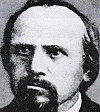
- Sanion'ia: named for Karl Gustav Sanio (1832-1891), a Prussian botanist, plant collector and professor. He was born
 |
|
in Lyck, East Prussia, now part of Poland. His father was a wealthy landowner, and he spent his youth roaming the fields and forests of his father’s vast estate collecting plants. He first studied botany with Ernst Meyer at the University of Königsberg, then switched to medicine, to which he took a quick dislike. He obtained a PhD degree iin botany at Königsberg in 1858 and devoted himself over the next eight years to teaching and doing research in botany at that institution. He became very interested in plant anatomy and published his first essay on the spores of Equisetum at |
the age of 24. In 1866 he was forced to leave the University apparently because the administration disapproved of his manner of living (?) and his academic career was at an end. At first planning to emigrate to America, he changed his mind and returned to Lyck where he settled down with his family and lived for the remainder of his life. He collected plants and insects in the summer and spent the winters with microscopy and writing. Somewhat isolated geographically, he corresponded with scientists in many countries. Sanio made his most important contributions in the field of the anatomy of wood, a subject that had attracted his attention when he was a student. Sanio’s findings and his precise terminology became widely known and almost all the terms that he coined are still in use. The genus Sanionia was published by Leopold Loeske in 1907. (Photo credit: International Association of Wood Anatomists Bulletin, Vol. 1(4), 1980)
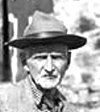
- sanson'ii: named for Norman Bethune Sanson (1862-1949), curator of the Banff Park Museum in Banff, Alberta from
 |
|
1896 to 1932. He was born in Toronto the son of a clergyman, the Reverand Alexander Sanson from Scotland. Wikipedia provides the following: “Sanson was born in Toronto in 1862, the son of a clergyman. He traveled to the Canadian West with the Queen's Own Rifles, who were involved in the suppression of the North-West Rebellion of 1885. Finding employment as a bookkeeper at the Mount Brett sanitorium he became acquainted with a Mr. McLeod who was curator of the museum and the park meteorologist. Sanson took over McLeod's work on McLeod's death in 1896. In |
addition to his work at the Park Museum, he was a zookeeper at the Banff Zoo, established in 1905 on the grounds behind the Museum. In 1931 Sanson accompanied the King and Queen of Siam to the top of Sulphur Mountain. He accompanied King George VI to the top of Tunnel Mountain in 1939. Sanson remained active in the Banff community after his retirement, organizing snowshoeing expeditions and traveling extensively in North America and Europe, hiking in Britain and Europe. Sanson was in charge of the weather station on Sanson Peak, built there at his suggestion in 1903. Sanson made more than 1000 trips to the peak in his capacity as park meteorologist until 1945, when he was 84 years old. Sanson was a member of the Alpine Club of Canada and was the first president of the Skyline Hikers of the Canadian Rockies. He was active with St. George's Anglican Church in Banff and supported the Canadian Bible Society.” In November 1948, the Dominion Government acknowledged Mr. Sanson’s years of service by naming one of the peaks of the Sulphur range after him. While N.B. as he was more familiarly known, had a host of friends, his own life of reading and research work took most of his time. He was a charter member of the Banff Rotary Club and a staunch supporter of the Canadian Bible Society. He was a member and a warden of St. George’s Anglican Church for fifty years. As to his association with the church it is summed up on one word “faithfulness.” He never failed to attend both morning and evening services unless he was out of town. A nature’s gentleman, he enjoyed life as did few men of his generation. He was never married and lived alone. He died at the age of 87 in Calgary. (Photo credit: Alchetron)
- santaro'sae: refers to the Santa Rosa basalt, a geological formation intimately associated with this species of Brodiaea, and which is at least in part responsible for the existence of the Santa Rosa Plateau Ecological Reserve in Riverside County, which is where almost the entirety of the known population of this species resides.
- Santoli'na: an ancient name for a species of the genus called lavender cotton, from the Latin sanctum
linum, "holy flax." The genus Santolina was published by Carl Linnaeus in 1753.
- santolino'ides: having the form of or
some resemblance to Santolina, lavender cotton.
- Sanvita'lia: there is some uncertainty about the etymology of this name, but it appears to honor either one or another or all of the following individuals, Professor Federico Sanvitali (1704-1761), a professor at Brescia, Italy, and author of Elementi di Architettura Civile, and his two grandnephews Federico Sanvitali (1770-1819) and his older brother Count Federico Sanvitali (1770-1819). Professor Federico Sanvitali (1704-1761) was an Italian architect and mathematician who began his career as a teacher of eloquence, literature and philosophy, but eventually devoted himself to mathematics and architecture. He was sent by his superiors to Brescia, where he remained for the rest of his life. He may have been a Jesuit. I have been unable to find any connection he may have had to botany. Stearn says “apparently” for Professor Federico Sanvitale (1704-1761), Umberto Quattrocchi says “probably” for the same person, and Gledhill says for the Sanvitale family as a whole. Most sources repeat the same information that the epithet honors the professor, but this may not in fact be the case. The original description of the genus was made in 1792 by Jean Baptiste-Lamarck based on samples sent to him by the Italian doctor, professor and malacologist Niccolo Gualtieri. Lamarck had a student named Federico Sanvitali (1770-1819) who was a grand-nephew of the afore-mentioned Professor Federico Sanvitali, and Gualtieri had a student named Count Stefano Sanvitali (1764-1838) who apparently harbored a passion for botany. He was Marquis of Medesano, Count of Fontanellato and Noceto (1764-1838), a politician, philanthropist and naturalist who sent samples of plants to Lamarck. Both FNA and the Jepson eflora however raise the possibility that the name may honor a Spanish botanist named Sanvital.
- Sap'ium: Umberto Quattrocchi suggests that this is probably derived
from the Latin sappinus, sapinus or sappium,
"a kind of fir-tree or pine-tree," possibly in turn from
the Celtic sap, "fat," referring to the exudate from
a damaged trunk. Gledhill says soapy from sapo or sapa, referring to the sticky sap. And Stearn says: "Latin name for a resinous pine. The stems of these trees, which are not pines, exude a sticky sap. S. sebiferum, the Chinese tallow-tree, has seeds with a waxy covering which can be used in making soap and candles." Alternatively an article in Springer says "The word Sapium means thick and dark color." In California the taxon previously named Sapium sebierum has been renamed as Triadica sebifera, The genus Sapium was published by Nicolaus Joseph von Jacquin in 1760.
- Saponar'ia/saponar'ia: sometimes called soapwort, the name derives from the
Latin sapo, "soap," for its soap-producing qualities.
The species Gentiana saponaria has been called the soapwort gentian, and the specific epithet refers to the resemblance to the leaves of genus Saponaria, which was published by Carl Linnaeus in 1753.
- sapphiri'num: blue, from the Latin sapphirinus, "of sapphire," referring to the color.
- saprophy'te: a plant living on dead organic matter, lacking chlorophyll, from Greek sapros, "putrid, rotten," and phyton, "plant."
- Sarcoba'tus: from the Greek sarx,
"flesh," and batos, "bramble," due to the
spiny stems. The genus Sarcobatus was published by Christian Gottfried Daniel Nees von Esenbeck in 1839.
- sarcocau'lis: fleshy-stemmed.
- Sarco'des: from the Greek words sarx,
"flesh," and oeides, "like," meaning "flesh-like."
The genus Sarcodes was published by John Torrey in 1851.
- Sarco'stemma: from the Greek sarx or sarkos, "flesh," and stemma, "crown
or wreath, garland," referring to the fleshy inner corona. The genus Sarcostemma was published by Robert Brown in 1810.
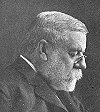
- sargent'ii: named for Charles Sprague Sargent (1841-1927), a prominent
member of the Massachusetts Horticultural
 |
|
Society, an elected trustee
of the Massachusetts Society for Promoting Agriculture, and the Arnold
Arboretum's first director who served the institution for over 54
years. The child of Henrietta Gray and Ignatius Sargent, a successful
Boston merchant, banker, and railroad financier, Sargent had the opportunity
to pursue a career in science and horticulture. After graduating from
Harvard College and serving in the Union army, Sargent spent his first
horticultural years abroad touring the gardens of Europe and then at home managing the family estate and gardens of Holm Lea. The following
is |
quoted from a website of the Harvard
University Herbaria. "[Although] Sargent did not have a formal
botany education [he] possesed good botanical instincts. He was called
to Harvard in 1872 and soon assumed the directorship of the Arnold
Arboretum. In 1863 James Arnold of New Bedford, Massachusetts left
over $100,000 to Harvard for '...the promotion of Agricultural,
or Horticultural improvements...' This gift was combined with
a parcel of land in Jamaica Plain given to the university in 1842
by Benjamin Bussey. Unfortunately with the small stipend of only $3,000
a year, it seemed impossible to turn the land into a flourishing arboretum.
Sargent, along with Frederick Law Olmsted, undertook a massive job.
They worked to convince both the Harvard Corporation and the city
of Boston that it would be in Harvard's best interest if the city
took the land. The city would then lease the property back to Harvard
for 1,000 years, at $1 a year, with an option to renew. In that way
the city of Boston would bear the cost of constructing roads and paths
and Sargent's funding could go towards the development of the grounds.
This was no small undertaking, but finally both parties agreed in
December 1881. The Arboretum was now part of the city's 'Emerald
Necklace' and Olmsted and Sargent began the difficult job of
planning and designing the Arboretum. Sargent served 54 years as director
of the Arboretum. During that time it grew from the original 120 acres
to 250 acres. Sargent also continued his own research and writing.
He wrote many books including Silva of North America, Trees
of North America, and Forest Flora of Japan. He also served
as editor for the journal Garden and Forest. Besides collecting plants
and specimens, Sargent also acquired books and journals for the Arboretum
library. The collection grew from no books in 1872 to over 40,000
by 1929. Most of these were purchased at Sargent's own expense. By
the time of his death Sargent had donated his entire library to the
Arboretum as well as a large financial gift for upkeep of the existing
collection and the purchase of more materials. In 1954 many of the
library materials of the Arnold Arboretum were moved to Cambridge
and merged with the Library of the Gray Herbarium while all of the
books and journals and most of the archival materials related to the
living collections remained in Jamaica Plain."
- sarmento'sa/sarmentos'um: twiggy, with long
slender runners or stolons, or whip-like branches, from the Latin sarmentosus, meaning "producing a runner."
- saroth'rae: from the Greek saron or sarothron, or the Latinized sarum,
"of the type of broom used for sweeping."
- sarothro'ides: broom-like.
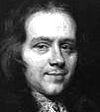
- Sarracen'ia: named for the French-born physician Michel Sarrazin de l'Etang (Sarracenus)
(1659-1734), born in
 |
|
Burgundy and an emigrant to what was then the colony of New France in North America, a physician/surgeon, naturalist and plant collector in Quebec. He returned to France only twice during his lifetime but while in Paris spent time at the Jardin des Plantes where he met and studied under Joseph Pitton de Tournefort who was the primary inspiration for his lifetime study of botany. He was responsible for the discovery of sarsparilla, and performed the first mastectomy in North America. He was not only interested in plants, but described the characteristics of beavers, musk- |
rats, porcupines, harbor seals and wolverines. His plant specimens are currently at the Museum National d’Histoire Naturelle in Paris. His name is sometimes spelled Sarrasin and sometimes Sarrazin. Despite the above, another source says that Sarracenia was derived from another French physician named Jean Antoine Sarrasin (1547-1598) who translated a work of Dioscorides. The genus Sarracenia was published by Carl Linnaeus in 1753.
- sarracho'ides: the species Solanum sarrachoides was published in 1846 by German botanist Otto Sendtner. The -oides ending usually means "like or resembling," so the question that arises about the species epithet sarrachoides, because it is often spelled as sarachoides, is whether it refers to the genus Saracha or Sarracha, both of which exist. Sendtner was thought to have named this species after the genus Saracha Ruiz & Pav. (after the taxa now part of the genus Jaltomata Schltdl.), but in Flora Brasiliensis (Sendtner, 1846), he used both "Saracha" and "Sarracha," and Edmonds (1986) determined that the name is correctly spelled S. sarrachoides following the original publication, and thus refers to genus Sarracha.
- sarraco'ides: like genus Sarracenia.
- Sarrat'ia: named for André Sarrat-Gineste (1797-1866). He assisted Christian Horace Bénédict Alfred Moquin-Tandon in his collecting work in the Pyrenees, and the genus Sarratia was published by Moquin-Tandon in 1849.
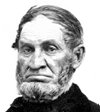
- sartwellia'na/sartwell'ii: named for Henry Parker Sartwell (1792-1867). The following
is quoted from his entry on the
 |
|
Virtual American Biographies website: "Sartwell, Henry Parker, scientist,
born in Pittsfield, Mass., 18 April, 1792; died in Penn Yan,
New York, 15 November, 1867. After receiving a classical education,
he began to practice medicine at nineteen years of age. He was a surgeon
in the United States Army during the second war with Great Britain,
and subsequently settled in Bethel, Ontario County, New York, where
he devoted himself to the study of botany. He removed to Penn Yan,
New York, in 1830, where he continued to reside. His botanical labors
extended over a period of forty-six |
years, and his collections of
American plants are found in many herbariums in Europe and America.
About 1846 he gave his entire attention to the study of the genus Carex, one of the most extensive and difficult of the vegetable
kingdom. He then conceived the idea of gathering and grouping all
the indigenous species of Carex in North America, which resulted
in the publication of his work entitled Carices Americane Septentrionalis
Exsic-eatae (2 vols., New York, 1848). The third part of this
work, intended to include fifty new species, was begun, and more than
forty species had already been collected for it, when he died. His
herbarium, the labor of forty years, containing about 8,000 species,
is now at Hamilton College, New York. Sartwell kept daily records
of the weather for forty years previous to his death, which were published
in Penn Yan, and sent to the Smithsonian Institution. Hamilton College
recognized his work by conferring upon him the degree of PhD in
1864."
- sati'va/sati'vum/sati'vus: from Latin sativus, "cultivated, that which is sown or planted," from satus, past participle of serere, "to sow, plant seed," indicating that the plant is a cultivated
one.
- sato'i: named for Satô Masami (1910-1984), Japanese lichenologist born in Yamagata Prefecture of parents who were educators. After elementary and high school, he graduated from the Department of Plant Science at Kyoto Imperial University. He was in the military during the Pacific campaign beginning in 1941 and after the war he became a professor at Yamagata Prefectural Agriculture and Forestry College.
- satura'tus: full, from Latin saturatus, perfect passive participle of saturare, “to fill full,” from satur, “full.”
- Sature'ja: a Latin name for the herb savory
which was well known to the ancients, and which was recommended by
Virgil as an excellent bee tree to plant around hives. The genus Satureja was published by Carl Linnaeus in 1753.
- saunders'ii: named for Charles Francis Saunders (1859-1941), a horticulturist, amateur photographer and prolific writer. He was born in Bucks County, Pennsylvania, and was married twice, first to artist and botanical illustrator Elisabeth Moore Hallowell in 1902, and then to writer Mira Barrett Culin in 1921. I have been unable to find any information about his schooling or early life, but he apparently worked as a businessman in Philadelphia for a number of years, and his interest in botany only developed in his 30’s. He began publishing essays on botany as early as the 1890s. He developed his knowledge of the plant world by attending lectures and by botanizing in Pennsylvania and the eastern United States. He collected many plants, and his dried specimens were given to the Academy of Natural Sciences in Philadelphia. He shared a love of natural history with his first wife and after a honeymoon trip to California and the Southwest, they decided to move for her health to Pasadena where they settled in 1906, and traveled througout the deserts and mountains of southern California, taking a keen interest in Native American ethnobotany and the California missions. The first of his many books, In a Poppy Garden, was published in 1904, and after moving to California he devoted himself to full time writing. The photographs taken by him and his first wife illustrated his early books. Elisabeth died in 1910. His second wife Mira shared his interest in gardens, botany, and photography, and for many years she published articles on Pasadena gardens, parks and trees in the Pasadena Star News. With both of his wives he traveled across the deserts and mountains of California and the Southwest, photographing its missions, natural wonders, native Americans, and flora. He was particularly interested in ethnobotany and the history of the missions. Most of his published works were written for general audiences in an accessible and highly entertaining style. He was a lifelong Quaker. According to someone who knew him, “His home and its gardens were a major tourist attraction in Pasadena during the great hiking era which existed from the early 1900s through the early 1930s. His contributions were as an author, naturalist and collector, who practiced and promoted ideals of the Arts and Crafts Movement and also promoted the beauty and allure of the Southwest. He was responsible, along with Charles Lummis, for fostering interest in restoring the deteriorating California missions and reestablishing the El Camino Real.” He died in Pasadena at the age of 82. Saunders' collection of native American pottery and crafts is now in the collection of the Southwest Museum, Los Angeles, and his botanic library is in the possession of the Santa Barbara Botanic Gardens. His books included among others The Southern Sierras of California, Under the Sky in California, Useful Wild Plants of the United States and Canada, The California Padres and their Missions, Western Flower Guide: Wildflowers of the Rockies and West to the Pacific, With the Flowers and Trees in California, and The Indians of the Terraced Houses. (Dalea fremontii var. saundersii)
- saunders'ii: named for William Saunders (1822-1900), a botanist, nurseryman, landscape gardener and designer, and
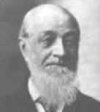 |
|
horticulturist. He was born in Saint Andrews, Scotland and studied for the ministry in Madras College in St. Andrews. However, coming from a long line of professional gardeners he soon had a change of heart and determined to study horticulture and landscape gardening in St. Andrews, and then at the University of Edinburgh. He worked briefly in London and received practical horticultural training at Kew Gardens before immigrating to the United States in 1848, becoming a US citizen in 1857. He wrote many practical and timely articles for Gardener's Monthly, The |
Horticulturist, and other periodicals. At first he worked in New Haven, CT, but then moved to Baltimore, Maryland, where he worked for both Thomas P. Winans and Johns Hopkins. By 1854 Saunders had relocated to Germantown, a neighborhood of Philadelphia, where he launched a firm with horticulturist Thomas Meehan and contributed to the planning of Fairmount and Hunting Parks in Philadelphia. In 1862 he moved to Washington, DC, where he was appointed Botanist and Superintendent of Horticulture of the newly created United States Department of Agriculture. He became one of the ablest and most influential men in the department during a long period and was instrumental in introducing a number of significant non-native plants to the United States. He was one of the founders of the National Grange and was Master during its first six years. The National Grange a fraternal organization in the United States that encourages families to band together to promote the economic and political well-being of the community and agriculture, and is the oldest American agricultural advocacy group with a national scope. In 1863, Saunders was selected to design the Soldiers' National Cemetery at Gettysburg, the well-known site of Lincoln’s famous 1863 address. Later, he designed the grounds of a memorial for Lincoln at Oak Ridge Cemetery and plans for the town of Garrett Park in Maryland. Saunders designed the park system in Washington, DC, and oversaw the planting of 80,000 trees in the city. He was crucial in the introduction of the seedless navel orange to California agriculture, by mailing three trees from Bahia, Brazil in the Department of Agriculture collection to farmer and friend Eliza Tibbets in Riverside County, California. They were the basis of the state's successful 20th century citrus industry. One of two remaining original trees stands in the Mission Inn courtyard in downtown Riverside. (Agropyron saundersii, Elymus X saundersii)
- saur'ae: named for Fulgencio Saura (1917-?), Argentinian grass geneticist.
- Saussur'ea: named for Swiss naturalist Horace Bénédict
de Saussure (1740-1799), a philosopher
and botanist,
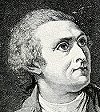 |
|
mountaineer, experimental petrologist and geologist, meteorologist, naturalist, traveller, a fellow of the Royal Society (1762-1786), and professor at Academy of Geneva. He was particularly interested in the botany and geology of the Alps which he crossed some 14 times. His great work was the Voyages dans les Alpes (4 vol., 1779–96). He discovered fifteen minerals, made careful measurements of atmospheric humidity, improved the thermometer and the anemometer (a device for measuring wind speed, the magnetometer, the cyanometer for estimating the blueness of the sky, |
the diaphanometer for judging the clarity of the atmosphere, and developed the hair hygrometer and, probably, the first electrometer. He was born in Conches, near Geneva, to a patrician father who was an agriculturist and author who encouraged his early interest in botany. He completed his educational studies at the Geneva Academy in 1759 and the following year made his first trip to the Chamonix Valley, at the foot of Mont Blanc, to collect plant specimens for the noted Swiss anatomist, physiologist and botanist Albrecht von Haller. In 1762 he was employed as professor of philosophy at the Academy of Geneva where he taught until 1786. Over the years he made seven trips to the Alps, carried out experiments on heat and cold, on the weight of the atmosphere and on electricity and magnetism, examined the inclination of the strata, the nature of the rocks, the fossils and the minerals, and studied Mt. Etna and other volcanoes in Italy. In 1784, Saussure was elected a foreign member of the Royal Swedish Academy of Sciences, in 1788, a foreign member of the Royal Society of London, and in 1791, an associate foreign member of l'Académie des sciences de Paris. He died in Geneva. The epithet also commemorates his son Nicolas Théodore de Saussure (1767-1845), Swiss chemist and plant physiologist who was considered one of the major pioneers in the study of
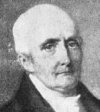 |
|
photosynthesis. He was born in Geneva into a family with many aristocratic, wealthy relatives well versed in the natural sciences including botany. He was first educated at home by his father then attended l'académie de Genève, where he studied math, science, and history. Both in the early 1790s and late 1790s he traveled abroad and met with eminent scientists. In 1800 he was in Paris where he took courses in chemistry, returning to Geneva in 1802 to accept an honorary professorship of mineralogy and geology at the University of Geneva, and remained on the faculty until 1835. He |
accompanied his father on alpine expeditions and assisted him with experiments in physics, chemistry, mineralogy, and meteorology. Wikipedia adds: “He became interested in the chemistry and physiology of plants, including gas exchange and the ways that different soils affected their growth. His early papers on these subjects laid the groundwork for some of the chapters in his magnum opus, Recherches chimiques sur la Végétation ("Chemical Research on Plant Growth"), published in 1804. This book was the first summation of the fundamental process of photosynthesis and a major contribution to the understanding of plant physiology. In contrast to some of his predecessors in the field of photosynthesis research, Saussure based his conclusions on extensive quantitative data that he had collected. For the several decades following publication of Saussure's book, his findings about the atmospheric source of plant carbon and the soil source for plant mineral nutrients were largely neglected, and little progress was made in further unraveling the chemical processes within plants. Then, Saussure's findings were re-discovered and revived by the eminent German chemist Justus von Liebig. In addition, field research by French agricultural chemist Jean-Baptiste Boussingault substantiated Saussure's conclusions on the importance of mineral nutrients that plants take up from the soil. Saussure's findings have had a significant impact on many disciplines, including chemistry, agriculture, agronomy, soil science, plant physiology, and plant nutrition. He is considered one of the pioneers of modern agriculture.” He was one of the founding members of the Société Helvétique des Sciences Naturelles in 1815. He died in Geneva. The genus Saussurea was published in 1810 by Augustin Pyramus de Candolle.
- savag'ei: named for Abraham Lincoln Savage (1864-1950), a teacher, school superintendent, county treasurer, and amateur botanist. He was born near Grants Pass, the sixth of thirteen children. His parents had come to the Rogue Valley in 1853 from Illinois. His interest in botany developed from an early age and he graduated from Grants Pass High School in 1892 and Southern Oregon State Normal School in Ashland with a bachelor of scientific didactics degree, equivalent to today’s bachelor of education. He spent thirteen years teaching in Butte Falls, Ruch, Wilderville, and Kerby and was principal at Ruch, Butte Falls, and Kerby high schools. He became the county superintendent of schools for Josephine County in 1900 and held that position until 1916. He was also an active member of the State Teachers’ Association. Josephine County was the first in Oregon to institute a uniform method of teaching and course of study, something that Savage had vigorously advocated for and that the state of Oregon adopted several years later. His teaching career ended with his election as Josephine County treasurer in 1924, a position he held until he retired in January, 1949. As far as his interest in botany is concerned, Wikipedia says: “When Savage was principal of Kerby High School in the Illinois Valley, he became acquainted with Albert Sweetser, a botanist at the University of Oregon herbarium. On April 29, 1923, the two men had some success locating Thomas Jefferson Howell's collecting sites from 1889. They also found hybrids between Henderson's and Oregon fawn-lilies. Savage also worked with Louis Henderson, Sweetser's successor at the University of Oregon, looking for fawn-lily hybrids. Savage introduced botany into his teaching, and a number of his students' collections are in the herbarium at Oregon State University, along with more than 160 of his own collections, many from the 1920s and 1930s. In 1931, Louis Henderson named a small plant in the phlox family, Navarretia savagei, in his honor (it is now considered a synonym for a name proposed earlier and is no longer in use). On Memorial Day 1958, 540 of Savage's specimens were presented to the University of Oregon's Natural History Museum (now the Museum of Natural and Cultural History) as the Lincoln Savage Memorial Collection. The specimens represented a valuable record of the southwest Oregon flora of the time.” He was married and had one son. The Lincoln Savage Middle School near Murphy, Oregon, was named in his honor in 1960.
- Savasta'na: named for Francesco Eulalio Savastano (1657-1717), an Italian Jesuit cleric and botanist who published a botanical work in Latin verse, Botanicorum seu Institutionem Rei Herbaria Libri IV. In this work he outlined cultivation methods, characteristics and healing properties of plants. The generic name Savastana was published twice, by Franz von Paula von Schrank in 1789 and by Constantine Samuel Rafinesque in 1838, but neither name is now considered legitimate.
- savia'na: named for Gaetano Savi (1769-1844), a botanist and teacher of botany. He was born in Florence and studied
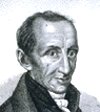 |
|
with the botanists Giorgio Santi and Adolfo Targioni Tozzetti. He taught physics and botany at the University of Pisa and was Praefectus of the Botanic Garden there and director of the Botanic Museum of Pisa from 1814 to 1843. In 1816, he was elected a member of the Royal Swedish Academy of Sciences. He was also a talented taxonomist who investigated different taxonomic groups and described many new species. He was particularly interested in the cultivation, study and conservation of plants belonging to well-known genera used in everyday life as food, herbs or in |
gardening. During his career he published about 75 scientific papers, primarily devoted to floristic researches and taxonomic investigations and described 89 taxa of vascular plants. He was the author of Flora Pisana (Flora of Pisa) in 1798, Trattato degli alberi della Toscana (Treatise on the Trees of Tuscany) in 1801, Botanicon Etruscum (Botany of Etruria) in 1808, and Flora Italiana (Flora of Italy) in 1818. His son was the geologist and ornithologist Paolo Savi (1798–1871).
- savil'ei: named for Douglas Barton Osborne Savile (1909-2000), an Irish-born Canadian botanist, ecologist, orni-
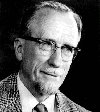 |
|
thologist, mycologist, plant pathologist and evolutionary biologist born in Dublin. Wikipedia says that he received an elementary school education in Africa, but I have been unable to confirm that. He got some secondary school training in England attending Weymouth College, then moved to Canada in 1928. He graduated from Macdonald College of McGill University in Quebec with a BSA degree (1933) and an MSc (1934), and received a PhD from the University of Michigan in 1939. He was a member of the Royal Canadian Air Force from 1939 to 1943 and then was |
employed in the Division of Botany and Plant Pathology at the Central Experimental Farm of the Department of Agriculture working on the diseases of ornamental plants. He was assistant curator of the mycological herbarium (DAOM) from 1943 to 1953, and curator from 1954 to 1967. He participated in numerous expeditions to the Canadian Arctic and in 1972 produced a monograph, Arctic Adaptations in Plants. He also spent three years doing botanical research and study in coastal British Columbia. He was co-editor for a number of years of Annual Report of the Canadian Plant Disease Survey. He retired in July 1974 after which he was appointed an honorary research associate. Mycologically, he worked primarily with the parasitic fungi known as rusts and smuts. His research treated taxonomy, ecology, phylogeny, co-evolution of host plants and their parasites, use of parasites to decipher host plant relationships, and biogeographic history of Canadian plants.He wrote papers on many subjects, such as meteorological phenomena, flight capabilities of Archeopteryx, flight mechanisms of swifts and hummingbirds, and the function and convergence of biogeography. In 1962 he produced a handbook intended for amateur and professional botanists (including mycologists) titled Collection and Care of Botanical Specimens. He was elected in 1966 a fellow of the Royal Society of Canada. In 1976 Doug was awarded the prestigious George Lawson Medal by the Canadian Botanical Association. In 1978 he received an honorary Doctor of Science degree from McGill University and in 1980 he was voted an Honorary Member of the Ottawa Field-Naturalists' Club. The Mycological Society of America elected Doug a Distinguished Mycologist in 1988. He had been a member since 1938. He died in Ottawa. (Photo credit: Mycologia 93(4), 2001)
- Savinio'na: named for Domingo Saviñón y Yánes (1769-1838), a physician trained in Seville and Paris. He was born and died at San Cristóbal de La Laguna, Canary Islands. He was appointed to occupy the chair of mathematics and experimental physics at the University of San Fernando. The genus Saviniona was published by Philip Barker Webb and Sabin Berthelot in 1836.
- sawatchen'se: for the Sawatch Mountains, Colorado, where T. S. Brandegee
collected one of the specimens cited in the original publication. The taxon in California is Polygonum sawatchense.
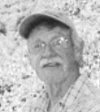
- saw'yeri: named for Dr. John Orvel Sawyer, Jr. (1939-2012), an American botanist-ecologist, and professor of botany
 |
|
at Humboldt State University. His areas of expertise were California vegetation, conifers, flora of northwestern California and the Klamath-Siskiyou area. He was born in Chico and earned his bachelor’s degree at California State University, Chico, and his MS and PhD in plant ecology from Purdue University. He joined the faculty at Humboldt State University in 1966, where he became professor of botany for more than forty years and a nationally recognized authority on plant ecology. His countless hours of field research, extending well beyond his formal retirement, resulted |
in over forty scientific publications and three books, Trees and Shrubs of California, Northwest California: A Natural History, and A Manual of California Vegetation, which was adopted as the state standard for vegetation classification. The Eureka Times-Standard had this to say: “John was recognized by Humboldt State University as its 1997 Scholar of the Year, by the California Botanical Society in dedicating the 2008 volume of its journal to him, and he was the recipient of the J.C. Pritzlaff Conservation Award of the Santa Barbara Botanical Garden. He was active in several organizations, including the Save the Redwoods League and the Ecological Society of America, where he served as a technical advisor. John was president of the California Native Plant Society, and a founding member and first president of the North Coast Chapter of CNPS. While plant ecology was John's primary academic interest, he was also an avid hiker, photographer, traveler, an admirer of the art of Turner, Bierstadt, and Miro, and gained much enjoyment listening to Bach, Villa-Lobos, Piazzolla, Glass, Judy Collins, Joan Baez, Bob Dylan, and Italian opera.” He died in Eureka after a seven-year battle with cancer. (Photo credit: Madroño 60:1, 2013)
- saxa'tile/saxa'tilis:
growing among rocks, from saxum, "rock or stone."
- saxea'na/sax'ei: named for Arthur Wellesley Saxe (1820-1891), a physician, botanist and artist born in Plattsburgh,
 |
|
New York. He had only common early schooling in his hometown but did receive painting lessons from a good artist. He graduated in medicine from the Vermont Academy of Medicine at Castleton, sometimes referred to as Castleton Medical College. He was married to Mary Elizabeth Judson in 1844 in Sheldon, Vermont, and they had 2 sons. He went to California in 1850 where he worked first in the mines for two years and then began providing medical services in Santa Clara, CA., as a resident doctor. He remained there until his death in Paso Robles. In 1880 he was president of the |
California State Medical Society and during that year he went to the Hawaiian Islands to study the condition, character, and history of the disease of leprosy in those islands. He was elected to represent his district in the California State Senate in 1884, which he filled with honor to himself and to the satisfaction of his constituents. He was also president of the State Horticultural Society and accumulated one of the largest collections of roses and rare bulbs in California. He was an energetic traveller, exploring parts of California, In conjunction with Dr. Kellogg he made his most extensive study of California’s flowers and plants. Much of his work was destroyed by the San Francisco Fire. He died in Santa Clara. (Photo credit: "Some American Medical Botanists Commemorated in Our Botanical Nomenclature" by Howard Atwood Kelly)
- saxico'la: growing among rocks.
- Saxifra'ga: from the Latin saxum,
"a rock," and frango, "to break," and referring
to the fact that by growing in rock crevices they appear to break
rocks. The genus Saxifraga was published by Carl Linnaeus in 1753.
- Saxifragop'sis: resembling Saxifraga. The genus Saxifragopsis was published by John Kunkel Small in 1896.
- saximonta'na/saximonta'num/saximonta'nus:
derived from words referring to rocks, saxum, "rock or stone" and mountains, montis, "a mountain," or montanus, "belonging to a mountain or of the mountains."
- saxo'sa: "full of rocks," hence growing
among rocks.
- sca'ber: rough, from Latin scaber, "rough, scaly," related to scabere. "to scratch, scrape."
- scaber'rima: very scabrous or rough.
- Scabio'sa: a Latin name meaning scurfy (Munz) and/or from the Latin scabies, "the itch," which the rough (scurfy) leaves
might have been used to cure (Stearn and Jepson). The genus Scabiosa was published by Carl Linnaeus in 1753.
- sca'bra/sca'brida: from the Latin scabr-
or scaber meaning rough or scurfy.
- scabrel'la: somewhat rough.
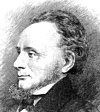
- Scabreth'ia: named for Nathaniel Jarvis Wyeth
(1802-1856), an American inventor and businessman who contributed
 |
|
greatly to the ice industry in Boston and elsewhere by inventing ice-harvesting tools and above-ground ice houses, and thus helped to facilitate New England's trade in ice with the Caribbean, Europe, and India. He was also a plant collector and explorer who discovered
plants and sent samples to his friend Harvard botanist Thomas
Nuttall who accompanied him on his second expedition. I can't find anything online about his early life other than that he was born in Massachusetts. He is considered
one of the great pioneers of Oregon, having blazed pathways that |
would
become known as the Oregon Trail. His expeditions to the Northwest were not commercially successful because he was competing with the Hudson Bay Company. He is best known in botany
for the plant called Mule's Ears which was named Wyethia in his honor by Nuttall in 1834. He was the great-grandson of shoemaker Ebenezer Wyeth (1698-1754), who was the great-great-great-great-grandfather of the famous painter Andrew Wyeth (1917-2009. Nathaniel's father was Jacob Wyeth (1764-1847) and his grandfather was Ebenezer Wyeth, II (1727-1799). The website Southwest Colorado Wildflowers adds this in explanation: "Scabrethia scabra was named Wyethia scabra by Hooker in 1847 and was given the new name of Scabrethia scabra by Weber in 1999. for it is, in the words of Intermountain Flora, 'a distinctive species, not to be confused with anything else,' and in Weber's words, 'not a true Wyethia, and given a new name in the ... Flora of North America.' Scabra is Latin for 'rough' and refers to the texture of the leaves." So this name is a combination of scabra and Wyethia. (Thanks to David Brown for providing information on Nathaniel Jarvis Wyeth's ancestral relationships). The genus Scabrethia was published by William Alfred Weber in 1998.
- scabriglu'mis: with rough glumes, the chaffy bracts that enclose the flowers of grasses and sedges.
- scan'dens: climbing, from the Latin scandere, meaning “to climb.”
- Scan'dix: deriving from the Greek names skandix or skandikos, this is a name which was used by Aristophanes, Theophrastus and Pliny the Elder for chervil, which
later became the Latin scandix. The genus Scandix was published by Carl Linnaeus in 1753.
- scandular'is: Latin for shingle, possibly for the overlapping leaflets.
Rydberg described the leaflets of the basal leaves as 'somewhat imbricated'
or overlapping like shingles.
- scapig'era/scapig'erum: from scapus, "the stalk of a plant,"
and the suffix -gera meaning "bearing or having",
and thus scape- or stalk-bearing.
- scapo'ides: scapose.
- scapo'sa: with a conspicuous scape.
- scario'sum: scarious, shriveled, thin, dry,
often translucent and not green; used of thin, dry organs, from the Latin adjective scariosus, meaning "thin, membraneous and not green (not herbaceous)."
- scelera'tus: wicked, hurtful, defiling,
from the Latin scelero, "to pollute, defile," and scelerus, "abominable."
- Sceptrid'ium: according to the Jepson Manual, the Greek derivation of this name is "scepter, staff, from the tall, upright spore-bearing leaf." The genus Sceptridium was published by Harold Lloyd Lyon in 1905.
- scep'trum: refers to a sceptre.
- schaff'neri: named for Wilhelm (later José Guillermo) Schaffner (1830-1882), a German plant collector and pharmacist in Mexico from 1856. He was born in Darmstadt and schooled there and studied at what has now become the Darmstadt Technical University. He studied botany, zoology and chemistry and then began a pharmacist apprenticeship. In 1849 he emigrated to Mexico where he eventually settled on the Pacific coast. He collected plants from the states of San Luis Potosí, Veracruz, and México from 1859 to 1867 and again from 1874 until just before his death, which he sent to Kew Botanical Garden and other European institutions for classification. While back in Germany from 1867 to 1874 he studied medicine at Heidelberg, completing his studies with a doctorate in 1871. He returned to Mexico in 1874, first to Veracruz and then to Mexico City where he was made a Mexican citizen. He finally moved to San Luis Potosí in the Central Mexican Highlands, where he was a doctor and pharmacist, and where he often gave prescriptions to the poor for free. He also returned to plant collecting and botanized extensively around San Luis Potosí, sending plant specimens to Asa Gray at Harvard. The British botanist at Kew William Botting Hemsley called him an excellent collector and a good botanist, although lacking much in the way of botanical literature, he often did not know whether something he collected had already been described. He died at the age of 51 of the consequences of a typhoid infection in San Luis Potosí.
- Schedonnar'dus: from the Greek schedon, "near, nearby,"
and nardos, "spikenard," a Himalayan plant belonging
to the Valerian family whose underground stems produce a perfume
used in Eastern aromatic oils. Spikenard is also a plant in the genus Aralia in North America, but this is unlikely to be the one
that had a Greek name. The genus Schedonnardus was published by Ernst Gottlieb von Steudel in 1855.
- Schedonor'us: from Greek schedon, for "near or near to." Gledhill says "near the margin, referring to the insertion of the awn. The genus Schedonorus was published in 1812 by Ambroise Marie François Joseph Palisot de Beauvois.
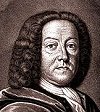
- Scheuchzer'ia: named for Swiss physician, naturalist, geologist, paleontologist, author, professor of mathematics and
 |
|
traveller Johann Jakob Scheuchzer (1672-1733), born in Zurich,and his brother, physician and professor of physics Johannes Gaspar Scheuchzer (1684-1738), author of Agrostogrophia Helveticae prodromus (1708). Johann received a degree as doctor of medicine from the University of Utrecht. He became a professor of mathematics and then was appointed chair of the department of physics shortly before his death. He wrote extensively on scientific matters and traveled across Switzerland gathering material for his scientific reports, one of which was a work on the natural history of the Alps published as "Itinera per Helvetiae alpinas regiones facta annis 1702-1711." He was also interested in paleontology and believed that at least some fossils were left over from the Flood. His third son, born in 1702, was Johann Caspar Scheuchzer, a naturalist whose major work was a history of Japan. His brother Johannes was a botanist, agrostologist and plant collector, and also a prolific author. One of his major works was Agrostographiae helveticae prodromus. The genus Scheuchzeria was published in 1753 by Swedish botanist Carl Linnaeus. |
 |
- schidig'era: from the Latin meaning "bearing
a splinter of wood," and the Greek schidion, "something split off, a twig, a splinter," alluding to the coarse marginal fibers at
the edge of the leaf blade.
- schiedea'na: named for Christian Julius Wilhelm Schiede (1798-1836), a German physician and botanist born in Kassel. He studied natural sciences and medicine in Berlin and Göttingen, where he earned his doctorate in 1825. Afterwards he practiced medicine in Kassel. In 1828 Schiede emigrated to Mexico, accompanied by Ferdinand Deppe (1794-1861), a German naturalist with previous experience in the country. The two scientists planned to collect zoological and botanical specimens, which would then be sold to museums and dealers in Europe. In July 1828 they settled in Jalapa, and performed scientific excursions throughout the state of Veracruz. Although they were able sell their collections to museums in Berlin and Vienna, the money earned was insufficient to continue operations, causing Deppe and Schiede to abandon their enterprise in late 1830. Christian Schiede died in Mexico in 1836 at the age of 38. His original collections were destroyed in the Second World War, though a duplicate set from Baschant is now extant at the Botanical Gardens and Museum in Berlin, and his type specimens are mainly at the Herbarium of Martin Luther University in Halle.
- schiff'neri: named for Victor Felix Schiffner (1862-1944), an Austrian bryologist specializing in the study of liverworts, born in Böhmisch Leipa, north of Prague, which at the time was part of the Austrian empire. Wikipedia says: “He studied natural sciences at the University of Prague, where he subsequently worked as a lecturer and as an assistant to Heinrich Moritz Willkomm at the botanical garden. In 1893-94 he was stationed in the Dutch East Indies, being based at the Buitenzorg Herbarium on Java. In the meantime, he collected liverwort specimens on Java and Sumatra. In 1895 he returned to Prague, being appointed professor of botany at the University of Prague. In 1901 he participated in a government sponsored mission to southern Brazil, where he collected bryophytes. After returning to Austria, he was appointed professor at the University of Vienna, where he remained until 1932, the year of his retirement. During the latter part of his career, he focused his energies towards flora native to Europe. His personal herbarium contained 50,000 hepatics and mosses, a collection that was acquired by Harvard University in 1931."
- schim'peri: named for Georg Heinrich Wilhelm Schimper (1804-1878), a German botanist and naturalist, brother of naturalist Karl Friedrich Schimper and cousin of botanist Wilhelm Philipp Schimper, and considered to be the single greatest contributor to the knowledge of the flora and fauna of the Horn of Africa. He was born in Lauf on the River Pegnitz near Nuremberg and studied natural history in Munich. A website created about Schimper by the German Historical Institute London, the British Library, and Kew Royal Botanic Gardens, has this to say about his early years: “Georg Wilhelm Schimper came from a family of scientists; his elder brother, Karl Friedrich Schimper (1803-1867), developed glacial theories about the Ice Age and his cousin, Wilhelm Philipp Schimper (1808-1880), a celebrated expert on mosses and bryophytes, became the director of the Strasbourg Natural History Museum. Schimper’s parents had an unhappy marriage and they separated when he was only 10 years old. His father eventually died in poverty in St. Petersburg in 1823 and his mother spent many years in mental institutions where she died in 1833. As a result Schimper and his brother had to rely on the charity of other family members for their education. Schimper attended school at Mannheim and Nuremberg but his formal education ended when he was 14. He then served an apprenticeship as wood turner at Nuremberg before joining the Badisches Infanterie Regiment, working as farrier and gaining the rank of Sergeant. On leaving the army in 1828 Schimper joined his brother Karl Friedrich in Munich, who was enrolled at the University studying Natural Sciences. Although Schimper never actually completed a formal course of study he enjoyed the company of some of the brightest students of his generation. They included Louis Agassiz, paleontologist, geologist and a prominent innovator in the study of the earth's natural history, and Alexander Braun, the German botanist and later director of the Berlin Botanical Garden. In 1830 he met Eduard Rüppell, the first naturalist to travel in Ethiopia. Ever short of funds Schimper supported himself by working for some of these scientists.” For a time he worked with Agassiz as a draftsman and illustrator. JSTOR has this: “He was employed by the Unio Intineraria to collect in Algeria (1831-1832) and later (1832-1835) with Anton Wiest in Egypt. After his colleague died from plague in Cairo, Schimper continued alone into Arabia (mainly Jordan) and later to Abyssinia (Ethiopia) where he continued to collect even after the dissolution of Unio Intineraria around 1842. His original collections were mainly deposited at the Berlin Botanical Gardens and Museum and some survived the Second World War though much was destroyed in 1943.” A shipwreck in the Ionian Sea near the island of Cephalonia, where both men saved themselves by swimming ashore, interrupted their voyage, and they finally arrived in Alexandria on 27 November, 1834. After traveling through the Sinai, then the Arabian peninsula, he eventually settled in Abyssinnia (Ethiopia) in 1836, married an Abyssinian princess, became governor of the Abyssinian district of Antitscho (1840-1855), and lived there until his death in 1878. He was also imprisoned at Magdala for a time by Emperor Tewodros II. he maintained frequent correspondence with botanists in Europe, and made valuable contributions to natural history collections in Paris and Berlin. During the years 1864 to 1868 he wrote an extensive report on his observations made in the course of his botanical trips through Tigray in northern Ethiopia. The manuscripts came to the British Museum in 1870 and are now kept in the British Library. He died in Adwa. He had at least three genera named for him in addition to a number of specific epithets. (Aloe X schimperi)
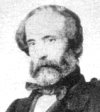
- schim'peri: named for Wilhelm Philippe Schimper (1808-1880), a French botanist born in Dossenheim-sur-Zinsel,
 |
|
Bas-Rhin, a town near the river Rhine in Alsace, the son of a Lutheran pastor. His cousins were Karl Friedrich Schimper and Georg Heinrich Wilhelm Schimper (see above), and his son was the plant geographer Andreas Franz Wilhelm Schimper. He completed his studies in theology at the University of Strasbourg in 1835 and then worked as a curator at the Natural History Museum in Strasbourg, becoming director of the museum in 1839. From 1862 until 1879, he was a professor of geology and mineralogy at the University of Strasbourg. Later he became a professor of paleon- |
tology (1872-1879). JSTOR says: “Schimper's contributions to biology were primarily in the specialized fields of bryology (study of mosses) and paleobotany (study of plant fossils). He spent considerable time collecting botanical specimens in his travels throughout Europe. Among his writings was the six-volume Bryologia Europaea, an epic work that was published between 1836 and 1855. It was co-written with Philipp Bruch [and and W.T. Gümbel] and it described every species of European moss known at the time. Schimper also made significant contributions in geology. In 1874 he proposed a new scientific subdivision of geological time.” He died in Strasbourg. (Ditrichum schimperi, Orthotrichum schimperi)
- Schi'nus: an ancient Greek name for another
genus in the same family, Pistacia, or Pistachio. The genus Schinus was published by Carl Linnaeus in 1753.
- Schis'mus: from the Greek schismos, "cleaving,"
referring to the split or notched lemma. The genus Schismus was published by Ambroise Marie François Joseph Palisot de Beauvois in 1812.
- Schistid'ium: possibly from the roots schist-, "split, divided" and -idium," small. One source says "Genus name denoting that the operculum breaks away, carrying the columella with it." Another says "diminutive of Greek schistos (divided), perhaps in reference to the calyptra being divided at the base." This is a bryophyte genus published by Philipp Bruch and Wilhelm Philippe Schimper in 1845.
- Schizach'yrium: from the Greek schizo, "to split, divide,"
and achyron, "chaff, husk," referring to the toothed
lemma. The genus Schizachyrium was published by Christian Gottfried Daniel Nees von Esenbeck in 1829.
- schizolo'ba: from the Greek schizo, "to split, divide," and lobos, "lobe," thus meaning split-lobed.
- Schizotech'ium: presumably from the Greek schizo, "to split, divide," and some other root that remains unknown to me. The species Schizotechium jamesianum which was previously known as Pseudostellaria jamesiana was published in 2022 and its common names are tuber starwort and sticky starwort. The genus Schizotechium was published in 1841 by Heinrich Reichenbach.
- schizotri'cha: from the Greek schizo, "to divide,"
and trichos, "hair," referring to the branched hairs.
- Schkuhr'ia: named for German botanist Christian
Schkuhr (1741-1811). The following was translated from a German website:
"Christian Schkuhr (1741-1811) was a trained gardener and later
worked as a mechanic for the University of Wittenberg. Besides his
occupation, he conducted botanical studies throughout his life. Not
only did he learn to draw, to engrave and to use a microscope (using
selfmade instruments) to publish his “Handbook of Botany,”
he also learned how to print (cf. Boehmer’s epilogue for the
first volume of the handbook with a rather detailed description of
the author’s life). With his rather modestly equipped work, Schkuhr
not only wanted to help plant lovers to get to know the names of native
plants and plants introduced to the area by using Carl von Linné’s
system, which by then had been accepted almost everywhere in Germany,
but also wanted them to get familiar with the value of plants with
regard to medicinal use, local economy and agriculture. At the same
time, he regarded his handbook as a substitute for a so far non-existent
guide to the flora of Wittenberg. The plant species
were classified according to Linné’s system and very frequently
Schkuhr placed several species next to each other, as was the case
with the sweet vernal grass. He stated both the Latin and the German
name of the species and gave a brief characterization of the plant
and a detailed description and explanation of the figures on the table.
Furthermore, Schkuhr gave anthesis, required location, and how widespread
the species was, in particular its extent of occurance in and around
Wittenberg, as well as the usefulness of the species and further particulars,
such as color and smell, peculiar characteristics or anecdotes associated
with the plant." The genus Schkuhria was published by Albrecht Wilhelm Roth in 1797.
- schleich'eri: named for Swiss botanist Johann Christoph Schleicher (1768-1834), a bryologist, mycologist, pteridologist, and algologist. He was of German origin born at Hofgeismar and settled in Bévieux sur Bex in 1800. He created the first botanical garden in the canton of Vaud and assembled commercial catalogs of plants which he published in 1800 and in subsequent years. He was the author of Catalogus plantarum in Helvetia cis et trasnalpia sponte noscentium, and Catalogus hucusque absolutus omnium plantarum in Helvetia.
- Schmaltz'ia: see Rafinesquia. According to Tropicos the genus name Schmaltzia was published by John Kunkel Small in 1903 based on a previous description by Nicaise Augustin Desvaux, but IPNI says that publication is illegitimate, and they say it was published by Augustin Pyramus de Candolle in Prodromus systematis naturalis regni vegetabilis in 1825 based on the previous description by Desvaux. I don't know how to reconcile this apparent contradiction.
- schmid'ii: named for German botanist Ludwig Bernhard Ehregott Schmid (1788-1858), a clergyman and missionary, private teacher, writer and botanical researcher born in Lobeda, near Jena, Germany. His father was a deacon and pastor of Wöllnitz. He attended schools in Lobeda and Sulzbach, and then at Jena where he received lessons in ancient languages and botany. From 1807 to 1809 he studied theology at the University of Jena. He then became a tutor at the family of Clermont in Vaals near Aachen. In 1811 he became a teacher at the institute of the Oberhof preacher and church council Johann Georg Breidenstein in Homburg. There he dealt mainly with languages. He wanted to go to Paris to study Sanskrit, but was offered instead a pastorate and teaching post in Trarbach, and he remained there for two years. In November, 1814 he was in Paris studying Arabic and Armenian. He left Paris in February, 1815, and asked his younger brother Deocar to accompany him as a missionary. He returned to the institute at Homburg and met there a preacher from London who encouraged him to become a missionary, and he applied to the same missionary society, in which his brother had applied and traveled, after he had been accepted as a missionary, in 1816 to London. On April 11, 1817, he left for Madras with his brother and his wife, arriving in August and remaining there for two years. In October 1819, Ludwig Bernhard Schmid was transferred to Palayamkottai in the Tirunelveli district. From there he went to Trankenbar and took over the supervision of 31 schools. In May, 1831, he was transferred to Oatakamund in the Nilgiri Mountains and went to Majaburam in the Tamil Nadu region in 1834. He had health problems and returned to Jena, donating a rich collection of Indian seeds and plants to the Jena Botanical Garden, but after recovering sailed back to India where he continued his missionary work. He was the author of Plantae Indicae and died at Kozhikode, India.
- Schober'ia: named for Gottlob (Gottlieb) Schober (c.1670/1675-1739), a German physician and plant collector who worked in Russia from about 1712. He was born in Leipzig and studied medicine there and earned a doctorate at Utrecht in 1696. He was one of the first botanists to study the flora of European Russia. He traveled along the Volga and investigated natural resources and mineral springs for the Russian Academy of Sciences. He was the personal physician of Tsar Peter the Great. The book Naturalists in the Field published in 2018 says: “After having worked as a physician in Lubeck, Reval, Dresden and Leipzig, Schober was appointed as a supervisor of the apothecary and medicus ordinarius at the Aptekarsky Prikaz (Pharmaceutical Ministry or Apothecary Ministry) in 1712. This was a ministry that dealt mostly with the health of the Tsar. Areskine, the institution’s director, sent Schober to Persia and the Caspian Sea from 1717 to 1720 to study natural history, or ‘to Kazan and Astrakhan to study nature.’ Although in the Tsar’s service, Schober also provided August Hermann Francke in Halle with information. Following his return Schober produced a report, titled Memorabilia Russico-Asiatica, in which he recorded his observations on ‘nature, medicine, geography, politics, and economics.’ The report also included notes on the languages of various hitherto unknown peoples. Unfortunately, Schober’s report was never published and went missing during the second half of the eighteenth century.” He lived in Moscow from 1716 until his death. He was the author of Disputatio … de cholera. He was born in Leipzig and died in Moscow. The genus Schoberia was published by Carl Anton von Meyer in 1829.
- schoenland'ii: named for Selmar Schonland (sometimes spelled Schoenland) (1860-1940), a distinguished botanist in
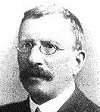 |
|
South Africa, where the Rhodes University herbarium and botany department are named in his honor (Thanks to the Dave's Garden Botanary site for this information). He "was a German immigrant, who came to the Eastern Cape in 1889 to take up an appointment as curator of the Albany Museum. He came to Grahamstown via a doctorate at the University of Hamburg and a post at Oxford University (1886–1889) as curator of the Fielding Herbarium and a lecturer in botany. Working under Prof. Bailey Balfour and Prof. Sydney Vines, he developed an interest in the family |
Crassulaceae and contributed an account of this group to Engler & Prantl's Natürl. Pflanzenfamilien. Coming to the museum in Grahamstown gave him the opportunity to broaden his interests and develop the second largest herbarium in South Africa which had been founded by W.G. Atherstone in 1860. His father-in-law, Peter MacOwan, had been its honorary curator from 1862 to 1869 before moving to Somerset East. When MacOwan retired from his subsequent post as director of the Cape Town Botanical Garden and curator of the Cape Government Herbarium, he returned to Grahamstown and assisted Schonland in the development of the local herbarium. Schonland approached one of the Rhodes Trustees, Dr. Leander Starr Jameson to assist in funding. Jameson, soon to be elected Member of Parliament for Albany and Prime Minister of the Cape Colony, promised £50,000 without consulting his fellow Trustees. At first they refused to confirm the grant; then, persuaded by Schonland, they made over De Beers Preference Shares to the value of £50,000 to Rhodes University College, founded by Act of Parliament on May 31, 1904. By the time Schonland retired, the botany department and Rhodes University had become an established center of taxonomic research and learning in South Africa. He played a leading role in the Botanical Survey of South Africa which had been initiated by Pole Evans. He was a foundation member of the South African Association for the Advancement of Science, honorary member of the Geological Society of South Africa, foundation member and fellow of the Royal Society of South Africa. His name was originally spelled Schönland, but he later dropped the umlaut. He is commemorated in Schoenlandia L.Bol., Euphorbia schoenlandii Pax, Brachystelma schonlandianum Schltr. and Sebaea schoenlandii Schinz. Selmar Schonland married Peter MacOwan's daughter Flora in 1896 and was the father of Basil Schonland who contributed greatly to lightning research and radar development." Calflora lists Aloe X schoenlandii as a non-native taxon in California. (from Wikipedia)
- schoeno'ides: like genus Schoenus.
- Schoenoplec'tus: from the Greek schoinos, "rush, reed
or cord," and plektos, "twisted, plaited." The genus Schoenoplectus was published by Eduard Palla in 1888.
- Schoe'nus: a Latin name for a rush, derived from the Greek schoinos,
"rush, reed, cord." The genus Schoenus was published in 1753 by Carl Linnaeus.
- schofieldia'na: named for Wilfred Borden Schofield (1927-2008), Canada’s leading and most celebrated bryologist.
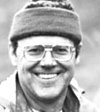 |
|
An obituary by Robert Ireland of the Smithsonian Institution in the Canadian Botanical Association Bulletin, 42:1, 2009, nicely summarizes his life and career: “Wilf was born in Brooklyn Corner, Nova Scotia on July 19, 1927. He soon decided he wanted to become a school teacher so he attended Acadia University in Wolfville, Nova Scotia (1946-50) where he graduated with his BA degree. John S. Erskine, a botanist who collected many N.S. records was on staff at Acadia University and no doubt this association led Wilf into his interest in bryophytes. Wilf then did some |
internships, residencies and obtained his teacher's license at Normal College, N.S. in 1951. However, after doing some teaching in Nova Scotia his passion for the bryophytes definitely helped him decide to go on to graduate school. He attended Stanford University (1954-1956) where the well known bryologist, Dr. William C. Steere, was the dean and also the director of his research, before becoming the president of the New York Botanical Garden. After receiving his MA degree with his dissertation entitled, “The Relationships and Geographic Distribution of Canadian and Alaskan species of Hypnum,” he attended Duke University (1957-1960) where he studied ecology under Dr. H.J. Oosting, obtaining his PhD degree with his dissertation there entitled, “The Ecotone between Spruce-Fir and Deciduous Forest in the Great Smoky Mountains.” The same year, after graduation in 1960, he obtained a position as assistant professor in botany at the University of Montana Biological Station in the summer, before accepting a position in September on the faculty of the botany department at the University of British Columbia, where he eventually became professor in botany in 1971, remaining there until he retired to an emeritus professor position in 1992 until his death. Wilf was an excellent teacher and he was well liked by his numerous students throughout his teaching career. He had a total of 19 graduate students: nine graduating with a MSc and 10 with a PhD Many of his students are currently teaching or in professional biological positions in North America and in various places in Asia. He has over 100 publications, mostly on bryophytes, but also some on lichens and vascular plants. He collaborated on five standard text-books in botany. He also produced two very impressive illustrated amateur guides to the bryophytes, one for the mosses, Some Common Mosses of British Columbia, and one for the liverworts, Field Guide to Liverwort Genera of Pacific North America. Most importantly however, he was the sole author of one of the most distinguished books, Introduction to Bryology, published in 1985 (revised in 2001), which was the first comprehensive textbook in bryology. The book received many awards from several organizations, among them the Association of American Publishers and the Canadian Botanical Association. Wilf was known as one of the best collectors in North America. He collected almost 129,000 plants, with roughly 90% of them being bryophytes. Most of his bryophytes were collected in Canada, many on the Queen Charlotte Islands off the coast of British Columbia. He traveled extensively to numerous places around the world often collecting during his travels. Among the places where he traveled were Australia, New Zealand, Tasmania, Japan, Europe and Hawaii. However, recent collecting for the past 15 years of his life was in the Aleutian Islands with Stephen Talbot (US Fish and Wildlife Service, Anchorage, Alaska) and his wife, Sandy (US Geological Survey, Anchorage). As a result of all of his collecting, several plants were named in his honor: one genus and seven species of mosses in six different genera, one genus and one species of liverworts, two lichen species and one vascular plant species. With his numerous collections and those from other institutions with which he exchanged specimens, the Bryophyte Herbarium of the U. of British Columbia has become the largest in Canada and one of the largest in the world, containing approximately 253,000 specimens. His professional accomplishments are also very impressive. He was the vice-president (1965-67) and president (1967-69) of the American Bryological and Lichenological Society that publishes the well known journal, The Bryologist. He was also a director of the Canadian Botanical Association (1970-72) that publishes the distinguished journal, The Canadian Journal of Botany. He also held many other duties in a number of other societies. He held 12 bryophyte workshops in several places in North America and he was an invited lecturer numerous times in many places throughout the world. In 1987 he received an invitation to contribute a paper to celebrate the 200th anniversary of the Linnean Society of London. In 1990 he was awarded an honorary Doctor of Science from Acadia University where he first started his educational career. He was very concerned with the environment, recently serving on the Committee on the Status of Endangered Wildlife in Canada for several years. His most recent publications have been with the bryophyte volumes of the Flora of North America.” He died of cancer in Vancouver. (Photo credit: Canadian Botanical Association Bulletin, 42:1, 2009) (Photo credit: Canadian Botanical Association Bulletin)
- Schol'lera: named for Friedrich Adam Scholler (1718-1785), a German priest, teacher at Barby near Magdeburg in Saxony, botanist and mycologist, and author of Flora Barbiensis (Flora of Barby). He was born at Beyreuth, Germany, and died in Barby. The genus Schollera was published by Albrecht Wilhelm Roth in 1788.
- schoolcraft'ii: named for Gary Dean Schoolcraft (1942- ), currently a
botanist for the Bureau of Land Management in Susanville, California.
He received a bachelor's degree in forest and range management in
1973 from Colorado State University and was a range conservationist
for the BLM from 1973-1979.
- schot'tii: named for Arthur Carl Victor Schott (1814-1875), an artist, engineer, poet, geologist, musician and one of the
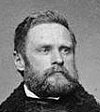 |
|
naturalists of the Mexican Boundary Survey. He was born in Stuttgart, Württemberg, Germany, on February 27, 1814, and attended a gymnasium and then a technical school there, served a year's apprenticeship at the Royal Gardens in Stuttgart, attended the Institute of Agriculture at Hohen- heim, and for the next ten years superintended a mining property in Hungary, studying botany, geology, and zoology. After travel in Europe and the Near East, he emigrated to the United States in 1850, where he met the prominent botanist John Torrey, and was soon employed to illustrate |
Torrey’s botanical report for Capt. Howard Stansbury's survey expedition to the Great Salt Lake in 1849–50. It was Torrey who recommended Schott to the United States Boundary Commission for appointment to surveys of the United States and Mexican boundary, and he was hired in 1851 as a ‘special scientific collector.’ He worked with the Commission under William H. Emory in surveying the boundary between Texas and its neighboring Mexican states, collecting botanical, geological, and zoological specimens, submitting notes on plants and animals, and drawing landscapes and Indians. Lithographs and engravings based on Schott's Texas drawings were published in Emory's official report of the boundary survey, most notably those of Seminole, Lipan Apache, and Kiowa Indians. Schott also made significant contributions to the study of Texas geology and to our knowledge of mountain formation. He examined sedimentary deposits and fossil evidence in the Rio Grande basin in order to establish the dates of inundation of the area by the sea, and made important contributions to the study of mountain formation. After completion in the mid-1850s of the boundary survey, Schott worked on a survey for a possible transoceanic ship canal across the Isthmus of Darien, collected zoological and botanical specimens in Yucatán, surveyed native vegetation in Washington, D.C. and worked in the coast survey office. He died in Washington, D.C., on July 26, 1875, leaving a widow, Augusta, and six children.
- schreb'eri: named for German naturalist and physician Johann Christian
Daniel Von Schreber (1739-1810). He studied
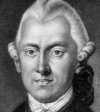 |
|
medicine, theology and
natural history at Halle in Germany and Uppsala in Sweden under Carl
von Linné and received his MD degree in 1760. He became a practicing
physician and then after studying botany in Berlin a professor of
medicine and botany at Erlangen in Bavaria in 1770. He was made director
of the Erlangen botanical garden in 1773 and became professor of natural
history in 1776. He was the editor of the 8th edition of Linné's Genera Plantarum (1789–1791), was chosen as a member of
the Royal Swedish Academy of Sciences in 1787, and knighted in 1791. |
- Schroeterel'la: named for Carl Joseph Schröter (1855-1939), Swiss botanist, traveller and professor of systematic
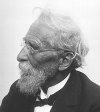 |
|
botany. born in Esslingen am Neckar, Germany, and studied natural sciences at Eidgenössische Polytechnische Schule (ETH) from 1874, where one of his early influences was geologist Albert Heim. Following his habilitation (the qualification to conduct self-contained university teaching which is the key for access to a professorship in many European countries) in 1878, he worked as an assistant to botanist Carl Eduard Cramer. In 1880 he received a doctorate from the University of Zurich, and in 1883 became a professor of botany at ETH Zurich, a position he kept until 1926. He |
was a pioneer in the fields of phytogeography and phytosociology, and conducted research on paleobotany, linology and morphology. He introduced the concept of ‘autecology’ to explain the relationship of an individual plant with its external environment, and ‘synecology’ to express relationships between plant communities and external influences. He was the co-author with Charles Flahaut of Rapport sur la nomenclature phytogéographique (Reports on phytogeographical nomenclature), with Friedrich Gottlieb Stebler of Die besten Futterpflanzen, a work involving forage crop cultivation and economics, and with Johann Jakob Früh of a book on Swiss moorlands entitled Die Moore der Schweiz : mit Berücksichtigung der gesamten Moorfrage. He was also the author of The Plant Life of the Alps, and was a member of numerous national and international scientific societies. He was a pioneer in nature conservation from 1906 and sat in the Swiss Conservation Commission. He received numerous honorary doctorates and was one of the founders of the Swiss National Park. The genus Schroeterella was published by Theodor Carl Julius Herzog in 1916.
- Schubert'ia: named for Michael Schubert aka Mikael (Michal) Szubert (1787-1860), Polish biologist and botanist,
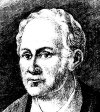 |
|
author of Catalogue Des Plantes Du Jardin Botanique De L'Université Royale De Varsovie. He was born into a wealthy family in Zabki, central Poland, just northeast of Warsaw. He was educated at first at home and then at the Warsaw Lyceum which he graduated from. From 1809 to 1813 he studied in Paris and there he became familiar with the the natural classification system of plants being espoused by Antoine Laurent de Jussieu, which he followed when he returned to Poland. Upon his return he worked as a lecturer in botanical and forestry subjects at universities operating in |
Warsaw, including the School of Law and Administration,Warsaw High School, the Special Forestry School, and the Pharmaceutical School. From 1816 to 1831 he worked as a botany professor at the Royal University of Warsaw, and was the founder and first director of the Warsaw Botanical Garden. The garden was originally called the Royal Garden and was at the Medical School, but was taken over by the University of Warsaw, and Schubert was its head from 1816 to 1848. He gathered some 10,000 plant species during the first six years. He was actively involved in the November uprising in 1830 when young Army officers revolted against the Russian empire, leading to the closing of the University and the shrinking of the botanical garden. He was a social activist and an active member of the Royal Society of Friends of the Sciences. He was an expert on the flora of the Kingdom of Poland, and was particularly interested in the regions of Ząbek, Zielonka, Rembertów, Anina and Las Kabackie, and was the author of many scientific publications. He was the author of the first modern dendrology textbook with its description of forest trees and shrubs. He died in Warsaw. The genus Schubertia was published by Carl Friedrich Philipp von Martius in 1824.
- schultes'ii: named for Josef August Schultes (1773-1831), an Austrian botanist
and professor in Vienna who co-authored with Johann Jacob Roemer some volumes of Systema
Vegetabilium. He was born in Vienna and received a doctorate in 1796. He was a member of the Royal Swedish Academy of Sciences and served as a professor of botany and natural history at the Theresianum in Vienna. Later he was a professor at the Universities of Krakow (1806) and Innsbruck (1808), and then in 1809 became professor of natural history and botany and medical director at the University of Landshut. He was commissioned by Carl Peter Thunberg to edit the first complete edition of his Flora Capensis.
- schustera'na: named for Rudolf Mathias Schuster (1921-2012), a German-born American botanist and bryologist. "Few bryologists have genuinely earned the accolade 'a legend in his or her lifetime,' but Rudy Schuster was that in every possible way. His death in November 2012 was a major and truly sad event in the field of hepaticology as it brought to an end a remarkable, colorful and prodigiously productive career. He was one of the truly great hepaticologists of the twentieth century." (from an obituary by David Geoffrey Long in the Journal of Bryology) He was born near Munich in Bavaria, and his father came to the US in 1929, with the rest of the family arriving the following year. Rudolf became a US citizen in 1937.
- schweinitz'ii: named for Lewis David de Schweinitz (1780-1834), a German-American botanist and mycologist,
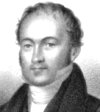 |
|
considered by some to be the 'Father of North American Mycology.' He was born in Bethlehem, Pennsylvania, a great-grandson of Count Nikolaus Ludwig von Zinzendorf und Pottendorf, founder and patron of the Moravian Church, and was in a Moravian community school in Nazareth, Pa., for eleven years. His father hailed from a distinguished family from Silesia, Germany. In 1798 he went to Germany and was educated in the Moravian college and theological seminary at Niesky (Saxony). In 1805 he published his first work, the Conspectus Fungorum in Lusatiae in collabora- |
tion with his teacher, Professor J.B. Albertini. Wikipedia provides the following: “In 1807 he went to Gnadenberg (in Silesia), then subsequently to Gnadau to work as a preacher in the Moravian church. A work appointment in the United States led him on a route through Denmark and Sweden, to avoid Napoleon's operations. This path allowed him to meet with some of the academics at the University of Kiel in Holstein, where he was bestowed with an honorary PhD. After returning to the United States in 1812, he settled in Salem, North Carolina (now called Old Salem), working as an administrator of church estates. The results of his mycological research in this location would later be published as Synopsis Fungorum Carolinæ Superioris in 1822. Schweinitz was elected to membership in the American Philosophical Society in 1817. The Synopsis was published without Schweinitz's knowledge; in 1818, he had simply given a list of North Carolina fungi to a friend in Leipzig. When he unexpectedly received prints of the published work four years later, he was ‘surprised but pleased.’ The Synopsis listed 1,373 species of fungi, and named and described 320 novel species. These new discoveries included such now widely known species as Lactarius indigo and Cantharellus cinnabarinus. He was a member of various learned societies in the United States, Germany, and France. A new genus of plant was named Schweinitzia (now referred to as Monotropsis) in his honor, and the polypore [a type of fungi] Phaeolus schweinitzii is named in his honor. While a resident of Salem he was elected president of the University of North Carolina, which honor he declined because it involved relinquishing work in the Moravian church. In 1821 he returned to his native village in Pennsylvania and continued his studies until his death. His herbarium, which comprised at the time of his death the largest private collection of plants in the United States, he bequeathed to the Academy of Natural Sciences at Philadelphia.” Despite his career path as an ecclesiastic, he had from his youth been devoted to the study of botany, and he published many papers and monographs that contributed greatly to the mycological literature. He was married to Louisa Amelia Ledoux, and was survived by four sons, all of whom entered the ministry, doing faithful and efficient service in the Church. He died in 1834 just five days short of his 54th birthday.
- schwerini'ana: named for Fritz Kurt Alexander von Schwerin (1856-1934), a German professor, dendrologist, botanist and writer. He was born and died in Berlin. He attended school in Liegnitz, Oleśnica and Stargard in Pomerania, where he graduated from high school. In 1877 he joined the Hussar Regiment No. 15, where he became an officer in 1879 and a regiment adjutant in 1880. In 1885 he undertook a journey to the Orient and then joined the 1st Dragoon Regiment. From 1886 to 1889 he attended the War Academy. In 1890 he gave up the military career. Since then he lived predominantly on his estate. He had designed the Märkisch Wilmersdorf landscape park in Trebbin, which he gradually expanded to a size of 125 ha. He also pursued his dendrological passion for collecting and planted numerous conifers. His maple assortment was well known, which included about 400 species and varieties. From 1901 to 1903 he had the mansion rebuilt in Tudor style. From 1902 until his death he was president of the German Dendrological Society, whose membership increased under his dedicated leadership from about 300 to about 7,600. Schwerin wrote scientific essays, among other things, about the genera Acer and Sambucus. He sold his park and castle in 1933 and succumbed to a prolonged illness in a hospital in Berlin. His two sons from his second marriage were trained as agronomists and foresters.
- scillo'ides: resembling genus Scilla,
a genus in the Lily family.
- scirpoid'ea: resembling genus Scirpus.
- Scir'pus: a Latin name used by Pliny for a
rush or bulrush. The genus Scirpus was published by Carl Linnaeus in 1753.
- sciur'ea: looking like a squirrel's tail, from Greek skiouros, "squirrel." The species Vulpia sciurea is called squirreltail fescue.
- Scleran'thus: from the Greek scleros, "hard," and anthos, "flower," from the extremely hard hypanthium
or calyx tube. The genus Scleranthus was published by Carl Linnaeus in 1753.
- Sclerocac'tus: from the Greek skleros, "hard, harsh,
cruel," and cactus, referring to the hard, sharp spines. The genus Sclerocactus was published by Nathaniel Lord Britton and Joseph Nelson Rose in 1922.
- Sclerochlo'a: from the Greek skleros, "hard, dry,"
and chloa, "grass," alluding to the thick glumes
on this grass. The genus Sclerochloa was published by Ambroise Marie François Joseph Palisot de Beauvois in 1812.
- Scleroli'non: from the Greek and Latin for "hard flax"
for the rough surface of the nutlets. The genus Sclerolinon was published by Claude Marvin Rogers in 1966.
- Scleropo'gon: from the Greek for "hard beard" for the firm
awns. The genus Scleropogon was published by Rudolf Amandus Philippi in 1870.
- Scolio'pus: from the Greek skolios, "curved or bent,"
and pous, "foot," alluding to the curving flower
stalks. The genus Scoliopus was published by John Torrey in 1857.
- scoly'mus: from the Greek skolymus, an artichoke. This is
also the name used by Pliny for the Spanish oyster-plant, Scolymus
hispanicus.
- sco'pa: broom-like, from Latin scopula, diminutive of scopa, "thin branches, twigs, broom."
- scopar'ia/scopar'ium/scopar'ius:
broom-like, from the Latin scopae or scopa, "broom or sweeper," alluding to the plant structure and in particular the dried tops of the Scotch broom.
- scopulor'um: growing on cliffs.
- scopuli'na/scopuli'num: growing in rocky
places.
- Scopuloph'ila: from the Latin scopulus,
"a rock or cliff," and philos, "fond of, loving,"
from its habitat. The genus Scopulophila was published by Marcus E. Jones in 1908.
- scopulor'um: from a Latin word meaning "of cliffs, crags, projecting
rocks."
- scorpio'ides: resembling a scorpion.
- Scorzonel'la/scorzonel'la: I can't find any certain meaning or derivation for this epithet, but referring to the similar generic epithet Scorzonera and adding the -ella suffix meaning a diminutive might provide a clue. An 1814 Transactions of the American Philosophical Society description of Scorzonella states that "The name alludes to the general aspect of Scorzonera." For scorzonera, Stearn says "Black salsify. From Old French scorzon, Italian scorzone, viper, and Gledhill says much the same. The root was once regarded as a scure for snakebite." The genus Scorzonella was published by Thomas Nuttall in 1841.
- Scorzoner'a: Italian Wikipedia says "The name of the genus Scorzonera has an uncertain etymology; it could derive from several roots such as scorzon in old French, scorsone in Italian and escorzonera in Spanish, which means black rind; but also "viper", perhaps from the use of its roots as an antidote to snake bites, or from the Catalan escurçonera derived from escurçó, i.e. "viper". In Italian the word scorzonera is mostly understood as zest (peel) and black, (precisely dark). The name could be derived from the Italian scorza negra meaning "black bark or black peel" and indicating the dark brown to black skin of the root. This meaning is confirmed by the fact that a similar plant, in terms of shape and use, the Tragopogon dubius, which instead has a white root, is called scorzobianca or scorzonera bianca, to distinguish it from the black. The genus Scorzonera was published by Carl Linnaeus in 1753 and is sometimes call viper's grass.
- scorzonerifo'lia: with leaves like those of genus Scorzonera.
- scot'ticum: of or from Scott Mountain in the Klamath Range.
- scoul'eri: see scouleriana below.
- Scouler'ia/scouleria'na: named for Dr. John Scouler (1804-1871),
a surgeon-naturalist who traveled, explored and
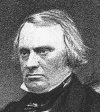 |
|
collected with his
fellow Scot David Douglas in the Columbia River region of the American
Northwest, making his specimens available to W.J. Hooker, his former
professor at Glasgow, and in the process introducing Pacific Northwest
plants to English gardens. After completing a medical course at the University of Glasgow, he went to Paris and studied at the Jardin des Plantes. In 1824, thanks to the influence of Hooker, he sailed on the William and Ann, a Hudson's Bay Company vessel, bound for the Columbia River by way of Madeira, Rio de Janeiro and the Galapagos Islands. |
To prepare himself for this undertaking, he studied the botanical journals and notes of Archibald Menzies, and he made a large collection of specimens from the American Northwest. After his return to England in 1826, he sailed for Calcutta by way of Cape Horn and Madras, and then after returning to Glasgow, he practised medicine and was subsequently appointed a professor of geology, natural history and mineralogy at the Andersonian Institute, now the University of Strathclyde, and in 1834 a professor of mineralogy, geology, zoology, and botany at the Royal Dublin Society, which position he held until his retirement in 1854. He was a co-founder of the Glasgow Medical Journal and an editor of Henry Cheek's Edinburgh Journal of Natural and Geographical Science, and published many articles on a variety of natural science topics. In 1905 the Oregon Historical Society published "Dr. John Scouler's Journal of a
Voyage to N.W. America." Also, with David Douglas, he made the
first 40 collections of botanical specimens on the Galapagos Islands
in 1825. In 1829 William Jackson Hooker published the genus Scouleria in the moss family Grimmiaceae in his honor. The name St. John’s wort apparently refers to John the Baptist, as the plant blooms around the time of the feast of St. John the Baptist in late June which is when he was born.
- scrib'neri/Scrib'neria/scribneria'num: named for Frank Lamson-Scribner (1851-1938), an American botanist, the first
|
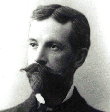 |
|
United States Department of Agriculture scientist hired to study diseases in economic plants, and the first USDA agrostologist (grass specialist). He was born in Cambridgeport, Massachusetts. His parents died when he was 3 years old and he was adopted by the Virgil Scribner family near Manchester, Maine. He received preparatory education at Hebron Academy, Kents Hill School, and Coburn Classical Institute, and graduated from Maine State College of Agriculture and Mechanic Arts in 1873. He taught botany in Maine high schools before becoming an officer with |
Girard College in Philadelphia in 1877. He was the botanist for the Northern Transcontinental Survey and completed an inventory of grasses and forages in Montana in the summer of 1883. In May 1885, he was appointed as an assistant in the USDA Division of Botany. His role was to study parasitic fungi affecting crops and his innovative approach established the foundation for applied plant pathology at the USDA. He became the chief of the USDA Section of Mycology in 1886 and focused on the control of downy mildew and black rot in grapes. In 1887, he established USDA stations for controlled experiments with farm owners as special agents. The section was also renamed as the Section of Vegetable Pathology. In 1888, Lamson-Scriber left the USDA to become the head of the Agricultural Experiment Station of the University of Tennessee. By the time he joined the faculty at UT in 1888, he had 73 professional publications to his credit. He introduced the laboratory method of teaching in botany, completed the acquisition of Augustin Gattinger’s herbarium for UT, and published the first US study of grasses (The Grasses of Tennessee), that was the basis of one of UT’s gold-medal winning exhibits at the Paris Exposition of 1900. He also published the first American book on plant diseases, Fungus Diseases of Grape and Other Plants and Their Treatment, and identified a new disease of the Irish potato occurring on the Cumberland Plateau, determining that the cause was a previously undescribed roundworm or nematode. In 1894 he returned to become the leader of the new USDA Division of Agrostology. He held this role until 1901, when he became the chief of the Insular Bureau of Agriculture for the Philippine Islands. Upon his return from the Philippines, he was appointed to the Government Exhibit Board where he prepared exhibits for international exhibitions past his retirement in 1922. He was also the author in 1897 of American Grasses (Illustrated). He was honored with the genus Scribneria which was published by Eduard Hackel in 1886. Some references hyphenate his name and some do not. He died in Washington D.C. of pneumonia at the age of 86.
- scribneria'num: see previous entry.
- scrip'tus: from the Latin scriptus, "written," past
participle of scribo, "to write," of unknown application. The sole taxon with this epithet in California is Plagiobothrys scriptus, commonly called scribe popcorn flower. A website of the San Diego State University says that the application of this epithet is in reference to the nutlet ridges. Other sources list it as Scridgee's popcorn flower but the Jepson eflora errata page lists that as a mistake.
- Scrophular'ia: named in 1474 by an Italian
physician who noticed the resemblance between the rhizomal knobs of
some species and the tubercular condition of human lymph nodes called
scrophula. The genus Scrophularia was published by Carl Linnaeus in 1753.
- scrophulario'ides: resembling Scrophularia.
- scupham'ii: named for Major John Robertson Scupham (1840-1927), a civil engineer, botanist and plant collector born at Rossy Priory in Edinburgh, Scotland. He came to California at the close of the Civil War during which he had served as an engineering officer in the Northern Army. He was employed by the Central Pacific Railroad during which he conducted field work in the Sierra Nevada. He collected and brought to the California Academy of Sciences many interesting plants from little-explored parts of California, and was for a time secretary of the Academy. He was a friend of John Gill Lemmon and purchased specimens from him. His collections were given to the University of California after his death.
- Scutellar'ia: from the Latin scutella,
"a small dish, tray or platter," and referring to the sepals
which appear this way during the fruiting period. The genus Scutellaria was published by Carl Linnaeus in 1753.
- scutella'ta: shaped like a small dish or saucer.
- searls'iae: named for Fanny Searls (1851-1939), wife of Henry Gradle.
Nevada botanist Arnold Tiehm researched Fanny Searls and had a 3-page
biography of her in Brittonia in 1985. She graduated Laureate
of Science in 1870 from Northwest Female College and studied for a
year at Northwestern University, the first year women were admitted. In
1871 she traveled with her father, a lawyer, to the Pahranagat Mountains
in Nevada. While there she collected 215 plant specimens, as well
as minerals and fossils, which she gave to Prof. Oliver Marcy at Northwestern
University. In 1877 she received her MD from the University of Michigan but couldn't
get an internship due to the prejudice of the day that women couldn't be doctors. So she worked as a student nurse in New York until
1881 when she married a Chicago ophthalmologist and raised two sons. After her husband's
death in 1911, she moved to Santa Barbara where she became interested in marine algae. Tiehm writes: "At
age 75 she would walk four to five miles on the beach every day and
still played the piano with such strength and precision that it sounded
as though two or three people were playing in harmony." (Thanks
to David Hollombe for this information)
- Sears'ia: named for Paul Bigelow Sears (1891-1990), an American ecologist, conservationist and writer born in
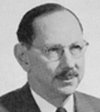 |
|
Bucyrus, Ohio. He received a bachelor’s degree in zoology in 1913 and a BA in economics in 1914, both from Ohio Wesleyan University (my alma mater), an AM in botany in 1915 from the University of Nebraska at Lincoln, and then a PhD in botany from the University of Chicago in 1922. A brief summary of his career is as follows: from 1915 to 1919 he was a botany instructor at Ohio State University; from 1917 to 1919 he was in the US Army; from 1919 to 1927 he was a botany professor at the University of Nebraska; from 1927 to 1938 he was chair of and professor in |
the botany department at the University of Oklahoma, on leave from there for the last two years at Columbia University Teachers College; from 1938 to 1950 he was chair of and professor in the botany department at Oberlin College in Ohio; and from 1950 to 1960 he was a professor and chair of the graduate level Yale University conservation program. Some of the positions he held were president of the Ecological Society of America, president of the Ohio Academy of Science, 1956 president of the American Association of Science, and president of the American Society of Naturalists. He spent a good portion of his early years investigating the history of postglacial vegetation in eastern North America involving himself in pioneering studies concerning archeology-fossil pollen relations, field and data recording techniques, prairie enclaves in forested areas, the relationships between vegetation and climatic change, and biogeographic relationships. He was a strong advocate of intensive recycling by human societies, and taught that a return to greater use of human muscle power would be healthy for people by promoting fitness and energy conservation, as well as having an impact on the biosphere. He was was also one of the few prominent ecologists to successfully write for popular audiences, and among his books were Deserts on the March (1935) which has become somewhat of a classic in dealing with the mistakes that led to the Dust Bowl era, This is Our World (1937), Charles Darwin: The Naturalist as a Cultural Force (1950), Where There is Life (1962), Biology of the Living Landscape (1964), and Lands Beyond the Forest (1969). He married Marjorie Lea McCutcheon in 1917, and they had a son and two daughters. His wife died in 1982. He retired to Taos, New Mexico in the mid 1960s. He taught a course in environmental biology in 1977 at Fort Burgwin, New Mexico, a research facility 10 miles from Taos which is owned by Southern Methodist University. He died in the medical center at Plaza de Retiro. The genus Searsia was published by Fred Alexander Barkley in 1942. (Photo credit: Chrono-Biological Sketches)
- sebif'erum: bearing tallow, from the Latin sebum, meaning "tallow," and fero, meaning "to bear."
- Seca'le: ancient Latin name for rye. The genus Secale was published by Carl Linnaeus in 1753.
- secali'nus: resembling rye.
- secun'da/secun'dus: side-flowering.
- secunda'tum: from secunda, "side-flowering," and
the suffix -atum which indicates likeness.
- secundiflor'us: with flowers arranged on one side of a stalk only.
- sedo'ides: like genus Sedum.
- Se'dum: from the Latin sedo, "to
sit," in reference to the manner in which some species attach
themselves to stones or walls.The genus Sedum was published by Carl Linnaeus in 1753.
- sege'tum: of the cornfields, from Latin seges, "a cornfield."
- Selaginel'la: diminutive of Selago,
the name of another moss-like plant. The genus Selaginella was published by Ambroise Marie François Joseph Palisot de Beauvois in 1804.
- sel'byi: named for Augustine Dawson Selby (1859-1924), an Ohio botanist, plant pathologist and plant collector who
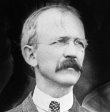 |
|
worked at the Ohio Agricultural Experiment Station at The Ohio State University in Columbus which he helped to found in 1882. He was also for a time president of the American Phyto- pathological Society. In addition to a great number of articles and essays, he was the author of Tobacco Diseases and Tobacco Breeding, Grape Rots in Ohio (co-author), Investigations of Plant Diseases, Sources of the Ohio Flora ( co-author), Some Diseases of Wheat and Oats, and “A Study of Vascular Plants of Franklin County” which he produced at the age of 23. In 1894 he was |
hired as Ohio's first plant pathologist and then in 1902 he was appointed botanist and chief of the new Department of Plant Physiology and Pathology, remaining there until 1923.
- selig'eri/Seligeri'a: named for Ignaz Seliger (1752-1812), a Silesian priest and botanist who worked primarily with mosses and lichens. He botanized extensively in the Sudets Mountains located in the northeastern Czech Republic in the border area with Poland and Germany. He was a pastor and archbishop’s notary in Wolfelsdorf in Bavaria.The genus Seligeria was published by Philipp Bruch and Wilhelm Philipp Schimper in 1846.
- Selinocar'pus: from the Greek selinon, "celery, parsley"
(or selene, "moon," or selinas, "a kind
of cabbage") and karpos, "fruit." The genus Selinocarpus was published by Asa Gray in 1863, and has now been replaced by Acleisanthes.
- selloa'na/sellowia'na:
named for Friedrich Sello(w) (1789-1831), a German traveller and naturalist, one of the earliest European scientific explorers of Brazil who made extensive botanical collections there and in Uruguay, and whose name appears on many South American plants. He was descended from the Prussian court gardening dynasty of the Sello family which had already produced five royal court gardeners including his father Carl Julius Samuel Sello. After his schooling, he worked for two years as an assistant in the botanical garden in Berlin which was supervised by the esteemed botanist and professor of natural history Carl Ludwig Willdenow. Willdenow took Sello under his wing and sent him to Paris for further training, encouraging his friend Alexander von Humboldt to arrange a job for him at the Jardin des Plantes. In addition to patrons like Willdenow and von Humboldt, he was assisted greatly in his career by the great British botanist Sir Joseph Banks in London, who helped to finance his first trip to Brazil. Over seventeen years he made extensive collections of plants, seeds, shells, wood samples, insects and minerals in the largely unexplored southern provinces of Brazil and adjacent areas of Argentina and Uruguay, most of which are in the Berlin Museum of Natural History, the Ethnological Museum of Berlin, and the Museum of Natural History in Vienna. He met a premature death at the age of 42 when he drowned while crossing the Rio Doce. The genus Selloa was named in his honor as well as many other taxa.
- sel'lulus: from the Latin sellula, "a small seat or stool," of unknown application.
- selwyn'ii: named for Alfred Richard Cecil Selwyn (1824-1902), a British geologist and public servant, and president
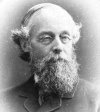 |
|
of the Royal Society of Canada from 1895 to 1896. He was born in Kilmington, Somerset (now in Wiltshire), England. His father was the Rev. Townshend Selwyn, Canon of Gloucester Cathedral. He was educated by private tutors and then in Switzerland where he became interested in geology. He joined the staff of the Geological Survey of Great Britain in 1845 and was engaged in the survey of North Wales. In 1852 he was appointed director of the Geological Survey of Victoria, Australia. Wikipedia says: “During his 17 years as director, over 60 geological maps were issued which were |
among the best of their period: they were models of accuracy which established a tradition of geological mapping in Australia. Selwyn was well qualified to analyse the Silurian strata. He was also responsible for several reports on the geology of Victoria and added much to the knowledge of gold-bearing rocks. Selwyn discovered the Caledonian goldfield near Melbourne in 1854 and in the following year reported on coal seams in Tasmania.” In 1869 he became director of the Geological Survey of Canada and remained in that position for 25 years. One of his early accomplishments was an expedition to investigate the geology and mineral resources along the proposed railroad routes between British Columbia which had been newly added to Canada and the eastern provinces. A greater area to be studied required a larger staff, and he was able to increase the number of survey parties from six to fourteen between 1870 and 1890. He oversaw the moving of the headquarters of the Survey from its longtime home in Montreal (since 1842) to Ottawa in 1881. He spent time abroad organizing Canada’s contributions to international exhibitions in Philadelphia (1876), Paris (1878), London (1886), and Chicago (1893). Selwyn was elected a fellow of the Royal Society in 1874. He married his cousin Matilda Charlotte, daughter of the Rev. Edward Selwyn, in 1852, and they had nine children, of which he was survived by three sons and a daughter. He retired in 1894 to Vancouver which is where he died.
- semi-: half.
- semibacca'ta: 'baccata' means "berry-like,
having fruits with a pulpy texture" and "semi" means
"half," hence somewhat berry-like.
- semibarba'ta: somewhat bearded or furnished
with long, weak hairs.
- semidecan'drum: semi in compound words means "half,"
and decandrum means "with ten anthers," so this would
mean with five anthers. Flora of North America calls this five-stamen
mouse-ear chickweed.
- semiintegrifo'lia: 'integrifolia' means 'with entire or uncut leaves,'
so this probably means that half the leaf is entire-margined and half
is toothed.
- semo'ta/semo'tus: from the Latin semotus,
"removed, separated, distant, remote," in turn from semoveo,
"to place apart."
- sem'per-: always, ever.
- semperflor'ens: ever- or always-flowering.
- semper'virens: evergreen, from Latin semper, “always,” and virens, “flourishing, living, green."
- sendt'neri/sendtneria'na: named for Otto Sendtner (1813-1859), a German botanist and phytogeographer born in Munich. Wikipedia gives us this information: “He received his education at the University of Munich, where he was a student of Karl Friedrich Schimper. Afterwards he served as a private secretary to a Silesian nobleman, and during his spare time performed studies of cryptogramic flora of the Sudetenland. In 1841 he was appointed curator of the Leuchtenbergsche Naturalienkabinett in Eichstätt. Two years later he accompanied Mutius von Tommasini on a botanical excursion through Istria and Tyrol, and in 1847 conducted botanical research in Bosnia. During this time period he also performed phytogeographical studies in southern Bavaria. In 1854 he became an associate professor, and in 1857 was appointed to the second chair of botany, as well as first curator of the herbarium at the University of Munich. Sendtner was a pioneer in the field of phytogeography, and in his research conducted important analyses involving the vertical distribution patterns of different types of vegetation. As a taxonomist he described many plants within the family Solanaceae.” He was the author in 1854 of Die Vegetationsverhältnisse Südbayerns nach den Grundsätzen der Pflanzengeographie und mit Bezugnahme auf die Landeskultur (Vegetation conditions of southern Bavaria in accordance with principles of plant geography and with reference to the local culture).
- Senebier'a: named for Jean Senebier (1742-1809), a Swiss pastor and naturalist, described as a polyglot of the
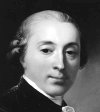 |
|
sciences. He was born in Geneva and his father was a wealthy merchant. He studied theology and was ordained a minister and pastor of the Protestant church of Geneva in 1765. He spent a year in Paris and became acquainted with many people in the scientific and theatrical worlds. In 1769 he became pastor of a church in Chancy, Switzerland, where he remained until 1773 when he was appointed chief city librarian of Geneva. In 1770 he published Contes moraux (Moral Tales) and became friends with Abraham Trembley, who influenced the young Protestant minister profoundly. |
In 1779 Senebier began to publish his Action de la lumière sur la végétation, the study of photosynthesis that established his reputation as a physiologist. His important literary work, Histoire littéraire de Genève, appeared in 1786. He then began a study of botany and in 1787 became a staff member of the Encyclopédie méthodique, with the task of producing a section on plant physiology. The first edition of this voluminous Traité de physiologie végétale appeared in 1800 recounting his experiments which demonstrated that light is the agent responsible for the fixation of carbon dioxide and that oxygen is liberated only in the presence of carbon dioxide. This work was fundamental to subsequent research in photosynthesis. He was a first-rate observer and experimenter himself, and was well in touch with the observational and experimental research of his predecessors and contemporaries. He produced both the two-volume Art d’observer (1775) and the three-volume Essai sur I’art d’observer et de faire des expeériences (1802) which described his fundamental philosophy about the experimental method. In April, 1809, Senebier became a Correspondent of the Royal Netherlands Academy of Arts and Sciences, and he died later that year. The genus Senebiera was published in 1719 by Augustin Pyramus de Candolle.
- Sene'cio: from senex, "old man,"
referring to the gray hairs on the seeds, also the root of the word senescence, the condition or process of deterioration with age. The genus Senecio was published by Carl Linnaeus in 1753.
- Senega'lia: apparently referring to some derivation from Senegal in Africa. Senegalia is a large widespread genus which consists of approximately 86 taxa in the Americas, 69 in Africa, 43 in Asia and 2 in Australia and which has been separated from Acacia. The genus name Senagalia was published by C.S. Rafinesque in 1838. The species name Senagalia triacantha was published by Rafinesque in the same year although it was later determined to be an illegitimate name, and subsequent to that date the first use of the name was for a whole group of species in Mexico published by Nathaniel Lord Britton and Josepg Nelson Rose in North American Flora in 1928. One of those species was Senegalia greggii, the name of which later became a synonym for Acacia greggii, but which has now been resurrected. It is unclear what Rafinesque was referring to when he created the name Senegalia since as usual he did not explain it in his publication, but there is a natural gum called gum senegal or gum arabic made from the hardened sap of two species of the acacia tree, Acacia [Senegalia] senegal and Acacia seyal, trees which grow from Senegal to the Sudan and Somalia, and there would seem to be some connection between the generic name and this substance. In any case an African name came to be used for an American species.
- Senkenberg'ia: named for Johann Christian Senckenberg (1707-1772), a German physician, naturalist, collector and
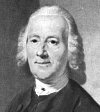 |
|
philanthropist born in Frankfurt am Main. His father was the physicus or medical officer of the city of Frankfurt. He attended a municipal school in 1719. The Senckenberg house burned down when he was twelve and the family experienced severe financial difficulties in its reconstruction, which despite receiving a scholarship from the city delayed young Senckenberg’s studies. His father instructed him in practical medicine and he worked with Frankfurt doctors. In 1730 he was studying medicine at the University of Halle, but by the next year he stopped, having become involved in |
theological disputations, turning away from state religion, and contacting members of the Moravian church. He returned to Frankfurt in 1732 and practiced there without a license. He suffered from mental problems but was able to earn a doctorate at the Georg August University of Göttingen in 1737. His mother died in 1740 and he was married in 1742, but unfortunately his wife died in 1743 of complications following the birth of their daughter who died in turn of meninigitis in 1745, the year after Senckenberg remarried. His second wife died in 1747 as did a son, and he married for a third time in 1754, but that wife died within two years. He must have felt that he was cursed. In 1763 he contributed his entire fortune to establish the Senckenberg Foundation for the support of natural sciences and worked to found the Botanischer Garten der Johann Wolfgang Goethe-Universitat Frankfurt am Main. The purpose of the Foundation was improved health care of local residents and the care of the poor. The Foundation became called Senckenbergische Stiftung and took as seal the coat of arms of the Senckenberg family: a burning bush. He planned a building on the outskirts with garden, laboratory, botanical garden and greenhouse, and acquired in 1766 a three-hectare plot of land at Eschenheimer Tor. In 1771 he laid the foundation stone for the Frankfurt Bürgerhospital, and during an inspection fell from the scaffolding around the dome and was killed. For many years he had kept diaries and 53 diary volumes and 600 folders with further notes are now in the Frankfurt University Johann Christian Senckenberg Library, totalling some 40,000 pages. This library, now called the University Library Johann Christian Senckenberg, is one of the most significant academic libraries in the Federal Republic of Germany with its extensive stocks and collections which functions as an academic library for the City of Frankfurt. The genus Senkenbergia was published by Sebastian Schauer in 1847.
- Sen'na: derives from the Arabic sana, for plants whose leaves and pods have purgative and laxative properties.The genus Senna was published by Philip Miller in 1754.
- senn'ii: named for Canadian botanist Harold Archie Senn (1912-1997). JSTOR provides the following biographical information about him: “Harold Senn was born in Caledonia, Ontario, and studied for a science and biology degree at McMaster University, Ontario. He continued at McMaster to gain an MA in botany in 1934 and received his doctorate from the University of Virginia (my wife's alma mater) in 1937, where he worked on the cytotaxonomy of the genus Crotolaria. After a spell as a research fellow at the Harvard Botanical Station in Soledad, Cuba, he took up a role in the botany department at the University of Ottawa, where he worked from 1938 until 1959, rising to director of the university's Plant Research Institute. While at Ottawa, Senn was appointed custodian of the Dominion Arboretum and published the herbarium's first Index Seminum, the forerunner of what is now the Gene Bank Resources of Canada. He also contributed to Canadian botany by continuing John Adams' Bibliography of Canadian Plant Geography. Under his leadership, the herbarium at Ottawa became one of the largest in North America and the new staff he took on made it a world center for plant systematic research. After helping to organize and acting as vice-president of the IX International Botanical Congress in Montreal, Senn moved to Wisconsin, where he was invited to become the university's new biotron facility director in 1960 (as well as professor of botany). The Biotron Project allowed Senn to pursue his interest in controlled environments; Wisconsin's plan was to build and develop the world's first large biotron, a laboratory with climate-controlled rooms imitating world environments. Senn was in charge of procuring $6m for its construction and on its completion demonstrated his wholehearted commitment to the project and spent several nights in the new facility to check its technology was working properly. He remained its director until his retirement from the University of Wisconsin in 1978. He spent the rest of his life in Victoria, British Columbia, with his wife Betty, where he spent much time collecting and planting varieties of rhododendron in his garden. Senn was a long-serving editor of The Canadian Field-Naturalist (from 1942-1955), fellow of the Royal Society of Canada and a life member of the Agriculture Institute of Canada.”
- sen'ta: thorny, rough, from the Latin sentis,
"a thorn or bramble," from the scabrous, rough stems.
- se'pium: growing in hedges or used for hedges, in reference to the common occurrence of the plant Calystegia sepium, a species named hedge bindweed, on fences and within hedges due to its twining and climbing nature.
- septentriona'le/septentriona'lis: northern, belonging to the north. The Latin septentrionalis comes from septentriones (“seven plow oxen”), a name for the constellations now known as Ursa Major and Ursa Minor, which appear in the northern sky.
- sepul'tipes: from the Latin sepultus, "buried," and the
suffix -pes which refers to the stalk, hence "buried stalk."
- Sequoi'a: named for Sequoiah/Sequoyah (1770?-1843), the son of a British merchant
and a Cherokee woman. He was
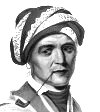 |
|
born in what is now Tennessee and went by the name of George Gist or George Guess. Much of what has been written about his life is speculative, contradictory, or fabricated. His mother was apparently related to a Cherokee chief and may have run a trading post. His father has been described variously as a peddler, a commissioned officer, a fur trader, or even a full-blooded Cherokee, but this cannot be stated for certain. Through his contacts with white men, he learned how to make jewelry and became an accomplished silversmith and then a blacksmith. At some |
point he moved to Alabama, where he enlisted in the Cherokee Regiment around 1813-1814. Although he apparently never learned English and did not believe as many Cherokee did that the white man's system of writing was a form of sorcery, he understood that it was potentially a useful thing, and he developed a syllabary to allow the Cherokee language to be written. The Cherokee nation officially adopted his writing system in 1825 and news of it spread across the nation and even around the world. He traveled to Arizona and New Mexico and eventually moved to Oklahoma. The genus Sequoia was published by Stephan Friedrich Ladislaus Endlicher in 1847. (Photo credit Wikipedia)
- Sequoiaden'dron: this name is derived
from the genus name Sequoia and the Greek dendron for
"tree," hence Sequoia tree, what we refer to today as the giant Sequoia. Wikipedia expands on this explanation by saying "The etymology of the genus name has been presumed—initially in The Yosemite Book by Josiah Whitney in 1868—to be in honor of Sequoyah (1767–1843), who was the inventor of the Cherokee syllabary. An etymological study published in 2012 concluded that Austrian Stephen L. Endlicher is actually responsible for the name. A linguist and botanist, Endlicher corresponded with experts in the Cherokee language including Sequoyah, whom he admired. He also realized that coincidentally the genus could be described in Latin as sequi (meaning "to follow") because the number of seeds per cone in the newly classified genus aligned in mathematical sequence with the other four genera in the suborder. Endlicher thus coined the name 'Sequoia' as both a description of the tree's genus and an honor to the indigenous man he admired." The genus Sequoiadendron was published by John Theodore Buchholz in 1939.
- serafin'ii: named for Stefano Serafini (aka Étienne Serafino) (1794-1843), a doctor of medicine at the University of Genoa. He was still a student when he went to Corsica to botanize and collect plants in 1822. He was married around 1841 and died two years later.
- seren'oi/serena'na: named for Sereno Watson (see watsonii).
- sergilo'ides: one reference I found that might relate to the meaning of this name is Jaeger's A
Source-book of Biological Names and Terms, in which he lists the
prefix serg as deriving from the French serge for 'silken
stuff.' But David Hollombe sent the following: "Sergilus was a genus named by Gaertner. The only species in the genus was Sergilus
scoparius which is a synonym of Baccharis scoparia, a broom-like
species from Jamaica." It is reasonable to conclude that sergiloides, like other epithets with -oides suffixes, means like genus Sergilus.
- serica'ta/serica'tus: from the Latin sericatus, "dressed
in silk."
- seri'cea/seri'ceum: silky. Wikipedia says "The specific name sericea comes from the Latin sericatus meaning 'clothed in silken hair' and describes the downy foliage."
- sericif'era: silk-bearing.
- Sericocar'pus: from the Greek serikos, "silky,"
and karpos, "fruit." The genus Sericocarpus was published by Christian Gottfried Daniel Nees von Esenbeck in 1832.
- sericoleu'ca: from serikos, "silky," and leukos,
"white."
- seroti'num: late in flowering or ripening, from the Latin serotinus, "coming late, that which comes late, that which happens in the evening," from sero, adverb of serus, "late."
- ser'pens: snake-like, present active participle of serpo, “to crawl or creep.”
- serpentico'la: same as serpentinicola.
- serpen'ticum: of or belonging to serpents.
- serpentinico'la: living on serpentine soils, from serpentinus, "serpentine rock," and -cola, "dweller of."
- serpenti'num/serpenti'nus: serpentine, relating to snakes or to serpentine
rocks, from serpens, "serpent."
- serpyllifo'lia: with leaves like those
of thyme, Serpyllum.
- serpyllo'ides: like genus Serpyllum.
- ser'ra: probably means serrate from the Latin serra for "saw."
- serra'ta: saw-toothed, sawlike, from Latin serra, "saw."
- serratifo'lia: with saw-toothed leaves.
- serratipe'tala: with toothed petals.
- serra'todens: with serrate teeth.
- serrio'la: either in ranks, or pertaining
to salad, being one form of an old name for chicory.
- serrula'ta/serrula'tus: minutely serrate.
- Sesban'ia: from Arabic sesban or saisaban, an ancient name for one of
the species of this genus. The genus Sesbania was published by Michel Adanson in 1763.
- sesquimetra'lis: the prefix sesqui- means one-and-a-half,
so this means one-and-a-half meters long, and refers to the stems.
- sessiliflo'ra: with unstalked or sessile
flowers.
- sessilifo'lia/sessilifo'lium: with sessile leaves,
from the Latin sessilis, "sitting," and folius, "leaf,' meaning the leaf 'sits' directly on the stem without a stalk.
- ses'silis: having sessile leaves.
- Sesu'vium: thanks to Umberto Quattrocchi, Jaeger's Source-book of Biological
Names and Terms, and various online sources, we have the following: Sesuvium, land
of the Sesuvii, a Gallic tribe from west of the Seine. Acording to David Hollombe, Sesuvium was apparently the name given by the Roman physician Aurelius Opilius to Sedum or Sempervivum. I have no idea
how this name came to be applied to this genus however, which was published by Carl Linnaeus in 1759.
- seta'ceum/seta'ceus: bristled, from seta, "a bristle."
- Seta'ria: from the Latin saeta or seta, "a bristle or hair"
in reference to the bristly spikelets. The genus Setaria was published by Ambroise Marie François Joseph Palisot de Beauvois in 1812.
- setchell'ii/setchellia'na: named for American botanist William Albert Setchell (1864-1943).
The following is from a
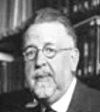 |
|
University of California website:
"Setchell was born in Norwich, Connecticut on April 15, 1864
into a family that had deep roots in New England. Setchell's father,
a businessman associated with a printing company that made wooden
type, was a prisoner of the Confederate army at the time of his son's
birth. Setchell, in an autobiographical fragment written in 1934,
chronicled an early interest in natural history, especially botany,
which was encouraged by family and friends and fostered in his prep
school years at the Norwich Free Academy. He collected plants and
sent interesting specimens |
to Daniel Cady Eaton, the pteridologist
of Yale, and to Edward Tuckerman, the lichenologist at Amherst College,
who replied with identifications and notes in Latin. Setchell entered
Yale University in 1883. The curriculum was heavily weighted towards
classics, with the result that Setchell's botanical studies, with
the exception of one formal course taught by Eaton from Gray's Textbook
of Botany, were extracurricular. He became acquainted with Isaac Holden,
an enthusiastic amateur botanist and joined him on numerous collecting
forays. Holden, a former teacher who was well versed in botany and
spoke several languages fluently, was vice-president and manager of
the Wheeler and Wilson Sewing Machine Company of Bridgeport, Connecticut.
Setchell noted in his abortive autobiography that his life at Yale
was that of an ordinary undergraduate of the time---he was elected
to a fraternity, he studied Greek, Latin, and mathematics and he attended
morning chapel daily. (An admonitory note from the college dean that
has been preserved among the Setchelliana in the Bancroft Library
at the University of California attests to occasional lapses in attendance.)
As his undergraduate years drew to a close, Setchell changed his goals,
deciding to pursue the study of natural history in graduate school
rather than teaching classics in a preparatory school. He graduated
ninth in a class of 175 in June 1887, and in the fall of that year
began graduate school at Harvard. At Harvard, Setchell studied with
William Gilson Farlow, the pre-eminent American cryptogamic botanist of the
time. He took as his research topic the study of kelps (Laminariales),
concentrating on Saccorhiza dermatodea. The published version of his
thesis (Setchell, 1891), entitled "Concerning the life-history
of Saccorhiza dermatodea, (De la Pyl.) J. Ag.", is an account
of the anatomy and morphology of growth stages of the sporophyte (kelp
gametophytes not being discovered for another 25 years). As a collateral
project, Setchell studied the fungal genus Doassansia, but he had
to conceal this work from Farlow until his thesis was completed, at
which time Farlow pronounced the work important enough to publish.
In 1889, Setchell met Francis Sellers Collins of Malden, Massachusetts, an amateur
phycologist and indefatigable collector, who was an accountant in
the Boston Rubber Shoe Company. Collins had been involved in the preparation
of various exsiccatae, and he, Setchell, and Holden conceived the
idea of issuing a series of fascicles of dried specimens with printed
labels of North American freshwater and marine algae. The initial
intention was for each of the trio to prepare 50 uniform specimens
of each collection, so that 50 copies of each fascicle could be produced.
Eventually, 80 copies of each fascicle were produced. The first fascicle
of this exsiccata, which came to be known as the Phycotheca boreali-americana (Collins, Holden, & Setchell, 1895--1919), was sent to subscribers
in 1895. Fascicles of the PBA, each consisting of 50 numbers, continued
to be issued until Collins's death, with the last, no. 46, in 1919.
After receiving his doctorate, Setchell returned to the Sheffield
Scientific School of Yale as an assistant in biology. He taught at
Yale until 1895, becoming Instructor, and finally, with the death
of Eaton, assistant professor of botany. In the summer he supervised
work in marine botany at the Woods Hole Marine Biological Laboratory.
During this time he continued research on kelps, becoming interested
in the influence of temperature on their distribution, following a
suggestion by Professor William H. Brewer (Setchell, 1893). He developed
interests in Cyanophyceae and physiology. In 1895, the regents of
the University of California, needing to replace the departing professor
of botany, Edward L. Greene, offered the 31-year old Setchell an associate
professorship, acting headship, and a salary of $2,800 per year. Setchell,
who was happy at Yale, refused. The offer was raised to full professorship,
headship, and $3000 per year. Unable to induce Yale to match this
offer, Setchell accepted, and with moving expenses of $250 left for
Berkeley, where he remained as head of the department of botany until
his retirement in 1934. During his academic career, Setchell's interests
included floristics (Pacific coast of North America, South Pacific,
Hong Kong), taxonomy of algae (Microdictyon, Laminariaceae, Sargassum,
Gigartinaceae, Corallinaceae, Cyanophyceae, Scinaia), taxonomy of
fungi (especially smuts and hypogeous gasteromycetes), and taxonomy
of a few groups of angiosperms (Balanophoraceae, Salix), parasitism
(angiosperms, red algae), genetics (Nicotiana), biogeography (kelps,
Zostera, island floras), ethnobotany (algae, tobacco), coral reefs,
and thermal algae. His pioneering ideas on the influence of temperature
on algal distribution are still cited today. He was the first to emphasize
the role of macroalgae in the formation of coral reefs. Setchell's
work on thermal algae was not as well documented as his work on other
subjects, so we will take this opportunity to review it. Setchell
traveled widely, and wherever he went he collected plants, and if
possible, visited herbaria and established contacts with other botanists.
He made three trips to Alaska, the first to the Bering Sea in 1899,
and two round-the-world trips, in 1903 and 1926 during sabbaticals.
He spent several summers on the east coast and in Europe looking at
type specimens in herbaria and parts of other summers at a camp in
Foresta near Yosemite National Park. He visited Yellowstone National
Park three times. Setchell was a very popular teacher. His Introductory
Botany course attracted so many students that it is suspected that his grading
policy may have influenced the attendance. According to Lincoln Constance, Setchell prided himself on being able to teach any
of the courses in the department. He was especially proud of his course
on botanical history (Botany 150, still available on microfilm at
the Bioscience Library at Berkeley). Setchell directed several master's
students and three PhD students specializing in phycology during his
career, but none of his students continued in phycology. In his later
years he acted as unofficial advisor to many young phycologists (among
them Elmer Yale Dawson and Francis Drouet) and other botanists at Berkeley and elsewhere. He referred to these students as his nephews and nieces,
and they addressed him (in letters, at least) as Uncle Bill. Under
his leadership, which was apparently autocratic, the department of
botany achieved world renown. The series University of California
Publications in Botany was initiated, the herbarium and the botanical
garden were built up. The founding of the botanical garden owes a
great deal to Setchell's addiction to cigars and pipes. He became
interested in all aspects of the smoking habit, and wanted to discover
the geographic origin of Nicotiana. Cultivars and aboriginal tobaccos
from around the world were grown in the garden. These same tobacco
stocks later were the basis of mutation research in the department
of genetics. Setchell's extracurricular life was as rich as his life
on campus. He delighted in theater and opera, an interest beginning
in his Boston days and documented in his scrapbooks by numerous tickets
and programs. He was a member of many academic and social societies
at the university and was also a member of the Athenian Club in Oakland
and the Bohemian Club in San Francisco. He took part in an annual
retreat at the Bohemian Grove in Sonoma County, which included an
elaborate theatrical piece. He wrote a play for this retreat, but
it was never performed. One of his closest friends and fellow club
member was the playwright and short story writer Charles Caldwell Dobie, who accompanied
him on many recreational collecting trips. In 1920, at the age of
56, Setchell married Clara B. Caldwell of Providence, Rhode Island.
From then on, she assisted him at the university and accompanied him
on all his trips. She died in 1934 following an unsuccessful operation
for breast cancer. Setchell retired that year, but continued to work
on botanical projects until his death in 1943. During these years
he was a semi-invalid, suffering from heart problems and complications
from prostate surgery. He continued to travel and collect, and in
fact was accompanied by a nurse on some of his last collecting trips." (Photo credit: Image courtesy of the University and Jepson Herbaria Archives, University of California, Berkeley)
- seti-: in compound words signifies "bristled."
- set'iger/setig'era/setig'erus: from seti, "bristle,"
and -gero, "bearing," thus "bearing bristles,"
referring to bristly stems, sepals, ovaries or styles.
- setilo'ba: bristle-lobed.
- seto'sa/seto'sum: bristly hairy, from the Latin seta, "bristle."
- setosis'sima: very bristly hairy.
- Seubert'ia: named for German botanist Moritz August Seubert (1818-1878), born in Karlsruhe. Wikipedia provides this information: “Seubert was the son of a medical officer of health. He first attended the Lyzeum in Karlsruhe and already at that time had contact with the botanist Alexander Braun, who interested him in this subject. As of 1836, he studied medicine at the University of Heidelberg and then in 1837, he studied natural science at the University of Bonn. His teachers in Bonn were Georg August Goldfuss, Ludolph Christian Treviranus and Johann Jakob Nöggerath. After receiving his PhD in Bonn, he moved to the University of Berlin, where he qualified as a professor. In 1843, he began teaching as a private lecturer in Bonn. In 1846, he was offered a chair as professor for botany and zoology at the University of Karlsruhe as the successor to Alexander Braun. At the same time, he succeeded Braun as the head of the Großherzoglichen Naturalienkabinetts (Grand Ducal Natural History Specimen Cabinet) and of the Karlsruhe Botanical Gardens. In addition, he was the librarian of the Großherzoglichen Hof- und Landesbibliothek (Grand Ducal Court and State Library). Besides teaching and administration, Seubert also published several works. His Flora azorica, in which he critically appraised the herbariums of Christian Ferdinand Friedrich Hochstetter and his son Karl Hochstetter, appeared in 1844. He also worked on a series of plant families in Flora Brasiliensis, published by Carl Friedrich Philipp von Martius, among which were the Alismataceae, Amaryllidaceae, Butomaceae and Liliaceae. In addition, he wrote a Lehrbuch der gesamten Pflanzenkunde (Textbook of All of Botany), which appeared in five editions. In 1836, his Exkursionsflora für das Großherzogthum Baden (Study Trip Flora for the Grand Duchy of Baden) appeared and another one for southwestern Germany was published in 1869.” He died in Karlsruhe at the age of 59. The genus Seubertia was published by Karl Sigismund Kunth in 1843.
- shal'lon: Stearn's Dictionary of Plant Names says: "Rendering
of a western American Indian (Chinook) name kikwu-salu for
Gaultheria shallon," commonly called salal. The Oxford English Dictionary's earliest evidence for the word shallon is from 1806, in the writing of Meriwether Lewis.
- shantz'ii: named for Homer LeRoy Shantz (1876-1958), an American botanist born in Kent County, Michigan, and
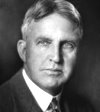 |
|
raised in Colorado Springs. He received a BS degree in 1901 from Colorado College and a PhD in botany in 1905 from the University of Nebraska. From 1901 to 1902 he was a botany and zoology instructor at Colorado College, from 1903 to 1904 an agricultural botany instructor at the University of Nebraska, from 1905 to 1906 a botany instructor at the University of Missouri, and in 1907 a botany instructor at Louisiana State University. In 1908 he went to work for the Bureau of Plant Industry of the United States Department of Agriculture, and remained there until 1926. Over this |
period of time he published Natural Vegetation as an Indicator of the Capabilities of Land for Crop Production in the Great Plains Area, The Vegetation and Soils of Africa, Vegetation Map of Africa, and The Natural Vegetation of the Great Plains Region, and participated in several expeditions to Africa. In 1924 he was president of the Botanical Society of Washington and in 1928 president of the Ecological Society of America. From 1926 to 1928 he was head of the botany department at the University of Illinois at Urbana, and from 1928 to 1936 he was president of the University of Arizona. From 1936 until his retirement in 1944 he was chief of the Division of Wildlife Management of the US Forest Service. He traveled widely and made documentary photographs wherever he went, being particularly interested in the photographic documentation of vegetation change. He worked with John E. Harrison, Jr. in the acquisition of land for the creation of what is now Saguaro National Park. Even after his retirement he worked at a number of consulting jobs and died in the field at the age of 82 near Rapid City, South Dakota.
- shar'smithae/sharsmith'iae: named for Helen Katherine Myers Sharsmith (1905-1982), American biologist, author of
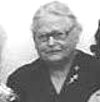 |
|
Flora of the Mount Hamilton Range of California and Spring Wildflowers of the San Francisco Bay Region. The article "First Women Botanists at Berkeley" by Sheila Humphries provides the following: “An Oakland native, Helen Myers earned a bachelor’s degree in zoology from UC Berkeley in 1927. Next she received a master’s degree, and proceeded, as did so many women with advanced degrees, to teach high school for three years. In the summer of 1930, Meyers attended the Yosemite Field School of Natural History, where she met her future husband Carl Sharsmith. After |
her marriage, both Sharsmiths studied at UCLA before transferring to the PhD program in botany at Berkeley in 1932. Helen Sharsmith wrote her dissertation on “Flora of the Mount Hamilton Range” under Herbert Mason and was awarded her degree in 1940, as was her husband with the same advisor. As botanist Annetta Carter writes in her obituary of her friend Helen Sharsmith, the couple had two children, named John after John Muir, and Linnea, after Linnaeus. Helen accompanied her husband to a teaching post at Washington State University in Pullman, and to a staff position in Minneapolis. Carl Sharsmith was hired in a permanent post in the Biological Sciences Department at San Jose State University. Every summer the couple returned to Yosemite but eventually divorced. Helen Sharsmith was appointed as senior herbarium botanist at the Berkeley Herbarium in 1950, where she remained until her retirement in 1969. In 1965, Sharsmith published Spring Wildflowers of the Bay Area which was reprinted due to its popularity. At the Herbarium she headed public service activities, which included the Herbarium’s extensive plant exchange program. Despite her considerable administrative responsibilities, she contributed research papers to the journal Madroño. Her monograph on “The Genus Hesperolinon (Linnaceae)” published by the Berkeley Botany Department was noted by British botanists as an outstanding floral morphological study. Annetta Carter, in an obituary of her friend, points out that Helen Sharsmith was a skilled photographer, and kept photographic records of her early summers in the Yosemite High Country. Sharsmith’s doctoral dissertation on the flora of Mount Hamilton was published by the Santa Clara Chapter of the California Native Plant Society in 1982." She retired in 1969 and died In Alameda, California. (Photo credit My Heritage)
- sharsmith'ii: named for Carl William Sharsmith (born Karl Wilhelm Schaarschmidt II) (1903-1994), botanist and
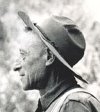 |
|
professor at San Jose State University where he created a 15,000 sheet herbarium
mostly of native plants that he collected, identified and mounted.
The herbarium now bears his name. He was also a much beloved National
Park Service interpretive ranger at Yosemite, beginning there at the
Yosemite School of Field Natural History in 1930, and remaining a
ranger until the age of 90. "[He] was born in New York, New York,
in 1903. He studied botany at the University of California in the
1930s and received the PhD in 1940. He held a position combining duties as herbarium curator and |
botany instructor at Washington State
University from 1937 to 1939. From 1940 to 1946 he was with the University
of Minnesota, and from 1950 onward at San Jose State College. His
principal interest was in alpine vegetation. Sharsmith's years at
Washington State proved to be a frustrating time. He found himself
required to teach many classes, while also attempting to complete
a doctoral dissertation and administer a herbarium with a large backlog
of work. He inadvertently became involved in a quarrel with the university
administration when the university president cancelled planned field
trips. He also felt a sense of isolation at Pullman, where he was
far from the alpine vegetation which held his major interest. Moreover,
the lack of cultural opportunities, especially performances of serious
music, added to this feeling of isolation. After two years he left
this position. Ironically, many of the problems which had vexed him,
and which had also prompted his immediate predecessors to leave Washington
State, were then alleviated by changes in the policies regarding research,
teaching, and administration of the herbarium." (Quoted from
a website of the Washington
State University Libraries). He was married to Helen Katherine Myers Sharsmith
(see previous entry).
- shasten'se/shasten'sis: of or from the Mt. Shasta region or named
for Shasta County, California.
- shaw'ii: named for Henry Shaw (1800-1889), who was
born in England and came to America in 1819, establishing a
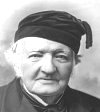 |
|
hardware
concern in St. Louis. He decided to found a botanical garden in his
adopted city after visiting the Royal Botanic Gardens at Kew, and
this was accomplished on land adjacent to his home in 1858, followed
by the creation of a museum for his library and herbarium the next
year, and later an arboretum, green houses and formal gardens. In
1870 he gave the city of St. Louis 190 acres of land adjoining the
gardens for a public park, and in 1885 he established the Henry Shaw
School of Botany at Washington University, stipulating that the director
of the botanical garden also hold the |
George Engelmann professorship
of botany at Washington University, positions which Dr. Peter Raven
currently holds (see ravenii). After his retirement from the world
of commerce, he pursued a fascination with botany and arboriculture,
and a love of travel and the classics that made his park into an American
version of a Victorian pleasure ground. (Agave shawii)
- shaw'ii: named for John Shaw (1837-1890), Scottish teacher, geologist, bryologist and amateur botanist (1837-1890). He was headmaster of the South African College School, Cape Town, and contributed papers on mosses to the Journal of Botany. He collected South African plants which are at Kew and he died at Cape Town. A number of South African plants like Aspalathus shawii and Albuca shawii were named for him. The taxon in California with the epithet named for him is Orthotrichum shawii.
- sheldon'ii: named for American botanist and Astragalus authority
Edmund Perry Sheldon (1869-1913), a resident of Minnesota and later
of Oregon where he specialized in forestry. Specimens he collected
form a significant part of the collection at the Oregon State Herbarium. A website of the Smithsonian Institution has this: "Edmund Perry Sheldon was born in 1869. After receiving his BS at the University of Minnesota, Sheldon moved to Oregon in 1897. There he worked in the eastern part of the state as a special field agent for the Division of Botany in the US Department of Agriculture. Sheldon later gained recognition for his forestry expertise when he was chosen to take charge of the Oregon State Exhibit of Forestry at the Louisiana Purchase Exposition in St. Louis in 1904. Later he was appointed superintendent of forestry at the Lewis and Clark Centennial Exposition in Portland in 1905. Sheldon was noted for being able to relate to both to amateur naturalists and to more formally trained academics. He spent time in the field while accompanying Martin Gorman and Lester Hawkinson several 'rambles' through the forest in search of natural history specimens. During 1906-1908 Sheldon served as president of the Oregon State Academy of Science (OSAS) and curator of the City Free Museum in Portland which house his personal herbarium. He also served as secretary of the newly formed Oregon State Board of Forestry until 1909. In 1913, Sheldon was elected president of the Mazamas, a mountaineering education organization located in Portland, and returned to working with the OSAS in the role of secretary. Shortly after, Sheldon left Portland and was never heard from again. His whereabouts following 1913 are unknown, though his death is often listed as 1913." It has been said that he disappeared in the deserts of Nevada, but this is not confirmed, nor is the claim by Spanish Wikipedia that he earned a PhD at the University of Minnesota. He was married to Grace Etta Sheldon and had three sons.
- shelton'ii: named for botanist, minerologist and horticulturist Christopher A. Shelton (1826?-1853), a pioneer of scientific agricultural research in California. It was Shelton
who brought the first colonies of honeybees into California, and he
died soon thereafter at the age of 27 as a result of a boiler explosion on the steamship Jenny Lind which was bound from Alviso in Santa Clara County, California to San Francisco. At least 31 other people also lost there lives in the disaster. Only a month or so before his death, he had been responsible for introducing the honeybee to California by purchasing twelve beehives from a New Yorker and transporting them by rail, pack mule and steamship to San Francisco. Most of the bees had died but enough remained to create one viable colony.
- Shepher'dia: named for John Shepherd (1764-1836),
curator of the Liverpool Botanic Gardens and friend of Thomas
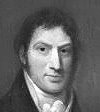 |
|
Nuttall,
born in Gosford, Cumberland. He was the author in 1808 of A Catalog of Plants in the Botanic Garden
at Liverpool. Nuttall was also associated with this botanic
garden. Shepherd became its first curator in 1803. He was largely responsible for its design and maintained it for over thirty years. He and his nephew, Henry Shepherd (c. 1783-1858), acquired material for the gardens from many parts of the world and established an important herbarium of approximately 40,000 specimens. One of his pupils was the botanical collector John Forbes. The Liverpool Botanic |
Garden is now called the Wavertree Botanic Garden. It was Nuttall who published the genus Shepherdia in his honor in 1818.
- Sherard'ia: named for Dr. William Sherard (1659-1728), an Englist botanist, patron of Dillenius and friend of John Ray, next to whom he was considered to be one of the outstanding English botanists of his day. Sherard was born in Leicestershire, educated at Merchant Taylors’ School in London from 1674-1677, and attended St John's College, Oxford, reading law from 1677 to 1683. Alongside his studies in this area, Sherard took a great interest in botany, often visiting the university's physic garden and striking up a lasting friendship with its keeper, Jacob Bobart the Younger. He collected Oxfordshire plants for Bobart and assisted him with completing Robert Morison's Plantarum Historiae Universalis Oxoniensis. He graduated with a law degree in 1683. He studied botany from 1686 to 1688 at the Jardin du Roi in Paris under Joseph Pitton de Tournefort and afterwards visited the Netherlands, where he met the keeper of the Leiden Botanical Gardens, Paul Hermann. He compiled lists of the plants growing at both the Leiden and Paris gardens, which were published as Schola botanica, Sherard's only book. Returning to England in 1689, Sherard worked on compiling records of the plants of southern England and the Channel Islands. He then went visiting again, this time to County Down, Ireland, where he stayed with Sir Arthur Rawdon, a keen horticulturalist. Enjoying life on Rawdon's estate, he remained three years, during which period he explored Ulster and its flora, adding several new species to scientific knowledge. Sherard finally returned to Oxford in 1694, where he became a Doctor of Civil Law before departing on a grand tour as tutor to Charles, Lord Townshend. He briefly returned to England in 1697 before setting off on another grand tour, this time accompanying the Marquess of Tavistock as tutor. Sherard was able to visit many botanical gardens in Italy on this trip and decided that he would make it his life's work to continue Casper Bauhin's Pinax (1623), updating all the plant names authored by botanists up to that time. Landing back in England before Christmas 1698 with a haul of rare books and herbarium specimens to help him with his set task, Sherard took some persuading to once again be employed as a tutor. His acquaintance, Hans Sloane, had introduced Sherard to the Dowager Duchess of Beaufort, who insisted Sherard tutor her grandson Henry. A keen collector of plants in her garden at Badminton, the Duchess was probably interested in Sherard because of his reputation as a botanist and Sherard duly took up the new post, but it did not last long, for Henry died the following year. Life was to be unsettled for the next two years, during which time Sherard was employed briefly as junior bursar at his Oxford college and then with a government commission to improve care of French and Spanish prisoners. A more attractive position was offered to him as British Consul at Smyrna in Turkish Asia Minor, which he gladly accepted, and he remained there until 1716, finding it difficult to continue his botanical work but financially remunerative, and he eventually left to resume work on his magnum opus (the Pinax) once more. He settled in London in late 1717 and he was soon elected to the Royal Society and joined its council in 1719-1720. During this period he also worked with his brother, James, an apothecary, building up a superb garden at the latter's estate in Eltham. Together they traveled to Europe in 1721 to collect plants and entice the Giessen botanist Johann Jakob Dillenius to come and work with them. While continuing to work on the Pinax, Sherard organised collecting expeditions to North America undertaken by Mark Catesby and Thomas More, and worked with Hermann Boerhaave on the completion of Sébastien Vaillant's Botanicon Perisiense (1727), requiring two visits to the Netherlands. Due to these distractions, the Pinax moved forwards slowly, even with Dillenius' help. In addition Sherard fell out with Hans Sloane, who denied him access to the collections of Petiver and Plukenet, further obstructing matters. The work was never to be completed; by 1728 Sherard (now living with Dillenius on Tower Hill), was suffering from senility and died that year. He had maintained a collection of botanical books, dried plants, fruits and seeds which he bequeathed to Oxford University, of which he was a fellow. Sherard helped shape the face of taxonomy which at the time was still in flux. His work with Ray, Tournefort, Vaillant, Hermann and Dillenius helped considerably define the work of Linnaeus, the father of modern taxonomy. He contributed to John Ray's Stirpium published in 1694 and co-edited Paul Hermann's Paradisus Batavus (1698) after Hermann's death in 1695. Sherard's major legacy was to endow a new chair of botany at Oxford University, to which he also bequeathed his herbarium of 12,000 sheets and his library and paintings. He stipulated that Dillenius was to be the first Sherardian professor of botany, though wrangling over the terms of the bequest meant he was not instated for seven years. The unfinished Pinax was also given to Oxford. The genus Sherardia was published by Carl Linnaeus in 1753.
- sherf'ii: named for Earl Edward Sherff (1886-1966), an American botanist and taxonomist who specialized in
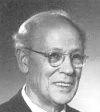 |
|
Hawaiian flora. He was born in Flint, Michigan, and received his undergraduate BSc degree in botany at Albion College, then a master’s and a PhD in 1916 from the University of Chicago. Beginning in 1907 he taught at high schools in Elgin and Deerfield as well as Christian Fenger High School and Lindblom Technical High in Chicago. Later he taught at the Chicago Teachers College where he headed the science department from 1929 to 1951, and became a research associate at the Field Museum of Natural History in Chicago. JSTOR says: “He collected extensively in the |
Chicago area as well as in other states and Hawaii in particular. Sherff published quite extensively on the flora of Hawaii and produced taxonomic revisions of the genera Taraxacum, Cosmos, Tetramolopium, Lipochaeta, Dubautia, Railliardia, Haplostachys, Phyllostegia, and Stenogyne. Five species epithets, all members of the Asteraceae family, have been named after him.” He was co-author of The Genus Bidens, and he died in Hastings, Michigan. (Photo credit: JSTOR)
- sherman-hoy'tae: named for Minerva Lockhart Hamilton Hoyt (Mrs. Albert Sherman Hoyt) (1866-1945), an American
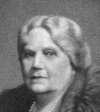 |
|
activist and conservationist known especially for her work to preserve California desert areas, including Joshua Tree National Park. She was born near Durant, Mississippi and attended local schools and then Dr. William Wards Seminary, Nashville, Tennessee, and the College of Music, Cincinnati, Ohio. She later received an honorary doctor of botany degree from the University of Mexico. She married physician Albert Sherman Hoyt in 1891 and lived with him in New York, Denver and Baltimore before moving west to South Pasadena, California, with him in 1897. In |
Pasadena, she was a wealthy socialite and civic activist, working for a variety of civic causes, such as the Los Angeles Philharmonic. Other civic endeavors were being president of the Los Angeles Symphony Orchestra, organizing the Music and Art Association of Pasadena, and being president of the Boys and Girls Aid Society of South Pasadena. Her son had died as an infant and her husband died in 1918, after which she threw herself fully into desert conservation. In southern California she became fascinated with the desert and desert plants, especially cacti and joshua trees, and being an avid gardener she frequently traveled to the desert and was shocked at the degree of destruction that was going on. In the 1920s she prepared elaborate exhibits of desert plant life that were shown in New York, Boston and at the Royal Horticultural Society Chelsea Flower Show in London. She became the conservation chairwoman for the California Chapter of the Garden Club of America and in 1930 Hoyt founded the International Desert Conservation League. Throughout the 1930s she worked to encourage the state of California to create three parks, including Joshua Tree, Death Valley, and Anza-Borrego Desert. In 1936, her efforts persuaded the administration of President Roosevelt to designate more than 800,000 acres in the area as the Joshua Tree National Monument. Hoyt was tapped by noted landscape architect, Frederick Law Olmstead, Jr. to serve on a California state commission formed to recommend proposals for new state parks. She prepared the commission’s report on desert parks and recommended large parks be created at Death Valley, the Anza-Borrego Desert, and in the Joshua tree forests of the Little San Bernardino Mountains north of Palm Springs. Eventually more than 3 million acres of California desert were protected in part due to her fierce advocacy. She was a member of the Royal Horticultural Society of Great Britain, the Horticultural Society of Germany, the National Society of Colonial Daughters, and the American Planning and Civic Association.
- sherwood'ii: named for William Edwin Sherwood (1896-1930). He was born in Jeffersonville, Ohio, and died at the age of 34 at Prospect, Oregon. He arrived at Salem in 1907 and served in the First World War guarding bridges and tunnels in eastern Oregon. He got a bachelor's degree in biology from Willamette University in 1921. He was mainly interested in birds and fungi. His father was Professor Edwin Sherwood, who was an instructor in languages at the State University of Oregon and in Greek and New Testament at Kimball College of Theology, both at Salem. William and his 6-year old son were on a fishing trip in Fore Bay, near Prospect, Oregon, when they both were drowned.
- shet'leri: named for Stanwyn Gerald Shetler (1933-2017), an American botanist
and Smithsonian Institution curator.
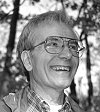 |
|
The following is from a website
of the Washington
Biologists' Field Club: "Stan was born on October 11, 1933,
in Johnstown, Pennsylvania. He grew up and attended schools nearby.
His father was a minister and also a school teacher, who founded and
directed a K-12 parochial school. His interest in natural history
began with bird watching in the sixth grade and was stimulated by
his science teacher and fostered by his mother. Birding has been a
lifelong avocation. Stan came to the department of botany, National Museum of Natural History of the Smithsonian Institution in 1962 |
directly from graduate studies at the University of Michigan, where he subsequently
earned a PhD in systematic botany after completing his dissertation.
He spent his whole professional career at the Smithsonian before retiring
at the end of 1995. Earlier he earned his bachelor's (1955) and master's
(1958) degrees from Cornell University after first attending
Eastern Mennonite College (now University), in Harrisonburg, Virginia.
Beginning as an assistant curator, he rose to the rank of curator,
with his curatorial area of responsibility being temperate and arctic
North America, including, notably, the local flora of the Washington,
DC region. From 1984 to 1994, he served as associate director and
then deputy director of the National Museum of Natural History. Stan's
botanical interests have been wide-ranging, but he is a recognized
expert on the bellflowers (genus Campanula) and the flora of
the Arctic. His publications number well over 100 scientific, technical,
and popular titles, including three books and the recent Annotated
Checklist of the Vascular Plants of the Washington-Baltimore Area (2 volumes, 2002). The books are on Russian botanical history (1968),
a monograph on the evolution of the New World harebells (Campanula
rotundifolia complex) (1982), and the popular Portraits of
Nature: Paintings by Robert Bateman (1986), which accompanied
a Smithsonian exhibition by the same title organized by him in 1987;
it explored the diversity of nature through the Canadian artist's
work. He also edited the English translations of the last eight volumes
of the 30-volume Flora of the USSR. From the mid-1960s to the
mid-1970s, Stan was executive secretary and then program director of
the international Flora North America Program, which pioneered in
the use of computers for taxonomic information and set the stage for
the subsequent effort to prepare a modern treatise of North American
plants. His research travels have taken him across North America and
to parts of South and Central America, Europe, Asia (Caucasus, Siberia,
Tuva), and Australia. Stan has been a frequent lecturer, teacher,
and consultant through the years. He has been active in various conservation
and environmental causes. He has served on the board of the Piedmont
Environmental Council (1985-1988) and several terms (latest, 1994-1999)
on the board of directors of the Audubon Naturalist Society, including
three years (1974-77) as president. He is a charter member (1982)
and the current botany chair since 1996 of the Virginia Native Plant
Society. He has taught plant identification courses for the USDA graduate
school off and on since 1963. Honors include election as fellow of
the American Association for the Advancement of Science (1994), for
'contributions to the formation of electronic data banks and
the computer registry of botanical specimens,' and fellow of
the Washington Academy of Sciences (2002). Upon retirement he was
appointed botanist emeritus by the NMNH. In 1995, he received the
Audubon Naturalist Society's top award for contributions to natural
history and conservation, the Paul Bartsch Medal. In 1988, he was
invited by the Chautauqua Institution to present the featured lecture
at the celebration of the late Roger Tory Peterson's 80th birthday.
He received the Piedmont Environmental Council’s Individual Award
for Contributions to Environmental Improvement in 1981 for his role
in drafting a Vegetation Preservation Policy for Loudoun County, Virginia.
Stan was elected to membership in the Washington Biologists’
Field Club in 1970 and served as vice-president from 1981 to 1984
and as president from 1984 to 1987. He lives in Sterling, Virginia,
with his wife, Elaine. They have a grown son, Stephen, and daughter,
Lara, and one granddaughter." (Photo credit Loudoun Now)
- shevock'ii: named for California botanist James Robert Shevock (1950- ). He received a BS in 1976 and an MA in
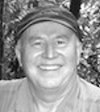 |
|
botany in 1978 from California State University Long Beach. A website on Mosses
of Nevada hosted by the Nevada
Natural Heritage Program provides this information: Jim began his
career in 1979 as the Botanist/Ecologist for the USDA Forest Service,
Sequoia National Forest. In 1984 he accepted at 2-year assignment
to assist the California Department of Fish & Game as botanist
of its Natural Diversity Database. He was promoted in 1986 to regional
botanist for the USDA Forest Service, Pacific Southwest Region, stationed
in San Francisco, where he administered the sensitive |
and rare plant program across 18 national forests in California. In 1998 Jim was selected to serve as the associate regional director for resources stewardship and science for the United States Department of the Interior National Park Service, Pacific West Region, headquartered in Oakland, California. In 2004 he became the National Park Service Research Coordinator for the Californian Cooperative Ecosystem Studies Unit (CA-CESU) based at University of California, Berkeley. Jim has also been a research associate of the department of botany, California Academy of Sciences, since 1983, and a research associate at the University Herbarium, University of California, Berkeley, since 1996. He has served as president, corresponding secretary, and council member for the California Botanical Society, and as vice-president for plant programs with the California Native Plant Society. Jim has traveled to the Peoples Republic of China, Taiwan (ROC), Thailand, Australia, Korea, and Japan to pursue professional and research interests. He is a member of the American Bryological and Lichenological Society and the International Association of Bryologists. In 2009 he retired from federal service to spend more time on bryological expeditions and associated researches. He currently maintains an office at Cal Academy of Sciences. (Photo credit: University Herbarium, University of California)
- shidig'era: from the Latin meaning "bearing
a splinter of wood," and presumably referring to the coarse marginal
fibers of the leaf blade, from the Greek schidion, "something split off, a chip, a splinter."
- shinners'ii: named for Lloyd Herbert Shinners (1918-1971), a Canadian-born botanist and professor of botany with
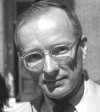 |
|
Southern Methodist University. He was born in Bluesky (population 16), near Waterhole in the Peace River country of northwestern Alberta, and his parents were homesteaders who had come from Wisconsin. His family returned to Wisconsin when he was five, and he attended public schools in Milwaukee, graduating from Lincoln High School. He enrolled at the University of Wisconsin-Milwaukee and then transferred to the University of Wisconsin-Madison, graduating in 1940. He received both his master’s and PhD from the same institution and his doctoral thesis in |
1943 was on the grasses of Wisconsin. In 1944 he worked at the Milwaukee County Parks Office as a botanist. In 1945 he went to Southern Methodist University and in 1949 became the director of the herbarium, and in 1960 a professor of botany. He remained on the faculty at SMU into his death in 1971. A webpage of the Botanical Research Institute of Texas provides the following: “Not only did he almost single-handedly develop the herbarium which today forms the core of the Botanical Research Institute of Texas (BRIT) collection, but he also created one of the best botanical libraries in the United States, did extensive field work, and published a total of 276 articles and a 514-page flora. Under his supervision the SMU herbarium grew from ca. 20,000 to 340,000 specimens. His contributions to botanical nomenclature are also particularly impressive, totaling 558 new scientific names and combinations. Among his most lasting achievements are the Spring Flora of the Dallas-Fort Worth Area Texas and the journal, Sida, Contributions to Botany, which he founded in 1962. His Spring Flora was the first completed, original, technical book on Texas plants prepared by a resident of the state. It was extensively used by high schools, colleges, and universities as a textbook for classes, and is still in use today. Shinners was also one of the organizers in 1953 of the Southwestern Association of Naturalists and was the first editor of its journal, Southwestern Naturalist. He was a tireless worker and an individual of varied intellectual pursuits ranging from poetry to linguistics, music, and a proficiency in seven languages.” He died in Dallas, Texas. (Photo credit: Botanical Research Institute of Texas)
- shock'leyi: named for William Hillman Shockley (1855-1925), an American mining engineer, amateur botanist, and
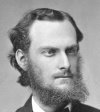 |
|
plant collector in western Nevada and eastern California. He was born in New Bedford, Massachusetts, and graduated from the Massachusetts Institute of Technology in 1875 with a degree in engineering, and shortly thereafter moved to the western frontier to make his fortune in the Nevada silver mines. He became interested in botany at an early age, and prior to his move west he had collected ferns in the limestone sinks around Ocala, Florida. Shockley collected plants as a hobby while living at Candelaria, Nevada, from 1880 to 1893. Ninety years ago the area of |
Shockley's travels in Nevada was virgin territory for a botanist and in consequence a high portion of the plants, even though some are now known to be widespread in the Great Basin or southern deserts, were then new to science. Candelaria is the type locality given for his collection of Lycium shockleyi and Eriogonum shockleyi. Two remarkable composites, Acamptopappus shockleyi and the monotypic genus Hecastocleis, were among his more notable prizes. He was the first person to collect in the White Mountains found on the border of Inyo and Mono County, California, and also made many collection excursions in Nevada during this time. JSTOR says: “Shockley traveled the world in his capacity as a mining engineer. In 1903 he made extensive travels in Peru and in 1905 made a trip to Sudan and Egypt. He married May Bradford, a geology graduate 22 years his junior, in 1908, and together they settled for a while in London, England, where May gave birth to their only son, William Bradford Shockley (1910-1989). W.B. Shockley co-invented the transistor and was awarded the Nobel Prize in Physics for 1956. The Shockleys returned to the US in 1913 and lived in Palo Alto, then, later, Los Angeles, where Shockley died in 1925.” He also worked on mining operations in the American South with his brothers Walter and George, and traveled to Russia, Korea, Australia and China, where he was active in mining regions. His wife had been a federal deputy surveyor of the mineral lands. Some of his specimens were sent to Harvard to be studied by Asa Gray and Sereno Watson, and others including duplicates went to the Pomona College herbarium, the California Academy of Sciences, the Greene Herbarium at Notre Dame, the New York Botanical Garden, and the University of California at Berkeley. (Photo credit: UNLV Digital Collections)
- shrev'ei: named for plant physiologist and ecologist Forrest Shreve (1878-1950).
According to a website called Some
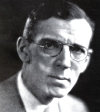 |
|
Biogeographers, Evolutionists and Ecologists: Chrono-Biographical
Sketches, "Forrest Shreve began his career with floristic
studies of his native Maryland and Jamaica, and then moved to Arizona
where he spent the rest of his life investigating the ecological and
biogeographical conditions under which desert vegetation flourishes.
The fourth edition of American Men of Science (1927) succinctly lists
Shreve's research as having involved "development of Sarracenia;
plant life of Maryland; ecology and physiology of the mountain rain-forests
of Jamaica and of |
desert vegetation; water relations of plants; rainfall
and temperature in mountains; vegetation and climate in the United
States; soil temperature; ecology of the coastal mountains of California;
soil conditions in relation to the distribution of desert vegetation."
He received his undergraduate and graduate degrees at Johns Hopkins
University, was an associate professor of botany at Goucher College
1906-1908, and editor of Plant World 1911-1919, authored in
1914 A Montane Rain-Forest, helped found the Ecological Society
of America in 1915, and co-authored with Ira L. Wiggins Vegetation
and Flora of the Sonoran Desert which was published posthumously
in 1964. He spent most of his career at the Carnegie Institution's
Desert Laboratory in Tuscon, Arizona. He was the subject of a 1988
biography by Janice Emily Bowers entitled A Sense of Place: The
Life and Work of Forrest Shreve.
|


