- tabernaemonta'ni: named for Jacob Theodor von Bergzabern (Jacobus Theodorus Tabernaemontanus) (1520-1590).
 |
|
The following is from Stearn's Dictionary of Plant Names: "...personal physician to the Count of the Palatine at Heidelberg, West Germany. He was born in the town of Bergzabern in the Palatinate region of Germany and was a student of the German botanist Hieronymus Bock. He Latinized his name as Tabernaemontanus [which means Tavern in the mountains] and is also commemorated by species named for him in Amsonia, Potentilla and Scirpus. He was the author of a celebrated herbal Neuw Kreuterbuch (1588-1591), of which the illustrations were issued separately at Frankfurt-am- |
Main in 1590 under the title Eicones Plantarum. The woodcuts were mostly copied from those in other herbals but make an attractive book. The London printer, John Norton, acquired them from the Frankfurt printer Nicholaus Bassaeus and used them in 1597 to illustrate Gerard's Herball." Many of the websites that mention von Bergzabern have to do with beer and brewing, a subject he was apparently very interested in. He studied at the University of Heidelberg, was married three times and had eighteen children. He spent a lifetime botanizing and practicing medicine and has been called the "Father of German botany." His work provided material for the better-known Herball of John Gerard (1597). He supported himself by serving as a court physician to a number of German nobles such as Philip III, Count of Nassau-Weilburg, and Marquard von Hattstein, Bishop of Speyer. The genus Tabernaemontana was created in his honor by Charles Plumier and the name was adopted and published by Carl Linnaeus in 1753.
- Taenia'therum: from the Greek taenia, "a band or ribbon,"
and ather, "an awn," referring to the flat or ribboned
awn of the lemma. The genus Taeniatherum was published by Sergei Arsenjevic Nevski in 1934.
- Taenid'ia: from Greek tainidion, "a small ribbon, diminutive of tainia or taenia, "a ribbon." The genus Taenidia was published in 1898 by John Torrey and Asa Gray.
- Tage'tes: named for the Etruscan god Tages
who as a miraculous child with the features of a wise old man sprang from a plowed furrow in the fields of Tarquinii and sang out the elements of what the Romans called the Etrusca disciplina, sometimes called the Etruscan scriptures, which was the foundation of the Etruscan religious tradition. He
was supposedly imbued with the power of divination, and is known from reports by Latin authors of the late Roman Republic and Roman Empire. He revealed a cosmic view of divinity and correct methods of ascertaining divine will concerning events of public interest. Such divination was undertaken in Roman society by priestly officials called haruspices. The genus Tagetes was published by Carl Linnaeus in 1753.
- tageti'na: presumably from genus Tagetes and alluding to some resemblance to that genus.
- tahoen'sis: of or from the area of Lake Tahoe.
- tamalpaien'sis: of Mt. Tamalpais, California.
- Tam'arix: the Latin name for this plant which may refer to the Tamaris River in Hispania Tarraconensis (Spain), although FNA gives the etymology as from Arabic tamr, a tree with dark bark. Another source says "The term Tamarix is derived from Támaris, a river of Hiberia, and assonant with the Arabic tamár." The genus Tamarix was published by Carl Linnaeus in 1753 and is called tamarisk.
- tanacetifo'lia: tansy-leaved, with leaves
like Tanacetum.
- Tanace'tum: from the medieval Latin name tanazita, in turn derived from Greek athanasia, "immortality,"
of uncertain application to this taxa. The genus Tanacetum was published by Carl Linnaeus in 1753.
- tandilen'sis: named for the Sierra de Tandil, near the center of
Buenos Aires Province, Argentina, where this taxon is native.
- taraxacifo'lia: with leaves like genus Taraxacum.
- taraxaco'ides: having a resemblance to Taraxacum.
- Tarax'acum: medieval name traceable through Arabic to the Persian talkh chakok, meaning "bitter herb." The Desktop Guide to Herbal Medicine by Brigitte Mars (2009) states “Opinions differ on the origin of dandelion’s genus name, Taraxacum. Some believe that it derives from the Persian talkh chakok, 'bitter herb.' Others propose that it derives from the Greek taraxos, 'disorder,' and akos, 'remedy.' Still others believe it could be derived from the Greek taraxia, 'eye disorder,' and akeomai, 'to cure,' as the plant was traditionally used as a remedy for eyes.” The online Free Dictionary says “from Medieval Latin, from Arabic tarakhshaqūn, 'wild chicory,' perhaps of Persian origin." And the 1894 Vol. 4 of the Agricultural Gazette of New South Wales says “Though it is a plant which must have been well known to the ancients, no distinct reference to it can be traced, either in the classics of Greece or Italy, although a plant mentioned by Theophrastus is thought to be it. The word taraxacum is usually considered to be of Oriental origin, probably meaning 'wild lettuce,' and we first meet with it in the works of Arabian physicians, who regarded it as a sort of wild endive. It is thus mentioned by Rhazes in the tenth and by Avicenna in the eleventh century. Some commentators consider it to be one of the bitter herbs eaten with the Passover lamb by the Israelites when leaving Egypt.” The dandelion has formerly gone by the Latin names of Taraxacum densleonis and Leontodon taraxacum which is what Linnaeus called it. Both names have reference to the French dent de lion and the Latin dens leonis, meaning "tooth of the lion," and are an allusion apparently to the jagged edges of the plant’s leaves. The dandelion had been known and utilized for centuries, and it had a widespread use in 18th century herbal pharmacology. Dandelion concoctions were common in European drugs of the early 19th century. Linnaeus called the common dandelion Leontodon Taraxacum, the specific name being adopted from an old time classical name. Leon is Latin for lion and -odon is Greek for tooth, so he thus atypically used two linguistic sources for his genus name, and took the name Taraxacum from a Middle Eastern language, perhaps with the thought of illustrating the plant’s wide usage and appeal. The genus Taraxacum was published by Friedrich Heinrich Wiggers in 1780.
- Tarax'ia: so named because it had leaves similar to Leontodon taraxacoides. The Greek word taraxia means "eye disorder." Other words which this epithet may be related to are taraxis, "disorder" or "tumult," and a-taraxis, "tranquility," or "absence of disorder." The name was originally published by John Torrey and Asa Gray, and clearly has some relationship to the name of the dandelion, Taraxacum. (See Taraxacum). I thank a correspondent, Eric Neville, for sending me a source of information about this generic epithet, which led me to investigate further this name and that of the related name Taraxacum. The genus Taraxia was published by Thomas Nuttall in 1893.
- tardiflor'a: late-flowering or developing.
- Targion'ia: named for Cipriano Antonio Targioni (1672-1748), a Florentine physician and scientific instrument maker. He studied medicine at the University of Pisa, and upon returning to his native town, he was named supervisor of the observations and physical experiments carried out in the Galleria Medicea by order of the Grand Duke of Tuscany, Cosimo III de' Medici. He developed methods for preserving animal corpses for anatomical dissection. Targioni also conducted meteorological observations on a systematic basis from 1728 on. The genus Targionia was published by Carl Linnaeus in 1753.
- tarminia'na: named for a Columbian agronomist and professor
named Tarmín de Jesus Campos Espinosa (1947- ) who was working
with fruit researchers in Columbia and introduced them to the study
of passion fruits which he was a scholar of.
- tatar'ica: from the common name of this species, Russian blue lettuce,
I infer that that the name tatarica refers to the Tatars, a
primarily Turkic peoples found in areas of the former USSR. Lonicera
tatarica is native to Siberia and the assignment of the name of
the native Lactuca tatarica was based on a plant from Siberia
described by Johann Georg Gmelin as 'Sonchus foliis lanceolatis sessilibus
dentatis, floribus corymbosis, caulibus glabris' (Sonchus sessile toothed lanceolate leaves, corymnose flowers, glabrous stems). Linnaeus renamed
it Sonchus tataricus and Carl Anton von Meyer transfered it to Lactuca in 1831.
- taur'icum: of or from the Crimean region of the Mediterranean, which
in ancient times was referred to as Taurica Chersonesus.
- Tau'schia/tausch'ii: named for Ignaz Friedrich Tausch (1793-1848), a Bohemian professor of botany, naturalist, plant collector, director of the garden of the Duke of Canal de Malabaillas in Prague, and author of Hortus Canlius, seu Plantarum Rariorum…Icones et Descriptiones in 1823. Tausch was born in Bohemia to a master brewer, Josef Tauch. In his youth, Tausch visited a Piaristengymnasium, a higher educational institution, in the town of Schlackenwerth, sparking his curiosity in botany. From 1809 to 1812, he attended the Charles University in Prague, where he studied philosophy, medicine, and natural sciences. In 1815 he was appointed as a professor of economic and technical botany and from then until 1826 he served as a professor of botany at the botanical garden of Emmanuel Canal at Prague. He was a member of the Academy in Turin, and in 1843 became president of the Bohemian Horticultural Society. He discovered at least eleven species of plants, including Rhizobotrya alpina and Saxifraga hostii. He was the taxonomic authority of many botanical species. Plants bearing the specific epithet of tauschii are named in his honor, and in 1835, Diederich Franz Leonhard von Schlechtendal named the genus Tauschia in the Apiaceae after him. He died at Prague.
- taxiflor'a: with flowers like genus Taxus.
- taxifo'lia: with leaves like those of the
genus Taxus or yew.
- Ta'xus: the Latin name for the yew tree which itself may be derived via the Greek from the Scythian word meaning "bow" or "yew," a word used for "yew" and "bow" because the Scythians employed its wood to make their bows. The genus Taxus was published by Carl Linnaeus in 1753.
- tay'lori: named for Dean William Taylor (1948-2020), a California botanist
who was particularly interested in mountain regions like the Sierras
and the White Mountains. He was born in Stockton, California, and enjoyed playing baseball, riding bikes, and building shelters for many different species of frogs and turtles. He attended California State University, Fresno with a BS in biology (1970), and received an MS degree at UC Davis (1974). He studied with G. Ledyard Stebbins and received
his doctoral degree in botany from UC Davis in 1976. He was a lecturer at San Francisco
State University, University of Colorado at Boulder, University of
California at Santa Cruz, and a research botanist at Oregon State
University. He was the first vice-president of the California Botanical
Society and was on the Rare Plant Scientific Advisory Committee
of the California Native Plant Society. He was deeply involved
in the conservation of endangered plants, and was the author of Flora of the Yosemite Sierra. He was also working on an update of A Flora of the White Mountains. He died suddenly and unexpectedly of a pulmonary embolism at his home in Aptos, Santa Cruz County, and Northern California Botanists has established the Dean W. Taylor Botanical Exploration Memorial Award to encourage future botanists to follow in his footsteps. In an obituary, they wrote that "He had an irrepressible enthusiasm for everything botanical, a genius for teaching, and an unparalleled understanding of the mechanisms driving plant speciation and distribution. His record of outstanding collections and discovery of new taxa speaks for itself. Dean was a champion of the unexplored botanical diversity of California, and frequently took the stage at our symposia to encourage people to collect specimens and work to define that diversity." (Erythranthe taylori, Erythronium taylori)
- tay'lori/Taylor'ia: named for Thomas Taylor (1786-1848), English botanist, bryologist, and mycologist. He was born in a boat on the Ganges in India and around 1793 was sent back to Ireland for his education where he attended the French School in Cork. His father Joseph, who was a Captain in the Bengal Artillery and a Major of the British East India Company, did not return from India with the rest of his family until he resigned from the military in 1811, dying later that year. Thomas was educated at Trinity College, Dublin, graduating BA in 1807, and MB and MD in 1814. In 1809 Thomas married his first cousin, Emma or Harriet Taylor (1790-1875), daughter of Captain Thomas Taylor. Emma was also born in India of part-Oriental extraction, and had been educated in Ireland. Thomas was subsequently elected a fellow of the King and Queen's College of Physicians, and during his residence in Dublin acted as physician in ordinary to Sir Patrick Dun's Hospital. In 1814 he was elected a fellow of the Linnean Society, and was also an honorary member of the Royal Irish Academy. In 1820 he was appointed as professor of botany and natural history at the Royal Cork Scientific Institute. In 1830 the government withdrew its grant to the Institute at Cork, and Taylor retired to the family estate of Dunkerron, near Kenmare and Killarney in Co. Kerry. He had a house built, and during this time he acted as a physician for his workers and the poorer members of his community. Also during this time he concentrated on botany, making local excursions in search of plants. His botanical researches were mainly among the mosses, liverworts, and lichens. The following is quoted from an article by Mark Lawley: “Like so many others in Ireland, economic circumstances of the 1840s and the potato-blight and famine affected his final years. In 1843 he was appointed medical officer of the Kenmare Poor Law Union, for which he was paid £40 a year, and in 1847 he was appointed consultant to the new fever hospital at Kenmare, where unassisted he attended 200 patients every day at the height of the epidemic. [Fevers like typhus and relapsing fever were responsible for much of the death toll during what has been called the Great Famine.] He wrote to Hooker in May 1847 that 'more than 40 medical officers of Union Work Houses have already perished of fever caught in the discharge of their duties.' His work did indeed prove his undoing, and he died of the fever himself on February 4th or 6th, 1848. Dunkerron [estate] passed to Thomas’s son, Joseph, who was in turn succeeded by his son, Thomas, who sold off the woods and allowed the house and grounds to fall into decay before selling them. Most of the remaining descendants subsequently emigrated to Canada.” The genus Tayloria was published by William Jackson Hooker in 1816. (Fisidens taylori)
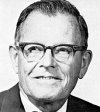
- tay'loris: named for botanist Thomas Mayne Cunninghame Taylor (1904-1983), author of The Sedge Family, The Pea
 |
|
Family of British Columbia, Pacific Northwest Ferns and their Allies, The Rose Family of British Columbia, The Lily Family of British Columbia, and The Ferns and Fern-Allies of British Columbia. He was a contributor to the University of British Columbia herbarium, and was a major contributor to the knowledge of the flora of Canada, especially of British Columbia. He was born in Pretoria, South Africa, and came to Canada at an early age where his father managed a large fruit orchard. He graduated from the University of British Columbia in 1926 and pursued graduate studies at the |
Universities of Wisconsin and Toronto, receiving the degree of doctor of philosophy in botany from the University of Toronto in 1930. He taught at the botany department there for nearly 20 years, then returned to the University of British Columbia as a professor of botany, eventually becoming head of the department and retiring in 1968. He traveled extensively both in North America and abroad including three trips, one lasting ten weeks, to Japan where he studied the art and philosophy of Japanese gardening. He retired to Victoria where he developed a garden of rhododendrons and unusual trees and shrubs. (Photo credit: Virginia Tech University Libraries)
- tazet'ta: apparently an Italian vernacular name derived from tazza, "a
small cup," referring to the form of the corona, which is a petal-like
or crown-like structure between the petals and stamens in some flowers.
- Teco'ma: abbreviated from the Nahautl name tecomaxochitl which was applied by the indigenous peoples of Mexico to plants with tubular flowers. The genus Tecoma was published by Antoine Laurent de Jussieu in 1789.
- Tecomar'ia: takes its name from Tecoma, a
genus which it closely resembles. The genus Tecomaria was published by Édouard Spach in 1840.
- tecopen'se/tecopen'sis: named for Tecopa, a hot springs community southeast
of Death Valley National Park. Chloropyron tecopense and Cordylanthus tecopensis are taxa in California.
- tector'um: relating to the roofs of houses,
this was a name used by Linnaeus for various Swedish plants that grew
on thatched roofs. JSTOR says "The species name, tectorum, was derived from the Latin tector, which means "one who overlays," and tectum, which means 'roof," and the Missouri Botanical Garden's A Grammatical Dictionary of Botanical Latin says " 'of roofs,' gen. pl. of tectum,-i, roof, as of houses."
- Teesdal'ia: named for Robert Teesdale (1740-1804), an English botanist, seedsman
and horticulturist from Yorkshire. He was a friend of James Edward Smith, and contributed to Smith and Sowerby's English Botany, a major publication of British plants comprising a 36-volume set, issued in 267 monthly parts over 23 years from 1791 to 1814. He also put out Catalog of the More Rare Plants in the Neighborhood of Castle Howard. He was a founder member (1788) of the Linnean Society and gardener to the Earl of Carlisle at Yorkshire. The genus Teesdalia was published in 1812 by William Townsend Aiton.
- tegelberg'ii: named for Gilbert Harold Tegelberg (1896-1983), an American horticulturist. He was born in Iowa, was married in Los Angeles, and died in San Bernardino. He was a fellow of and held several positions for the Cactus and Succulent Society of America, such as librarian and vice-president.
- tegetario'ides: like tegetarius. This taxon is similar to Astragalus kentrophyta var. tegetarius.
- tegetar'ius: from the Latin tegetarius, "a mat maker,"
from teges or tegetis, "a covering, mat."
- tehamen'se: of or from Tehama County in northern California north
of Sacramento.
- Telli'ma: anagram of Mitella. The genus Tellima was published by Robert Brown in 1823.
- telmatei'a: of or referring to wet meadows
or pools, from the Greek telma or telmatos, "swamp or pond."
- tembloren'se: same as next entry.
- temblorien'sis: named for the Temblor Range in south-central California
bordering on the San Joaquin Valley and the Carrizo Plain.
- templeton'ii: named for John Templeton (1766-1825), an early Irish naturalist and botanist often referred to as the 'Father of Irish Botany.' He was born in Belfast in 1766. His father was a Belfast merchant. He married Katherine Johnson of Seymour Hill, on the outskirts of Belfast, who was also the child of a Belfast merchant, in 1799. The union of the two merchant families provided sufficient funds for the young Templeton to pursue his interests in natural history. He was educated at a private school and began studying botany after his father’s death. In 1794 he made the acquaintance of a botany professor, Thomas Martyn, at Cambridge. He also came to know the zoologist George Shaw and the cryptogamist James Dickson, and was selected as an associate of the Linnean Society. On a subsequent visit to London he was introduced to Dr. (afterwards Sir) J. E. Smith, Dr. Samuel Goodenough, Aylmer Bourke Lambert, James Sowerby, William Curtis, Robert Brown, and Sir Joseph Banks. He declined Banks' offer to underwrite a trip for him to visit Australia. His interest in natural history was not limited to botany and he also studied birds extensively, and chemistry as it applied to agriculture and horticulture, meteorology and phenology. He contributed monthly reports on natural history and meteorology to the Belfast Magazine which was begun in 1808, and was promoted to a position at the Belfast Botanic Garden in 1809. He was an early member of the Belfast Society for Promoting Knowledge, and when the Belfast Natural History Society was established in 1821, he was chosen its first honorary member. Though he visited Scotland and Wicklow, Templeton lived mainly in Ulster, and never visited the south or west of Ireland. He also contributed papers to the 'Transactions' of the Linnean Society on the migrations of birds and on soils, and to those of the Geological Society in 1821 on peat-bogs. Several volumes of his manuscript Flora Hibernica, sadly never finished, with colored drawings, are preserved in the Ulster Museum in Belfast. Robert Brown dedicated to him the Australian leguminous genus Templetonia. From 1806 to 1825 he kept a detailed journal which is now in the Ulster Museum. Wikipedia provides the following: “Influenced by the French Revolution, which many saw as lighting a beacon of enlightenment before the counter-revolutionary Civil War and the ensuing ‘Terror,’ Templeton was an early member of the organization called United Irishmen. At once a fervent advocate of Irish independence from the United Kingdom he changed the name of the family home to 'Cranmore' (Irish: crann mór; 'big tree') from its original ‘Orange Grove.’ Disillusionment came with the murders of a number of Protestants at Wexford bridge and the rise of sectarian Irish nationalism, though he remained a strenuous and enlightened advocate of civil and religious liberty. Never of strong constitution, he was not expected to survive, he was in failing health from 1815 and died in 1825 aged only 60.” He supported many Belfast societies, such as Belfast Literary Society and Belfast Natural History Society, which became the Belfast Natural History and Philosophical Society in 1842, and was a founder, with other far-sighted Belfast men, of the Royal Belfast Academical Institution. His son was the naturalist, artist and entomologist Robert Templeton.
- temulen'ta/temulen'tum: from the Latin temulus for "drunken, nodding, top-heavy."
- ten'ax: gripping, tenacious or sticky in one sense, and firm, persistant
or stubborn in another, from teneo or tenere, "to
hold."
- tenebro'sa: growing in shady places, from the Latin tenebrae, meaning “darkness.”
- tenel'la/tenel'lum/tenel'lus:
from the Latin tener meaning "quite delicate, dainty."
- te'ner/tener'um: slender, tender, soft, delicate, youthful.
- tene'rrima/tener'rimus: very slender.
- ten'ue: see tenuis.
- tenui-: prefix indicating the characteristic of being slender.
- tenuicau'lis: with fine stems.
- tenuiflor'a/tenuiflor'us: with fine or delicate
flowers.
- tenuifo'lia/tenuifo'lius: with finely-divided,
slender leaves, from Latin tenuis, “thin,” and folium, “leaf.”
- tenuilo'ba/tenuiloba'tum: with finely-divided or slender lobes.
- tenu'ipes: with a slender stalk.
- tenu'is/tenuis'sima/tenuis'simus: slender.
- tenuisec'ta/tenuisec'tum: thinly or narrowly cut.
- tenuitu'ba: from the Latin tuba, "a trumpet" and
the prefix tenui- which means "slender or narrow,"
referring to the flowers.
- tephro'des: ashen-colored, from the Greek tephros for "ash-colored" in reference to the leaves. Tephroite is a rare semi-precious gemstone named for its ashy-gray color.
- terebinthifo'lia: terebinthinaceus means "pertaining in some way to
turpentine," and turpentine (at least the Chian variety) derives from
the turpentine tree, Pistacia terebinthus, a member of the
sumac family and a native of the Mediterranean region, specifically
but perhaps not limited to the island of Chios. So terebinthifolius probably means "having leaves like the turpentine tree."
- terebinth'inus: resembling or appearing like turpentine.
- te'res: cylindrical, circular in cross-section, from Latin teres, "rounded, smooth, well-turned."
- tereticor'nis: with terete or cylindrical horns.
- teretifo'lia/teretifo'lium/teretifo'lius: terete-leaved, that is, with leaves that
are smooth and cylindrical, usually circular in cross-section, from the Latin teres, "smooth or tapering."
- terna'ta/terna'tum: with parts in groups of
three, referring often to the leaflets.
- terna'tea: of the island of Ternate in the Moluccas.
- tern'ipes: from the Latin terni, "three," and the
suffix -pes, referring to the stalk, or foot of something, hence,
"three-stalked."
- terraci'na: uncertain meaning, but possibly
having something to do with terraces (?), but more likely a reference to Tarracina or Terracina,
a seaside resort town in the province of Latina between Rome and Naples, which perhaps makes
more sense since this species is originally from the Mediterranean. Known in mythology as the place where Ulysses met up with the enchantress Circe.
- terres'tris: from Latin terra meaning "earth, on land," and -estris, "belonging to," thus of the ground, growing on the ground as opposed to growing on trees or in water.
- tescam'nis: I was contacted by Diana Hurlbut at the New York State Museum where the author of this taxon was a curator to the effect that the protologue for this species in Rhodora states that "the specific epithet is derived from tesca, 'desert,' [or wilderness, wastelands] and amnis, 'swift-flowing river,' in allusion to the species’ typical habitat along arid-region streams." According to Bill Jennings, one of the authors, "Most specimens are from lower elevations near rivers, in the Intermountain Region."And thanks to both of them for this information.
- teso'ta: corruption of the Spanish tieso meaning "stiff or firm". Tesota is a southwestern Native American
name for this tree, Olneya tesota, the desert ironwood.
- Tessar'ia: named for Lodovico Tessari, 18th century Italian doctor and professor of botany in Ancona, author of Materia Medica Contracta, Synonyma, Natalia, Pharmaceutica, Qualitates, Principia, Praeparata, Vires, Usus Communes, Usus Praecipuos, Composita published in 1762. The genus Tessaria was published by Hipólito Ruiz López and José Antonio Pavón in 1794.
- tessella'ta: tessellate or checkered, patterned
like a mosaic, in allusion to the arrangement of warts on the back
of the nutlets, from Late Latin tessellatus, "made of small square stones or tiles."
- testicula'tus: like testicles, from Late Latin testiculatus, "shaped like a testicle; having testicles.".
- Tetracoc'cus: "four seeds," from
the Greek tetra, "four," and kokkos, "a
kernel, grain, or berry," (from Edmund Jaeger's A Source-Book
of Biological names and Terms) because of the four-lobed or four-seeded
ovary in the original species, T. dioicus. My original
information followed Philip Munz, who used the word kakkos for "fruit," but I have been kindly informed by Dr. Stavros
Kakkos of my mistake, and in checking other sources find the proper
word source to have been kokkos. Thank you, Dr. Kakkos.
The genus Tetracoccus was published by Georg Engelmann in 1885.
- Tetrady'mia: from the Greek tetra,
"four," and dymos, "together," from the
four-flowered heads of the first known species of this genus. The genus Tetradymia was published by Augustin Pyramus de Candolle in 1837.
- tetrago'na: probably the same as the next entry.
- Tetrago'nia: four-angled, in reference to the shape of the fruit. The genus Tetragonia was published by Carl Linnaeus in 1753.
- tetragonio'ides: like genus Tetragonia.
- tet'rahit: the Missouri Plants website suggests that this means "four-parted."
The name Tetrahit was apparently used as a generic name by
French physician and botanist Matthias de l'Obel (1538-1616). The taxon in California with this specific epithet is Galeopsis tetrahit, and the only thing having to do with four is the four nutlets and the four stamens. Gledhill says tetrahit means "four times," of unknown application, but
I have no further information on its derivation or meaning.
- tetramer'a/tetramer'es: from tetras, "four," and meris, "part," thus meaning "with four parts.
- tetrancis'tra: from the Greek tetra, "four," and ankistron, "fish-hook,"
thus meaning four fish-hooks for the 3- to 4-hooked central spines.
- tetran'dra: from the Greek tetra, tetras, "four" and aner, andros,
"man, male, stamen."
- Tetraneur'is: from the Greek tetras, "four," and neuron, "nerve," alluding to venation of ray floret corollas. The genus Tetraneuris was published by Edward Greene in 1898.
- tetraphyl'lum: four-leaved.
- tetrap'tera: four-winged.
- Tetrap'teron: Greek for "four-winged," and according to FNA alluding to the fruit appearance. The genus Tetrapteron was published by Warren Lambert Wagner and Peter C. Hoch in 2007.
- tetrasper'ma: four-seeded.
- Teu'crium: there seems to some confusion about this name,
although most of the confusion may be on my part alone. The Jepson
Manual simply says an ancient Greek name. The Botanary website says
"Named for Teucer, a Trojan king who used the plant as a medicine;
or possibly for Dr. Teucer, a botanist and physician." Stearn's Dictionary of Plant Names says: "Possibly named for Teucer,
first king of Troy." The Columbia Encyclopedia gives two alternate
meanings: "1. Ancestor and king of the Trojans, who are also called
the Teucri. He was the father-in-law of Dardanus. or 2. Son of Telamon
and Hesione. He was the greatest archer in the Trojan War and a faithful
comrade of his half brother, the Telamonian Ajax. When he returned
home he was banished by his father, who mistakenly thought that Teucer
was responsible for the death of Ajax. Teucer went to Cyprus, where
he founded the town of Salamis and ruled as king." Umberto Quattrocchi
states: "From the Greek teukrion, possibly for Teucer
(Teukros), the founder of the town of Salamis in Cyprus." Encyclopedia
Mythica says: "Teucer was the son of the river Scamander and
the nymph Idaea, and was the legendary ancestor of the Trojans; hence
the Trojans are often called 'Teucrians.' He should not be confused
with the Teucer who was the son of Telamon and the brother of Ajax,
and who fought against Troy during the Trojan War." And Wikipedia
states that Teucer was "The son of Hesione and Telamon, Teucer
fought with his half-brother, Ajax the Great, in the Trojan War and
is the legendary founder of the city Salamis on Cyprus." Wikipedia also states that: "The name Teucrium was used by Pedanius Dioscorides for several species in this genus, and is believed to refer to King Teucer of Troy who used the plant in his medicine." It appears
that there were two separate figures, Teucrus, who was the ancestor
of the Trojans, and the Greek Teucer who fought in the Trojan War
and founded Salamis. However, another website stated that the Teucer
who was the founder ancestor of the Trojans also fought in the Trojan
War against the Greeks, and I don't see how that would have been possible.
As to which of these figures is honored by the name Teucrium,
Pliny wrote that Teucer discovered Teucrium during the same
period in which Achilles discovered Achillea, so he would be
refering to the one who fought in the Trojan War. The genus Teucrium was published by Carl Linnaeus in 1753.
- tevis'ii: named for Lloyd Pacheco Tevis (1890-1963), born in San Francisco, California. His two grandparents were the famous pioneer, banker, capitalist and 20-year president of Wells Fargo Lloyd Tevis, and the early governor of California and minister to Central America Romualdo Pacheco. Lloyd Pacheco Tevis was encouraged as a young man to collect wildflowers in the Lake Tahoe region. His son was Lloyd Pacheco Tevis, Jr., died 2002, biologist, author, horseman, hiker, and gardener, co-author with Tracey Storer of California Grizzly, still considered the authoritative text on this extinct mammal, and a founder of the City of Rancho Mirage and the Living Desert Reserve in Palm Desert. He died in Monterey County.
- texa'na/texa'num/texa'nus: of or from, or somehow relating
to, Texas.
- texen'sis: same as previous entry.
- tex'tilis: from the Latin textilis,
"woven or braided." The taxon in California with this epithet is Juncus textilis.
- thacher'iae/thacheria'num: named for Olive Day Thacher
(1891-1971), member of the California Botanical Society, recipient
in 1915 of a BS in botany from the University of California, and daughter
of Sherman Day Thacher who in 1889 founded the Thacher School in Ojai,
which was then known as the School for Out-of-Door Life and Study. She collected Ribes thacherianum on Santa Cruz Island in 1921.
- thalia'na: named for Johann Thal (1542-1583), a German physician and botanist. He was born in Erfurt, Thuringia in central Germany, the son of a Protestant pastor. He was first schooled in Erfurt then went to the monastery school at Ilfeld (1558-1561), a then famous school under the direction of Michael Neander, a man Thal worshipped as a second father after the early death of his own father. Soon after entering that school, he had become enamored of botany and the natural world and had determined 72 grass species in the surrounding area and created his own herbarium. He then studied medicine at the University of Jena beginning in 1561 and practiced his profession in Stendal and then in Stolberg as a doctor in the city (1572), Whether he actually received any kind of medical degree is unclear. He worked for five years producing a compilation of the plants of the Harz Mountains and northern Thuringia region. While authors who preceded Thal had limited themselves to medicinally active plants, Thal's work was unique because it included all occurring plants. He first discovered what came to be called Arabidopsis thaliana in the Harz Mountains. He originally called it Pilosella siliquosa, and it went through several name changes before finally being named in his honor in 1842. This species has turned out to be an incredibly significant and important model organism in developmental biology. In 1583 Thal had a carriage accident and fractured his lower leg, dying as a result of his severe injuries three weeks later. His work Sylvia Hercynia was published posthumously in 1588.
- thalictro'ides: like genus Thalictrum.
- Thalic'trum: from thaliktron, a name
used to describe meadow-rue, a plant with divided leaves, and a name given to
the genus by Dioscorides, the Greek physician and pharmacologist who
wrote the Materia Medica, which remained the leading pharmacological
text for sixteen centuries. The genus Thalictrum was published by Carl Linnaes in 1753.
- Thamnos'ma: from the Greek thamnos, "a bush," and osme, "scent," thus "odorous
bush or shrub." The genus Thamnosma was published by John Torrey and John Charles Frémont in 1845.
- -tham'nus: a shrub.
- thap'sus: Nikander, Theocritus and Theophrastus wrote about thapsus, a plant from Thapsos or Thapsus, Sicily, where mullein was gathered in ancient times and where it is still very common. The root was used to produce a yellow dye. There was also a Tunisian port called Thapsus, near modern-day Bakalta, sometimes referred to as Thapsus Minor to distinguish it from the Thapsus in Sicily. Numerous sources refer to both the Sicilian Thapsus and the Tunisian Thapsus as islands, which of course is not correct. Many common names have been applied to Verbascum thapsus including adam's flannel, aaron's rod, beggar's blanket, beggar's stalk, big taper, blanket herb, bullock's lungwort, candlewick plant, clot, clown's lungwort, common mullein, cuddy's lungs, duffle, feltwort, flannel mullein, flannel plant, flannel leaf, fluffweed, golden rod, hare's beard, hag's taper, jacob's staff, jupiter's staff, white mullein, mullein dock, old man's flannel, our lady's flannel, peter's staff, rag paper, shepherd's staff, shepherd's clubs, torches, velvet dock, velvet plant, woollen and wild ice leaf. The name Verbascum thapsus was published by Linnaeus in 1753.
- tharp'ii: named for Benjamin Carroll Tharp (1885-1964), an American botanist and teacher. The Handbook of Texas
 |
|
from the Texas State Historical Association provides the following information: “Benjamin Carroll Tharp, botanist and teacher, was born in Pankey, Grimes County, Texas, on November 16, 1885, the son of Edwin Harris and Angelina Victoria (McJunkin) Tharp. He enrolled in Sam Houston Normal Institute in 1908 and graduated in 1910. He entered the University of Texas in 1911 and received a BA degree in 1914 and an MA degree in 1915. He was plant pathologist at the Texas Department of Agriculture from 1915 to 1917 and associate professor of biology at Sam Houston from 1917 to |
1919, when he joined the University of Texas faculty as an instructor in botany. His work on the ecological survey in 1921, concerning the age of trees along the Red River, contributed to the settlement of the Texas-Oklahoma boundary dispute. Tharp received a PhD degree in 1925 from the University of Texas and in that year was named an associate professor; he was a full professor from 1933 until his retirement in 1956, at which time he was named professor emeritus. He was also assistant dean of the College of Arts and Sciences from 1928 to 1934. Tharp's approach to Texas vegetation was essentially that of a naturalist, and he probably knew the vegetation of the state better than anyone in his own time. He was director of the University of Texas Herbarium from 1943 until 1956, and his studies and collection of the Texas flora resulted in publications that strongly influenced such writers as Roy Bedichek, J. Frank Dobie, and Walter P. Webb. Tharp's first comprehensive treatment of the vegetation of Texas was 'The Structure of Texas Vegetation East of the 98th Meridian,' published in the University of Texas Bulletin (1926). The Vegetation of Texas (1939) was a more comprehensive study. 'A Pollen Profile from a Texas Bog,' published jointly with J. E. Potzger of Butler University in 1947, was one of the first studies in the southern United States to determine vegetational shifts and climate changes through the use of pollen profile sequences. Tharp's last major work was Texas Range Grasses (1952). He was co-editor of Mary S. Young's 1914 journal of botanical explorations in Trans-Pecos Texas, published in the Southwestern Historical Quarterly in 1962. Tharp, who has been called the 'Father of Texas Ecology,' was a life member of the Texas Academy of Science and a member of other state and national societies. He was a Democrat, a Mason, and a deacon of the University Baptist Church in Austin. He married Norris Ophelia Wallis on September 16, 1914; they had two sons. He died in Austin on November 29, 1964, and was buried in Austin Memorial Park.”
- -theca: cover, case, container.
- Thelesper'ma: from the Greek thele, "nipple," and sperma, "seed," and alluding to papillate cypselae of original species.
The genus Thelesperma was published by Christian Friedrich Lessing in 1831.
- Thelypo'dium: from the Greek thelys, "female," and pus, "foot," from the presence of the stipe or stalk
above the receptacle. The genus Thelypodium was published by Stephan Friedrich Ladislaus Endlicher in 1839.
- Thelyp'teris: from the Greek thelys, "female," and pteris, "fern." No one seems to explain the female part of the name, although one site said it alludes to this plant's common name of 'maiden fern' although this doesn't make sense since the plant's Latin name came first, and it's more likely that the common name derived from that. The genus Thelypteris was published by Casimir Christoph Schmidel in 1763.
- theophras'ti: named for the Greek philospher and botanist Theophrastus
(371-c.287 B.C.). The following is quoted
 |
|
from a website called Theophrastus
of Eresos: "Around 320 BC the Greek philosopher Theophrastus
begins the science of botany with his books De causis plantarum/The
Causes of Plants and De historia plantarum/The History of Plants.
In them he classifies 500 plants, develops a scientific terminology
for describing biological structures, distinguishes between the internal
organs and external tissues of plants, and gives the first clear account
of plant sexual reproduction, including how to pollinate the date
palm by hand. Theophrastus (or Theophrast or Theophrastos) |
(371 or
372 -287/286) BC, the son of Melantas, born in Eresos on Lesbos, was
a student of Aristotle and succeeded him as a director of the Lyceum
in Athens. He took over the philosophy of Aristotle in parts reshaping,
commenting, and developing it in an original way. His thinking leads
to empirism by means of observation, collection, and classification.
He was around 35 years the director of the Lyceum and he was a teacher
of up to 2,000 students. His true name was Tyrtamos of Eresos. Due
to his oratory talents he was nicknamed Euphrastos the well-spoken,
eventually to become famous as Theophrastus, divine spoken. Having
joined Plato’s Academy at the age of 17 he soon fell to Aristotle’s
spell and accompanied him, still a young man, in his self-chosen exile
on the Troad then on his home island Lesbos. He then disappeared from
the record for three or more years – during which time some believe
he traveled far, to Crete and Libya to come again at Aristotle’s
side in Stageira. From there on he never again left his master except
for his short last exile, succeeding him as the headmaster of the
peripatetic school until his death in 287, at the venerable age of
85. He is said to have been a congenial chap, sworn bachelor and gourmet,
and to have died of the sequels of the wedding party of one of his
pupils. The main innovation of Theophrastus is his attempt to find
a connection between the 'first principles' (the intelligible world,
ratio) and the perceivable objects of nature; this distinction remains
the main motive of occidental philosophy during the next two millenia
with different solutions. Theophrastus is also called 'father of botany'
and can be regarded as the founder of ecology, too. He described the
origin of plants from seeds, he carried out germination experiments,
discussed the influence of abiotic habitat factors on plants, the
ecology of domestic plants, pollination of plants with the example
of the fig, he invented a growth form terminology which is still valid
(root, shoot). He described more than 500 species and varieties of
plants from lands bordering the Atlantic and Mediterranean. He classified
plants into trees, shrubs, under shrubs, and herbs. He noted that
some flowers bear petals whereas others do not, and observed the different
relative positions of the petals and ovary. In his work on propagation
and germination, Theophrastus described the various ways in which
specific plants and trees can grow: from seeds, from roots, from pieces
torn off, from a branch or twig, or from a small piece of cleft wood." The family name Theophrastaceae was also named for him.
- Theres'ia: named for his wife Therese Auguste Weichardt Koch (1818-1886) in 1849 by German physician and botanist Karl Heinrich Emil Koch, best known for his botanical explorations in the Caucasus region, including northeast Turkey. Most of his collections have today been lost. He is also known as the first professional horticultural officer in Germany. Therese was born in Saxe-Weimar, Germany, and died in Berlin. She and her husband had two children.
- therma'le/therma'lis: of warm springs, from the Greek therme, "heat."
- thermop'ola: David Hollombe at first thought this was for Thermopolis,
Wyoming, but then found out that "the type locality [of Artemisia arbuscula ssp. thermopola] was on the
Snake River near the southern entrance to Yellowstone and the range
was originally thought of as a narrow band from Yellowstone to Salt
Lake City, all far to the west of Thermopolis, but I think there is
still a reference to hot springs, just different ones." FNA says the habitat is rocky soils of igneous origin. The common name is hot springs sagebrush.
- Thermop'sis: from the Greek thermos for a lupine and -opsis,
"like," bearing yellow lupine-like flower heads. The genus Thermopsis was published by Robert Brown in 1811.
- Thing'ia: named for Thing of the Addams Family. Mark Hershkovitz in the journal Phytoneuron published this generic name in 2019. He says: “The generic name metaphorically refers to one of the colloquial names for the type species, ‘dead man’s fingers.’ Thus, the genus is named for the literary figure, Thing, of the Addams Family cartoon, television series, and movie. ‘Thing’ is an animated but (at least in the movie) disembodied human hand. This suggests that the hand derives from a deceased human, hence possesses “dead man's fingers.” The generic/specific combination Thingia ambigua also suggests an appropriate vernacular name, ‘ambiguous thing,’ reflecting the ambiguity of the status of this species following cladistic classification of Montiaceae.” The genus Thingia was published by Mark A. Hershkovitz in 2019.
- Thlas'pi: from the Greek thlaein, "to crush," from
the flattened silicle, and the Greek name for a cress. The genus Thlaspi was published by Carl Linnaeus in 1753.
- thomas'ii: named for George Henry Thomas (1816-1870), a United States Army officer stationed at Fort Yuma about
 |
|
1850, and later as a General and Civil War hero called the Rock of Chickamauga. He was born of French Huguenot ancestry at Newsom’s Depot, Virginia, on an upper class plantation which eventually reached a size of almost 700 acres and included 24 slaves. After his father died, he and his family had to flee their home and hide in the woods during the slave uprising of Nat Turner in 1931. This episode appeared to create in him a negative view of slavery, although he continued to own slaves. Thomas was appointed to the United States Military Academy at West Point, New |
York, in 1836 by Congressman John Y. Mason, where one of his roommates was William Tecumsah Sherman. He served in the Seminole Wars in Florida and then during Mexican-American War. In 1851 he was appointed as a cavalry and artillery instructor at West Point, where he established a close professional and personal relationship with another Virginia officer, Lt. Col. Robert E. Lee. One of his students who received his recommendation for assignment to the cavalry was Jeb Stuart. Despite his southern heritage chose to side with the Union during the Civil War, in which he had a distinguished career. He had an uncomfortable relationship with General Grant which may partially explain why he did not seem to get the credit for his war service that he deserved, but he was widely regarded as the next best general to Grant and Sherman on the Union side. He had an interest in botany and plant collecting, and it was because of plants he collected near Fort Yuma that John Torrey honored him with the specific epithet thomasii. He died of a stroke in 1870.
- thompson'iae: named for Ellen Louella Powell Thompson (Mrs. Almon Harris Thompson) (1843-1911), called "Nellie," American naturalist and botanist, and an active advocate for women's suffrage. She was born in New York and was a founding member of the Women's Anthropological Society of America, Washington, DC. She was the sister of John Wesley Powell and having a degree in botany she accompanied her husband, Almon Harris Thompson, on an expedition through the Escalante Wilderness in 1872. Thompson had been appointed by Powell to lead the expedition after he left to return to Salt Lake City to visit his wife and new child. They charted the course of the Escalante River which was the last named river in the United States. At one point the expedition climbed a pass between two peaks: Mt. Ellen and Mt. Pennell. "Prof" Thompson named Mt. Ellen after his wife, "Nellie." She was the first person to do botanical studies in the region. On his expedition of the year before, Powell had named one of his boats the Nellie Powell. Another brother was William P Powell, superintendent of Washington, DC public schools. She attended Wheaton College in Wheaton, Illinois, in the mid-1850s and taught school from the age of 16. In 1862 she was married to professor, topographer, explorer, geologist, geographer and Civil War veteran Almon Harris Thompson, who was a colleague and friend of her brother John. Ellen Thompson accompanied her husband on expeditions to map the western United States. During this period, she made friends with members of a number of indian tribes, learning the language of the "Pah Utes" and studying their customs. When her husband entered the Army, she took her husband's position as superintendent of schools, and spent one summer caring for the sick and wounded soldiers. She had at least five taxa named for her.
- thompsonia'nus/thompson'ii: named for John William Thompson (1890-1976), a teacher and botanist. He was born in Dexter, Missouri, and was raised by his grandparents on a farm. He had no formal schooling, and taught himself to read from old almanacs. Moving to Oregon at the age of 15, he worked in a mill, then entered grammar school two years later, completing his courses in two years. He then took the teachers’ examination which he passed successfully. At 34 he enrolled at Willamette University and received a masters degree in botany. He first taught in several Oregon and Washington communities, and then began teaching in Seattle in 1928. He taught botany and biology at Cleveland, Ballard and Lincoln High Schools until he was forced to retire in the early 1950s due to a heart ailment. His next career was the creation of color slides of natural history subjects for classroom use, and he eventually aamassed a total of around 150,000 slides that are being used in classrooms across the US and Canada. Eighteen plants have been named in his honor. He donated his private herbarium to the University of Washington botany department and served as assistant curator there for 17 years. He died in Renton, Washington. (Iris thompsonii)
- thompson'ii: named for Dr. David Malcolm Thompson (1957- ), a botanist, author of Systematics of Antirrhinum (Scrophulariaceae) in the New World, and expert on Mimulus. He received a bachelor’s degree in forest engineering from Ohio State University in 1965. He was at Rancho Santa Ana Botanic Garden and he prepared the treatment for Mimulus for the Jepson Manual. He was awarded a PhD from the University of California at Berkeley in 1986. (Antirrhinum thompsonii, Diplacus thompsonii)
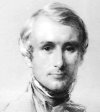
- thomson'ii: named for Thomas Thomson (1817-1878), a Scottish physician and botanist. He was born in Glasgow and
 |
|
his father was a chemistry professor at Glasgow University. Thomas was educated at the high school and then at the University. When only seventeen he discovered and described the celebrated beds of fossil mollusca on the Firth of Clyde. He intended originally to make a career of chemistry, but after entering medical classes at university he concentrated his attention on botany under William Jackson Hooker. I include here a section of the entry in the Dictionary of National Biography about his career because it is summarized and described better than I could: “After graduating MD at Glas- |
gow University in 1839 he entered the service of the East India Company as assistant surgeon, and on his arrival in Calcutta early in 1840 was appointed to the curatorship of the museum of the Asiatic Society. He had begun the arrangement of their collection of minerals when in August he was sent to Afghanistan in charge of a party of European recruits. He reached Kabul in June 1841, and proceeded to Ghuznee, where he was attached to the 27th native infantry. He was besieged in Ghuznee during the winter, and was made a prisoner when the place fell in March, 1842. He was destined to be sold into slavery in Bokhara, but, with some fellow-prisoners, succeeded in bribing his captors to convey him to the British army of relief. Before he was closely beleaguered he had been employed in making a study of the geology and botany of the district. He returned to India without his collections and personal effects, and was stationed with his regiment at Moradabad till 1845, when he joined the army of the Indus and served through the Sutlej campaign, after which he returned to Moradabad and was stationed at Lahore and Ferozepur. During this period he was engaged in investigating the botany of the plains and outer Himalayas. In August 1847 he was appointed one of the commissioners for defining the boundary between Kashmir and Chinese Tibet, and reached Léh in October. He made extensive journeys in the Kashmir territories, going as far north as the Karakoran Pass, and obtaining most important geographical information, besides valuable collections. After his return to India he took furlough at Simla, where he finished his report and made further botanical researches. At the end of 1849 he joined his friend Dr. (now Sir) Joseph Dalton Hooker in Darjeeling, and, in lieu of going to England, spent 1850 in traveling with him in the Sikkim forests, the Khasi hills, Cachar, Chittagong, and the Sunderbunds, finally returning to England in very broken health in March 1851. The next few years were spent at Kew, working at the collections obtained during these travels. In the mistaken belief that assistance would be given by the company, he brought out, in conjunction with Hooker, at his own expense, and issued at cost price, the first volume of a work entitled Flora Indica, London, 1855, in 8 volumes, but the sole support he obtained from the company was the offer to purchase some copies. In 1854 Thomson succeeded Dr. Falconer as superintendent of the botanical garden at Calcutta. He was also appointed professor of botany at the Calcutta medical college, and held the two posts till 1861, when he retired and returned to England in ill health. He resided first at Kew and then at Maidstone. In 1871 he went again to India as secretary to the expedition fitted out to observe the eclipse of the sun on 12 December of that year. He died on 18 April 1878. He married, in 1854, Catharine, daughter of R. C. Sconce, esq., of Malta. Thomson was elected a fellow of the Linnean Society in 1852, of the Royal Geographical Society in 1854, and of the Royal Society in 1855. He was for twelve years an examiner in natural science for the medical services of the army and navy, and on several occasions examiner in botany for the University of London and the South Kensington School of Science.” (Photo credit: John Grimshaw's Garden Diary)
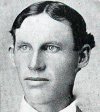
- thorn'beri: named for John James Thornber (1872-1962), a professor of biology/botany at the University of Arizona
 |
|
College of Agriculture for 45 years who did some of the earliest research on native grasses and cacti. He was born in Rantoul, Champaign County, Illinois, and took undergraduate studies in 1895 at South Dakota Agricultural College in Brookings. He received a bachelor of science degree in botany in 1897 from the University of Nebraska at Lincoln, and a master of arts degree in botany in 1901 from the same institution. He was one-time head of the School of Agriculture and botanist for the Agricultural Experiment Station for 41 years. Even after his partial retirement in 1942, he re- |
mained an active and influential scholar until his death in 1962. The University of Arizona Herbarium has a detailed on-line history that includes much material on Thornber, who contributed some 10,000 records to its collections. Thornber was influential in the study of rangeland restoration, grasses, and cacti. He was visiting scholar, Smithsonian Institution and Asa Gray Herbarium, Harvard University, 1911-1912. He was the author of The Fantastic Clan: The Cactus Family, Field Book of Western Wild Flowers, and Native cacti as emergency forage plants. He was honored with the generic name Thornbera. He died in Tucson. (Photo credit: Find-a-Grave)
- thorne'ae: named for teacher and botanist Kaye Hugie Thorne (Mrs. James Meyers Thorne) (1939-2004). She
 |
|
graduated from Utah State University and taught elementary school in Walnut Creek, California. She was married and the family moved to Provo in 1966 where her husband taught chemistry at Brigham Young University. She had two children and when they were in school she obtained a master's degree in botany and was hired as the assistant curator of plants at the BYU Herbarium. She took numerous field trips collecting plant specimens for use in teaching and research at BYU and elsewhere. She was especially talented in drawing plants in pen and ink, and her scientific books and |
botanical journals. Her excitement about wild plants was infectious, and she lead numerous nature walks for non-scientists. She also ran the Colorado River to train boating guides in the plants of the area. Her husband, James Meyers Thorne, received a PhD in physical chemistry at UCLA, and spent his professional career as a professor of chemistry at Brigham Young University. Kaye Hugie Thorne died after a long struggle with Alzheimer's disease.
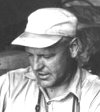
- thorn'ei: named for Robert Folger Thorne (1920-2015), "Bob" to
his friends, a professor of botany emeritus at
 |
|
Claremont Graduate University and Rancho Santa Ana Botanical Garden, botanist and authority on angiosperm evolution, and former president of Southern California Botanists. The following is quoted from the April/May newsletter of the Orange
County Chapter CNPS: "He is retired from his position as curator
and taxonomist at the Rancho Santa Ana Botanic Garden, although he
continues to conduct research. He is a member of the San Diego chapter
of CNPS. He continues also as an active member of Southern California
Botanists, where he served previously as member of the |
board, vice-president, and president. As a young man - he is now 84 - he served as
a B-24 bomber navigator in World War II. During a mission over Austria,
his plane was badly shot up. Despite the fact that the plane was riddled
with flak, causing a fire in one engine, the crew managed to parachute
over the only partisan-held island (Vis) in the Dalmatian chain, now
part of Croatia. (Had he landed on any other island, he and his crewmates
would have been prisoners of war). But Dr. Thorne’s military
career did not end at that point - after the crew was returned to Italy
he flew 29 more missions. Dr. Thorne became hooked on botany when
he took required science courses at Dartmouth College. Abandoning
plans to become a linguist, he went on to earn an MS in 1942 and
a PhD in 1949 from Cornell University. After graduation, he spent
thirteen years at the University of Iowa, as an assistant, associate,
then full professor. He became friends with Peter Raven (another giant
in the field) during a five-month stint as a researcher at the Royal
Botanic Gardens at Kew and the British Museum of Natural History in
London. Dr. Raven was then the curator at Rancho Santa Ana, and the
Garden accepted his recommendation to appoint Dr. Thorne as his successor
when the former moved on to Stanford. During his tenure there (from
1962 to 1987), Dr. Thorne was also professor of botany at Claremont
Graduate School, now Claremont Graduate University. At that time,
famed cactologist Lyman Benson was curator of the herbarium at Pomona
College. When Dr. Benson retired, the Pomona College collection was
donated to Rancho Santa Ana, and Dr. Thorne became curator of the
combined collection. Before and during those years, Dr. Thorne traveled
extensively while collecting specimens for herbaria. He spent 1½
years in Australia as a Fulbright researcher studying primitive angiosperms
in the rain forests of the region, including New Caledonia, New Guinea,
and Tasmania. Based on his travels in Mexico, he has prepared a flora
of the high country of the Sierra San Pedro Martir and is working
on a flora of the California floristic region of northwestern Baja
California. His California publications include the Flora of the
Santa Ana Mountains and the Flora of the Santa Rosa Plateau (both with Earl Lathrop), the Flora of the Higher Ranges of the
Eastern Mojave (with Jim Henrickson and Barry Prigge) and the Flora of Santa Catalina Island. His numerous other works include
two chapters written for the voluminous Terrestrial Vegetation
of California, treatments of aquatic monocots in the Jepson Manual
and many papers on biogeography, vernal pools, other plant communities
of California as well as floras of areas in New York, Iowa, Virginia,
Georgia, and Florida. Among other awards and honors and memberships
Dr. Thorne has received is the Asa Gray Award from the American Society
of Plant Taxonomists. He received two Fulbright scholarships and a
National Science Foundation senior postdoctoral fellowship while at
the University of Iowa. He has been a fellow of the Linnaean Society
of London and was honored with foreign membership in the Royal Society
of Denmark." He died March 24, 2015, at Claremont, California, at the age of 94.
- Thorneochlo'a: see previous entry. The genus Thorneochloa was published in 2019 by Konstantin Romaschenko, Paul M. Peterson, and Robert John Soreng.
- thuillier'i: named for Jean Louis Thuillier (1757-1822), a French botanist, bryologist and gardener. He was born in Creil, only received a basic education, and began working as a gardener at the Jardin des plantes in Paris. He spent most of his life at Charlemagne College, and was often solicited by botanists like Louis Marie Claude Richard and Bernard de Jussieu to accompany them on their botanical excursions. He sold collections to people such as Benjamin Delessert. In 1790 he published Flora of the environs of Paris, or Methodical distribution of the plants which grow there naturally, executed according to the system of Linnaeus, in which the descriptions of the plants were provided by other botanists. He died in Paris.
- Thu'ja: from the Greek name thuia or thyia, for a kind
of juniper or other resinous tree. The genus Thuja was published by Carl Linnaeus in 1753.
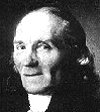
- thunbergia'na: named for Carl Peter Thunberg (1743-1828), the ‘Father of South African botany.’ Stearn’s Dictionary
 |
|
says he was a "...Swedish botanist, a student of Linnaeus who was pursuaded by Dutch lovers of new plants to enter the service of the Dutch East India Company as a doctor and send back plants from Japan to Europe. He traveled in South Africa and Japan and became professor of botany at Uppsala." He was born in Jönköping, Sweden, and attended Uppsala University where he was one of the students of Carl Linnaeus and graduated in 1767. Linnaeus encouraged him in 1770 to travel to Paris, Amsterdam and Leiden to deepen his knowledge of botany, medicine and natural history. |
Linnaeus’ Swedish pupil Johannes Burman convinced Thunberg to travel to the Indies to collect plants for the Leiden botanical garden, which he did for the Dutch East India Company in 1771. He was also experiencing a powerful attraction to South Africa, which he reached in 1772. He was there for three years and regularly undertook field trips and journeys into the interior of South Africa, during which time he not only collected specimens of flora and fauna but also studied the culture of the native people of Western South Africa who were called the Khoikhoi. At some point he met Francis Masson, a Scots gardener who had come to Cape Town to collect plants for the Royal Gardens at Kew. While in South Africa he graduated in absentia from the University of Uppsala as doctor of medicine. In 1775 he left the Cape for Batavia and traveled on to Japan. At first restricted to a small artificial island in the bay of Nagasaki by order of the Shogun, he was gradually allowed limited access to the city, and began trading medical knowledge for botanical information and the ability to collect specimens. He taught local doctors about treating syphilis and in turn learned about acupuncture. Wikipedia goes on to say: “In both countries, Thunberg's knowledge exchange hence led to a cultural opening-up effect which too manifested itself also in the spread of universities and boarding schools which taught knowledge on the other culture. For this reason, Thunberg has been given the title of being "the most important eye witness of Tokugawa Japan in the eighteenth century." “Due to his scientific reputation, Thunberg was given the opportunity in 1776 to accompany the Dutch ambassador M. Feith to the shogun's court in Edo, today's Tokyo. During that journey, the Swede was given the chance to collect a great number of specimen of plants and animals and likewise to talk to Japanese locals in the villages they traversed on their way. It is in this time that Thunberg wrote two of his scientific masterpieces, the Flora Japonica (1784) and the Fauna Japonica (1833). The latter was completed by the German traveller Philipp Franz von Siebold who visited Japan between 1823 and 1829. Yet, von Siebold based the Fauna Japonica on Thunberg's notes which he carried with him all the time in Japan.” In November 1776 he left Japan and traveled first to Java, then to Ceylon, before returning to Europe via South Africa in 1778. He made a short trip to London to meet Sir Joseph Banks, and then upon arriving back in Sweden, was appointed in 1781 professor of medicine and natural philosophy at the University of Uppsala. He published his Flora japonica in 1784, and in 1788 he began to publish his travels. He completed his Prodromus plantarum in 1800, his Icones plantarum japonicarum in 1805, and his Flora capensis in 1813. He had been elected a member of the Royal Swedish Academy of Sciences and then in 1823 associate member of the Royal Institute of the Netherlands. He died near Uppsala in 1818. The genus Thunbergia was published in 1780 by Anders Jahan Retzius.
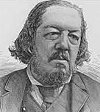
- thur'beri/thurberia'na/thurberia'num: named for Dr. George Thurber (1821-1890), called the most accomplished horti-
 |
|
culturist in America, and botanist and quartermaster of the Mexican Boundary Survey, 1850-1854. Dr. Thurber was professor of botany and horticulture at Michigan Agricultural College 1859-1863 and editor of the American Agriculturalist from 1863 until his death in 1890. He was born in Providence, Rhode Island and studied at the Union Classical and Engineering School, but did not graduate. He apprenticed with a local pharmacist and then set up in business with a partner, while at the same time giving lectures in chemistry at the Franklin Society of Providence. He was largely |
self-taught as a botanist, and like so many others was stimulated in his botanical explorations by his desire to learn about medicinal plants. In 1850 he was offered the position of botanist on the US Boundary Commission which had been tasked to survey the boundary between the United States and Mexico, and he remained with the Commission until 1854. The collections he made, including the curious Pilostyles, form the subject of Asa Gray's Plantae Novae Thurberianae. Returning to academia, he earned a graduate degree in chemistry from Brown University and was appointed, probably through the influence of Dr. John Torrey, to the United States Assay Office in New York. Wikipedia says: “He left the Assay Office in 1856 and held a succession of teaching positions at Cooper Union, the College of Pharmacy of the City of New York, and Michigan Agricultural College, before assuming the position of editor of American Agriculturist, which he occupied for 22 years. As editor, he not only wrote regular columns on botany and horticulture but was also dedicated to exposing business and professional frauds, and the many swindlers and charlatans circulating within the agricultural community. After his death, Garden and Forest magazine praised him for having elevated the standing of the American agricultural and horticulture press more than any other writer of his time. His larger publications included American Weeds and Useful Plants, the graminology of the botany of California, and the botany entries for Appleton's New American Encyclopaedia. Thurber, who suffered most of his life from a debilitating rheumatism contracted in Mexico, did not live to complete his monograph on American grasses on which he laboured for many years. He became a corresponding member of the Royal Horticultural Society of London in 1886, six years after his tour of the European continent, during which he met many leading botanists and horticulturalists. In America, he was a member of the New Jersey Horticultural Society, the Philadelphia Academy of Sciences, the New York Academy of Sciences, and the American Pomological Society, and received an honorary doctorate from the University Medical College of New York. After the death of his good friend Dr. Torrey in 1873, Thurber served as president of the Torrey Botanical Club for seven years. Two different genera of plants were given the same name in dedication to him, though neither is in current usage. Thurberia A. Gray (1855) in the Malvaceae is a synonym of Gossypium. The later homonym Thurberia Bentham (1881) in the Poaceae is an illegitimate name for Limnodea L.H. Dewey.”
- thurow'i: named for German-American amateur botanist Frederick William Thurow (1852-1930). He was born in Wartenstein, Germany, and at the age of 12 emigrated with his parents to Burlington, Wisconsin. His mother soon died, and his father departed for parts unknown, leaving young Frederick in the care of relatives for whom he had to work to earn his room and board. He had practically no formal schooling, but when he began earning wages at age 15 he spent almost everything on books to further his education, accumulating a fine library of scientific and natural history books and becoming especially proficient in botany. He left for Texas in 1876 and settled near Hockley in Waller County. He explored the surrounding country and discovered many new species. He also contacted a number of prominent botanists including John Merle Coulter, and assisted him in collecting material for his Flora of West Texas. He also provided hundreds of specimens to the US National Museum and the Field Museum in Chicago. He worked with George Vasey to study the Texas grass flora. One species that he collected in 1889 near Hockley (Harris County), Texas, Hymenoxys texana, disappeared from the Texas flora after 1904 and was not rediscovered until 1970. His collection of 1,600 Texas species comprises the bulk of the herbarium which is currently located at the Sam Houston State Teachers’ College at Huntsville. He died in Houston.
- Thymophyl'la: from the Greek thymos,
"thyme," and phyllon, "leaf," meaning "thyme-leaved."
The genus Thymophylla was published by Mariano Lagasca y Segura in 1816.
- thysanocar'phus: like platycarphus, there are two possibilities here:
(1) from Greek thusanos, "fringe," and karphos,
"a dry splinter, twig, straw," in turn from karpho,
"to dry up or wither," referring to the pappus or to the
scales of the involucre; (2) it is also possible that this is just
an alternate spelling of 'thysanocarpus' meaning "fringed fruit."
- thyrsiflor'a: with flowers in a thyrse, which according to Harris
and Harris's Plant Identification Terminology is "a compact
cylindrical or ovate panicle with an indeterminate main axis and cymose
sub-axes."
- Thysanocar'pus: from the Greek words thusanos, "fringe," and karpos, "fruit,"
hence "fringed fruit." The genus Thysanocarpus was published by William Jackson Hooker in 1830.
- Tiarel'la: from the Greek tiara or tiaras for "a tiara, turban or headdress," and the diminutive -ella, a Persian head-dress worn on great occasions, and alluding to the shape of the capsule, hence a small tiara. The genus Tiarella was published by Carl Linnaeus in 1753.
- tiburonen'sis: I think this refers to the town of Tiburon in Marin
County.
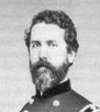
- tidball'ii: named for John Caldwell Tidball (1825-1906), a professional soldier during the Civil War and after. He was
 |
|
born near Wheeling, West Virginia, and grew up on a farm in eastern Ohio. He graduated from the United States Military Academy in 1848 and served as an artillery officer at various stations. He served in the Florida hostilities against the Seminoles, and accompanied an exploring expedition to California in 1853–1854. In 1859 he was sent on the expedition to Harper's Ferry to suppress John Brown's raid. He served throughout the war, rising toward the end to the rank of brevet Major General. He was placed in various positions of command, receiving five brevet commissions for |
gallant and meritorious conduct on the field, being complimented personally by President Abraham Lincoln for his work at the Battle of Gettysburg, and serving in most of the major campaigns in the Eastern Theater, from the First Battle of Bull Run through the siege of Petersburg. He became the 3rd Commander of the Department of Alaska (which preceded the position of governor of Alaska), and lived there for six years. He was Commandant at West Point for many years, and was Commandant at the Artillery School at Fort Monroe in Virginia, and reorganized and brought that institution to a high state of perfection. He was promoted to Colonel and served as aide-de-camp to General William T. Sherman during the latter's tenure as General-in-chief of the US Army, 1881-1884. His 1880 instruction book, Manual Of Heavy Artillery Service, served for decades as the army's guidebook to artillery strategy and operations. Tidball was appointed Brigadier General on the retired list, April 23, 1904. He retired from active service in 1889. He was married twice, first to Mary Hunt Davis with whom he had three children, and secondly to Mary Langdon Dana, with whom he had five children. He died at the age of 81 in his residence in Montclair, New Jersey, and was buried in the post cemetery at the United States Military Academy at West Point, New York. I haven't been able to find out any reason why Tidball should have been so honored, but the taxon, Opuntia tidballii, was published by John Milton Bigelow in Pacif. Railr. Rep. Parke, Bot. 4(5): 11 (1857), after one of the Pacific railroad surveys, and can only assume that he had some relationship with Tidball and may have been assisted in some way. (Find-a-Grave)
- Tidestrom'ia/tidestrom'ii: named for Swedish-American botanist Ivar Theodor Tidestrøm (1864-1956), a professor of botany at Catholic University, author of Flora of Utah and Nevada (1925) and Flora of Arizona and New Mexico (1941) with Sister Teresita Kittell. He was born in Närke, Sweden, on his father's estate "Lanna" near modern Vintrosa. Wikipedia provides this: “His father operated a lime kiln and a stone quarry on the property. Tidestrom's early schooling was in nearby Örebro. In 1880 or 1881 he ran away to America, landing in New York where his luggage was stolen. Tidestrom enlisted in the United States 8th Cavalry, serving until a hip injury forced him out in 1884, and then again from 1887 to 1891 in the United States 4th Cavalry. In 1891 Tidestrom went to the University of California, Berkeley, intending to study engineering, but after becoming an assistant to botany professor Edward Lee Greene he switched to botany. When Greene moved to the Catholic University of America in 1895, Tidestrom went with him and in 1897 earned the first PhB [Bachelor of philosophy] given out by the university, in botany. Tidestrom entered the military once more with the onset of the Spanish-American War in 1898, taking part in the Battle of San Juan Hill (not as part of the Rough Riders, although Tidestrom admired Teddy Roosevelt greatly). By 1903 Tidestrom was out of the military and had a job at the Bureau of Plant Industry under botanist Frederick Vernon Coville. From 1906 to 1910 Tidestrom self-published Elysium Marianum, an attempt at a flora of Maryland. Starting in 1915, Tidestrom became an assistant to Edward Lee Greene at the Forest Service, who was identifying species collected by rangers; after Greene's death later that year, he took over the job. In 1925 he published his best-known work, Flora of Utah and Nevada. In 1934 Tidestrom retired from government service and shortly afterwards accepted a position at the Catholic University of America, retiring from there in 1939 and afterwards moving to Florida. With his student Sister Mary Teresita Kittell he published Flora of Arizona and New Mexico in 1941. Tidestrom continued to collect specimens, his last major trip being a trip to Sweden in 1954 at the age of 90 for a family reunion, on which he collected about 300 plants with the aid of a Swedish niece to add to the 14,000 sheets which he had already added to the Smithsonian collections. Tidestrom was married twice; his first marriage ended unhappily when his wife left him for another man. His second marriage, to French widow Marie Demarest (1887-1944), was happier. Tidestrom enjoyed playing the piano and published several of his own compositions. He was an accomplished linguist who spoke Swedish, English, French, Spanish, and German, could read Latin, Danish, and Norwegian, and studied other languages as well. He was a Francophile who read extensively in French literature; after World War I he supported a French war orphan for a number of years.” He apparently also did work in Maryland and Virginia. He died in St. Augustine, Florida, and is buried in Arlington National Cemetary. The genus Tidestromia was published by Paul Carpenter Standley in 1916.
- tiehm'ii: named for amateur plant collector and
professional bellhop and limo driver Arnold Gerard Tiehm (1951- ) of Reno,
Nevada, author of Nevada Vascular Plant Types and Their
Collectors, published by the New York Botanical Garden in 1996.
Tiehm has had the rare good luck to have discovered nineteen new plants,
six of which bear his name, all found on days off in his native Nevada
"backyard." He is also the author of a biography of Per
Axel Rydberg, and according to David Hollombe, is at work on a biography
of Amos Arthur Heller.
- tilin'gii: named for Heinrich Sylvester Theodor Tiling (1818-1871), a German-Russian physician and botanist for a
 |
|
Russian-American company in Sitka who also collected plants in California and Nevada for various European botanical gardens. He was born in Latvia and studied medicine in Dorpat from 1838 to 1844. He became a physician at the Russian North American Co. in Ayan, Siberia from 1845 through 1851. He described all of the plants in the area and published an account of it with the director of the botanical gardens in St. Petersburg, Russia, Eduard August von Regel. In 1852 he and his family traveled from Ayan to Sakhalin, Kamchatka, Sitka, Hawaii, Tahiti, around Cape |
Horn through the Atlantic Ocean to Kronstadt and finally back to Riga. There he practiced for a couple of years before moving to Wenden, Lativia, where he practiced from 1854 to 1863. He resituated in 1863 to Sitka, Alaska where he was a surgeon until 1868 before moving on to San Francisco and then later to Nevada City, California. Alaska had been purchased by the US government in 1867. At some point he became an American citizen. The collection and categorization of plants, and the recording of meteorological data were clearly the two major preoccupations of his life, and he was responsible for the introduction into Europe of a number of previously unknown species. More than 20 species were named for him. He wrote about his "trip around the world" in a book whose title translates as A journey around the world from West to East through Siberia and the Pacific and Atlantic seas. He died in Nevada City, California, in 1871, and his wife died in Riga in 1876. (Photo credit: Geni)
- tillae'a: named for the Italian botanist Michael Angelo Tilli (1655-1740), a physician, professor of botany and fellow
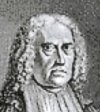 |
|
of the Royal Society of London, author of Catalogus plantarum horti Pisani (1723), and from 1685 until his death praefectus (the person in charge) of the botanical garden of the University of Pisa. He was born in Castelfiorentino, Italy, and became a doctor of medicine in 1677 at the University of Pisa. Wikipedia says: “He opened a practice in Florence and worked from 1681 as a doctor on the ship routes leading from Florence to Mallorca and Menorca. In 1683 he traveled to Constantinople and Adrianople to treat the son-in-law of Sultan Mehmed IV. During the return journey that took |
him through the Aegean Sea, he made notes on the natural history of that body of water. In 1685 he became a professor of botany at the University of Pisa and director of the botanical garden founded there by Luca Ghini. To expand the plant collection, he received many rare species from the botanical garden in Amsterdam." The genus Tillaea was published by Carl Linnaeus in 1753.
- Tillands'ia: named for Elias Tillandz (1640-1692), a Swedish-born doctor, botanist and university rector in Finland. He was born in Rogberga, Småland, Sweden under the name Tillander. He first studied at the Turku Academy, 1659-1962, then at Uppsala, 1663-1668, and Leiden University, 1668-1670, where he graduated as a doctor of medicine. As a student he traveled by boat from Turku to Stockholm and became so seasick that he returned by walking 1,000 kilometers around the Gulf of Bothnia. From this supposedly arose his name Til-Landz, ‘by land.’ One of his professors was Olof Rudbeck the senior. He was the professor of medicine at the Academy of Turku. He wrote the country's first botanical work, the Catalogus Plantarum prope Aboam observatorum nasci observatarum (Catalog of Plants Observed to Grow near Aboam), which was first published in 1673, and conducted the first autopsy in Finland. As a doctor he was very interested in the suitability of plants as herbs and prepared medicines for his patients by using his extensive knowledge of available plants. Tillandz founded Finland's first botanical garden in Turku in 1678. The genus Tillandsia was published by Carl Linnaeus in 1753.
- Tim'mia: named for Joachim Christian Timm (1734-1805), a German apothecary and botanist. The following is
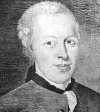 |
|
quoted from Wikipedia: “Joachim Christian Timm, the son of tobacconist Matthias Ernst Timm (1704–1779), was born in Wangerin in Farther Pomerania, Prussia (now in Poland) and attended school there. In 1749 he started a five-year apprenticeship as an apothecary, initially with Friedrich John in Wangerin, where he served for a year as an assistant. In the 1750s he was in Mecklenburg, working in Rostock. At the end of the 1750s he moved to Malchin to manage the apothecary business of Georg Heinrich Kruger and his successors. In 1760, Timm became the official |
apothecary of Malchin. In 1771 he was elected senator. In 1778 he became the second or vice-mayor of Malchin, becoming the mayor in 1790. The tradition of having more than one mayor to lead the town ended with his death. As an apothecary, he was interested in botany. He enthusiastically collected plants of all kinds, especially cryptogams, primarily in the Malchin area. In 1788 he published his work Florae megapolitanae Prodromus, which he based on the system of the Swedish botanist Linnaeus. Professor Johann Hedwig of Leipzig later named a genus of moss Timmia after him. At the instigation of the author of a monograph on Timmia, Guy Brassard, a mountain on the Arctic Ellesmere Island was named "Mount Timmia" in honor of Timm. In 1762, Timm married Anna Christine Elisabeth Witte (1743–1792), a merchant's daughter from Röbel. They had ten children, including the sons Joachim (1768–1801) and Hans Timm (1774–1852), who one after the other succeeded their father as the official apothecary in Malchin. Another son, Helmuth Timm (1782–1848), became a pastor in Groß Gievitz and later in Malchin. Joachim Christian Timm died in Malchin in 1805 and is regarded today as a pioneer of modern botany in Germany.”
The genus Timmia was published in
1791 by Johann Friedrich Gmelin.
- timor'um: a modern Latin dictionary defines timoris as "fear,
alarm, dread; a terror" and the Latin timeo means "I fear," but I don't know whether this has anything
to do with the botanical meaning here. David Hollombe says that this name is
from the Latin root timoros or timoreo meaning "to
help, lend aid, give succour" but again the application is unclear. Probably the same roots as for the English word timorous, "showing or suffering from nervousness, fear or a lack of confidence."
- tinctor'ia/tinctor'ius: from the Latin word tinctus, meaning "to dye or color," used in dyeing, and
usually used to refer to a plant that when broken or crushed exudes some kind
of stain.
- tinc'tus: colored.
- tingita'nus: of Tangiers, the ancient name of which was Tingis.
- tioga'na: the only geographical feature I know of with the name of
Tioga is Tioga Pass on the road going into Yosemite National Park
from the eastern side. There are two taxa in the California flora with this specific epithet, Carex tiogana (discovered in the Tioga Pass region on the eastern border of Yosemite), and Gentiana newberryi var. tiogana (called Tioga gentian).
- Tiqui'lia: a native South American name for
a flower of this genus. I thank San Diego County botanist Michael Simpson for sending me the following from Alfred T. Richardson, 1977, Monograph of the genus Tiquilia (Coldenia, sensu lato), Boraginaceae: Ehretioideae, Rhodora 79: 467-572.:
"Ruiz and Pavon (1799) described Lithospermum dichotomum,
which they collected in Peru, and subsequently, Persoon (1805) established the genus Tiquilia to accommodate this taxon, the generic name being derived from the vernacular name, reported by Ruiz and Pavon (1799) as "Tiquil-tiquil". It is possible that the cited vernacular name is simply a corruption of the Quechua word for flower, "t'ika" (Pers. comm., Helen Barler. April, 1975; Lira, 1973)." The genus Tiquilia was published by Christiaan Hendrik Persoon in 1805.
- ti'ti: named for Frank H. Titus (1850-1908). "Graduated from Medical
College of the Pacific, San Francisco, CA, 1876; resident physician
of St. Luke's Hospital San Francisco, 1890-92; superintendant of San Francisco City & County Hospital,
1894-95; proprietor of a San Francisco pharmacy, 1896; US Army surgeon in
the Philippines 1898-1902." (from Cantelow & Cantelow). He was born in Powellsville, Scioto, Ohio, and died in Paris, Lamar, Texas. He was married to Louise C. King in 1890, in San Francisco, and had at least one daughter. His father is listed by Family Search A dR. aRTHUR tITUS.
- tobi'ra: the Dave's Garden Botanary site says that this is from the
Japanese name for this plant, one of its common names being Japanese pittosporum. In Japan and China, where it is native, it is known as tobera and hǎitóng huā respectively. Its Japanese name, tobera, comes from "tobira no ki" which roughly translates as "door tree" because the plant gives off a foul odor when leaves or branches are cut, and so it was hung up in doorways during Setsubun (the day before the beginning of spring in the old calendar in Japan) along with the heads of sardines to drive away evil spirits.
- Tofield'ia: named for Thomas Tofield (1730-1779), a British botanist
and civil engineer, bom at Wilsic Hall near
 |
|
Wadworth (4 miles
south of Doncaster) on 18 December, 1730, the only surviving son of
Thomas Tofield (1695-1747) and his wife Elizabeth Atkinson. He attended
William Burrow's School at Chesterfield and in 1747 went up to Trinity
College, Cambridge, taking his BA in 1751. Returning to Wilsic,
he began an intensive study of the local flora. This activity brought
him into contact with William Hudson who in the late 1750s was working
on a new British flora based on the Linnean system. Tofield sent him
many specimens. In Hudson's classic Flora Anglica (1762), Tofield, |
along with John Blackstone, was singled out for special acknowledgement.
He continued to send botanical data, much of which was included in
the enlarged second edition of the Flora (1778). It appears
that botany was only his avocation, his chief interest and occupation
being as a hydrological engineer and waterways surveyor, involved
mainly with the drainage of various low grounds and the diversion
of rivers. The genus Tofieldia was published by William Hudson in 1778. (Photo credit: Geni)
- Tolmachev'ia: named for Alexandr Innokentevich Tolmachev (1903-1979), a Russian arctic-alpine botanist and phytogeographer born in St. Petersburg. His grandfather was the distinguished geologist and paleontologist Aleksandr Petrovich Karpinskiy, who was the first president of the Academy of Sciences of the USSR from 1917 to his death at 90 years of age in 1936. His father was the Russian mammoth hunter and paleobotanist, Innokenty Pablovich Tolmachoff, who immigrated to the United States in 1918. It was due to his grandfather’s influence that he received an excellent liberal education and was taught to think logically and critically. Alexandr began at an early age collecting specimens, and at the age of twelve knew many of the insects of the Ural region where his grandfather did research. He entered university at the age of 16 and chose ornithology as his specialty but already demonstarted a strong interest in botany. He became employed as an herbarium assistant at the Botanical Garden of the Academy where he fell under the influence of taxonomist Boris Alexsevic Fedchenko, and was permanently employed at the Botanical Institute of the Academy of Sciences in Leningrad in 1925, and that year he also became a member and junior secretary of the Polar Committee of the Academy, indicating his developing interest in the Arctic. A memorial to him by Áskell Löve provides the following: “In 1934 he was appointed to the directorship of the Bureau for Exploration of the Northland, which soon was reorganized as the Northern Station of the Academy in Arkangelsk to which Tolmachev then moved. There he remained to 1942, when he was transferred as the deputy president of the Tadzhik branch of the Academy, residing in the city of Dushanbe in the far south of Soviet Asia. In 1947 he took over a similar position in far eastern Asia and organized the scientific work at the Sakhalin branch of the Academy. But in 1955 he returned to Leningrad, first as a scientist in the laboratory for the vegetation of the far north in the Botanical Institute, and later, in the autumn of 1958, as professor of taxonomy of higher plants at the University of Leningrad, where he lectured on phytogeography, the phylogenetic system, and the taxonomy of higher plants. Few botanists have spent more years in arctic-alpine research than did Tolmachev, who first went into the northland with a group visiting the White Sea islands in 1920, then took part in an expedition to Novaya Zemlya and Vaigach in 1921-22, and became the second Russian botanist to stay for a winter in the Arctic during the expedition to Novaya Zemlya in 1922-23. After that he studied the Arctic and its flora on numerous expeditions to various parts of the Soviet northlands, and even visited the Canadian Arctic on an extensive field trip during the 1959 Botanical Congress. No other botanist has seen as much of the Arctic, and none has visited as many alpine areas all over Europe, Asia and North America and even in the tropics of Africa and Asia. Tolmachev's influence on the development of arctic botany in general and on arctic-alpine botanical research in the Soviet Union in particular was immense. He was the founder of a comparative floristical approach to phytgeography that affected even the Scandinavian school of ecologists, and all the many Soviet phytogeographers-taxonomists are either his personal students or have been strongly affected by his methods and interpretations. He also revised and modernized the taxonomy of numerous critical genera of plants, notably Cerastium, Draba, Eriophorum, Gastrolychnis, and Papaver, compiled three important atlases of plant areas, wrote a remarkable textbook on phytogeography, and edited and compiled several flora manuals of which the Arctic Flora USSR, still incomplete, is monumental.” He died in St. Petersburg in 1979 after several years of frail health. The genus Tolmachevia was published by Áskell Löve and Doris Benta Maria Löve in 1975.
- Tol'miea/tol'miei: named for William Fraser Tolmie (1812-1886), a Scottish physician with the Hudson Bay Company
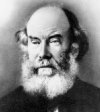 |
|
first at Fort Vancouver then elsewhere. He was born in Inverness, Scotland, and his mother died when he was only three. He was educated at Inverness Academy and Perth Grammar School. He had been interested in botany as a young child, and as so many others had, found a connection between botany and medicine. This brought him in contact with the famed botanist, William Jackson Hooker, then professor of botany at the University of Glasgow, and with Dr John Scouler, who had made a voyage to Fort Vancouver (Vancouver, Wash.) in a Hudson’s Bay Company |
supply ship in 1825. Thanks to an uncle's encouragement he took to medical studies and was at the University of Glasgow from 1829 to 1831 although he did not receive a degree and was not an MD, but instead was a licentiate of the Faculty of Physicians and Surgeons of Glasgow, a body independent of the university. In 1832, when the Hudson's Bay Company was looking for medical officers for the Columbia District of the Pacific Northwest, Tolmie signed a five-year contract to serve in the dual capacity of clerk and surgeon. He continued working for the Hudson Bay Company in one capacity or another until he retired in 1871. He was the first white man to reach the summit of Mount Rainier, now known as Tolmie Peak. He was manager of the Puget Sound Agricultural Company, the HBC's farming subsidiary. He was elected to the House of Assembly of Vancouver Island as member for Victoria in January 1860. He was re-elected in 1863, and remained a member until Vancouver Island was annexed by the mainland colony of British Columbia in 1866. He became involved in education on Vancouver island serving for several years first on the General Board of Education and then as chairman of the board. He was also a member of the Legislative Assembly of British Columbia, (1874-1878). One of his sons, Simon Fraser Tolmie, became the Prime Minister of British Columbia. The genus Tolmiea was published by John Torrey and Asa Gray in 1840. (Photo credit: Find-a-Grave)
- Tol'pis: Umberto Quattrocchi says, "Origin unknown, possibly
from the Greek tolype, 'a ball of wool, lump,' referring
to the fruiting capitula [i.e. the small flowering heads]; some
suggest from Crepis." Stearn says "Name coined by Adanson who gave no derivation," and Gledhill "An Adansonian name of uncertain derivation." FNA says "No etymology in protologue, no readily discernible meaning from Greek or Latin roots." The genus Tolpis was published by Michel Adanson in 1763. The Jepson eflora says "Greek: ball, from involucre. The Electronic Flora of Southern Australia genus Fact Sheet says "Etymology unknown; perhaps from the Greek tolype, a clew or ball of wool, from the appearance of the fruiting capitula." This is a good example of the fact that there are botanical names for which we really have no certain idea of their meaning. The genus Tolpis was published by Michel Adanson in 1763.
- tomentel'la/tomentel'lus:
with small woolly hairs, diminutive of tomentosa, the oak species
that bears this name being somewhat tomentose. The species Doellingeria tomentella is described as densely tomentose, as is Frangula californica ssp. tomentella.
- tomento'sa/tomento'sum/tomento'sus:
densely covered with matted wool or short hair, tomentose.
- tomentulo'sa: slightly tomentose.
- tompkins'ii: named for chemical engineer and photographer Philip Weber Tompkins
(1873-1972). The following is quoted from the California
Academy of Sciences: "Philip Tompkins was born in San Anselmo,
California. He graduated from the University of California in 1894.
An analytical chemist and chemical engineer, he was a founder of the
San Francisco chemical firm of Curtis and Tompkins where he continued
to work until two years before his death (on 6 December 1972 in San
Anselmo, California). An avid photographer, he explored Utah, Colorado,
and Arizona. Tompkins aided in discovering and recording the 'Lost
Valley of the Goblins' in Utah (1949). His article, 'Goblin
Valley, Recent History and Need for Protection' accompanied by
many of his photographs of the area appeared in National Parks
Magazine (October-December 1954). As an expression of appreciation
to the botany department of the California Academy of Sciences, and
a memorial to Alice Eastwood, he funded the Tompkins, Tehipite Botanical
Expedition of the Sierra Nevada, California. An account of this journey
was published in Leaflets of Western Botany by John Thomas
Howell (1958). Tompkins also assisted in the publication of A Flora
of Lassen Volcanic National Park, California (1961). Tompkins
was a California Academy of Sciences member (1930) and Academy lecturer
(1953 'Sections of South-Central Utah,' 1955 'Southern
Utah Scenes'). His extensive collection of slides, photographs,
and negatives were donated to the Academy Library (1957, 1963)."
His photographs also appeared in Mesa Land: The History and Romance
of the American Southwest by Anna Wilmarth Ickes.
- Tonel'la: derivation uncertain, but Flora of North America says: "perhaps a misspelling of Latin tenella, 'delicate,' alluding to filiform branches." The genus Tonella was published by Thomas Nuttall in 1868, and there is a taxon in California with the epithet Tonella tenella called smallflower tonella.
- Tones'tus: anagram of Stenotus. The genus Tonestus was published by Aven Nelson in 1904.
- ton'sum: sheared, smooth, possibly from the Latin tondeo, meaning "shaven, shorn, clipped, cut."
- toren'ii: named for David Roy Toren (1950- ), a botanist with the department of botany, California Academy of Sciences. He was the author of "A Moss Flora of Lake County, California" in Madroño, Vol. 2, No. 4, 2015.
- Toril'is: name used in the publication by Michel Adanson in 1763, meaning
obscure. Umberto Quattrocchi says "A meaningless name or possibly
from toreo "to bore through, to pierce," referring
to the prickled fruit.
- torqua'ta: presumably from the Latin torquatus, "adorned
with a necklace."
- Tor'reya/torreya'na/torreya'num/torreyel'la/tor'reyi: named for John Torrey
(1796-1873), a professor of chemistry and
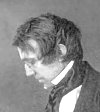 |
|
one of the giants of North American botany who described hundreds of plants brought or sent back
by such explorers as John C. Frémont, William Emory, Charles Wilkes,
Joseph Nicollet, Howard Stansbury and Charles Pickering, and sent
back east also by the Mexican Boundary Expedition and the Pacific
railroad survey expeditions, and who named many California species. Born in New York, he began observing and collecting plants while still
a youth. His father was appointed fiscal agent for the state prison
of New York when he was 15, and it was there that he met Amos Eaton, |
a pioneer in the field of natural science education. Eaton encouraged
the boy's natural inclinations in the sciences, and at the age of
21 Torrey was selected to prepare A Catalog of the Plants Growing
Within Thirty Miles of New York. A year later, he received a medical
degree and opened a practice, although he continued to spend a great
deal of his leisure time on botany. He became professor of chemistry,
mineralogy and geology, and also assistant-surgeon, at West Point
in 1824, and then chair of chemistry and botany at the College of
Physicians and Surgeons in New York three years later. At one time
he was teaching at Columbia, Princeton and West Point simultaneously.
His great contribution was not as a collector, but rather as a taxonomist,
and he was the first American to move away from the Linnean system
of plant classification. Using John Lindley's system of arranging
plants by families, he became of the first botanists to apply this
to a major work, A Compendium of the flora of the northern and
middle states. His interest in plants expanded to the Great Plains
and the western Rocky Mountains after receiving the collections of
Dr. Edwin James, botanist of the Long expedition of 1820. He was appointed
State Botanist of New York in 1836 and in 1843 published A Flora
of the State of New York. He became the mentor and lifelong friend
and colleague of Asa Gray, who came to New York as a young student
in the mid-1830s to study under the eminent Torrey and became his
chemistry lab assistant. The two men co-authored Flora of North
America, a major botanical work that was based at least in part
on the descriptions and specimens of new plants sent east by Thomas
Nuttall, but which was never completely finished during their lifetimes.
His name was given to the Torrey pine in California by plant explorer
Charles Parry who first found it. A year before his death, he
visited Parry in the Rocky Mountains of Colorado, and the latter was
able to show him not only the peak he had named in Torrey's honor
but also many living plants that he had described from dead specimens
fifty years before. On that same trip he stayed with his friend George
Engelmann in St. Louis and met John Muir in California. He was president
of the American Association for the Advancement of Science, and twice
president of the New York Lyceum of Natural History. As though all
of his other occupations were not enough, he also served as supervisor
of the New York Mint, and despite being one of the greatest American
botanists, I have read that he never was able to make a living as
a botanist, and he always considered that chemistry was his true profession.
He founded the Botanical Club of New York which later became the Torrey
Botanical Club, and his own collection eventually went to the New
York Botanical Garden. The genus Torreya was published by George Arnott Walker Arnott in 1838.
- Torreyochlo'a: named for botanist John Torrey (1796-1873), see Torreya
above. The genus Torreyochloa was published by George Lyle Church in 1949.
- Torreyostellar'ia: see Torreya.
- torticul'mis: with twisted stems, from the Latin tortus meaning "liable to twist, twisted, crooked."
- tortifo'lia: from the Latin for "twisted
leaf."
- tortil'is: twisted, from the Latin tortus meaning "liable to twist, twisted, crooked."
- tortuo'sum/tortuo'sus: winding, very twisted.
- toum'eyi: named for James William Toumey (1865-1932), a botanist, explorer and author of a number of botanical
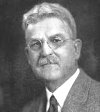 |
|
papers on silviculture and dendrology. He was born in Lawrence, Michigan, and was one of the early pioneers in forestry and a distinguished educator and scientist of distinction, and an author. He earned an undergraduate degree (1889) and a master’s degree (1893) from Michigan State Agricultural College. From 1891 to 1898 he worked at the University of Arizona, eventually becoming a professor of botany and a botanist at the State Agricultural Experiment Station. His interest in forestry resulted in him becoming superintendent of tree planting in the Division of |
Forestry, USDA. He taught as professor of silviculture at the Yale School of Forestry which he helped to establish in 1900 and became its second dean, a position he held until his retirement in 1922. While there he wrote Foundations of Silviculture Upon an Ecological Basis. James Toumey collected plants on Santa Catalina Island with Charles Sprague Sargent in September, 1894. Specimens, principally woody plants, are in the US National Herbarium at the University of Arizona. He died in New Haven on May 5, 1932. (Photo credit: Journal of Forestry)
- touret'ii: named for Marc-Antoine-Louis Claret de La Tourette (1729-1793), a French botanist, mycologist and algol-
 |
|
ogist from La Tourette, Rhone, near Lyon. He began his studies under the Jesuits in Lyon with Father Jacques Pernety who was a naturalist and a member of the Academy of Lyon and who passed on his passion to Marc-Antoine. Next he went to Harcourt College in Paris, and then became a councilor at the court of the Coins, an enviable place of the Magistrature Lyonnaise. He created a botanical park for the Veterinary School of Lyon in La Tourette and an acclimitization garden at the family property of Eveux where there were more than 3,000 species, trees and foreign plants and |
foreign plants and trees. He traveled and collected extensively around Lyon and also Italy, and amassed a herbarium of more than a thousand species. He was secretary of the Academy of Lyon and a correspondent of the Academy of Sciences of Paris. He corresponded with Jean-Jacques Rousseau, Carl Linnaeus, Bernard de Jussieu, Albrecht von Haller, and Voltaire. After twenty years of essentially administrative work, he gave up his duties to concentrate on natural history studies, mineralogy, botany, zoology, archeology and history. He died of gangrene and other medical conditions in Lyon.
- tournefor'tii: named for Joseph Pitton de Tournefort (1656-1708), author of Institutiones Rei Herbariae published in
 |
|
1700 and a celebrated French botanist who was the first to properly define genera and was an important forerunner of Linnaeus. He was born in Aix-en-Provence and studied at the Jesuit convent there. He was another of those who studied both botany and medicine. Wikipedia says: “After two years collecting, he studied medicine at Montpellier, but was appointed professor of botany at the Jardin des Plantes in Paris in 1683. During this time he traveled through Western Europe, particularly the Pyrenees, where he made extensive collections. Between 1700 and 1702 |
he traveled through the islands of Greece and visited Constantinople, the borders of the Black Sea, Armenia, and Georgia, collecting plants and undertaking other types of observations. He was accompanied by the German botanist Andreas Gundelsheimer and the artist Claude Aubriet. His description of this journey was published posthumously (Relation d'un voyage du Levant), he himself having been killed by a carriage in Paris; the road on which he died now bears his name (Rue de Tournefort).” Another botanist who had been one of de Tournefort’s students and accompanied him on his voyages was Charles Plumier. De Tournefort’s major work was his Eléments de botanique, ou Méthode pour reconnaître les Plantes published in 1694. Again from Wikipedia: “The classification followed was completely artificial, and neglected some important divisions established by earlier botanists, such as John Ray's separation of the phanerogams from the cryptogams, and his division of the flowering plants into monocots and dicots. Overall it was a step backwards in systematics, yet the text was so clearly written and well structured, and contained so much valuable information on individual species, that it became popular amongst botanists, and nearly all classifications published for the next fifty years were based upon it. Tournefort is often credited with being the first to make a clear distinction between genus and species. Though he did indeed cluster the 7,000 plant species that he described into around 700 genera, this was not particularly original. Concepts of genus and species had been framed as early as the 16th century, and Kaspar Bauhin in particular consistently distinguished genera and species. Augustus Quirinus Rivinus had even advocated the use of binary nomenclature shortly before Tournefort's work was published.” His herbarium collection of 6,963 specimens was housed in the Jardin du Roi in Paris, now part of the Muséum national d'histoire naturelle. He died the year after Linnaeus was born.
- Tovar'ia: named for Simón de Tovar (1528-1596), a doctor noted for his work in pharmacy, botany and astronomy. He studied medicine at the University of Seville and founded the most important botanical garden of those in Seville in the sixteenth century. He published annual catalogs of plants, which he distributed among major European botanists. He also carried on extensive correspondence with Bernardus Paludanus, a professor at the University of Leiden, and especially Carolus Clusius (Charles de l'Ecluse). The genus Tovaria was published by Hipólito Ruiz López and José Antonio Pavón in 1794.
- town'ei: named for (William) Stuart Sones Towne (1893-1980). He was born in Grand Rapids, Michigan and went to Los Angeles, California around 1910. He held various jobs including timekeeper for the city of L.A., lab chemist, DMV examiner, and employee in the county assessor’s office. He was interested in botany and especially mycology. He was a member of the Lorquin Club, and was co-author along with fellow Lorquin Club member Scott Lewis of “How to ID the Wildflowers” in AAA Touring Topics, February 1930. The oak that bore his name was supposedly a hybrid of Q. dumosa and Q. lobata and was found near Pasadena. He died in Pasadena.
- Townsend'ia: named for David Townsend (1787-1858), an amateur botanist. He grew up on a farm in northern Chester County, Pennyslvania, and moved to West Chester in 1810 where he worked as a clerk in the office of the Register of Wills. He was Chester county commissioner, the head bank cashier of the National Bank of Chester County. In 1826 he was the founding member of the Chester County Cabinet of Natural Science, which became West Chester University. He was a devoted and respected botanist who collected over 700 plants in the area near where he lived. Townsend was a life-long friend and business associate of Dr. William Darlington (see Darlingtonia). From the West Chester Patch, August 2018: “In a relativity short period of time, Townsend established himself as a respected botanist. He planted a large 'herbarium' on his property, and with his 'habits of close observation,' as his obituary described it, he was soon sharing his insights of native plants with eminent botanists in England. His assistance in identifying native asters, for instance, led the director of Kew Gardens [William Jackson Hooker] to name an entire genus in Townsend's name. Perhaps most important to Townsend was the success of his book, Florula Cestrica, which documented all the flora he had discovered in Chester County.” The genus Townsendia was published by William Jackson Hooker in 1834.
- Toxicoden'dron: means "poison tree,"
from Greek toxikos, "poison," and dendron, "tree." The genus Toxicodendron was published by Philip Miller in 1754.
- Toxicoscor'dion: Scott Earle of Larkspur
Books provides the following: Scordion or scordon is a Greek word for
garlic, thus 'poisonous garlic' from the rather remote resemblance
of the death camases to Allium sativum," and I thank him
for his contribution. The genus Toxicoscordion was published by Per Axel Rydberg in 1903.
- to'zeri: named for the Rev. John Savery Tozer (1791-1836), a British plant collector, about whom I have no information except this sent to me by David Hollombe: "The information on his death is confusing. His body was found near Shrewsbury, and was identified by his clothing by Feb. 20, 1836. It's not clear how much earlier the body was found, and it was reported that the body appeared to have ben in the water for several weeks. However a probate record, dated Aug. 19 1858, says he died in Liverpool, Nov. 20, 1858." And from the Report and Transactions of the Dvonshire Association for the Advancement of Science, Literature, and Art (1917), we have this: "Devon's earliest and acute bryologist was, according to the late Edward Parfitt, the Reverand Mr. Tozer, in compliment to whom Greville named the South Devon moss, Bryum Tozeri, now known as Webera Tozeri Schimp. John Savery Tozer at Cambridge graduated, from St. John's College, BA in 1812, MA in 1815, and BD in 1823. He was tenth wrangler in 1812, and his name appears in the Cambridge University Calendar for the year 1815, page 210, as a junior fellow of St. John's College, from Devon. At one time Tozer was curate of St. Petrock, Exeter. He was drowned near Shrewsbury in 1836."
- trachycar'pus: from the Greek trachys, "rough,"
and karpos, "fruit," referring to the irregularly-shaped fruits.
- trachycau'lus: rough-stemmed, from the Greek trachys, "rough," and kaulos, "the stem of a plant."
- trachygo'num: rough-kneed or rough-jointed.
- trachyphyl'la: rough-leaved.
- trachysper'ma: rough-seeded, from the Greek trachys, "rough,"
and sperma, "seed."
- tra'cyi/Tracyi'na: named for Joseph Prince Tracy (1879-1953), title examiner
of Eureka, California, and a botanist who amassed a collection of some 30,000 specimens
from northwestern California and adjacent Oregon which subsequently
became part of the University Herbarium of the University of California. He studied at the University of California at Berkeley with such luminaries as Harvey M. Hall, J. Burtt Davy, Willis Jepson, and William Setchell, and graduated in 1903. Financial constraints prevented him from continuing his formal studies, but he continued collecting in Humboldt County and surrounding areas and became a leading authority on the local flora. He was a member of the California Botanical Society, the Save-the-Redwoods League, the American Association for the Advancement of Science, the American Geographic Society, and the California Academy of Sciences. The genus Tracyina was published by Sidney Fay Blake in
1937. ( All taxa in California with specific epithet tracyi except for the three listed in the next entry)
- tra'cyi: named for Samuel Mills Tracy (1845-1922), an American botanist born in Hartford, Vermont. He moved west with his parents, living first in Illinois and later in Wisconsin. He enlisted in the Wisconsin Volunteers of the Union Army and served for a hundred days, after which he returned home and began farming. He enrolled at Michigan State Agricultural College where he was awarded a bachelor’s degree in 1868 and then a master's in 1871. He worked at commercial horticultural work from 1871 to 1877 and then was hired by the University of Missouri as a professor of botany, becoming in 1877 the first director of the Mississippi Experiment Station. His botanical interests concentrated on the taxonomy of grasses, plant breeding, and the adaptation of forage plants to the southern states. He is perhaps best known for his work, Flora of Missouri, which was published in 1886. (Chamaesyce tracyi, Drosera filiformis var. tracyi, Epilobium paniculatum var. tracyi)
- Tradescan'tia: named for John Tradescant (1608-1662) (called John Tradescant the Younger), an English gardener to
 |
|
King Charles I. He was born in Meopham, Kent, England, the son of John Tradescant the Elder. He entered the King's School, Canterbury at the age of 11. In 1634, after a period of apprenticeship, he was admitted a freeman of the Worshipful Company of Gardeners. In 1637 he sailed to Virginia to collect seeds and plants for English gardens. Among the seeds he brought back were great American trees like the magnolia, bald cypress and tulip tree, the yucca plant, and garden plants such as phlox and asters. Tradescant visited Virginia on three occasions in 1637, 1642 and 1654. |
In 1638, he was appointed Keeper of his Majesty's Gardens, Vines, and Silkworms at Oatlands Palace, in place of his father who had died that year, and thus became head gardener to Charles I and Henrietta Maria of France. He and his father maintained a cabinet of curiosities known as the Ark, and added to it items collected in Virginia, including the ceremonial cloak of Chief Powhatan, an important Native American relic. Wikipedia says: “He published the contents of his father's celebrated collection as Musaeum Tradescantianum - books, coins, weapons, costumes, taxidermy, and other curiosities - dedicating the first edition to the Royal College of Physicians (with whom he was negotiating for the transfer of his botanic garden), and the second edition to the recently restored Charles II. Tradescant bequeathed his library and museum to (or some say it was swindled from him by) Elias Ashmole (1617–1692), whose name it bears as the core of the Ashmolean Museum in Oxford where the Tradescant collections remain largely intact. He was buried beside his father. The genus Tradescantia was published by Carl Linnaeus in 1753. (Photo credit: Find-a-Grave)
- Tra'gia: although there may be some uncertainty about the origin of the generic epithet Tragia, several usually
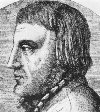 |
|
reputable sources such as FNA, Gledhill in The Names of Plants and Umberto Quattrocchi in the CRC World Dictionary of Plant Names claim that it referred to Jerome Bock (1498-1554) whose Latinized name was Hieronymus Tragus. Bock is German for "male goat," while tragos is ancient Greek for the same. Many of the details of his life are unclear, for instance his birthplace and where he received his early schooling, but he was a German Lutheran botanist and herbalist. He was clearly interested in botany from an early age and by 1523 was head of a botanical garden |
owned by the Count Palatine Ludwig in Zweibrücken. He apparently attended the University of Heidelberg at least for a time. It is uncertain whether he studied medicine, philosophy, theology, or something else, and there does not seem to be any record of his having received a degree, but he presumably did have some theological and medical training. Following his attendance there he became a schoolteacher in Zweibrücken for nine years. In 1533 he received a lifetime position as a Lutheran minister at the Benedictine church of St. Fabian in nearby Hornbach where he mostly stayed until his death. He left Hornbach for a brief period in 1550 and acted as personal physician to the Landgraf Philipp II of Nassau, whose garden he is said to have supervised. In 1551 he returned to Hornbach. He was the author of a work entitled The Neu Kreutterbuch (literally "plant book") in which he described German plants, including their names, characteristics, and medical uses, and developed his own system to classify 700 plants. He apparently traveled widely through the German region observing the plants for himself, since he includes ecological and distributional observations. The grass genus Tragus (published by Albrecht von Heller in 1768) and the spurge genus Tragia (published by Linnaeus in 1753) are both said to be named for him. He is significant for having been one of the three German ‘fathers of botany’ along with Otto Brunfels and Leonhard Fuchs, who begun the transition from medieval botany to the modern scientific worldview by arranging plants by their relation or resemblance. He died in 1554, probably of consumption, three years after his return to Hornbach. Alternatively, a website of the National Institutes of Health says "The etymology for the name of this genus comes from the Greek tragos, meaning goat." And the website of the Scholarly Community Encyclopedia says "This name may stem either from the name of the German botanist Hieronymus Bock (Bock means “ram” or “he-goat” in German), or from the hairy appearance of the plant that would resemble a male goat."
- Trago'pogon: derived from two Greek words tragos meaning "goat" and pogon meaning "beard,"
suggested by its prominent, feathery hairs when in seed. The genus Tragopogon was published by Carl Linnaeus in 1753.
- tra'gus: possibly from the Greek tragos,
a part of the ear, literally "goat," or from Hieronymous
Tragus, the Greek name for Jerome Bock (1498-1554), physician, scholar,
and one of the three fathers of German botany. Dioscorides used the name for the grass that goats eat.
- train'ii/trainia'nus: named for Percy Train (1876-1942), a geologist, botanist and avid plant collector born in Helena,
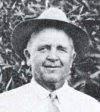 |
|
Montana, who attended courses at the Montana School of Mines at Butte. He worked as a mining consultant and prospector until 1905, established an assayer’s office and operated it until 1915, and began to explore the geology of the Great Basin. By 1926 he had turned to experimental botany and fossil collecting in southern Nevada. He was married in 1928 to Agnes Hume Scott, a Chicago librarian, and they became a team for the remainder of his life. He signed a contract in 1932 with the University of Michigan to collect fossils for Dr. Chester A. Arnold. In 1935 he was collecting |
plants in Death Valley for William R. Maxon of the Smithsonian Institution. From 1937 to 1941 he and his wife studied the medicinal uses of plants among the native cultures of Nevada, including Shoshone, Paiute, Washoe, and Moapa Paiute cultures, conducting ethnobotanical fieldwork and collecting specimens. He published Medicinal Uses of Plants by Indian Tribes of Nevada (1941) with James R. Henrichs and W. Andrew Archer. A recollection by Chester Arnold in Huntia (1965) is worth relating here: “It was a somewhat unfortunate quirk of fate that the most active part of Percy Train’s career as collector of natural history material came during the depression of the 1930s when institutions that could have made good use of his special abilities were so desperately short of funds. Were he alive and active today, the situation would probably be very different. In those days he had to work hard to keep the wolf from the door, literally as well as figuratively. As a collector, he appreciated the scientific value of the material, and he was always concerned that it fall into competent hands and be properly utilized. Furthermore, he took pride in his work, and did everything possible to turn out fine specimens. His fossils were always carefully removed from the rock strata, and neatly trimmed and cleaned. Living plants were laid out and pressed with the most meticulous care. He realized too, which some collectors do not, the importance of source data concerning specimens, and his collections were often embellished with detailed sketch maps and diagrams of stratigraphic sequences. Then, too, he could go into and collect in places most of us would consider inaccessible. He has left a permanent imprint on the botany and paleontology of the Great Basin, and men of his type are indeed in short supply.” He died in Reno, Nevada. (Photo credit: Hunt Institute for Botanical Documentation)
- trans-: beyond, through, across.
- Transberin'gia: this genus contains a single species with two subspecies,
one in northwestern North America and one in northeastern Asia, separated
by the Bering Strait, hence 'trans Bering.' The genus Transberingia was published by Ihsan Ali Al-Shehbaz and Steve Lawrence O'Kane in 2003.
- transitor'ius: I am assuming that this means what the modern English
word 'transitory' means, that is "of brief duration, not persistent,
temporary," but it may alternatively mean "transitional
or intermediate." Seems to derive from Latin transitorius, "passing transient," and.or transit, "going across."
- transmonta'na: beyond the mountains.
- transvalen'sis: of or from the Transvaal Province of South Africa.
- transver'sa: transverse, set crosswise,
made at right angles.
- trask'iae: named for botanical collector Luella Blanche Engle Trask (1865-1916). She seemed to have had a love of
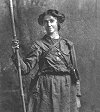 |
|
flowers from the earliest age, and recalled the story that her mother would find her in the garden at the age of 2 or 3 kissing the pansies and verbenas and telling them how much she loved them. The following is from the website Islapedia. “She was born in Waterloo, Iowa, and later moved to Minnesota with her family [where she began collecting wild plants]. Her father was a nurseryman which is probably where she developed her first interest in plants. Although she also explored some of the desert mountains of the west, such as the San Jacinto Mountains, Colorado Desert, Death |
Valley, Arizona, Utah, Colorado, and Yellowstone, it was the Channel Islands that held her. She became a botanist, poet and island explorer who lived on Santa Catalina Island at Avalon and Fisherman’s Cove from 1893-1912. She made extensive collections on the Southern Channel Islands during the late 1890s and early 1900s. As early as 1896 she made field trips to San Clemente Island, and in April 1897 she collected plant specimens on San Nicolas Island. In 1900 she collected plants on both Santa Rosa and Santa Cruz island, at the latter of which island mountain mahogany (Cercocarpus betuloides var. blancheae) bears her name. In 1901 she discovered a species of Dudleya on Santa Barbara Island which was named in her honor, Dudleya traskiae. The locoweed, Astragalus traskiae, found on both Santa Barbara and San Nicolas islands, was also named in her honor, as was Catalina mahogany, Cercocarpus traskiae. Mrs. Trask spent an additional three months on San Clemente Island in 1903, but specimens from this trip, as well as many others were lost in the 1906 San Francisco earthquake and fires. Nine years later, Trask’s personal herbarium was destroyed by fire at Avalon on Santa Catalina Island in November, 1915. Trask authored more than a dozen articles and poems, particularly about Santa Catalina Island. On March 6, 1886 at age 20, Blanche married Walter Trask in Minnesota, and they had a daughter, Caroline, born December 6, 1887. They divorced in 1895 when Caroline was 9 years old.” Willis Linn Jepson described Trask this way: “No one knows so much about Catalina Island as Mrs. Blanche Trask who has been here about 17 years. For the island as a whole, its rocks, cliffs, and canyons, as well as its plants, trees and shrubs this woman has a most remarkable love. It has grown out of her love for its wildness, its inaccessible cliffs, and its great solitudes of canyon crest, and sky. She has worked through all its canyons, even on the inaccessible south coast, and beyond ‘the isthmus,’ at all times of the year but especially in the winter season. It is so intolerably hot in the dry season that she hibernates, usually from May to September or October. There is little water on the island, only a few springs, which are frequented by the sheep or goats. I have never known anyone anywhere who knows the plants individually over such a large area as she does. She seems to know the individual trees and shrubs like old friends and knows whether they have changed in the last ten years and how much.” In addition to botany, her interests included archeology, history, zoology and geology, and she carried on an extensive correspondence with Alice Eastwood and Willis Jepson. Blanche Trask died in Colfax, California on November 11, 1916 where she had gone due to her pulmonary trouble. It was the year following the devastating destruction of her herbarium caused by a fire that swept through Avalon on Santa Catalina Island. She collected on six of the eight Channel Islands, was a great friend of Alice Eastwood, and found a mammoth tooth on San Nicolas in 1902. Her winter home was in Avalon, but she also had a summer refuge in Fisherman's Cove, and frequently walked the roundtrip route over the ridge trail in a day. She was described by Charles Frederick Milspaugh, former curator of the Field Museum of Natural History in Chicago, as an "indefatigable pedestrian." Trask was 51 years old at the time of her death, and undoubtedly would have accomplished much more had she been granted a longer span of life.
- Trautvetter'ia: named for Ernst Rudolf von Trautvetter (1809-1889), a Baltic-German or Russian botanist who
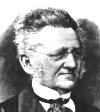 |
|
specialized in the flora of the Caucasus and central Asia and was author of De Echinope genere capita (1833) and the Decas plantarum novarum published in St. Petersburg, 1882. He was born in Jelgava, Latvia, the son of a German philosophy professor, teacher and author of De novo systemate botanico brevem notitiam Ernst Christian Johann von Trautvetter. Wikipedia says: “He studied medicine and natural sciences at the University of Dorpat [in present-day Estonia.] From 1829 to 1831, he conducted botanical field trips throughout Livonia, returning to Jelgava in 1831 as a |
private instructor. In 1833 he began work as an assistant at the botanical garden in Dorpat, two years later, performing similar duties at the botanical garden in St. Petersburg. In 1838 he relocated to Kiev as a professor of botany and director of the botanical garden. During his many years in Kiev, he served as university rector from 1847 to 1859. Later in his career, he returned to the botanical garden in St. Petersburg as an administrator and director. Here, he was tasked with publishing an account of the garden's history.” His first publication was entitled Ueber die Nebenblätter (1831) and was a work on plant stipules. In 1835 he received a doctor of philosophy degree from the University of Königsberg. After a brief time as director of the Agricultural Institute at Gory-Gorki (Mogilev) he returned to the Botanic Garden of St. Petersburg to become the director there. He retired in 1875, only to return to directorship in 1889, the same year in which he died. He was a prolific author, publishing among other things Skizze der Classen und Ordnungen des natürlichen Ppflanzensysterns which was his assessment of the natural orders and classes of plant systems. He also added to the regional floras of northern Siberia and the Caspian-Caucusus region. The genus Trautvetteria was published by Friedrich Ernst Ludwig von Fischer and Carl Anton Meyer in 1835.
- travers'ii: named for Alfred Traverse (1925-2015), an American paleobotanist and palynologist. He was born on
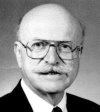 |
|
Prince Edward Island, Canada and moved with his family to the United States in 1928. He graduated from high school in St. Joseph, Michigan, in 1943. He enrolled at Harvard, graduating magna cum laude in 1946, then left for England with a fellowship for a year of study and research at the Botany School of Cambridge University. He returned to Harvard in 1947 and resumed his graduate work, concentrating on fossil pollen and spore studies, a field now called palynology. He was awarded a masters degree in 1948 and a PhD in 1951. That same year he was married to Elizabeth Jane Insley |
and was hired by the US Bureau of Mines to research the petrology of lignite-coal in Grand Forks, North Dakota. The remainder of his career was summarized by an obituary of the website of the Koch Funeral Home: “In 1956, the USBM transferred him to the Federal Center in Denver, Colorado, to be head of the coal microscopy lab, but he almost immediately accepted an offer from Shell to set up a palynology lab at their Bellaire research headquarters in Houston, Texas. Soon after his employment with Shell, he was sent to their international headquarters in The Hague, Netherlands, to learn about the company's palynological methods and previous research. During his years with Shell, his most significant contribution was study of the distribution of palynomorphs in sediments offshore from the Bahamas and the significance of this for sedimentation in general. Alfred resigned at Shell in 1962, and enrolled at the Episcopal Theological Seminary of the Southwest. He graduated with a degree of master of divinity in 1965 as the top-ranked student. For the academic year 1965-1966, he was assistant professor of geology at the University of Texas, and assistant clergyman at a nearby Episcopal church, having been ordained deacon. In May, 1966, Alfred was ordained priest, and in June that same year moved to State College to become associate professor of palynology in the departments of Geosciences and Biology at Penn State. He also took up duties as assistant to the rector of St. Paul's Episcopal Church in Philipsburg. In 1967, he was one of the co-founders of AASP, now known as The Palynological Society. He was the first secretary-treasurer of the organization and later was elected president. Beginning in 1950, he became active in the Botanical Society of America, in which he served several years as secretary and chairman of the palenobotanical section. He was a member and fellow from 1950 until his death of both the American Association for the Advancement of Science and the Geological Society of America. In 1975, the Traverses moved from State College to Huntingdon, Pennsylvania. Alfred became priest-in-charge of St. John's Episcopal Church while continuing his work as professor at Penn State. He also served as adjunct professor at Juniata College in Huntingdon, where he gave occasional lectures. From 1980-1981, Alfred and Betty were in Zürich, Switzerland, on sabbatical. Alfred was associated with the geology department of the Swiss Federal Technical Institute, where he gave a course on Cenozoic palynolgy. While in Zürich, he also served as assistant priest in a parish of the Old Catholic Church, a denomination in communion with the Anglican Church. This was his last church connection, because upon his return to the US and after much deliberation, he came to realize that he had actually become a secular humanist, more in tune with his scientific present than with his religious past. In 1995, Alfred retired from teaching at Penn State. His personal herbarium of about 5,000 specimens was given to Penn State Herbarium in Whitmore Lab, of which Alfred was voluntary curator from 2007-2015. A point of interest is that the original collection for the herbarium was brought back from Europe by Penn State's first president, Evan Pugh. Dr. Pugh believed a herbarium to be an essential asset for research at what was the ‘Farmers' High School’ renamed by him to be ‘Pennsylvania College of Agriculture.’ Alfred was proud to be integral in the continuance of this legacy and important collection for Penn State.” He was married for near 65 years and had four children. He died after an extended illness in State College, Pennsylvania.
- treleasea'num/treleas'ei: named for William Trelease (1857-1945), who was "born
in Mount Vernon, New York in
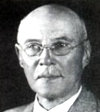 |
|
1857. In his teens he was briefly apprenticed
in a machine shop, but in 1877 he decided to enter Cornell College
and study the natural sciences. After Cornell, he taught at the University
of Wisconsin, and planned to study bacteriology there; but when he
was offered the director's job at the St. Louis Botanical Garden,
he accepted. It was an ideal position for Trelease, a gifted botanist
with a genius for classifying plants. He directed the 75-acre garden
for 23 years, during which time he identified and named 2,500 species
and varieties of flora. Trelease's botanical interests were |
broad:
he published a paper on the giant cactus of Mexico in the same year
that he published his findings about coastal species in Alaska. He
studied apple scab, leaf blight, and nematodes. [In 1899 he joined John
Muir on the Harriman Alaska expedition aboard the ship Elder.]
While on the Elder, he worked with the others involved in botany,
collecting specimens, but tended to play second fiddle to Muir, Gilbert
and the other, more talkative, scientists. He was first and foremost
a scientist, not a story-teller. After the expedition, he returned
to St. Louis, and eventually taught at the University of Illinois.
His work includes hundreds of scholarly papers, but Trelease was not
solely an academic. He published a small, inexpensive set of guides
for the everyday gardener, that remain, to this day, a value for anyone
who wishes to graft an apple tree, or identify and avoid poison ivy
in the winter. Trelease died in 1945." (From a PBS website on the Harriman scientific expedition to the coast of Alaska) He was the author of Winter
Botany: An Identification Guide to Native Trees & Shrubs and
his name is on Mt. Trelease in Colorado. (Photo credit: Herbarium of the L.H. Bailey Hortorium)
- Tremat'odon: FNA says from "Greek trema, "hole," and odon, "tooth," alluding to perforate peristome teeth." The genus Trematodon was published by André Michaux in 1803.
- trem'ula: trembling, referring to foliage, from Latin tremulus, "trembling."
- tremulo'ides: like the quivering poplar
or quaking aspen.
- tri-: in compound words signifying three.
- triacan'thos: three-spined, from the Greek tri, "three," and acanthos, "spine."
- Triad'ica: from the Greek for three, for lobes of calyx, ovary, fruit, FNA says for the 3-merous flowers. The Missouri Botanical Garden has a different idea, saying "Genus name comes from the Latin name for a resinous pine." The genus Triadica was published in 1790 by João de Loureiro, and the taxon in California is Triadica sebifera, called the Chinese tallow-tree.
- triangular'is: with three angles.
- triangulival'vis: presumably with one or more three-angled or triangular
valves.
- Trian'tha: probably the same as Trianthema, that is, three-flowered.
The genus Triantha was published by John Gilbert Baker in 1879.
- Trianth'ema: from the Greek treis,
"three," and anthemon, "flower," with flowers generally grouped in threes. The genus Trianthema was published by John Gilbert Baker in 1879.
- Tribo'lium: from the Greek name tribolos applied to various
prickly plants. Jaeger gives tribolos as meaning three-pointed but other sources say it means spiked fruit or three-spiked. The genus Tribolium was published in 1831 by Nicaise Auguste Desvaux.
- tribractea'tum: three-bracted.
- Trib'ulus: from the Greek tribeles or tribolos and Latin tribulus for "three-pointed,
a caltrop," the shape of which is suggested by the three-pronged
fruit, and referring to the caltrop, an ancient military weapon which consisted of an iron ball
with projecting spikes that could be strewn on the battlefield to impede cavalry or foot soldiers. At least one spike projected upwards while others anchored the caltrop in the ground. The genus Tribulus was published by Carl Linnaeus in 1753.
- Tricar'dia: from the Greek tri for
"three" and cardia for "heart," thus "three-hearted,"
apparently from the structure of the calyx. The genus Tricardia was published by John Torrey in 1871.
- tricarinat'us: three-keeled, or by extension, three-ribbed or with three angled sides.
- tri'ceps: three-headed.
- trichan'tha/trican'thum: hairy-flowered.
- tricho-: in compound words signifying hairy or hair-like.
- trichoca'lyx: with a hairy calyx.
- trichocar'pa: hairy-fruited.
- Trichocoron'is: from the Greek trichos, "hair,"
and koronis, "crown" referring to the pappus. The genus Trichocoronis was published by Asa Gray in 1849.
- trichoma'nes: the name of a fern mentioned by Theophrastus and Dioscorides,
and used by Pliny for a fern resembling Adiantum. The taxon in California with this epithet is Asplenium trichomanes called maindenhair spleenwort. There is also a genus Trichomanes (not in California) about which the World Flora Online website says Bristle fern [Greek thrix, "hair," and manes, "cup," alluding to the hairlike receptacle extending from the cuplike involucre].
- tricho'pes: hairy-footed or -stalked.
- Trichophor'um: from the Greek thrix or trichos, "hair,"
and phoros, "bearing, carrying," referring to the
margins of the clinandrum, which is the portion of an orchid column
which conceals the anther. The genus Trichophorum was published by Christiaan Hendrik Persoon in 1805.
- trichopo'dus: having a hairy pod.
- Trichoptil'ium: from the Greek trichos,
"hair," and ptilon, "feather," in allusion
to the dissected pappus-paleae, i.e. the chafflike scales on the receptacle.
The genus Trichoptilium was published by Asa Gray in 1859.
- Trichos'tema: from trichos, "hair,"
and stema, "stamens," and alluding to the hair-like
stamens. The genus Trichostema was published by Johan Frederik Gronovius in 1753.
- tri'color: of three colors.
- tricorna'tum: three-horned.
- tricuspida'ta: three-pointed.
- tricus'pis: probably meaning the same as tricuspidata.
- tridactylo'sa: from tri-, "three," and daktylos,
"a finger, toe," thus meaning three-fingered or three-toed.
- Tri'dens: three-toothed. The genus Tridens was published by Johann Jakob Roemer and Josef August Schultes in 1817.
- tridenta'ta/tridenta'tum: three-toothed.
- Trienta'lis: one-third of a foot in height, about the height of these
small plants. The genus Trientalis was published by Carl Linnaeus in 1753.
- tri'fida/tri'fidum: cleft into three parts.
- triflor'um: three-flowered.
- trifolia'ta: three-leaved.
- Trifo'lium: from the Latin meaning "three-leaved." The genus Trifolium was published by Carl Linnaeus in 1753.
- trifor'mis: Engelmann described the species as having three varieties:
var stylosus ('planta major...'), var. brachystylus ('planta minor...') and var. uniflorus ('planta minima...').
- trifur'ca: three forked.
- triglochidia'tus: with three barbed
bristles, from the Greek tri, “three” and glochis, “a point.”
- Triglo'chin: from the Greek tri, "three," and glochis,
"a point," referring to the fruit of some species. The genus Triglochin was published by Carl Linnaeus in 1753.
- Trigonel'la: a diminutive of the Latin trigonum, "triangle
or three-cornered," referring to the corolla of one of the species.
The genus Trigonella was published by Carl Linnaeus in 1753.
- trigonophyl'la: possibly from trigonus, "three-cornered,"
and phyllon, "leaf."
- trigy'na/trigyn'um: with three pistils.
- trilliifo'lia: with leaves like genus Trillium.
- Tril'lium: from Latin tri, "three or triple." Stearn says leaves and other parts are in threes. The genus Trillium was published by Carl Linnaeus in 1753.
- trilo'ba/trilo'bata: indicates leaves are
three-lobed.
- trilocular'is: from tri, "three," loculus, "a small place or cell," and -aris, an adjectival suffix meaning "pertaining to."
- trimes'tris: blooming for three months.
- Trimor'pha: from the Greek treis or tria, "three,"
and morphe, "a shape," in reference to the flower types.
The genus Trimorpha was published by Alexandre Henri Gabriel de Cassini in 1817.
- triner'via: with three nerves or veins.
- trin'ii: named for Karl Bernhard von Trinius (1778-1844), a German court physician, poet and world-famous agros-
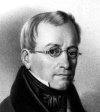 |
|
tologist who was born in Eisleben northeast of Leipzig. He founded the Botanical Museum in St. Petersburg and was personal physician and teacher of Tsar Alexander II. He was the son of a Protestant pastor. His uncle was the founder of homeopathy, Samuel Hahnemann. His father died early and his mother married a teacher named Müller from Eisleben. He studied medicine from 1792 to 1802, first in Jena, then in Halle, and finally in Leipzig. Along the way he, as was the case with so many other medical people, developed an interest in botany. He received a doctorate in |
1802 in Göttingen. After finishing his studies he moved to the Baltic provinces and located in several different communities. He married in 1804 and in 1808 became the personal physician of the Duchess Antoinette of Württemberg. He traveled extensively throughout Germany and Russia and from 1811 to 1815 was with the Duchess in St. Petersburg. During the period 1816 to 1822 he lived in Belarus before returning to St. Petersburg and becoming a full member of the Imperial Academy of Sciences as a result of his botanical work. In 1821 he was elected a member of the German Academy of Sciences Leopoldina. In 1824 he was appointed as the imperial personal physician and taught natural sciences to Tsar Alexander II from 1829 to 1833. At this time he was continuing to communicate with his uncle and delve into the study of homeopathy. He visited botanical collections abroad on behalf of the Imperial Academy in 1836 but in 1837 and 1838 he suffered several strokes and died in 1844 in St. Petersburg. He was also a poet and a prolific author, and compiled a herbarium of 4,000-5,000 specimens which he bequeathed to the Botanical Museum of St. Petersburg.
- triniten'sis: of or from the area of the Trinity Mountains of northern
California.
- tri'odon: from the Greek for "three"
and "tooth," referring to the three lobes of the petals.
- Triodan'is: from Greek treis, "three,"
and odons, "tooth," hence "three-toothed," possibly referring to the pores on the capsule. The genus Triodanis was published by Constantine Samuel Rafinesque in 1836.
- trio'num: Jaeger's Source-book of Biological Names and Terms gives two alternate etymologies for this name: (1) from New Latin trionum derived from the Greek trionon, the name of
a malvaceous plant; and (2) from Latin Triones, referring to
Ursa Major or the Big Dipper. A website on Ursa Major says this: "Ursa Major in English tradition
is the Plough derived possibly from the Triones or Teriones, the Plough
Oxen or Threshing Oxen of Roman fable; Cicero mentions them as the
Septentriones, which later became a term for the north wind, the northern
heavens and polar things in general." Since Hibiscus trionum is malvaceous and not particular polar
or northern, the former etymology is probably correct. There was also a genus Trionum in the Malvaceae published by Linnaeus in 1758. Gledhill gives the meaning of trionus/trionum as "three-clawed."
- tripar'tita: in three parts, having three parts.
- tripet'ii: named for Jacques-Isidore Tripet (1782-1838), who was famous for the cultivation of tulips. He was born in Paris into a family of tulip growers. The Gardener's Magazine and Register of Rural & Domestic Improvement, Vol. 15, has this: "M. Tripet, a celebrated tulip-grower of Paris, died in that city on April 8, 1837, in his 55th year. The taste for flowers, and particularly for tulips, may be said to have been hereditary in Tripet's family. Grandfather, father, and son have been celebrated in this way for more than a century. The grandfather was a native of Champagne, possessing but little wealth, but he was fortunate enough to marry a lady of rank in that province, a circumstance which rarely occurred in those days. His son was born in 1749, and his tulip shows, in the Champ Elysées, were celebrated throughout the kingdom. At the revolution in 1789, M. Tripet emigrated to England, where he remained nearly ten years; and soon after his return to France in 1799, he exhibited his collection to the public in his garden, in the Rue Fauxbourg St. Martin. In 1801, he removed to the Champs Elysées, where his garden was visited by all the eminent persons in France, including the ambassadors from foreign powers. In 1814 he was appointed florist to the emperor, and daily sent bouquets to the apartments of the palace, and planted yearly two beds of tulips in the gardens of the Tuileries. This M. Tripet the second had a son equally attached to flowers with the father, and who assisted in the management of his concerns; but he died before his father." Some sources say his death was in 1837 and others 1838. An obituary in the Journal de la Société nationale d'horticulture de France, Volume 22, 1838, translated by Google, says: "Mr. Jacques-Isidore Tripet, whom the Society has just had the pain of losing, was born in 1782. Raised by his father, he immediately showed himself worthy of his origin through an early taste for the cultivation of tulips, to study them in all respects and obtain new beauties. At the age of 18, his knowledge was extensive and solid enough for his father to entrust him with the main care of cultivation, verifications and the classical order essential in a numerous collection of tulips; he only reserved for himself the demonstrations that he continued to give, with the extraordinary talent that he possessed, to the societies of the French and foreign upper classes until near his death in 1820s. Heir to the name and reputation of his father, the younger Tripet neglected nothing to support both with dignity, and to further enhance them by enriching the collection he had just inherited with all that existed of tulips, remarkable for their novelty and merit; he also undertook new issues on a large scale, continued them each year, and now amateurs and the trade have at least 200 kinds of magnificent tulips emerging from his seedlings. There is one above all, of inestimable value, honored with the name of Princess Helene, which alone has compensated Mr. Tripet a hundredfold for several years of care, fears and hopes. The cultivation of tulips as an amateur was not enough for Mr. Tripet, and in 1812 he opened a commercial seed store at the Boulevard des Capuchines, which enjoys an honorable reputation justly acquired, and successively increased his crops, first in Maisons-Alfort, and then at Paris, Avenue de Breteuil, where they are currently concentrated. Mr. Tripet had married, in 1812, Miss Agnes Morane, today his inconsolable widow; his marriage, one of the best matched and happiest, gave him four girls, but no boys, and it is from this last point of view that his hopes were not realized. Beneath everything else, his happiness was perfect. Mrs. Tripet, gifted with all the qualities of heart and mind, loving flowers and their cultivation with the same passion that her husband loved them, possessing the art of commerce to a higher degree and exercising it with delicacy and an exemplary probite, Madame Tripet has powerfully contributed to making the Tripet establishment one of the most considerable and best known in the capital; but the more his establishment prospered, the more Mr. Tripet regretted not having a son to succeed him, to pass on to him the fruit of his long experience, and above all the care of preserving the name of Tripet at the head of tulip cultivation in France. This regret however was greatly alleviated by the feelings and qualities that he found in the person of Mr. Leblanc, today our colleague, and who had entered, as a clerk, in the Tripet establishment at the age of 15. Although still very young, Mr. LeBlanc already had the discernment and judgment of mature age; he himself felt for them the respect and attachment that a son owes to his parents. Full of dedication, active and studious, docile to instructions and seeking them with ardor, Mr. Leblanc was not long in being aware of the culture and commerce of the establishment. Mr. Tripet had never sown on better soil, and in a few years Mr. Leblanc deserved to be considered rather as director of the establishment than as a simple clerk; also, to reward his zeal, his activity and his work, Mr. and Mrs. Tripet first received him as an associate in their seed business and in their crops, and soon declared him their successor."
- triphyl'la: three-leaved.
- triphyl'los: probably the same as the previous entry.
- Triphysar'ia: from the Greek meaning "having three bladders"
because of the lower lip pouches. The genus Triphysaria was published by Friedrich Ernst Ludwig von Fischer and Carl Anton von Meyer in 1836.
- Tripleurosper'mum: from the Greek treis, "three," pleura or pleuron, "rib," and sperma,
"seed," referring to the achenes. The genus Tripleurospermum was published by Carl Heinrich Schultz in 1844.
- tripo'dum: three-footed.
- Tripteroca'lyx: from the Greek tripteros, "three-winged,"
and kalyx, "calyx." The genus Tripterocalyx was published by William Jackson Hooker in 1853.
- triquet'ra/triquet'rum: from the Latin triquetrus meaning "having three corners, triangular."
- trisep'alus: with three sepals.
- Triset'um: from tri, "three," and seta, "bristle,
hair," referring to the three-bristled appearance of the lemma of the type species T. flavescens, which results from the presence of a bristle and two teeth. The genus Trisetum was published by Christiaan Hendrik Persoon in 1805.
- trista'chya: three-spiked.
- tris'te: dull, sad.
- tris'tulis: diminutive of tristis, "sad."
- trisul'ca: with three furrows, from Latin sulcus, "furrow."
- Tritel'eia: from the Greek tri, "three,"
and teleios, "perfect," the floral parts being in
three's. The genus Triteleia was published by David Douglas in 1830.
- triterna'tum: triply ternate.
- tritico'ides: like genus Triticum,
or wheat.
- Trit'icum: the classical Latin name for wheat.
The genus Triticum was published by Carl Linnaeus in 1753.
- triumfet'tii: named for Giovanni Battista Trionfetti (1656-1708), an Italian naturalist and botanist, doctor of medicine and philosophy, born in Bologna. He became a professor of medicine at the University of La Sapienza in Rome in 1680. Pope Nicholas V had first ordered the construction of a botanical garden for the Holy See in Rome in the 15th century, and it had been moved to various locations within the Vatican walls before Pope Alexander VII in 1660 ordered that a garden on a much larger scale be built on Janiculum Hill. Under the direction of its curator Giovanni Trionfetti more than 3,000 species were added to its collection which spread its renown to every corner of Europe. He was the author of Observationes de ortu ac vegetatione plantarum, which bitterly attacked the view held by Marcello Malpighi, an Italian physician, anatomist and physiologist, that the whole plant is actually in the seed. His brother was a professor of botany in Bologna. After Trionfetti's death, the chemist and botanist Giuseppe Monti succeeded him as garden director.
- triuncia'lis: the Latin uncia means one-twelfth, so this might
mean three-twelfths, of unknown application.
- trivia'le/trivia'lis: common, ordinary. One website says trivialis means that which is in, or belongs to, the crossroads or public streets; hence, that may be found everywhere, common. It appears to be derived from trivium, which means a place where three roads meet. Legend has it that travelers would meet at the intersection of three crossroads to exchange news, gossip, and tiny interesting facts. Some think the word trivia derives from this idea. Merriam-Webster presents a different idea: "But there is another theory as well, one that hinges on knowledge of a different sort. In medieval times, the word Trivium referred to the threefold education curriculum encompassing Grammar, Logic, and Rhetoric—as opposed to the Quadrivium, which included Arithmetic, Music, Geometry, and Astronomy. The Trivium was regarded as a prerequisite of sorts for the Quadrivium, and as the foundation of a liberal arts education. In the word's earliest use, trivial described what belonged to the Trivium."
- trixa'go: Brown's Composition of Scientific Words says that this
name is Latin for germander, but then -ago is a Latin substantival
suffix used to indicate a resemblance or property, and trix could derive from trix (thrix), "a hair,"
or trixos "three-fold," inasmuch as Bellardia trixago is
a glandular-hairy plant, and it was apparently an old name for some
plant possibly of the mint family like germander. Wikipedia offers this an alternative derivation: "It derives from the ancient Greek word trixós, trissós, or trittós, meaning 'triple,' and refers to the trilobate lower lip of the flower. It is also the old Latin name of germanders."
- Trix'is: from the Greek trixos, "three-fold,"
referring to the three-cleft outer corolla lip. The genus Trixis was published by Patrick Browne in 1756.
- trochlear'is: from the Greek trochlea, "a pulley,"
plus -aris, "belonging or pertaining to," referring to a grooved structure reminiscent of a pulley's wheel."
- trolliifo'lium: with leaves like genus Trollius in the buttercup
family.
- Tropaeo'lum: the nasturtium of gardeners,
although not of botanists, and named by Linnaeus, from the Greek tropaion and the Latin tropaeum for "trophy, memorial of victory," the manner in
which the plant grew up a support reminding him of a classical trophy
with round shields and golden helmets such as those hung as a sign
of victory on a battlefield. The genus Tropaeolum was published by Carl Linnaeus in 1753.
- Tropidocar'pum: from the Greek tropis, "keel," and karpos, "fruit," meaning
"keel fruit," referring to the keeled capsular valves. The genus Tropidocarpum was published by William Jackson Hooker in 1836.
- troximo'ides: Jaeger's Sourcebook relates the root trox with trog, from the Greek trogo, "to gnaw,"
and trogos, "a gnawer, weevil," and Brown's Composition
of Scientific Words says that troxalis is the Latin word
for grasshopper or cricket, which are gnawing insects. Another piece
of evidence for this interpretation is a web listing that I found
of the species Microseris troximoides (synonym for Nothocalais
troximoides) for which the common name weevil microseris is given.
- tru'ei: named for Gordon Haines True, Jr. (1908-1984), son of the noted livestock
scientist and professor of animal husbandry at UC Davis, Gordon Haines True (1868-1928). True, Jr.
graduated from Davis with a degree in animal science and received
his MS in parasitology from Berkeley in 1931. He first worked as a
parasitologist for the California State Department of Fish and Game
and then the Bureau of Game Conservation in San Francisco until 1946.
After being injured in a car accident, he moved to Nevada to work
a dairy ranch and collect local plants. He moved back to California
in 1963, two years later becoming a research associate in the botany
department at the California Academy of Sciences.
- trunca'ta/trunca'tum/trunca'tus:
abruptly cut off, from Latin truncatus, "cut off, truncated, maimed, mutilated."
- truxillen'sis: apparently a reference
to the city of Trujillo in Peru, since Cressa truxillensis was first described
from Peru. Trujillo lies on the Pan-American Highway NNW of Lima,
in the coastal desert region of the Moche River Valley, and is a commercial,
educational, cultural and transportation center. It is the 2nd oldest
Spanish city in Peru and was founded in 1534 by Diego de Almagro and
elevated to city status the following year by Francisco Pizarro who
named it after his birthplace in Spain. Trujillo was visited by Alexander
von Humboldt during his epic excursion across Central and South America
(1799-1804) in the course of which he traveled some 6,000 miles on
foot and horseback and by canoe.
- Tsu'ga: from a Japanese name for their native hemlocks. The genus Tsuga was published by Élie Abel Carrière in 1855.
- tsugen'se: of hemlocks.
- tu'berans/tuberas'cens: becoming swollen or tuberous.
- Tuberar'ia: from the thickened, tuber-like swellings on the roots
of the type species. The genus Tuberaria was published by Édouard Spach in 1836.
- tubero'sa/tubero'sum: tuberous, alluding to the fact
that the rhizomes of some species have tubers.
- tubiflor'a: with tubular flowers.
- tubuliflor'a: with tubular flowers.
- tubulo'sa: tubular, pipe-like.
- Tuckerman'nia: named for Edward Tuckerman, Jr. (1817-1886), American botanist and professor born in Boston,
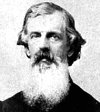 |
|
Mass. The following is quoted from Wikipedia: “Tuckerman was the eldest son of a Boston merchant, also Edward Tuckerman, and Sophia (May) Tuckerman. He studied at Boston Latin School and then at his father's urging at Union College in Schenectady, which he entered as a sophomore and where he completed a BA in 1837 and to which he returned for his MA after taking a law degree at Harvard in 1839, traveling in Germany and Scandinavia, and making the first of his botanical studies in the White Mountains. In 1846, he returned to Harvard as a senior (telling the |
president he intended to correct his father's error in breaking the family tradition), completed a second BA in 1847, then two or three years later entered the Divinity School and graduated from there in 1852. When Lewis and Clark went on their 1804-1806 expedition across the western United States, they collected many plant, seed, and flower species that had never been seen before. Lewis wrote notes about these species and they were put on scrap book paper. After Lewis apparently committed suicide in 1809, dozens of his scrapbook pages were stolen by a botanist who was supposed to draw and classify the plants collected on the expedition. He took the papers to England to sell for money at an auction in 1842. Tuckerman noticed the auction and the significance of these papers. He bought them and then donated them to the Academy of Natural Sciences in Philadelphia. After teaching at Union College, Tuckerman was a professor at Amherst College from 1854 until his death, successively lecturer in history, professor of Oriental history, and from 1858 professor of botany. Amherst awarded him an LLD. He was elected a member of the American Antiquarian Society in 1855. His first paper, on New England lichens, was given in 1838 or 1839. In 1843, he published privately the first serious systematic analysis of the genus Carex, Enumeratio Methodica Caricum Quarundam. Tuckerman liked to write his botanical studies in Latin. He also made the first systematic study of native Potamogeton, and after becoming professor of botany at Amherst, began preparing A Catalogue of Plants Growing without cultivation within 30 miles of Amherst College (published in 1875). However, his main focus was lichens. He published a number of important studies in the field, drawing on both his own collecting and specimens sent to him from elsewhere, in particular by Charles Wright from Cuba. His career culminated in the publication of Genera Lichenum: An Arrangement of the North American Lichens (1872) and Synopsis of the North American Lichens, Part 1 (1882). His last botanical publication was in 1884, and he may have published anonymous theological articles after that. Tuckerman did not accept that lichens are a combination of fungi and algae, a theory advanced late in his life. He was a founding member of the Natural History Society of Boston. His brother was Frederick Goddard Tuckerman, the American poet, and his first cousin was Henry Theodore Tuckerman, an American writer, essayist and critic.” He died in Amherst, Massachusetts. The genus Tuckermannia was published by Thomas Nuttall in 1841.
- Tuctor'ia: apparently an anagram of the genus name Orcuttia. The genus Tuctoria was published by John Raymond Reeder in 1982.
- tularen'se/tularen'sis: of or from the Tulare area of the San Joaquin
Valley.
- Tul'ipa: Latinized version of the Turkish tulbend, a turban.
The genus Tulipa was published by Carl Linnaeus in 1753.
- tumes'cens: becoming swollen, from Latin tumescens, "swollen."
- tumulico'la: a dweller of mounds and hillocks.
- tumulo'sa: from the Latin tumulus,
"a mound or hillock," and meaning "swollen."
- tuolumnen'se: from Tuolumne County.
- turbina'ta: shaped like a spinning top, turbinate.
- turbinel'la: means the same as turbinata
(see above) although possibly in diminutive form.
- turionif'era: bearing turions, which are
small shoots or buds.
- tur'neri: named for Dawson Turner (1775-1858), an English banker, botanist and antiquary. He was born at Great
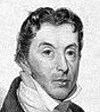 |
|
Yarmouth, and Wikipedia relates that he was educated at North Walsham Grammar School (now Paston College), Norfolk, and at Barton Bendish as a pupil of the botanist Robert Forby. He then enrolled at Pembroke College, Cambridge, but left without a degree due to his father's terminal illness. In 1796, he joined his father's bank in Great Yarmouth. He became interested in botany and published a number of books. In December 1802, he was elected a fellow of the Royal Society, and in 1816 was elected a foreign member of the Royal Swedish Academy of Sciences. His botanical |
works included Synopsis of British Fuci (1802), Muscologia Hibernicae Spicilegium (Irish Moss Ferns) (1804), and Botanist's Guide through England and Wales with Lewis Weston Dillwyn (1805). He also wrote articles for Annals of Botany and the Transactions of the Linnaean Society between 1800 and 1808. By 1820 however, his interest in botany was waning. He donated his herbarium to his son-in-law William Jackson Turner who had married his daughter Maria. Today his herbarium is at Kew along with other manuscripts, photocopies of correspondence, and botanical memoranda, and other materials of his are at Norwich Museum, Trinity College, Cambridge, the British Library, Linnaean Society, and Liverpool and Norwich Public Libraries. He and his children were taught drawing by renowned Norfolk artist John Sell Cotman who became a good friend. Mark Lawley’s excellent synopsis of Turner’s life states: “As the years passed, Turner’s botanical interests gave way to increasing preoccupation with antiquarian pursuits, and his Account of a Tour in Normandy (two volumes, 1820) was a family effort with assistance from John Sell Cotman. Turner also wrote a commentary for and produced at his own expense Cotman’s Architectural Remains in Various Countries (two volumes, 1822), and provided descriptive notes Specimens of Architectural Remains in Various Countries (two volumes, 1838). The walls of Bank House had paintings by Dutch, Flemish and Italian artists as well as the Norwich school, and these were catalogued in Turner’s Outlines in Lithography (1840). He also added 7,000 illustrations to Blomefield’s History of Norfolk. Turner’s library extended to 8,000 volumes, and his collection of manuscripts to 34,000 manuscripts and letters, from which he produced, for example, a Guide … towards the Verification of Manuscripts by Reference to engraved Facsimiles (1848). Turner also borrowed the letters of the naturalist Richard Richardson in order to publish Extracts from Literary Science. Correspondence of Richard Richardson (1835).” He had a total of eleven children with his wife Mary, eight of whom lived to adulthood, and after she died he married Rosamund Matilda Duff. Turner died in London in 1858 and is buried in Brompton Cemetery, London.
- Turric'ula: Latin for "little tower," from Latin, "small tower," diminutive of turris, "tower." Merriam-Webster gives the modern meaning of turricula as a utensil or ornament (as a candlestick) shaped like a tower. The genus Turricula was published by James Francis Macbride in 1917.
- Turrit'is: according to the Jepson Manual and Jaeger's Source-Book of Biological Names and Terms, this generic epithet is from the Latin turris for "tower" or turritus, "furnished with towers," for the orientation of the overlapping leaves and fruits, giving the plant a pyramidal shape. The genus Turritis was published by Carl Linnaeus in 1753.
- twee'dyi: named for Frank Tweedy (1854-1937), an American topographical engineer and plant collector in Wyoming and Colorado, and author of Flora of the Yellowstone National Park (1886). He began collecting plants when he was a member of the Northern Transcontinental Survey of 1882-1883. He was originally from New York and took a degree in civil engineering at Union College in 1875 and in 1884 became a permanent employee of the United States Geological Survey, remaining until his retirement in 1915. He collected the type specimen of Salix tweedyi in the Bighorn Mountains of Wyoming in 1896.
- Twisselmann'ia/twisselmann'ii: named for Ernest Christian Twisselmann (1917-1972), a cattle rancher, authority on
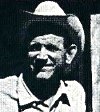 |
|
southern San Joaquin Valley flora, and author of The Flora of Kern County. He was born and lived nearly all his life in Cholame in San Luis Obispo County east of Paso Robles. His family had large holdings in the Cholame Valley and Temblor Range. He graduated from the University of California, Berkeley, and shortly after began cattle ranching which he continued until his death. An outbreak of nitrate poisoning in 1952 that caused extensive cattle losses in parts of California triggered an interest in Twisselman to discover the plants causing the outbreak, and this led him |
into botany. He learned the mechanics of collecting plants and how to identify them from John Thomas Howell and in 1956 published a flora of the Temblor Range region. His focus expanded to Kern County and his Kern County book was published in 1968. As early as 1965 he began field work with the cooperation of USFS on the Kern Plateau in the southern Sierra Nevada of Tulare and Kern Counties. He built up a personal herbarium of about 20,000 specimens which was eventually held by the California Academy of Sciences. Most of this information comes from an obituary in Madroño, Vol. 22, No. 8, October 1974. The genus Twisselmannia was published by Ihsan Ali Al-Shehbaz in 1999. (Photo credit: A Flora of Kern County)
- Ty'pha: from the word typhe, the old Greek name for cat-tail, derived either from typhos, which refers to its marsh or bog habitat, or from typhe meaning “cat’s tail,” which the plant’s inflorescences resemble. The genus Typha was published by Carl Linnaeus in 1753.
|


