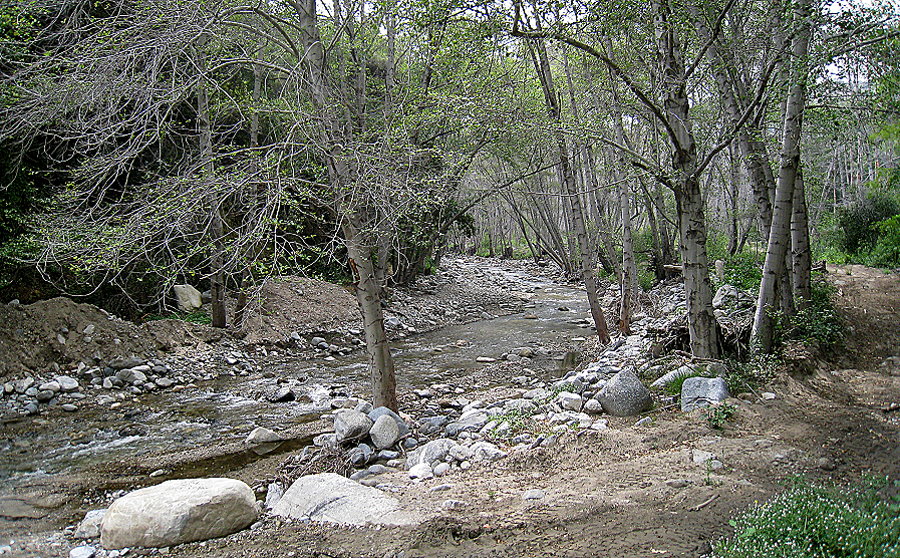
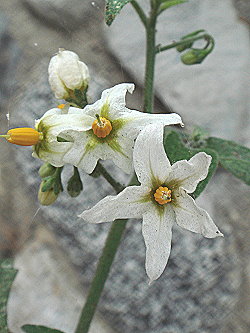
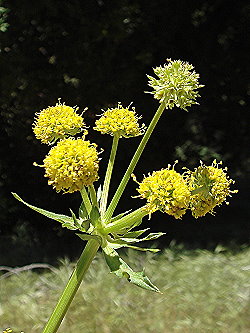
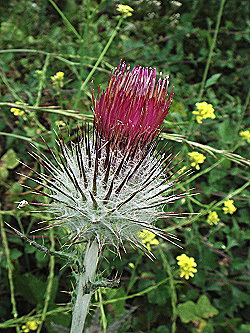
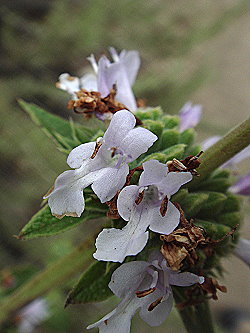
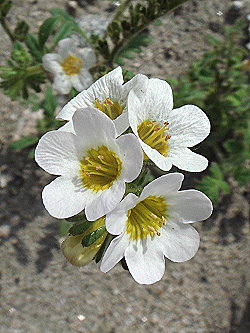
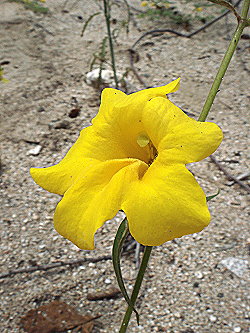
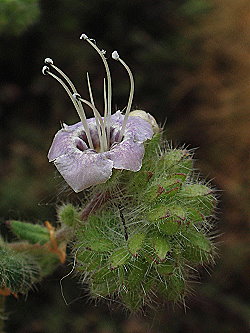
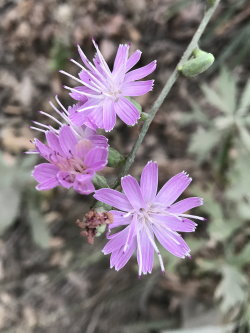
The Arroyo Seco, meaning "dry stream" in Spanish, is a 25-mile long seasonal river, canyon, and watershed covering roughly 32 square miles, beginning near Red Box and running down through Switzer, Millard, El Prieto, Bear and other canyons through the Angeles National Forest of the San Gabriel Mountains and Pasadena, California, passing camping areas like Oakwilde and Gould Mesa and the interesting Dawn Mine, and featuring major local landmarks like the Rose Bowl Stadium, Hahamongna Watershed Park and recreational trails, and passing as it does the Jet Propulsion Laboratory. This area primarily consists of chaparral, southern coastal sage scrub, and oak/sycamore/spruce riparian woodlands.
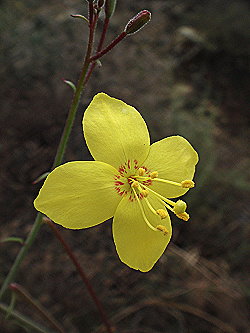
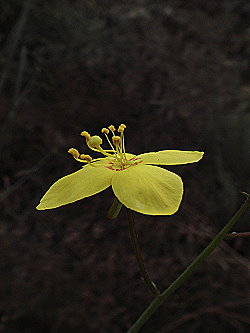
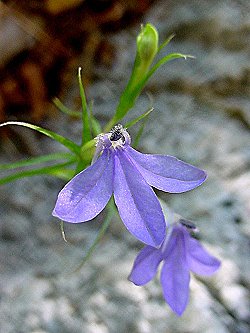
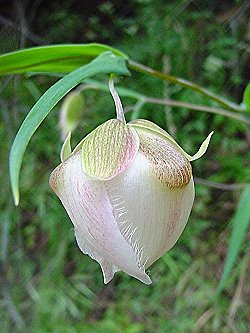
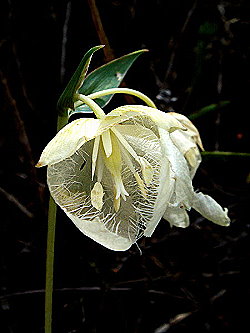
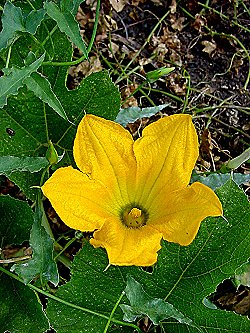
The western boundary of the upper Arroyo Seco watershed above Pasadena is defined by the ridgeline along the San Rafael Hills and portions of La Cañada Flintridge that separate it from the Verdugo Wash drainage, and the eastern boundary is defined by the ridge separating it from Millard Canyon and Eaton Canyon. The area was explored by Gaspar de Portolá in the late summer and fall of 1770, who named the stream Arroyo Seco because its canyon had the least water of any he had seen. During this exploration, he met Chief Hahamog-na (Hahamongna) of the Tongva Indians near Millard Canyon. The watershed begins at Red Box Saddle near Mount Wilson, and flows all the way to the Los Angeles River. The Arroyo is one of two major streams that capture rainfall and storm water in Pasadena, the other being Eaton Wash on the eastern side of the city. To many, the Arroyo Seco is one of the most popular hiking spots in Southern California, and the Gabrielino Trail is the main trail that winds along it. This gallery is limited to the area that extends northward from near the San Pasqual Stables and Arroyo Park, and includes pictures taken on numerous hikes. I have hiked from Red Box to Switzer Picnic Area on one occasion and on another from Switzer all the way to the Brookside parking area near JPL but that was with my daughter’s Pacific Oaks School class. I did no photography on either of those hikes, so the upper Arroyo Seco is still to be more floristically explored and photographed by me. The presence in the Arroyo Seco watershed of the species in this gallery is mostly attested to in Bob Muns’ checklist, the Calscape website, Orlando Mistretta's Field Guide to the Flora of the San Gabriel Mountains, and in surveys by botanists and others who are associated with the Hahamongna Watershed Park and the Arroyo Seco Foundation, and some of them are not to be found in any great numbers or in any widespread range and may in fact be quite rare. Due to the length of this gallery, I have decided not to include here non-native taxa which are present in great numbers especially in the lower sections, but instead I will put together a photo gallery for those introduced taxa.
|