| BIG SYCAMORE CANYON, SANTA MONICA MOUNTAINS 2002/2003 PAGE TWO |
 |
 |
 |
 |
|||
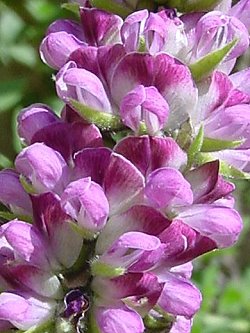
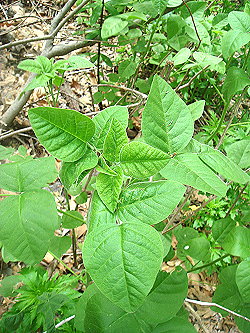
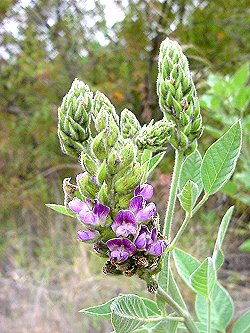
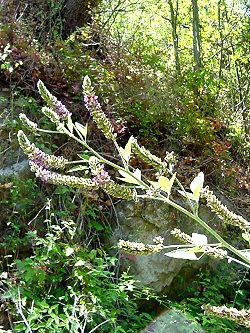
| Leather root Hoita macrostachya Fabaceae |
||||||
Most people probably pronounce the name Hoita as HOY-ta which is the way it would be pronounced if it were an English name, however the name Hoita was recorded by Victor King Chesnut (1867-1938) as a name for Psoralea in the ConCow (or KonKow) Maidu language spoken by a Native American people of the Feather River region (Butte County, California). In their language it was spoken with a short 'i', long 'a' and accent on the middle syllable, hence ho-IT-ay, |
|
|
 |
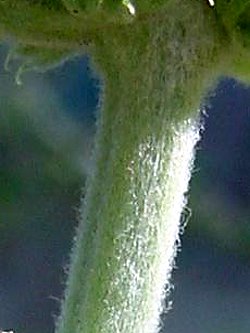 |
|
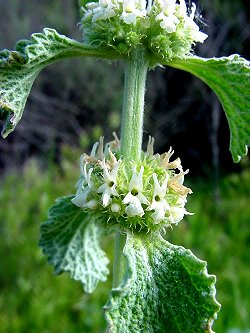
Horehound * Marrubium vulgare Lamiaceae |
||
Horehound candies which were made with sugar and an extract from this plant were one of my grandfather's favorite candies and my least favorite. Their bittersweet flavor has been compared to menthol, licorice and root beer. As far back as the 1st century BC, this plant has been utilized to alleviate all kinds of physical problems. Native to Europe, Northern Africa and southwestern and central Asia, the name derives from the Old English 'hoar,' white or light-colored, referring to the hairs that lend it its 'hoary' appearance, and 'hune,' a generic word for plant. One of its common names was houndsbane. Horehound candy probably originated as a medicine, which is perhaps one of the reasons I didn't like it. |
 |
 |
 |
||
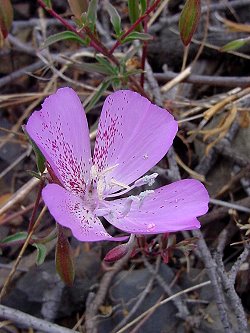
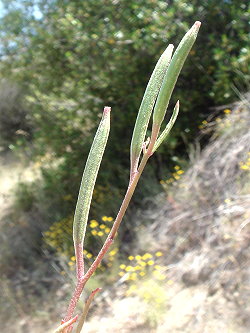
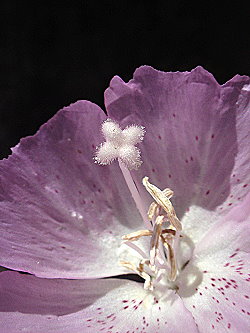
| Punchbowl clarkia Clarkia bottae Onagraceae [Named for William Clark, 1770-1838, and Paulo Emilio Botta, 1802-1870] |
||||
 |
|
||
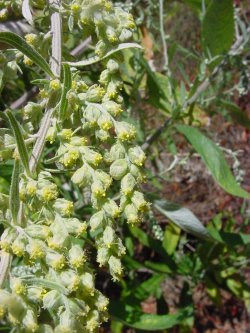
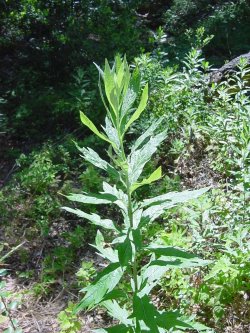
| Mugwort Artemisia douglasiana Asteraceae [Named for David Douglas, 1798-1834] |
|
|
|
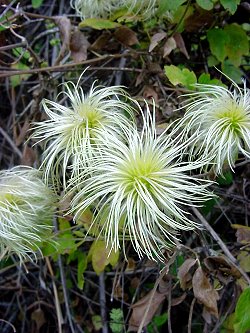
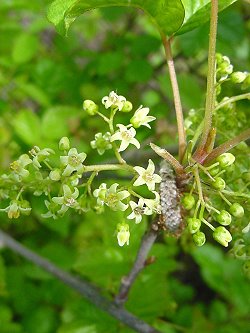 |
|
||
| Western poison oak Toxicodendron diversilobum Anacardiaceae |
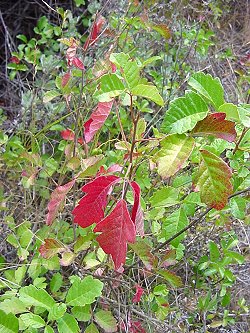
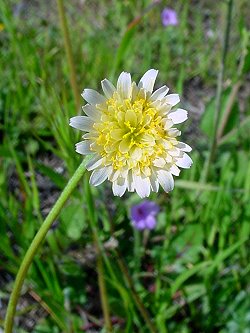 |
 |
 |
||
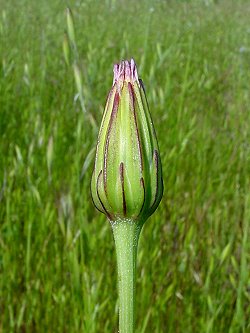
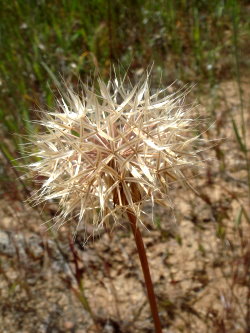
| Brown microseris Stebbinsoseris heterocarpa Asteraceae [Named for George Ledyard Stebbins, Jr., 1906-2000] |
||||
 |
 |
|
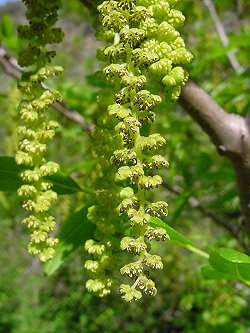
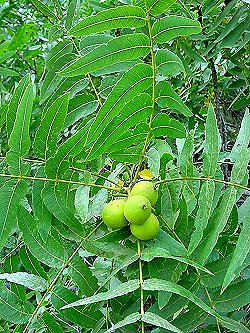
California black walnut Juglans californica Juglandaceae [Picture on left shows male flowers] |
||
|
|
|
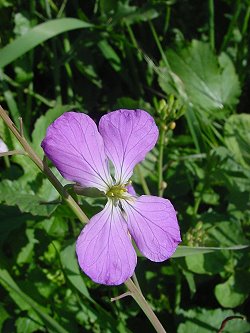
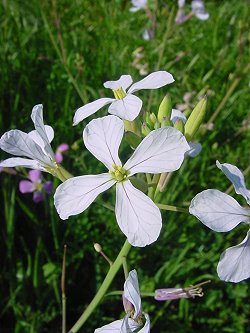
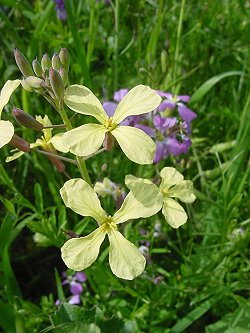
|
|||
| CALIFORNIA PLANT NAMES: LATIN AND GREEK MEANINGS AND DERIVATIONS | |||
| VIRGINIA PLANT NAMES: LATIN AND GREEK MEANINGS AND DERIVATIONS |