| WILDFLOWERS OF SOUTHERN CALIFORNIA |
CALIFORNIA PLANT NAMES |
VIRGINIA PLANT NAMES |
FIELD TRIP PHOTO GALLERIES |
EPONYM DICTIONARY OF SOUTHERN AFRICAN PLANTS |
| FLOWERING PLANTS OF TEJON RANCH PAGE ONE |
| Photographs by Michael Charters |
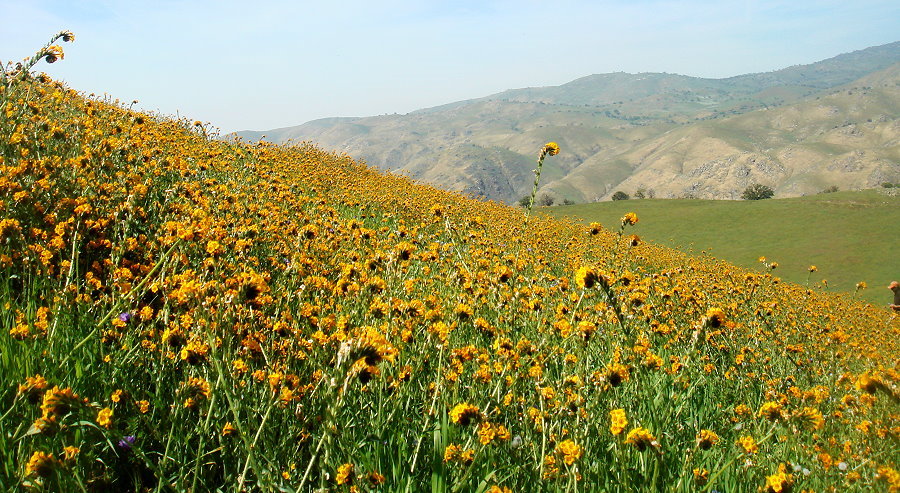 |
The Tejon Ranch is a majestic landscape of canyons and mountains, valleys, watercourses and plains. The sheer scale of the ranch's size almost boggles the imagination, with its 270,000 acres sprawling across the Tehachapi Mountains stretching from the San Joaquin Valley to the Antelope Valley and crisscrossed by thirty miles of paved roads, and over a thousand miles of dirt ranch roads, firebreaks and livestock trails. An elevational gradient of 6,000', a dizzying complexity of soil types and substrates, innumerable and varied habitats, and the fortuitous conjunction of four floristic regions, the Central Valley, the southern Sierras, the Mojave Desert and the Transverse Range, allow for the presence of around 1,000 species of plants, new taxa of which continue to be found and recorded, and many of which are rare. It is the largest contiguous piece of private property remaining in California. An agreement appeared to have been reached between the ranch and environmental groups to preserve the bulk of the land there in its natural state, and due in no small measure to the work of the Tejon Ranch Conservancy, public access albeit under controlled conditions seemed to be assured. Many of those who have opposed the development plans of the ranch appeared to be gratified that 90% of the ranch's acreage was going to be conserved, and that the Pacific Crest Trail was going to be rerouted across the ranch. Because of the difficulty of accessing the ranch in the past, it has been essentially a floristic black hole, but recently that began to change with significant survey work having been done which greatly increased knowledge of the flora in particular. However, as of December 2018, the Tejon Ranch management has banned the California Plant Society and associated botanical organizations such as Rancho Santa Ana Botanic Garden, the Eriogonum Society and the Jepson Herbarium from their previously allowed visits to the ranch, due to public opposition to the 6,700-acre Centennial Project which is proposed to create a 19,300-home community on the Antelope Valley side, a gigantic development footprint of tremendous financial value to the ranch but one where the threat of fire, the enormous consumption of water, and the impact of tens of thousands of vehicles are obviously of great concern. Despite the agreement, there are currently legal challenges underway brought by the California Native Plant Society and the Center for Biological Diversity to stop the development, and the accord between Ranch and environmental groups that would have preserved so much of the Ranch in perpetuity seems up in the air again. As of 2026 these legal issues remain unresolved. It appears that for the moment at least, the ranch's participation in further botanical endeavors seems at an end, and it sadly remains to be seen whether it will ever be renewed. Photographs of species displayed here are from my three visits to Tejon Ranch in 2014, 2016 and 2017, based on the plant list of vouchered specimens compiled by Nick Jensen. Despite the length of this photo gallery, it includes only a fraction of the taxa that are present on that list. I express my appreciation to trip leaders Neal Kramer, Maynard Moe, and Nick Jensen, and to the Tejon Ranch Conservancy's Conservation Science Director Mike White and Public Access Manager Scott Pipkin. Tejon Ranch is private property, and anyone seeking to visit there should respect that and should do so only under the auspices of the Conservancy's public access program such as it may continue to evolve. I hope one day to be able to return to this beautiful area. Because of the length of this photo gallery, I have purposely not included non-native plants. |
|
|
|
||||||||||||
 |
 |
 |
||
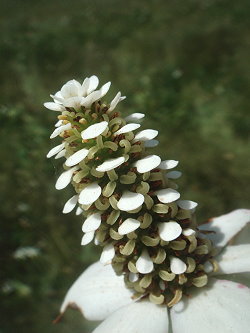
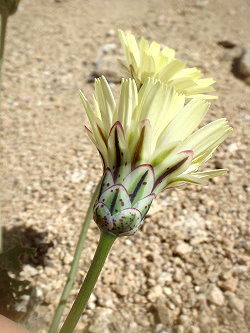
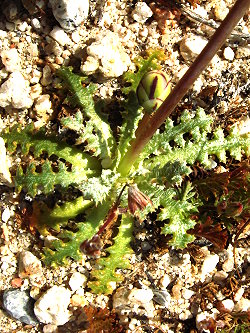
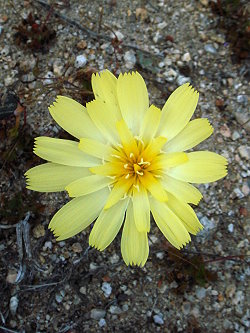
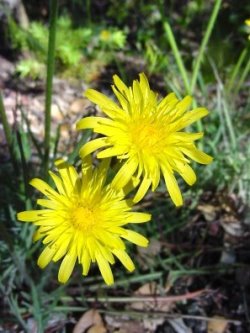
| Scalebud Anisocoma acaulis Asteraceae |
||||
 |
 |
|
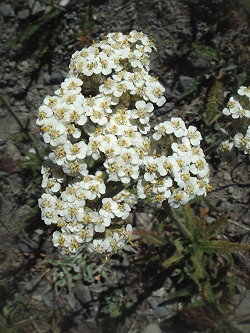
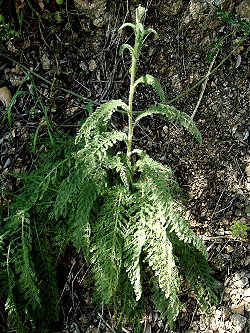
Yarrow Achillea millefolium Asteraceae |
||
 |
|
|
||||||||||
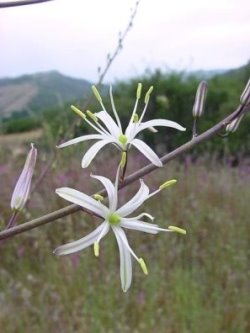
Soap plant Chlorogalum pomeridianum var. pomeridianum Agavaceae |
||||||||||||
 |
 |
|
Bitterroot Lewisia rediviva var. minor Montiaceae [Named for Meriwether Lewis, 1774-1809] |
||
|
|
|
|||||
 |
|||||
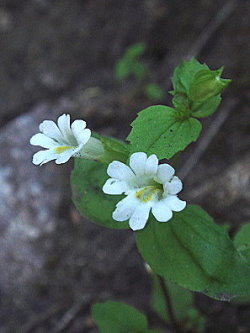
Smallflower monkeyflower Erythranthe inconspicua Phrymaceae |
|
|
|
 |
 |
|
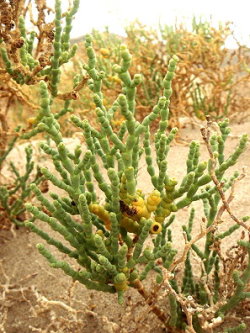
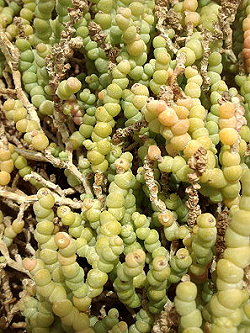
Iodine bush Allenrolfea occidentalis Chenopodiaceae [Named for Robert Allen Rolfe, 1855-1921] |
||
|
|
|
|
||||
 |
|
|||||||
 |
 |
||||||
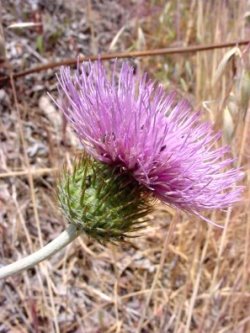
California thistle Cirsium occidentale var. californicum Asteraceae |
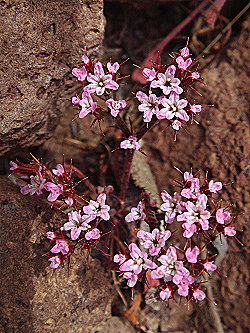
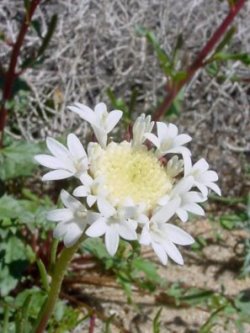
Turkish rugging Chorizanthe staticoides Polygonaceae |
 |
 |
|
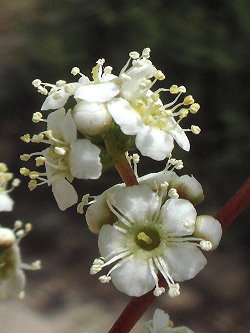
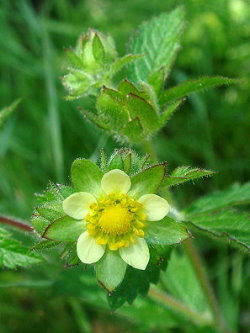
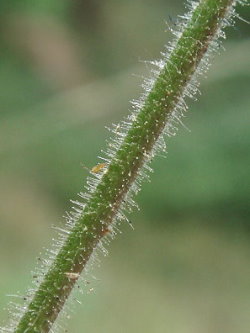
Inland sticky cinquefoil Drymocallis glandulosa var. glandulosa Rosaceae |
||
 |
 |
 |
||
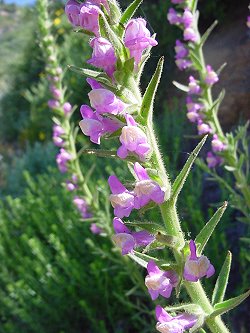
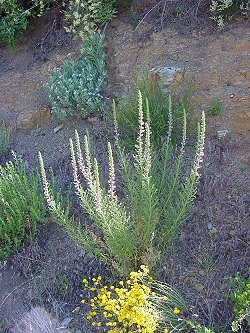
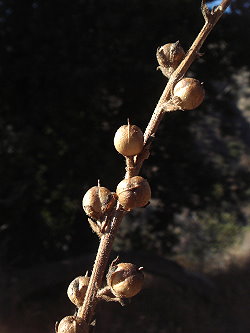
| Rose snapdragon Antirrhinum thompsonii Plantaginaceae [Named for John William Thompson, 1890-1976] |
||||
| PHOTO GALLERIES INDEX |
PAGE TWO OF EIGHTEEN |
|
| CALIFORNIA PLANT NAMES: LATIN AND GREEK MEANINGS AND DERIVATIONS | ||
| VIRGINIA PLANT NAMES: LATIN AND GREEK MEANINGS AND DERIVATIONS | ||
Copyright © 2025 by Michael L. Charters.
The photographs contained on these web pages may not be reproduced without the express consent of the author.
Comments and/or questions may be addressed to: mmlcharters[at]calflora.net.